Wall Art Guide, Wall Art Tutoriels
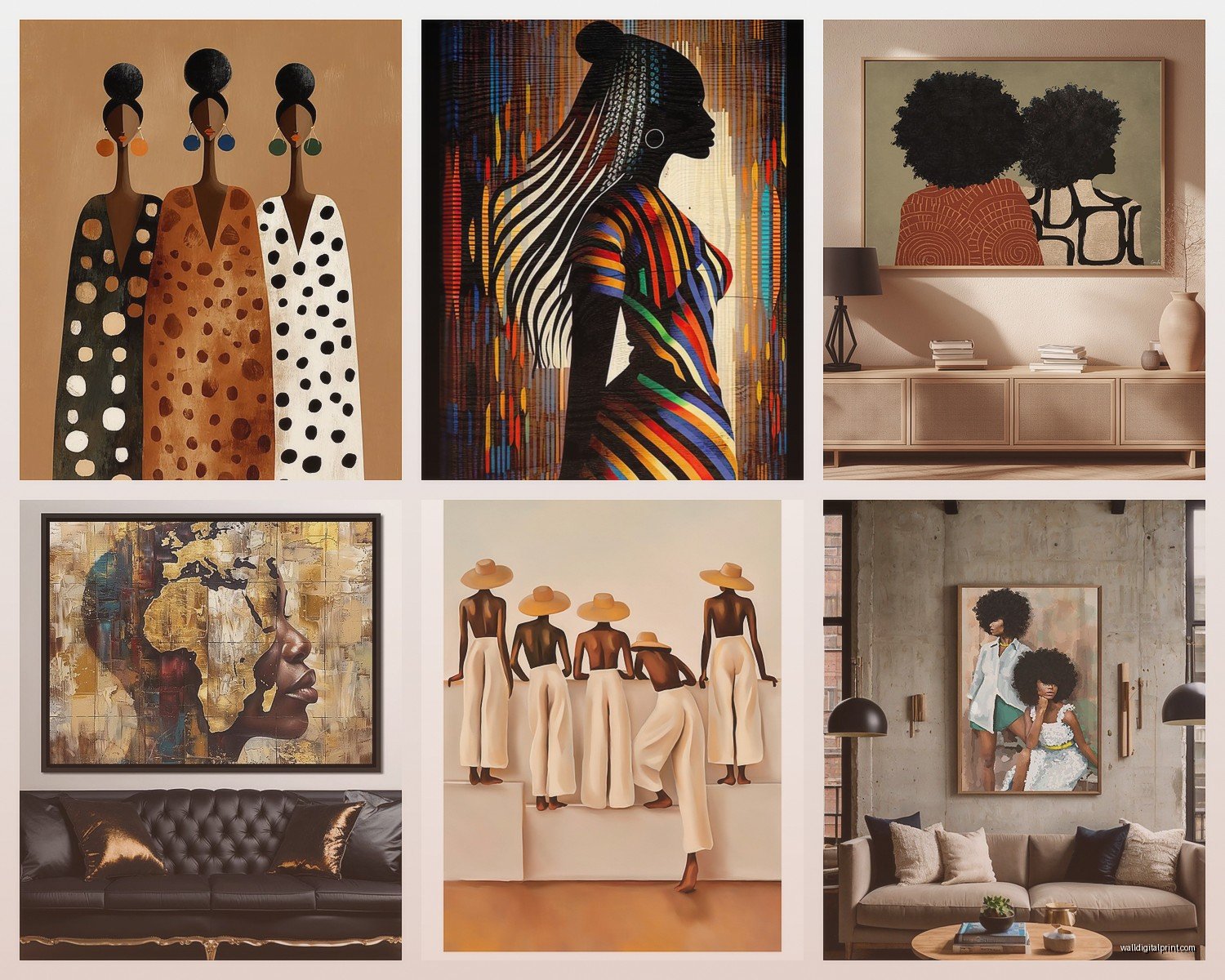
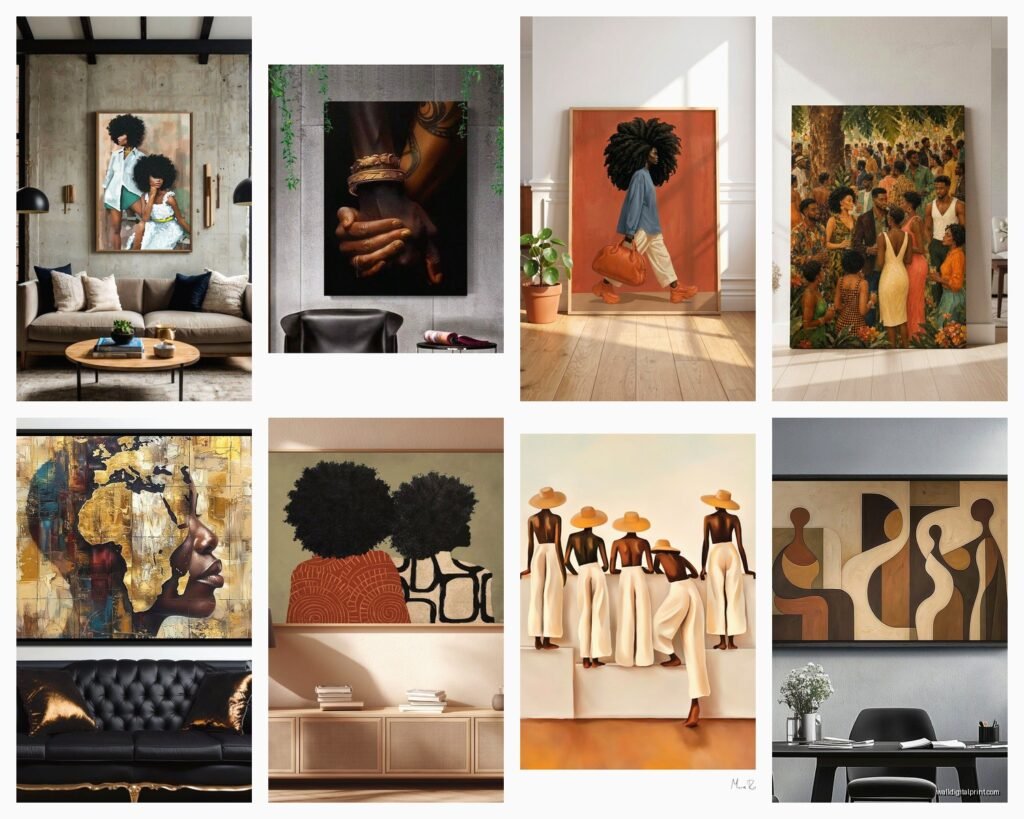
African American Wall Art for Living Room: Black Culture Main Space
Aug
So I’ve been totally obsessed with incorporating African American wall art into living rooms lately, and honestly it’s way more nuanced than just slapping up any piece with cultural significance. Like, I spent three hours last Tuesday (my afternoon client rescheduled) just comparing different print qualities and it completely changed how I approach this.
First thing you gotta know is that size actually matters more than you think. I see people buying these gorgeous pieces of Black art and then hanging like a 16×20 print on this massive wall and it just gets swallowed up. Your living room is your main space, right? So you need artwork that commands attention without screaming for it. I usually tell people to measure their wall space and aim for pieces that take up about 60-75% of the available wall width. Sounds like a lot but trust me, it works.
Finding Authentic Pieces That Actually Mean Something
Okay so here’s where it gets tricky. There are SO many prints out there claiming to represent Black culture but they’re just… surface level? I’ve learned to look for artists who are actually part of the community they’re representing. Check the artist bio before you buy anything. Are they telling their own story or someone else’s?
Some of my favorite artists right now are people like Bisa Butler (her quilted portraits are insane), Kehinde Wiley obviously, but also lesser-known folks like Lois Mailou Jones and Romare Bearden. The thing is, you can find prints of their work at different price points. I found a Bearden print at this gallery in Atlanta for like $300, but then saw similar quality reproductions online for $75. The difference was just the exclusivity factor.
Where to Actually Shop
Real talk, Etsy has been surprisingly good for this. I know, I know, it’s hit or miss, but if you filter for Black-owned shops specifically, you’ll find incredible artists selling their original work or high-quality prints. I bought this amazing piece depicting a Black family at Sunday dinner from a shop called… wait let me check my orders… SoulfulArtistry, and the detail is gorgeous. Canvas print, came already stretched.
But also check out:
- The Black Art Depot (they curate specifically African American artists)
- Corridor Gallery if you’re near Brooklyn
- Gallery shops at HBCUs, seriously underrated source
- Local Black art festivals, you can meet artists directly
- Even Society6 if you search carefully, though quality varies
The Whole Gallery Wall vs Single Statement Piece Debate
I flip flop on this constantly. Last month I was all about gallery walls, now I’m back to thinking one major piece is the move. Here’s what I’ve figured out though, it depends on your living room’s vibe.
If you’ve got a modern, minimalist space with clean lines and neutral furniture, one large statement piece works better. Think like a 40×60 canvas of something bold. I did this for a client with a cream sectional and white walls, we hung this incredible piece by a Detroit artist showing a Black ballerina in motion, and it became the entire room’s focal point. Everything else just supported it.
But if your living room already has personality, patterns, textures, different colors happening, a gallery wall lets you tell a more complex story. You can mix different art styles, different eras of Black culture, different mediums even. I’ve got three framed vintage jazz posters, two contemporary abstract pieces by Black artists, and one photograph from the Civil Rights era all on one wall in my own place and somehow it works? My cat knocks into the bottom frame sometimes but that’s a different issue.
Mixing Historical and Contemporary
Oh and another thing, don’t feel like you have to pick a lane. Some of the most impactful living rooms I’ve styled mix historical Black imagery with super contemporary Black art. Like you could have a vintage print of a Harlem Renaissance scene next to a modern abstract by a current Black artist exploring identity through color and shape.
I did this thing where I paired a reproduction of an old photograph from a Black church in Mississippi (1940s) with this vibrant, almost neon painting by a young artist from Houston. Sounds weird but the juxtaposition actually highlighted both pieces more. The historical context made the contemporary piece feel more grounded, and the contemporary piece made you look at the historical one differently.
Framing Matters More Than I Thought It Would
Okay so I used to just buy whatever frame was cheapest or came with the print. Big mistake. The frame literally changes how people perceive the art and by extension, how they perceive your space.
For traditional pieces, historical photographs, vintage prints, I go with classic black or dark wood frames. Simple, clean, lets the art speak. But for contemporary work, especially abstract pieces or bold colorful paintings, I’ve started using either frameless canvas wraps or really minimal floating frames.
There’s this one artist I follow on Instagram who does these incredible portraits of Black women with natural hair, and I bought a print of her work. First I put it in a ornate gold frame thinking it would elevate it, and honestly it looked… trying too hard? Switched it to a simple black frame with a white mat and suddenly the piece breathed. The subject became the focus instead of fighting with the frame.
Mat colors matter too. White or cream mats work for basically everything, but I’ve experimented with colored mats that pull tones from the artwork itself. Had a piece with deep burgundy tones, used a burgundy mat, and it intensified the whole thing.
Themes That Actually Work in Living Spaces
Not all Black culture art works equally well in a living room, and that’s okay. Like, I love powerful protest art and historical documentation, but sometimes those pieces are heavy for a space where you’re trying to relax and watch Netflix, you know?
Themes I’ve seen work really well:
- Jazz and music culture, there’s movement and energy but it’s not emotionally exhausting
- Abstract expressionism by Black artists, adds color and cultural significance without being literal
- Portraits that celebrate Black beauty and joy, not trauma
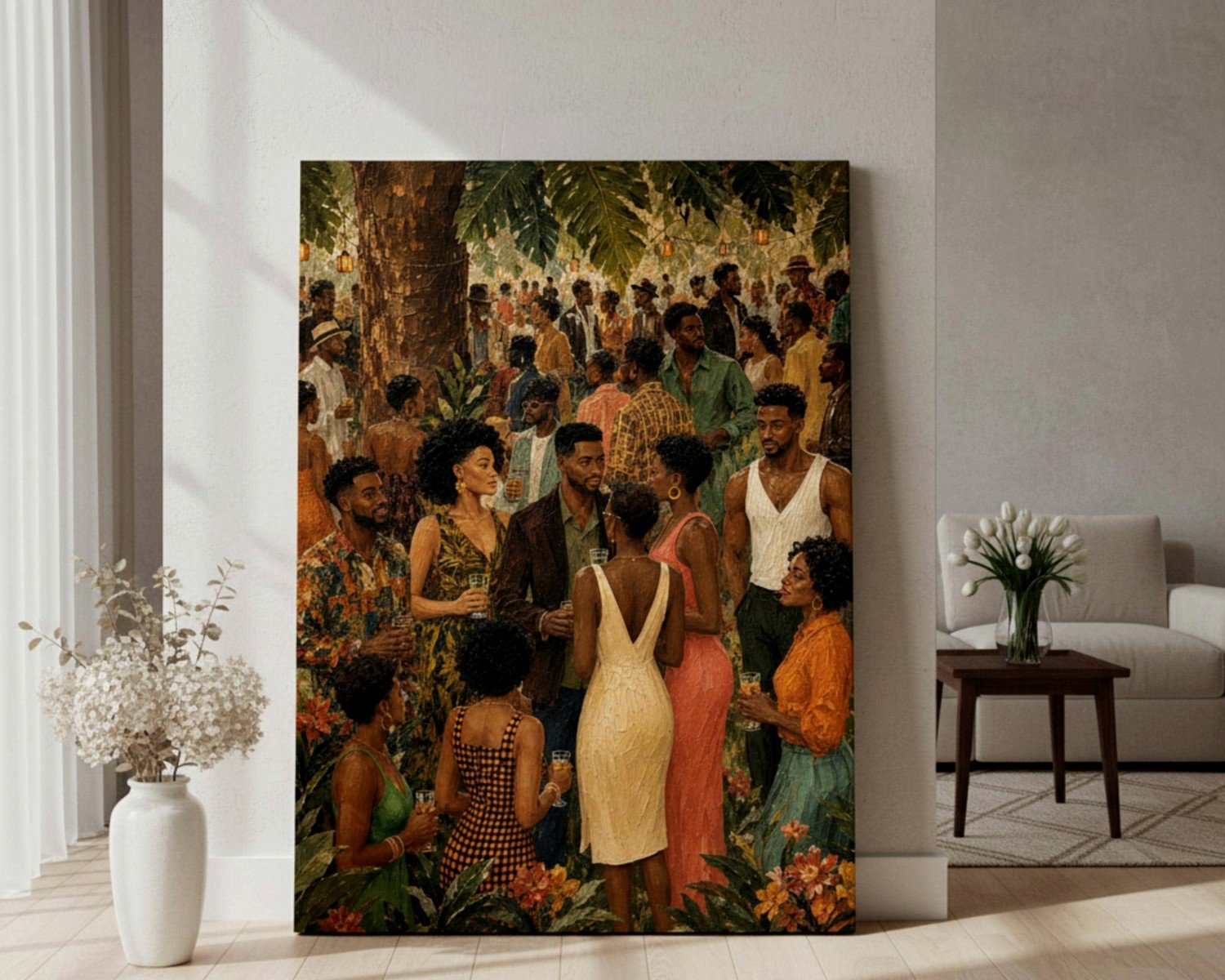
- Cultural celebration scenes like family gatherings, church, dance
- Nature scenes by Black artists (this is underutilized honestly)
- Typography art with meaningful quotes from Black leaders or writers
I’m not saying avoid serious historical pieces, just consider the emotional weight. Your living room should reflect Black culture in a way that energizes you, not drains you every time you sit down.
The Color Coordination Thing
This is gonna sound weird but I don’t actually match art to my existing color scheme anymore. I used to think everything had to coordinate, but now I pick art that speaks to me culturally and emotionally, then I let that guide accent colors in the room.
Like I bought this piece with these amazing turquoise and orange tones depicting a Black woman in traditional African dress. My living room was all gray and white at the time. Instead of returning the art, I added turquoise throw pillows and an orange blanket. Suddenly the whole room felt intentional and the art felt integrated instead of just stuck on a wall.
Lighting Your Art Properly
Wait I forgot to mention this earlier, but lighting is huge. I’ve seen beautiful pieces look totally flat because they’re in a dark corner or getting weird overhead lighting that creates glare.
If you can, use picture lights or track lighting aimed at your art. Makes such a difference. I installed these battery-operated LED picture lights from Amazon (like $25 for a two-pack) above some prints in my living room and they went from barely noticeable to being the first thing people comment on.
Natural light is great but watch out for direct sunlight, especially on prints. UV damage is real and I’ve seen colors fade in like six months when art was across from a sunny window. Either use UV-protective glass or just position pieces away from direct sun.
Mixing Price Points Without Looking Cheap
Not everything needs to be an original or a limited edition print. I mix $50 prints with $500 pieces all the time. The key is quality framing and thoughtful placement.
A $40 print in a $80 custom frame looks way better than a $300 print in a cheap pre-made frame. I learned this the hard way. Also, how you group things matters. If you’ve got one really nice original piece, you can surround it with quality prints and the original elevates everything around it.
Supporting Living Artists
Okay so this is important to me personally. There are so many incredible living Black artists who are accessible and affordable. Yeah, you can buy mass-produced prints of famous historical pieces, but consider commissioning something or buying directly from contemporary artists.
I commissioned a piece last year from an artist I found at a local art walk. Told her my living room dimensions, the feeling I wanted, showed her some photos of my space. She created this custom abstract piece with these deep blues and golds that somehow captured exactly what I was going for. Cost me $400 which honestly wasn’t much more than I would’ve spent on a nice print plus framing.
Plus when people ask about it, I can tell them about the artist, her process, her vision. It makes the art feel more alive in the space.
Avoiding the Museum Effect
This is something I see all the time and I’m guilty of it too. We get so precious about the art that the living room starts feeling like a gallery instead of a living space. The art should enhance your life, not make you afraid to actually live.
I hang art at proper eye level (center of the piece at about 57-60 inches from the floor), but I also don’t stress if my dog’s tail knocks into a frame corner or if there’s a smudge on the glass. These pieces are meant to be part of your daily life, part of your cultural expression in your home.
Also like, it’s okay to change things up. I rotate art seasonally sometimes, or when I just need a refresh. That piece that felt perfect six months ago might not hit the same way now, and that’s fine.
The Conversation Starter Factor
One thing I didn’t expect when I started really curating African American art in my living room is how much it facilitates conversations. People ask about the artists, the meaning, the cultural context. It’s become this way of sharing culture and history in a really organic way.
But that also means you should know something about the pieces you display. Not like a full dissertation, but basic context. Who’s the artist, what drew you to it, what it represents. Makes the art more meaningful for you too.
I keep little notes in my phone about each piece, just basic info so when someone asks I don’t blank out. My friend came over last week and asked about this Romare Bearden print I have and I totally forgot the name of the series and felt ridiculous just being like “uh… it’s… jazz themed?” Even though I’d read the whole description when I bought it.
Anyway, that’s basically everything I’ve learned from trial and error and way too many hours browsing art sites when I should be sleeping. The main thing is just start somewhere, even if it’s one print that speaks to you, and build from there. Your living room’s gonna evolve and so will your collection.