Wall Art Guide, Wall Art Tutoriels
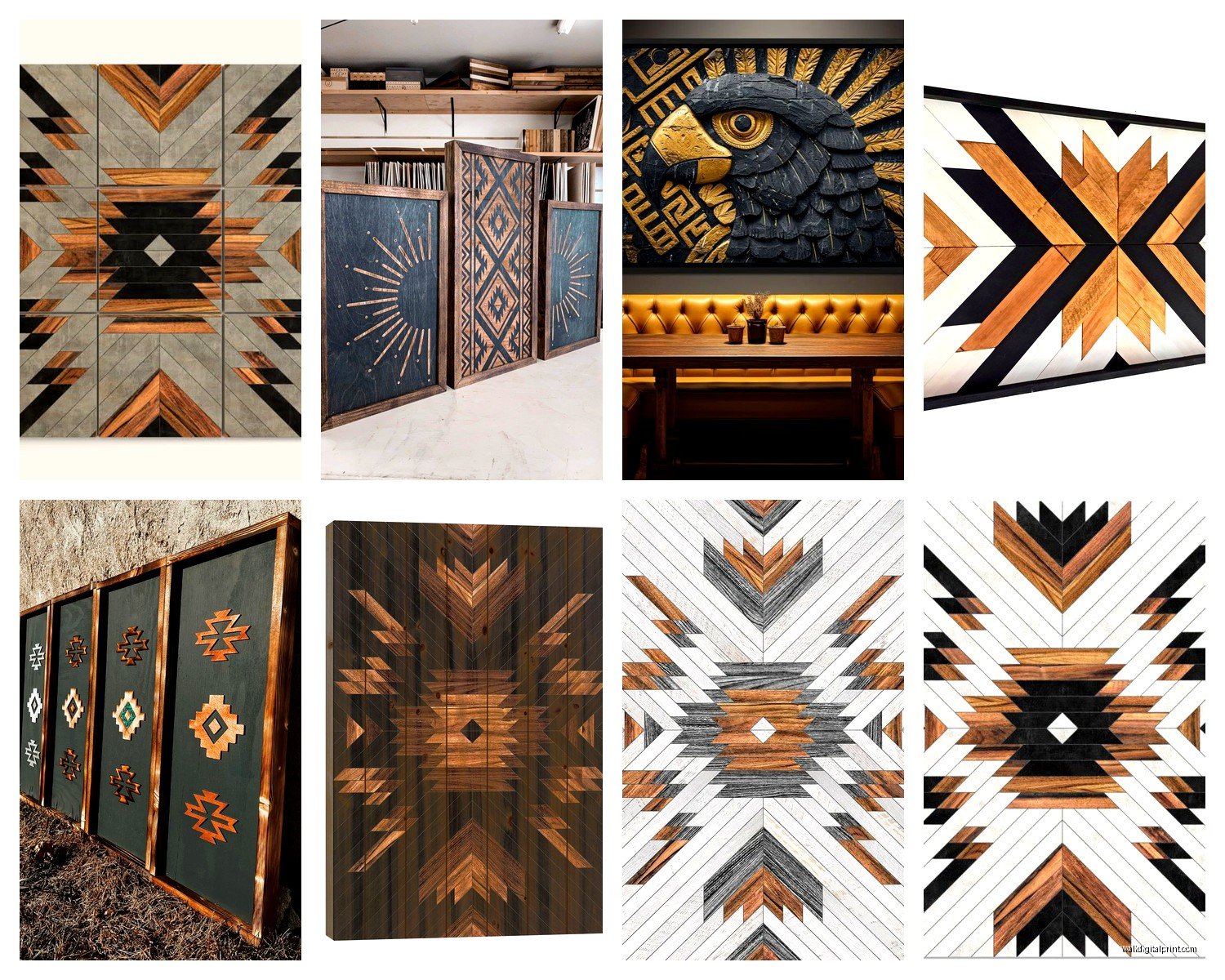
Aztec Wood Wall Art: Mexican Indigenous Tribal Carvings
Jul
So I’ve been completely obsessed with Aztec wood carvings lately and honestly it started because a client wanted something “tribal but not the basic stuff everyone has” and that sent me down this rabbit hole. Now I have like three pieces in my own apartment and I’m gonna tell you everything I learned because some of it was trial and error and kinda expensive mistakes.
Understanding What You’re Actually Looking At
Okay so first thing – not all “Aztec” wood art is actually Aztec-inspired. A lot of what you see online is just geometric patterns that someone slapped the word Aztec on for SEO purposes. Real Aztec-inspired pieces usually feature specific symbols like the sun stone (that circular calendar thing), feathered serpents, jaguars, eagles, or those stepped pyramid designs.
The authentic Mexican carvings are typically made from parota wood, cedar, or pine. Parota is my favorite because it has this gorgeous natural grain that shows through even when it’s stained dark. Cedar smells amazing but it’s softer so the details aren’t always as crisp. I learned this the hard way when I bought a “handcrafted cedar piece” that looked stunning in photos but up close the carved lines were kinda mushy looking.
Where the Good Stuff Actually Comes From
Most legitimate pieces come from Oaxaca or Puebla regions in Mexico. There are artisan cooperatives there that have been doing woodcarving for generations. The thing is, you’re gonna pay more for these – like $200-$800 depending on size – but the craftsmanship is completely different from the mass-produced stuff you’ll find on Amazon for $45.
I’m not saying don’t buy the cheaper versions, just know what you’re getting. I have both in different rooms and they serve different purposes.
Sizing and Where to Actually Hang This Stuff
This is where I messed up initially. I bought this massive 4-foot sun stone carving thinking it would look amazing above my couch and it was just… too much. Like way too intense for a living room where you’re trying to relax and watch TV (currently rewatching The Bear again, don’t judge me).
Here’s what actually works:
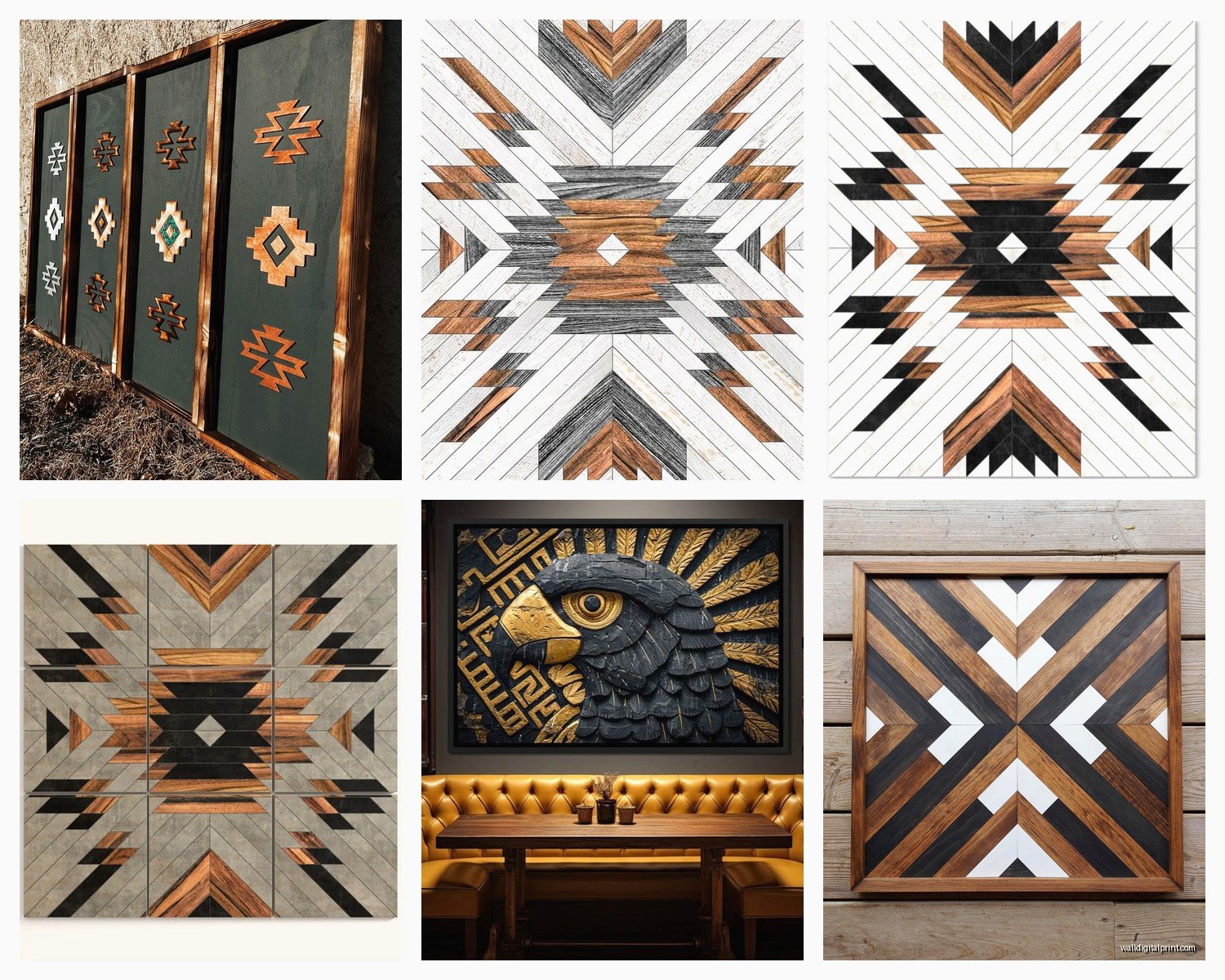
- Large pieces (3-5 feet): entryways, dining rooms, or that awkward wall at the end of a hallway
- Medium pieces (18-30 inches): above consoles, in home offices, bedroom accent walls
- Small pieces (under 18 inches): grouped in threes or fives, bathroom accent, bookshelf styling
The big pieces need breathing room. Don’t put them on a wall that’s already crowded with other art or shelving. They’re statement pieces and they need to be treated like that.
The Color Situation
Most Aztec wood carvings come in natural wood tones, dark stains, or painted versions. The painted ones usually feature turquoise, terracotta, deep reds, and golds. Here’s my honest take after living with different versions:
Natural wood is the most versatile. Works with literally everything from minimalist spaces to maximalist boho vibes. I have a natural parota feathered serpent piece and it’s been in three different rooms as I’ve moved things around.
Dark stained pieces (espresso or black stain) are dramatic but they need the right wall color. They disappear on dark walls – learned that one when I hung a dark piece on my charcoal gray accent wall and you literally couldn’t see half the details. They look incredible on white, cream, or light gray walls though.
Painted pieces are tricky. They’re beautiful but they lock you into a color scheme. I bought a gorgeous painted sun calendar with turquoise and gold details and then wanted to change my bedroom colors six months later and suddenly it didn’t work anymore. Now it’s in my guest room which I basically never change.
Quality Markers You Gotta Look For
Oh and another thing – here’s how to spot whether something is actually hand-carved or machine-cut with some hand-finishing:
Hand-carved pieces have slight irregularities. The lines aren’t perfectly uniform, there might be tiny variations in depth, the back is usually rough or has chisel marks. This is GOOD. This is what you want if you’re paying handmade prices.
Machine-cut pieces are too perfect. Every line is exactly the same depth, the pattern repeats with mathematical precision, the back is usually smooth or has saw marks in straight lines.
Also check the weight. Real solid wood pieces are heavy. If it feels light, it might be plywood with a veneer or some composite material. Not necessarily bad, just don’t pay solid wood prices for it.
The Hanging Hardware Drama
Okay so funny story – the first piece I bought didn’t come with any hanging hardware and I assumed I could just use a regular picture hanger. Wrong. These pieces are HEAVY. Like 15-30 pounds for medium-sized ones.
You need either:
- Heavy-duty D-rings screwed into the back with wire between them
- A French cleat system for really large pieces
- Multiple anchor points if you’re hanging on drywall
I’ve had the best luck with French cleats for anything over 20 pounds. Yeah it’s more work to install but that piece isn’t going anywhere. Had a piece fall off the wall at 2am once and it scared my cat so badly she didn’t come out from under the bed for like six hours. Also put a dent in my floor.
Styling Around Aztec Carvings
This is where it gets fun. These pieces are bold so you gotta balance them right or your room looks like a theme restaurant.
What works: neutral backgrounds, natural textures like jute or linen, leather furniture, plants (especially large leafy ones like monstera or bird of paradise), ceramic or clay accessories, woven baskets, simple metal accents in brass or black iron.
What doesn’t work: competing patterns, too many other statement pieces on the same wall, ultra-modern glass and chrome furniture (there’s a clash there that just feels off), pastel color schemes (the pieces feel too heavy).
I’ve found that mixing one Aztec wood piece with more minimal modern art actually looks really good. Like I have my sun stone carving on one wall and two simple black and white photographs on an adjacent wall. The contrast works.
Grouping Multiple Pieces
If you’re gonna do a gallery wall situation with multiple Aztec carvings, keep them all in the same finish. Don’t mix natural wood with painted with dark stained. Pick one lane.
Also vary the sizes. Three pieces of the exact same size look weird unless they’re meant to be a triptych. I do one large focal piece with two smaller complementary pieces. The layout that’s worked best for me is the large piece in the center with smaller pieces flanking it slightly lower. Not symmetrical but balanced.
Wait I forgot to mention – leave more space between these pieces than you would with regular framed art. They’re dimensional and they cast shadows so if you hang them too close together it looks cluttered and you lose the impact of the individual carvings.
Caring for Wood Carvings
This is gonna sound weird but don’t clean them too much. Seriously. The dust settling into the carved grooves actually enhances the shadows and depth. I dust mine maybe once a month with a super soft brush or a can of compressed air for the deep crevices.
If they’re near a window, be aware that sun exposure will fade painted pieces and can dry out natural wood over time. I learned this when the side of my feathered serpent that faces the window started looking lighter than the other side. Now I have sheer curtains up.
For natural wood pieces, I put a thin coat of paste wax on them once a year. Just regular furniture paste wax, buff it out with a soft cloth. Keeps the wood from drying out and brings out the grain.
Humidity Concerns
Wood expands and contracts with humidity changes. In really dry climates or during winter when the heat’s running constantly, you might notice small cracks developing. This is normal and honestly adds to the character. But if you’re bothered by it, run a humidifier in that room.
Don’t hang these in bathrooms unless you have amazing ventilation. Steam and wood carvings don’t mix well. I tried this in a powder room and the piece started getting this musty smell after a few months.
Where to Actually Buy Them
I’ve bought from a bunch of different sources so here’s the real breakdown:
Etsy: Hit or miss. Read the reviews carefully, check where they’re shipping from (if it says “ships from China” for an “authentic Mexican carving” that’s a red flag), message the seller with questions. I’ve gotten some beautiful pieces from Etsy but also some disappointing ones. Look for shops that show work-in-progress photos.
Direct from artisan cooperatives: Best quality but you’re paying shipping from Mexico and sometimes there’s a language barrier. Worth it for statement pieces. The cooperative in Oaxaca I’ve ordered from twice takes like 6-8 weeks but the pieces are museum quality.
Import stores and galleries: You’ll pay a markup but you can see the piece in person before buying which is huge. I bought my favorite piece this way – walked into a gallery in Santa Fe, saw it on the wall, bought it immediately.
Amazon and big box stores: Okay for small pieces or if you’re just testing out the look. Don’t expect heirloom quality. I have a couple smaller Amazon pieces in my guest room and they’re fine for what they are.
Price Reality Check
Since everyone always wants to know what things actually cost:
- Small machine-cut pieces: $30-$80
- Medium machine-cut: $80-$150
- Small hand-carved: $100-$250
- Medium hand-carved: $250-$500
- Large hand-carved statement pieces: $500-$1200+
- Museum-quality or antique pieces: $1500-$5000+
I know those hand-carved prices seem high but remember you’re paying for days or weeks of skilled labor. The medium-sized sun stone on my dining room wall took the artisan 40+ hours to carve according to the certificate that came with it.
The Knock-Off Question
Look, I’m not gonna tell you only buy the expensive authentic pieces. Budget is real and sometimes you just want the aesthetic without the investment. Just be honest about what you’re buying. If you’re paying $60 for a “hand-carved Aztec calendar” on Amazon, you’re getting a laser-cut or CNC-milled piece with maybe some hand-finishing. Which is totally fine for most people’s needs.
The difference shows up in the details, the depth of the carving, the quality of the wood, and yeah, in how it feels to own something made by a specific artisan versus a factory. Both have their place.
Common Mistakes to Avoid
Okay real quick before I forget – things I wish someone had told me:
Don’t buy a piece just because it’s on sale if the size is wrong for your space. I have a piece in my storage unit right now that I got for 40% off but it’s too big for anywhere in my current apartment.
Don’t assume “rustic” means it should look rough or poorly finished. There’s a difference between intentional rustic character and sloppy work.
Don’t hang these with command strips unless they’re tiny. Just don’t. Physics will win.
Consider the thickness. Some pieces are flat-ish carvings, others are really dimensional and stick out 2-3 inches from the wall. Make sure you have clearance if it’s above furniture.
And honestly the biggest thing is don’t overthink it. If you see a piece that makes you stop scrolling or that you keep thinking about days later, that’s probably the one you should get. I’ve bought pieces based on spreadsheets and measurements and whatever, and my favorite pieces are the ones I bought on impulse because something about them just worked.
My client canceled last week so I spent an hour comparing different jaguar carvings online and ended up buying one that wasn’t even on my original list because the expression on its face just seemed more alive than the others. It arrived yesterday and it’s perfect above my bookshelf even though technically the proportions are slightly off according to design rules.
Anyway that’s basically everything I’ve figured out through way too much research and some expensive lessons. Start with one piece, live with it for a while, see how you feel about it before you commit to doing a whole wall or room theme around it.