Wall Art Guide, Wall Art Tutoriels
Black and White Wall Art for Bedroom: Monochrome Sleep Space

Apr
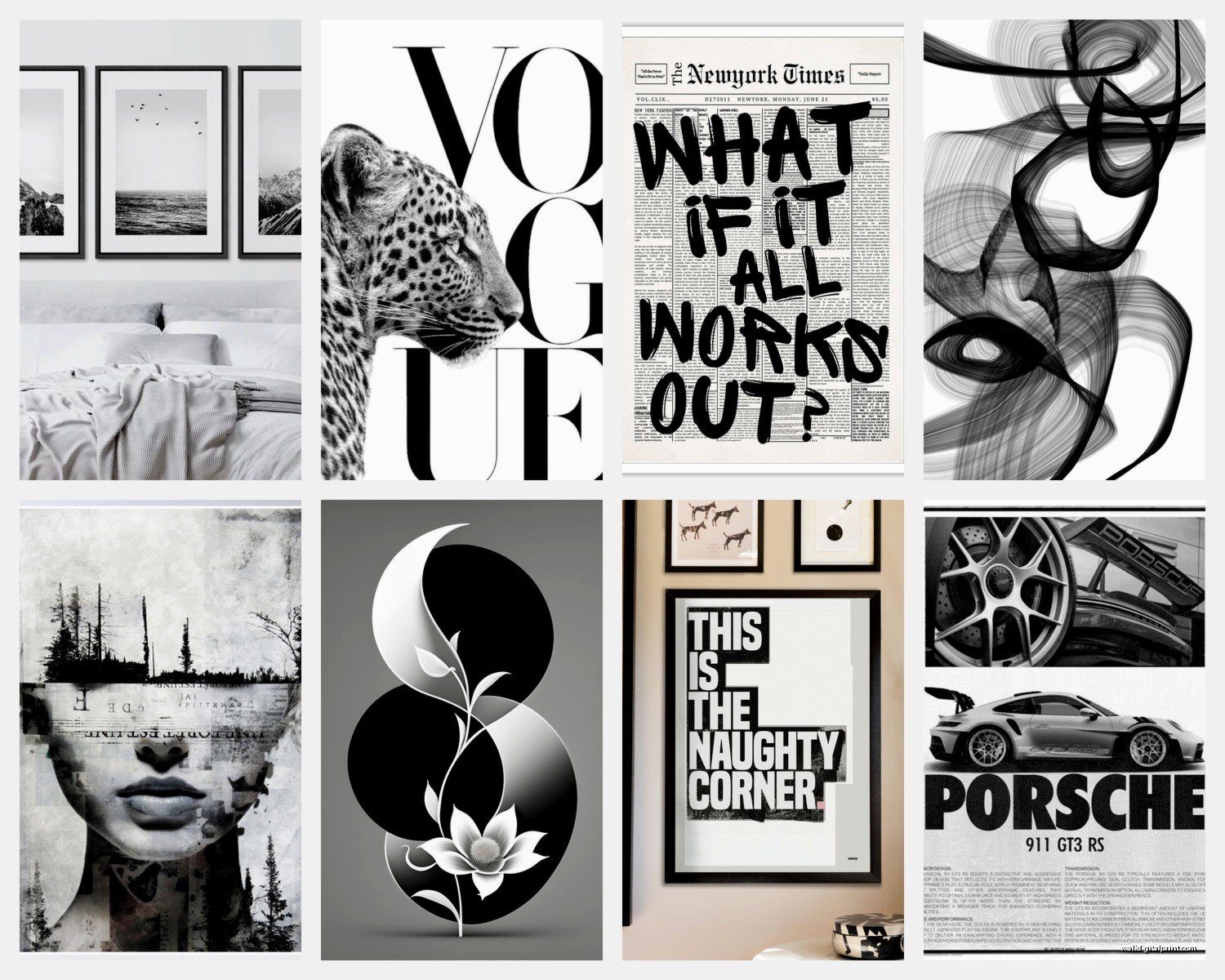
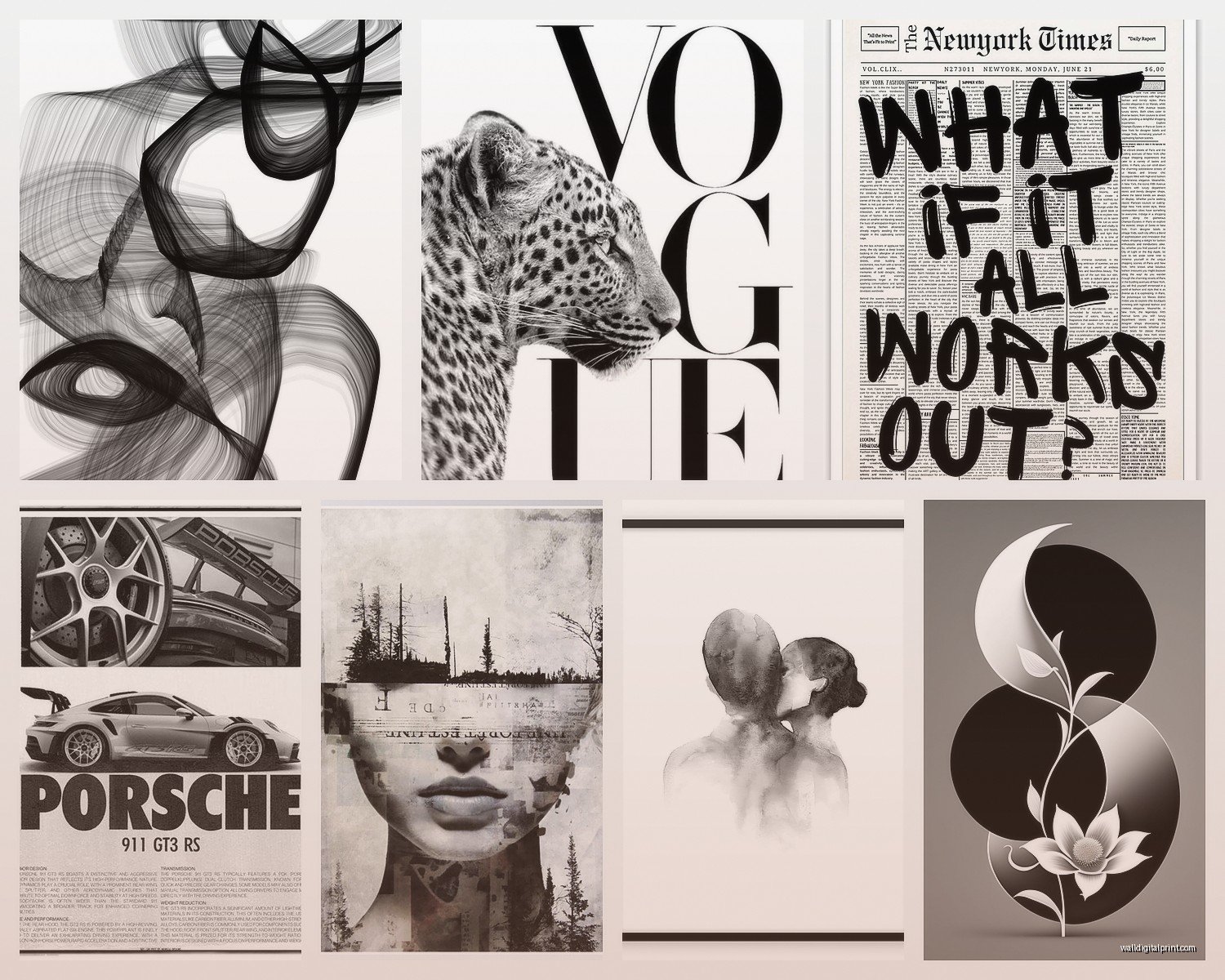
So I’ve been obsessing over black and white art for bedrooms lately because honestly, it’s the easiest way to make a space look intentional without actually trying that hard. Like, you know when someone walks into a room and goes “wow this is so put together” but you literally just hung three prints you got from Etsy? That’s the magic of monochrome.
First thing – and I cannot stress this enough – size matters way more than you think. I see so many people buying these tiny 8×10 prints and wondering why their bedroom looks like a college dorm. You need to go bigger. Like, uncomfortably big at first. I’m talking 24×36 minimum for over the bed, or if you’re doing a gallery wall, nothing smaller than 16×20 for your anchor pieces. My client last month was convinced she wanted small delicate prints and I literally had to photoshop them onto a picture of her wall to show her how they’d disappear. She ended up getting one massive 40×60 abstract piece instead and texted me like three weeks later saying everyone asks about it.
The easiest formula I’ve found is to pick one style and stick with it. Sounds boring but mixing like… abstract line drawings with realistic photography with typography usually just looks messy. Pick your lane:
Line Art and Minimalist Drawings
These are everywhere right now. The simple one-line face drawings, botanical sketches, body silhouettes. They work really well in bedrooms because they’re calm but still interesting. I have this one-line woman’s back piece above my bed that I got from an independent artist on Instagram and people always think it’s from some fancy gallery.
The trick with line art is placement. Don’t center it perfectly like a target on your wall – that’s what everyone does and it looks stiff. Try offsetting it slightly to one side, or if you’re doing multiple pieces, create asymmetry. I did a client’s bedroom where we hung three different sized line drawings in this cascading diagonal pattern and it looked so much better than the typical grid she wanted.
Oh and frame quality actually shows with this style because there’s so much negative space. You can’t hide a cheap frame when the art itself is so minimal. I usually go with thin black metal frames – CB2 has decent ones that don’t cost a fortune, or if you’re willing to spend a bit more, Framebridge does custom sizing which is clutch when you’re working with odd dimensions.
Abstract Black and White Pieces
This is my personal favorite because you can’t really mess it up? Like if someone asks what it means you can just make something up. I’ve been loving the really textured abstract stuff – you know, the ones that look like someone spilled ink or made aggressive brush strokes. They add this moody, artistic vibe without being too literal.
For bedrooms specifically, I lean toward abstracts with more white space than black. Too much black can feel heavy when you’re trying to sleep, but that’s also personal preference. My sister has this almost entirely black abstract piece in her bedroom and says it makes her feel cocooned, so.
The size thing applies here too but even more so. A tiny abstract just looks like you didn’t know what to buy. Go big or do a diptych/triptych situation. I found this set of three 20×30 abstract prints on Minted last year that work really well as a horizontal arrangement above a dresser.
Photography
Okay so this is where it gets tricky because black and white photography can go really right or really wrong. Architecture photography is pretty safe – like geometric building shots, staircases, brutalist structures. They’re interesting but not distracting.
Nature photography in black and white can be stunning but avoid the cliché stuff. No Ansel Adams knockoffs unless you’re actually getting an Ansel Adams print, you know? I saw someone do a series of black and white wave photographs that were shot from above and they looked incredible – way more interesting than your standard landscape.
Portrait photography is… I’m gonna be honest, I find it weird in bedrooms most of the time? Unless it’s your family or someone you know. Random beautiful stranger staring at you while you sleep feels off to me. But that’s just my thing, I’ve definitely styled bedrooms where clients wanted fashion photography or portraits and it worked because it fit their vibe.
Typography and Quotes
This is gonna sound judgey but I gotta say it – skip the “live laugh love” energy. If you’re doing text-based art in a bedroom, make it actually meaningful to you or go for something abstract where the text is more about the visual composition than the message.
I do like typography art that’s more artistic than inspirational. Like when the letters themselves create a pattern or shape. There’s this artist who does city maps made entirely of street names in different fonts and sizes – that kind of thing works because it’s personal and interesting to look at.
Wait I forgot to mention – if you ARE doing quotes, nothing too energizing. Your bedroom shouldn’t have “hustle” or “rise and grind” energy. Save that for your home office. I had a client who had “FOCUS” in huge letters over her bed and wondered why she couldn’t relax at night…
Gallery Wall vs. Single Statement Piece
So here’s where everyone gets stuck. The gallery wall looks amazing on Pinterest but it’s honestly a pain to execute and easy to mess up. You need to map it out on the floor first, use paper templates on the wall, the whole thing. I’ve done probably fifty gallery walls at this point and I still sometimes hang things twice.
For bedrooms, I actually think one large statement piece is easier and often more impactful. It creates a focal point without the visual clutter. Your bedroom should be restful, and twenty pieces of art competing for attention doesn’t always serve that.
BUT if you want to do a gallery wall, here’s my method that actually works:
- Start with your largest piece and place it first – this is your anchor
- Work outward from there, maintaining roughly 2-3 inches between frames
- Mix frame sizes but keep the style consistent (all black, all wood, all white)
- Don’t feel like you need to fill every inch – negative space is good
- Hang at eye level, which is usually around 57 inches from the floor to the center of your arrangement
I use command strips for the smaller pieces now because I’m so over putting unnecessary holes in walls. The velcro ones hold up to 16 pounds and I’ve never had one fall, even in my friend’s apartment where the walls are basically cardboard.
Where to Actually Buy This Stuff
Okay so I’ve tested like every source and here’s what I actually recommend:
Etsy is great for unique pieces and supporting independent artists. You can get instant downloads which means you can print them at whatever size you need. I use a local print shop that does large format printing on nice paper for way less than buying pre-framed stuff. Just make sure the file resolution is high enough – you want at least 300 DPI for printing.
Minted has really good quality prints and their framing is decent. Pricier but worth it if you don’t wanna deal with framing yourself. They run sales constantly so never pay full price.
Juniqe ships from Europe but has such cool stuff you can’t find elsewhere. Shipping takes forever though, like plan three weeks ahead.
Desenio is affordable and has a huge selection. The paper quality is fine, not amazing, but for the price it’s solid. Their frames are meh – I usually buy the prints and frame elsewhere.
Society6 and Redbubble let artists sell their work on prints. Hit or miss on quality but you can find really unique stuff. Always read reviews before buying.
Oh and this is gonna sound weird but check eBay for vintage black and white photography. You can find actual vintage prints for less than new ones sometimes, and they have that authentic quality that’s hard to replicate.
Framing Without Going Broke
Custom framing is insanely expensive. Like $200+ per piece. Here’s how to avoid that:
IKEA frames are actually good if you stick to standard sizes. The RIBBA series is my go-to – they look more expensive than they are. The Knoppang frames are even better if you want a really clean look with no visible border.
Michael’s has sales literally every week. Get on their email list, wait for 60-70% off frames, stock up. Their Belmont series in black is really nice for the price.
Target’s Threshold frames are solid for smaller pieces. I’ve used them in multiple client homes and they hold up.
If you need custom sizes, check out American Frame online. Still cheaper than brick and mortar framing shops and decent quality.
For large pieces, consider canvas prints instead of framed prints. They’re lighter, easier to hang, and often cheaper. You lose that framed gallery look but gain simplicity.
Styling Around Your Black and White Art
The whole point of going monochrome with your art is that it’s versatile, right? But you still gotta style around it intentionally or it looks flat.
Texture is everything. Your bedding should have different textures – think linen, velvet, chunky knits. The art provides the visual interest, the textiles provide the depth. I’m obsessed with this white linen duvet I got from Brooklinen paired with a black chunky throw blanket. Super simple but looks expensive.
Add in some natural elements. Wood furniture warms up the black and white so it doesn’t feel cold. Plants obviously help too – the green breaks up the monochrome without clashing.
Metallics work great. Brass, gold, or copper accents add just enough color without actually adding color? If that makes sense. Black and white with brass lamps is such a good combo.
Don’t feel like you have to make EVERYTHING black and white just because your art is. That gets boring fast. Your art can be monochrome while your rug has color, or your throw pillows have patterns. The art grounds the space but doesn’t have to dictate every single choice.
Lighting Your Art
This makes such a huge difference and barely anyone thinks about it. Black and white art needs good lighting to read properly, especially if it’s abstract or has subtle details.
Picture lights are the official “right” way to do it but they’re expensive and require wiring. I usually just make sure there’s good ambient lighting in the room. A floor lamp near the art, or wall sconces flanking it if you’re fancy.
Natural light during the day is obviously ideal but make sure you’re not getting direct sunlight hitting your art or it’ll fade. UV-protective glass is a thing if you’re worried about it, but honestly for most affordable prints it’s not worth the extra cost.
My cat keeps trying to climb my gallery wall which is a whole separate issue but anyway—
The other thing with lighting is that it changes how colors read. What looks like pure white in the store might look cream in your bedroom if you have warm bulbs. I always recommend checking your art in your actual space lighting before committing. Most places have good return policies but it’s still a hassle.
Common Mistakes I See Constantly
Hanging art too high. I don’t know why everyone does this. The center of your art should be at eye level, which for most people is like 57-60 inches from the floor. Not ceiling level.
Buying everything the same size. Variation in scale creates interest. Even if you’re doing a grid gallery wall, vary the sizes within it.
Not considering the bed frame. If you have a tall upholstered headboard, you need to account for that in your hanging height and art size. The art should relate to the bed, not float randomly above it.
Forgetting about nightstands. If you have nightstands with lamps, your art needs to clear those visually. Nothing worse than a lamp blocking your art.
Matching the art too perfectly to existing decor. Let the art be its own thing. It shouldn’t match your duvet exactly – that’s trying too hard.
Okay I think that’s everything I’ve learned from doing this for years and making plenty of mistakes myself. The main thing is just to start somewhere and adjust as you go. Nothing’s permanent, especially if you use command strips like I do now.