Wall Art Guide, Wall Art Tutoriels
Black Metal Wall Art for Living Room: Dark Sculptural Main Space
Nov
So I’ve been going down this whole black metal wall art rabbit hole lately and honestly it started because my cat knocked over this ugly beige canvas I had in my living room and I was like… you know what, this is a sign. Time to go dark and sculptural.
Why Black Metal Actually Works Better Than You Think
Okay so first thing – black metal wall art isn’t as intense as it sounds. I thought it would make my living room look like a goth teenager’s bedroom but it’s actually incredibly sophisticated if you do it right. The thing about metal is it catches light in ways that flat art just doesn’t. You get these shadows and reflections that change throughout the day which is gonna sound weird but it makes your wall feel alive? Like the piece actually shifts with natural light.
I tested this theory in three different client spaces last month and the transformation was insane. One living room went from “basic rental” to “could be in Architectural Digest” just by swapping out some generic prints for a large black metal geometric piece.
The Scale Thing Nobody Talks About
Here’s what I wish someone told me before I wasted money on my first attempt – scale matters SO much more with metal than with regular art. You can’t just eyeball it. A metal piece that looks huge online will sometimes look weirdly small on your wall because metal reads as “heavier” visually, so your brain expects it to take up more space.
My rule now: measure your wall space, then buy something that takes up at least 60-70% of that width. I know that sounds like too much but trust me. I have this one piece above my couch that’s like 48 inches wide and my couch is 72 inches, and it looks perfectly balanced. Anything smaller would’ve gotten lost.
Types of Black Metal Wall Art That Actually Look Good
There are basically four categories I work with and they each give totally different vibes:
Geometric Abstract Pieces
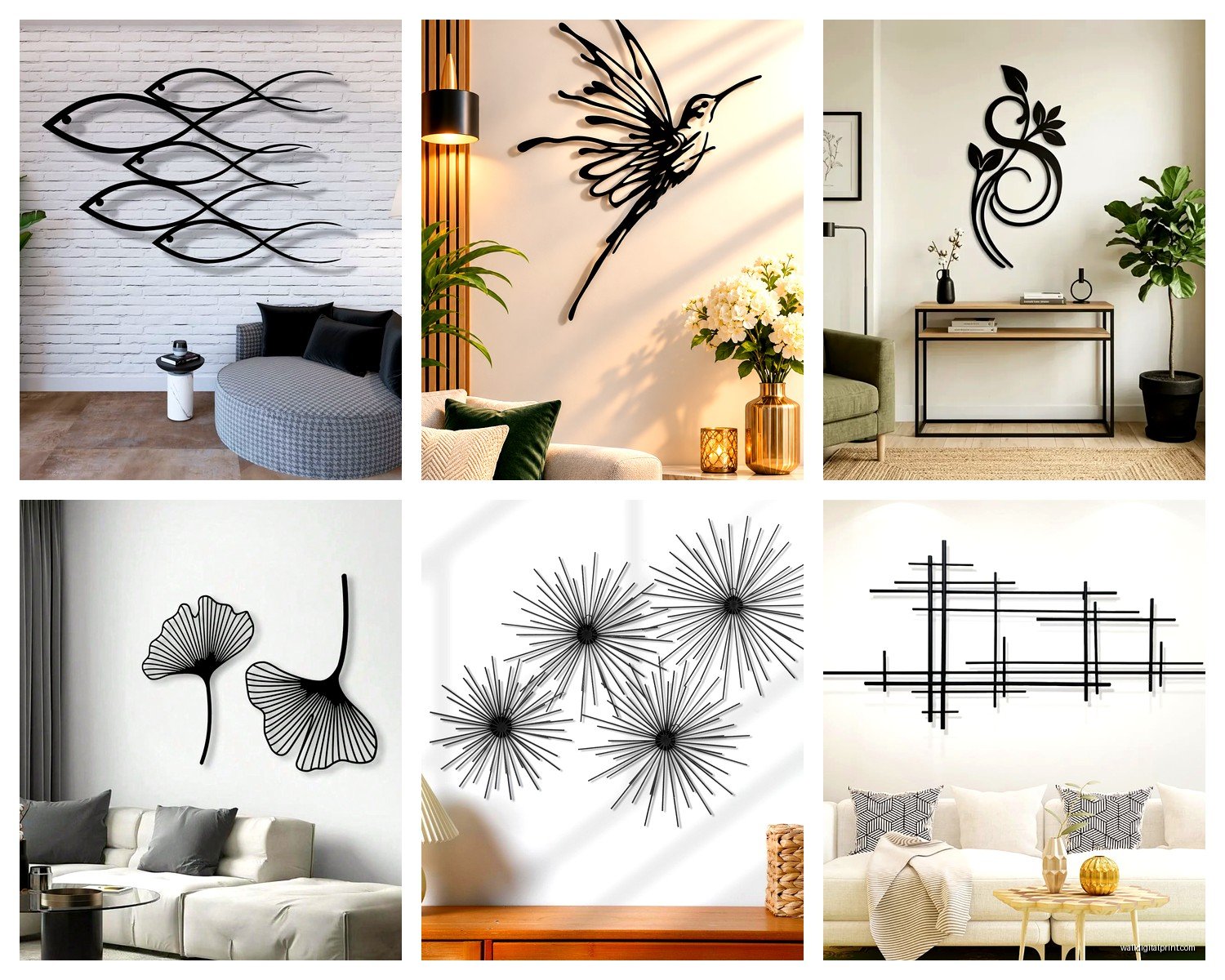
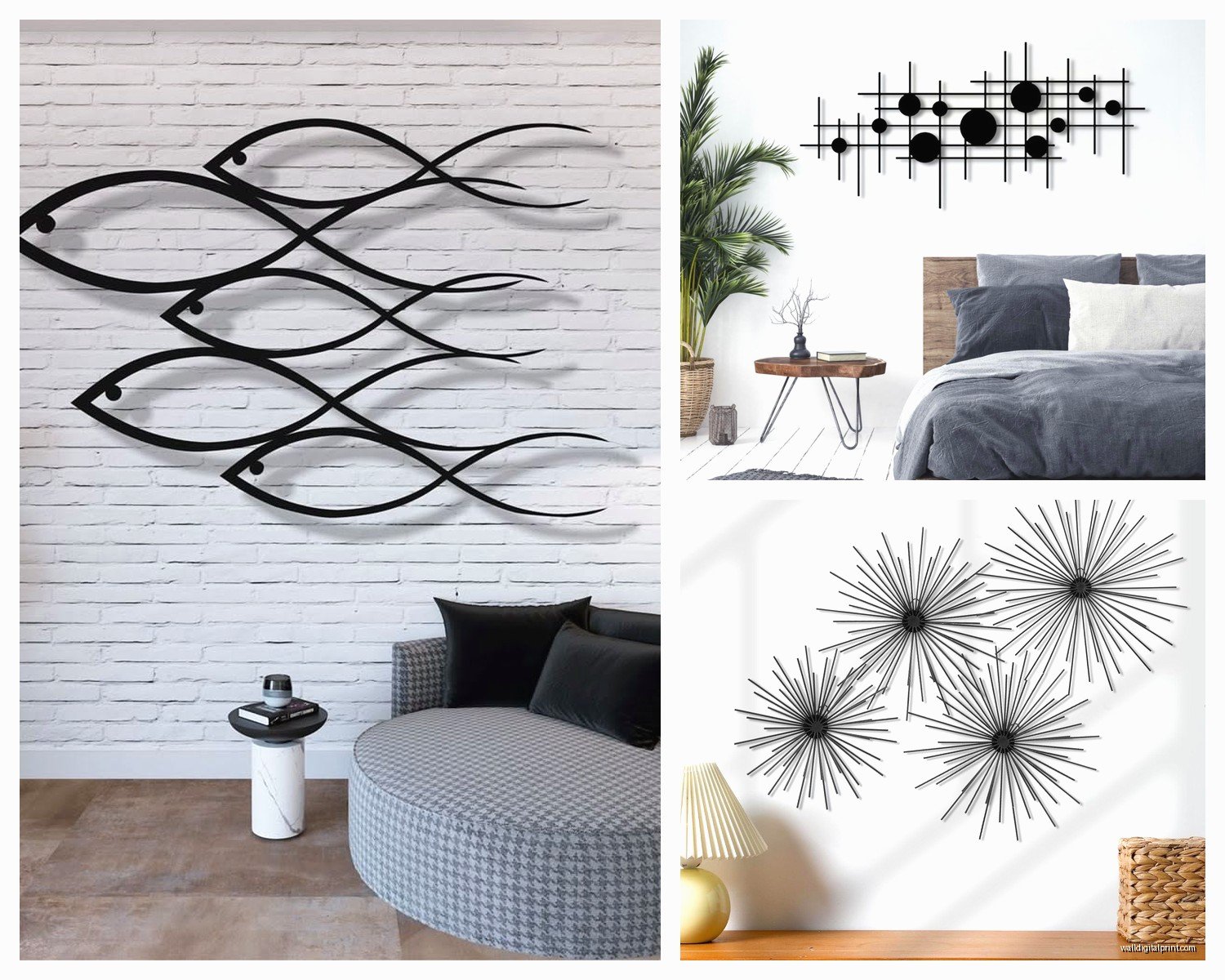
These are your circles, hexagons, interconnected lines, that whole modern minimalist thing. They work best in contemporary or Scandinavian-style living rooms. I’ve got a client with this massive circular black metal piece with cut-out geometric patterns and when the light hits it from her west-facing window in the afternoon the shadows on the wall are just *chef’s kiss*.
The good ones have depth – like multiple layers of metal at different distances from the wall. Flat geometric pieces can look cheap honestly. You want dimension.
Nature-Inspired Sculptural Art
Think tree branches, leaves, abstract representations of mountains or waves. These soften the industrial edge of metal which makes them perfect if your living room has warmer elements like wood furniture or plants. I just installed a black metal tree branch piece in a client’s space last week and she was worried it would clash with her mid-century modern credenza but it actually tied everything together.
The secret with nature pieces is making sure they’re stylized enough that they don’t look like something from a cabin gift shop. Abstract interpretations work better than literal representations.
Linear and Architectural Designs
Straight lines, angular compositions, stuff that looks like it could be a building blueprint turned into art. These are my favorite for larger living rooms with high ceilings because they draw the eye up and make the space feel more expansive.
I’ve been obsessing over this one style that’s basically intersecting rectangles at different angles – it creates this 3D effect that changes completely depending on where you’re standing in the room. My sister came over last weekend and literally walked back and forth in front of it for like five minutes.
Mixed Media Metal Art
This is where metal combines with wood, glass, or even fabric elements. It’s trickier to pull off but when it works it WORKS. The contrast between cold metal and warm wood especially can add so much visual interest.
Where to Actually Place It Without Screwing Up Your Whole Room
Okay so placement is where I see people mess up constantly. Just because you have a blank wall doesn’t mean that’s where the art should go.
Above the sofa is obviously the classic spot but here’s what matters – leave 6-8 inches between the top of your sofa and the bottom of the art. Any more and it looks like they’re not related to each other. Any less and it feels cramped. Also the center of the piece should be at eye level when you’re standing, which is usually around 57-60 inches from the floor.
On the wall opposite your main seating is actually my preferred spot if you have the space. This way everyone sitting in the room gets to look at it naturally. Plus you can go REALLY big here without it feeling overwhelming since there’s viewing distance.
Creating a gallery wall with metal pieces – wait I forgot to mention this earlier but you can totally mix black metal art with other pieces. I did this in my own living room where I combined three smaller black metal geometric pieces with two framed black and white photographs. The key is keeping a consistent color palette (all black, white, and maybe one accent color) and maintaining similar spacing between all pieces.
The Lighting Setup That Makes It Look Expensive
This is gonna sound extra but proper lighting is literally half the battle with metal art. Without it, black metal can just look like a dark blob on your wall, especially at night.
I use picture lights for smaller pieces – those little LED strips that mount above the frame. For larger sculptural pieces, track lighting or adjustable wall sconces work better because you can angle them to create dramatic shadows.
Oh and another thing – if you have recessed ceiling lights, make sure at least one is positioned to graze the wall where your metal art hangs. That side lighting makes the texture and dimension pop in ways that straight-on lighting never will.
Natural light is your friend too obviously. I positioned my main piece where it catches morning light from my east window and the shadows it casts change the whole mood of the room between 7am and 10am.
The Background Wall Color Situation
Black on white is the obvious choice and yeah it works great for maximum contrast. But black metal on dark gray, charcoal, or even deep navy can be incredibly sophisticated. The art becomes more subtle, more about texture and shadow than stark contrast.
I tested this theory when I was watching that new Netflix show about interior design (can’t remember the name but the host was kind of annoying) and they did a whole episode on monochromatic schemes. Tried it with a client who was nervous about going too dark and now she wants to paint her whole house gray.
One thing to avoid – black metal on beige or tan walls usually looks muddy. Not enough contrast to make the piece stand out but not monochromatic enough to feel intentional.
What to Look for When You’re Actually Shopping
Quality varies SO much with metal art and honestly price isn’t always the indicator. I’ve found gorgeous pieces on Etsy from independent metalworkers for reasonable prices, and I’ve seen overpriced garbage at high-end furniture stores.
Check the thickness of the metal – anything under 14 gauge is gonna look flimsy. You want substantial weight and rigidity.
Look at the finish – matte black powder coating is usually best because it doesn’t show fingerprints or smudges. Glossy black can work but it’s high maintenance.
Examine the mounting system – good metal art comes with a proper hanging system, usually a french cleat or heavy-duty sawtooth hangers. If it just has a wire and two hooks, that’s a red flag for quality.
Consider the depth – pieces that extend 2-4 inches from the wall create way more visual interest than flat metal cutouts.
Styling Around Black Metal Art
Your art shouldn’t exist in isolation which I know sounds obvious but people do this ALL THE TIME. You gotta style around it.
I usually add a console table or credenza beneath larger pieces with some carefully chosen objects – maybe a ceramic vase, some books, a small plant. This grounds the art and creates a full vignette rather than just a piece floating on the wall.
Texture mixing is crucial. If you have smooth metal art, incorporate rough textures nearby – a chunky knit throw on your sofa, a jute rug, raw wood furniture. This prevents the space from feeling too cold or industrial.
And honestly throw pillows matter more than you’d think. I have these charcoal velvet pillows that pick up the black from my metal art and suddenly everything feels cohesive instead of random.
The Unexpected Color Pops
Black metal art actually makes colorful accents look MORE vibrant. I added a rust-colored accent chair to my living room after installing my metal pieces and the combination is *perfect*. The black makes the rust look richer and more intentional.
Jewel tones work especially well – emerald green, sapphire blue, deep burgundy. Just keep them as accents (pillows, throws, small furniture pieces) rather than major elements.
Maintenance and Real Talk
Metal art is pretty low maintenance which is great because I’m lazy about this stuff. Dust it every couple weeks with a microfiber cloth. If it gets smudged, a slightly damp cloth works fine.
The one thing to watch out for is humidity if you live somewhere super humid. I had a client in Charleston whose metal art started showing some oxidation spots after a year. Now she runs a dehumidifier in summer and hasn’t had issues since.
Also be careful about placing metal art above radiators or heating vents. The heat can affect certain finishes over time and I learned this the hard way with a piece in my old apartment.
Common Mistakes I See Constantly
Going too small is the number one issue. People are scared of large art but especially with metal, you need size to make an impact.
Hanging it too high is another one – I swear every third living room I walk into has art that’s basically at ceiling level. Eye level people, eye level.
Trying to match it with existing art that doesn’t work stylistically. Black metal has a strong aesthetic and you can’t just throw it next to like a pastel watercolor floral and expect it to work.
Not considering the viewing angles. Walk around your room and see where you’ll actually look at the art from. That’s where it should be positioned, not just wherever there’s blank wall space.
Okay I think that covers most of what you need to know? The main thing is just commit to it – black metal wall art works best when it’s a statement rather than an afterthought. Start with one strong piece rather than trying to do a whole gallery wall immediately. You can always add more later once you see how it transforms your space.