
Wall Art Guide, Wall Art Tutoriels
Expensive Wall Art: Luxury Investment Art Pieces

May
So I’ve been down this rabbit hole of expensive wall art lately because a client dropped like 50k on a single piece and honestly it got me thinking about what actually makes these investment pieces worth it vs just… expensive for no reason.
The Actual Money Talk Nobody Wants to Have
Okay so here’s the thing about luxury wall art – you’re looking at anywhere from $5,000 to like, millions. I know that’s not helpful but the range is genuinely insane. A decent emerging contemporary artist? Maybe $8k-$25k. Established names start around $50k and just… keep going. I saw a Basquiat drawing go for $1.2 million last year and it was smaller than my kitchen window.
But here’s what I actually tell people who are serious about this – don’t think about it like buying a couch. You’re either buying because you genuinely love it and have the money to burn, or you’re buying as an actual investment strategy. The middle ground is where people get screwed.
Investment Grade vs Just Expensive
Investment grade means the artist has:
- Gallery representation in major cities (New York, London, Hong Kong minimum)
- Museum acquisitions – like their work is literally IN permanent collections
- Auction history you can track on Artsy or Artnet
- Critical writing about their work in actual art publications
- A waiting list for new pieces
Just expensive means it’s from a fancy gallery but none of that other stuff checks out. I’ve seen galleries price unknown artists at $30k because the frame costs $3k and they think rich people won’t question it. They’re not wrong but also… don’t be that person.

Where to Actually Buy This Stuff
Blue-chip galleries are your safest bet – Gagosian, Pace, Hauser & Wirth, David Zwirner. They’re not gonna sell you garbage because their reputation is everything. But also they’re kinda intimidating? I remember walking into Gagosian for the first time and the gallerist looked at me like I wandered in from a TJ Maxx. Which I had, but still.
Auction houses – Christie’s, Sotheby’s, Phillips – are great for secondary market stuff. You can see what pieces actually sold for, not just what they were listed at. This is gonna sound weird but I literally spend my evenings sometimes just watching the online auctions with wine. My cat judges me for it.
Art fairs are where I’ve had the most success honestly. Frieze, Art Basel, TEFAF. You get to see work from hundreds of galleries in one place, and the vibe is slightly less stuffy because everyone’s busy. Plus you can compare prices across similar artists really quickly.
The Authentication Thing
Oh and another thing – provenance is EVERYTHING at this price point. You need:
- Certificate of authenticity from the artist or estate
- Exhibition history if it exists
- Previous ownership records
- Condition reports
- Original purchase receipts
I had a client almost buy what turned out to be a fake Warhol print. The gallery seemed legit, price was suspiciously good at $85k instead of the usual $200k+, and when we dug deeper the COA was from some foundation nobody had heard of. Dodged that bullet.
Artists Worth Looking At Right Now
Okay so if you’re actually dropping serious money, here’s who I’m watching or have clients collecting:
Established but still appreciating: Julie Mehretu (her large-scale abstracts start around $500k now, crazy), Kehinde Wiley (portraits are $75k-$300k range), Cecily Brown (abstracts $200k+). These are people whose work will absolutely hold value.
Mid-career investments: Amoako Boafo (portraits $50k-$150k), Christina Quarles ($40k-$100k), Salman Toor ($30k-$80k). They’re all represented by major galleries, have museum shows, and their prices have been steadily climbing.
Emerging but smart bets: This is trickier because you gotta really pay attention. But artists like Danielle McKinney (around $20k-$40k), Tschabalala Self ($15k-$60k), or Vaughn Spann ($10k-$30k) are showing up in the right collections and institutions.
Wait I forgot to mention – blue-chip dead artists are obviously safer financially but you’re paying peak prices. A small Picasso drawing? $200k minimum. Minor Warhol print? $50k+. Hockney? Don’t even ask. The appreciation potential is smaller because the prices are already astronomical.
What Actually Looks Good in a Room
This is where investment strategy and actual interior design collide and it gets messy. A 6-foot abstract painting might be worth $100k but if your ceilings are only 8 feet and the room is narrow, it’s gonna look wrong. I’ve seen SO many expensive pieces in homes where they just… don’t work spatially.
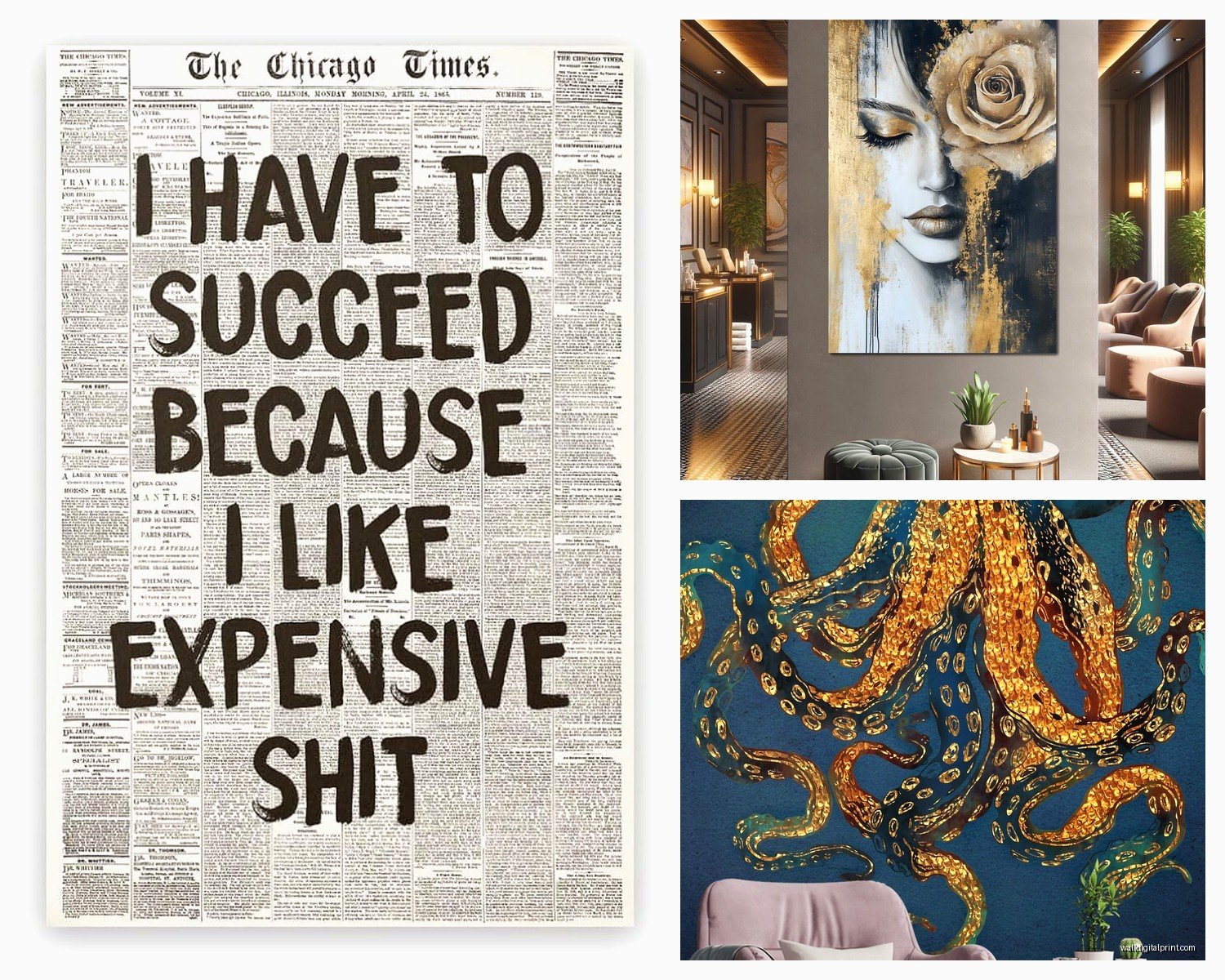
Scale guidelines I actually use:
- Above a sofa: artwork should be 2/3 to 3/4 the width of the furniture
- Statement walls: go bigger than you think, like 4-6 feet minimum for a proper impact
- Dining rooms: people forget to look up here but it’s perfect for large-scale work
- Hallways: long horizontal pieces or gallery walls of smaller works
But honestly sometimes you just need to live with a piece temporarily to know. Most high-end galleries will let you do trials for serious buyers.
The Lighting Situation
You’re spending tens of thousands on art and then people just… stick it on a wall with regular room lighting? No. Get proper art lighting installed. Picture lights, track lighting, or recessed spots with the right color temperature (2700-3000K usually, never cool white).
UV filtering is non-negotiable for works on paper or anything with fugitive pigments. Museum glass costs like $500+ for a large piece but it’s worth it. I watched a client’s $40k photograph fade over two years because they had it in direct sunlight with regular glass. Painful.
The Unsexy Practical Stuff
Insurance. You need fine art insurance separate from homeowner’s coverage once you’re above like $25k in total collection value. Expect to pay 1-2% of the appraised value annually. Get everything appraised every 3-5 years because values change.
Climate control matters more than you think. Humidity should stay between 45-55%, temperature around 68-72°F. I know someone whose $80k painting cracked because they kept their brownstone at 60°F all winter to save money. False economy right there.
Hanging systems – please don’t use the wire and nail method on a $50k painting. Get a professional installer. They’ll use proper D-rings or French cleats, hit studs correctly, and make sure the weight is distributed right. Cost is usually $200-500 depending on size and it’s so worth it.
The Selling Part Nobody Talks About
Okay so funny story, I helped a client sell a piece last year that they bought for $30k in 2015 and it went for $125k at auction. But here’s what made that possible – they had bought from a reputable gallery, kept all documentation, had it properly stored and maintained, and the artist’s career had blown up in the meantime.
Selling options:
- Auction houses take 10-25% commission but get the highest prices for in-demand work
- Galleries might buy back or consign but usually offer 50% of retail max
- Private sales through advisors (my preferred method honestly) – around 10% commission
- Never sell directly on Instagram or whatever, you’ll get scammed or lowballed
The art market is also super illiquid. Like you can’t just decide to sell tomorrow and have cash next week. Plan for 3-6 months minimum for a proper sale.
Red Flags I’ve Learned to Watch For
Galleries that pressure you to buy immediately – nope. Legitimate galleries understand these are major purchases and will give you time to decide. I once had a gallery literally follow up three times in one day about a $60k piece and it felt so sketchy.
Prices that seem too good – if a Kaws print is listed at $15k when they usually go for $40k+, something’s wrong. Either it’s fake, damaged, or stolen.
Artists with no exhibition history charging gallery prices – this is the biggest scam honestly. Just because someone has an MFA and a studio doesn’t mean their work is worth $20k. Check if they’ve actually shown anywhere legitimate.
Galleries that won’t provide detailed provenance – immediate no. At this price point everything should be documented within an inch of its life.
My Actual Advice If You’re Doing This
Start by going to museums and galleries for like six months without buying anything. Figure out what you actually respond to, not what you think you should buy. I see people drop $75k on a trendy artist because everyone’s talking about them, then two years later they’re trying to quietly sell because they never actually liked it.
Work with an art advisor if you’re spending over $100k total. They cost 10-15% commission but they’ll save you from expensive mistakes and get you access to pieces you wouldn’t see otherwise. Mine has gotten me into studio visits and private sales that never hit the public market.
Buy the best example you can afford rather than multiple mediocre pieces. One museum-quality $80k painting beats four $20k pieces that are just… fine.
And honestly? Sometimes the answer is to just buy what makes you happy and forget the investment angle. My favorite piece in my own place is this $12k painting from an artist who’ll probably never blow up commercially but I literally stop and look at it every day. That’s worth more than watching prices on Artnet tbh.
Oh wait I should mention – tax stuff. You might be able to donate work to museums later for tax deductions, but you need documentation from purchase and qualified appraisals. Talk to an accountant who specializes in art, not your regular CPA. The rules are super specific.
Also storage – if you’re rotating pieces or buying before you have wall space, proper art storage runs $100-300/month depending on size and climate control. Don’t just stick a $50k painting in your garage, I’m begging you.
