
Wall Art Guide, Wall Art Tutoriels
Extra Large Metal Wall Art for Living Room: Oversized Sculptures
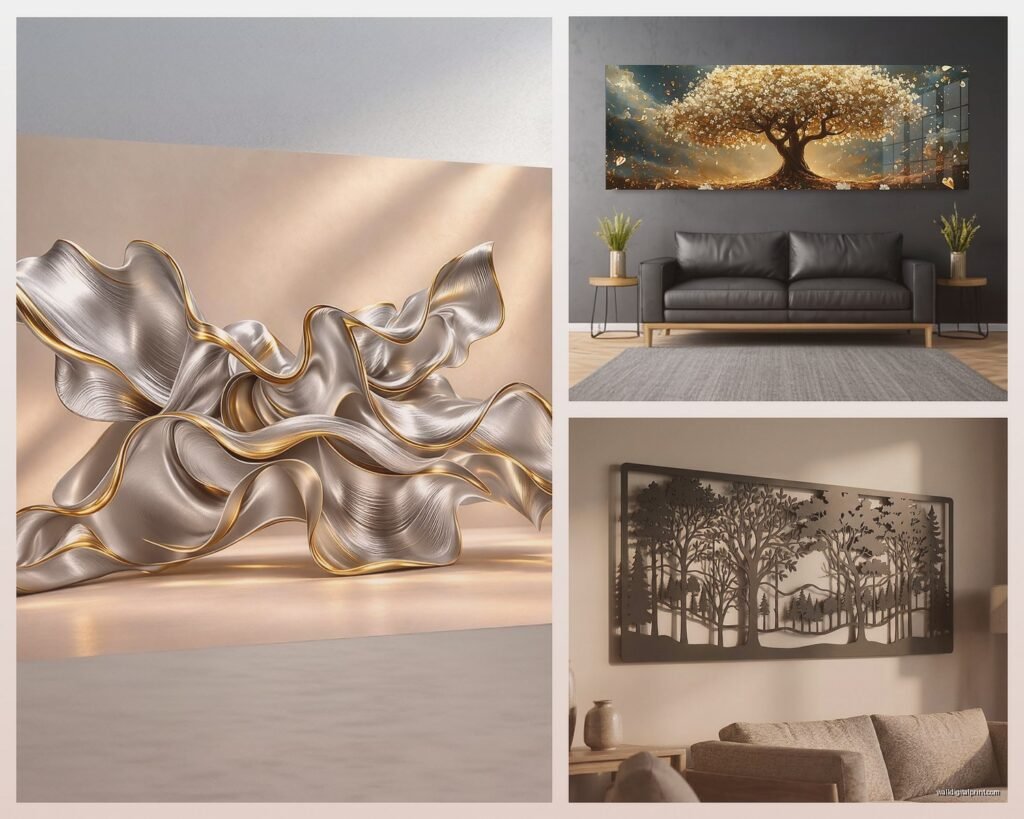
Apr
So I just spent like three hours yesterday (supposed to be working on a client’s mood board but got distracted) going down this rabbit hole of extra large metal wall art and honestly, the sizing thing is WAY more complicated than anyone tells you.
The Actual Size Thing Nobody Explains Properly
Okay so when they say “extra large” they mean anywhere from like 40 inches to literally 8 feet across. I learned this the hard way when a piece I ordered for my own living room showed up and it was… not what I pictured. The general rule I tell everyone now is measure your wall space, then subtract at least 12-18 inches from both dimensions. That’s your max artwork size. Your wall should breathe around the piece, you know?
For living rooms specifically, if you’re hanging above a sofa (which is where most people put these), the width should be roughly 2/3 to 3/4 the width of your couch. So like if you have an 84-inch sofa, you’re looking at 56-63 inches of art width. But here’s where it gets tricky – metal sculptures often have these extending elements or negative space that makes them feel bigger than their actual measurements.
Weight Considerations That’ll Save Your Walls
This is gonna sound obvious but I’ve seen so many disasters… metal is HEAVY. An extra large piece can easily be 30-50 pounds, some of those massive ones hit 80+ pounds. You absolutely cannot use those little picture hanging hooks from the hardware store.
What actually works:
- Heavy duty wall anchors rated for at least double the artwork’s weight
- French cleats for anything over 40 pounds (they’re these interlocking pieces, super secure)
- Stud finders are your friend – hanging directly into studs is always best
- If you’re renting, there are heavy duty toggle bolts that work in drywall but leave bigger holes FYI
I had this client last month who tried hanging a 60-pound metal tree sculpture with regular drywall anchors and it literally ripped out of the wall at 2am. Her cat apparently tried to climb it which… don’t let your pets near these before they’re properly secured.
Material Types and What They Actually Mean
Metal wall art isn’t just “metal” and this matters more than you’d think for how it looks in different lighting throughout the day.
Brushed Aluminum is probably what you see most often. It’s lightweight (relatively), doesn’t rust, and has this subtle texture that catches light nicely. Works great in modern or contemporary spaces. The finish tends to be more matte which I actually prefer because it doesn’t compete with other reflective surfaces in the room.
Steel or Iron pieces have more weight and presence. They usually come powder-coated or with some kind of protective finish. Without it they’ll rust, which some people actually want for that industrial look? But if you don’t want rust, make sure it’s sealed properly. I’ve got this steel geometric piece in my office that’s developed this cool patina over two years even with the coating, adds character honestly.
Copper and Brass are having a moment right now. They oxidize and change color over time which is either a feature or a bug depending on your perspective. I love the warmth they add to a room but they’re pricier and you gotta be okay with them evolving. There’s this copper sunburst piece I sourced for a client’s mid-century living room and it’s already shifting from bright penny to this deeper bronze tone after six months.
Mixed metals are where it gets interesting – combinations of steel, copper, aluminum in one piece. These tend to be more artistic and less matchy-matchy which works if your living room isn’t super coordinated anyway.
Finish Options That Change Everything
The finish affects not just appearance but also maintenance:
- Polished/mirror finishes reflect like crazy – beautiful but shows every fingerprint and dust particle
- Matte or satin finishes are way more forgiving for everyday living
- Powder-coated colors (blacks, whites, metallics) are durable but can chip if you bang into them
- Raw or industrial finishes need more maintenance but have that authentic vibe
Style Categories That Actually Help You Search
When you’re scrolling through hundreds of options online this framework helps narrow it down.
Geometric/Abstract pieces are those circles, squares, lines, wave patterns. Super versatile, work in almost any living room style. I probably specify these most often because they don’t compete with furniture or demand too much attention. They’re like… the supporting actor that makes everything else look better.
Nature-inspired stuff includes trees, leaves, mountains, ocean waves. These can go either really elegant or really cheesy depending on execution. The key is looking for pieces with negative space and clean lines rather than those overly detailed ones that read as trying too hard. There’s this metal aspen tree silhouette I’ve used in three different projects – it’s like 6 feet tall but feels light because it’s mostly empty space with just the tree trunks and a few branches.
Sculptural/3D pieces extend off the wall significantly. These create actual shadows and dimension which is cool but they need space around them to work. Don’t put these on a wall with lots of other stuff competing.
Word art and typography can be great or terrible. Honestly I’m picky about these. If you’re gonna do words, make sure they mean something to you beyond just looking cute on Pinterest, you know?
Color Considerations for Living Rooms
Wait I forgot to mention – most metal art comes in neutrals (black, silver, bronze, copper tones) but you can also find painted or colored pieces.
For wall color matching, here’s what I’ve learned works:
- Dark metal on light walls creates maximum contrast and drama
- Light or silver metal on dark walls can look really sophisticated but needs good lighting
- Tone-on-tone (like bronze metal on warm beige walls) is subtle and elegant
- Colored metal art should pull from your existing color palette – don’t introduce a totally new color through wall art
The lighting in your living room matters SO much. Metal reflects and absorbs light differently throughout the day. I always tell people to look at their wall at different times – morning light, afternoon, evening with lamps on – because a piece that looks amazing at noon might disappear at night or vice versa.
Installation Real Talk
Okay so funny story, I was watching this home reno show while installing a massive metal piece in my living room last year and learned several things the hard way.
You need two people minimum for anything over 4 feet in any direction. Not optional. One person to hold, one person to step back and check if it’s level. I tried doing it myself with a 5-foot piece and ended up with three extra holes in my wall.
The process that actually works:
Mark your center point on the wall first. Measure from the ceiling, measure from both sides, make sure you’re truly centered where you want it. Use a level app on your phone or an actual level – eyeballing it never works as well as you think.
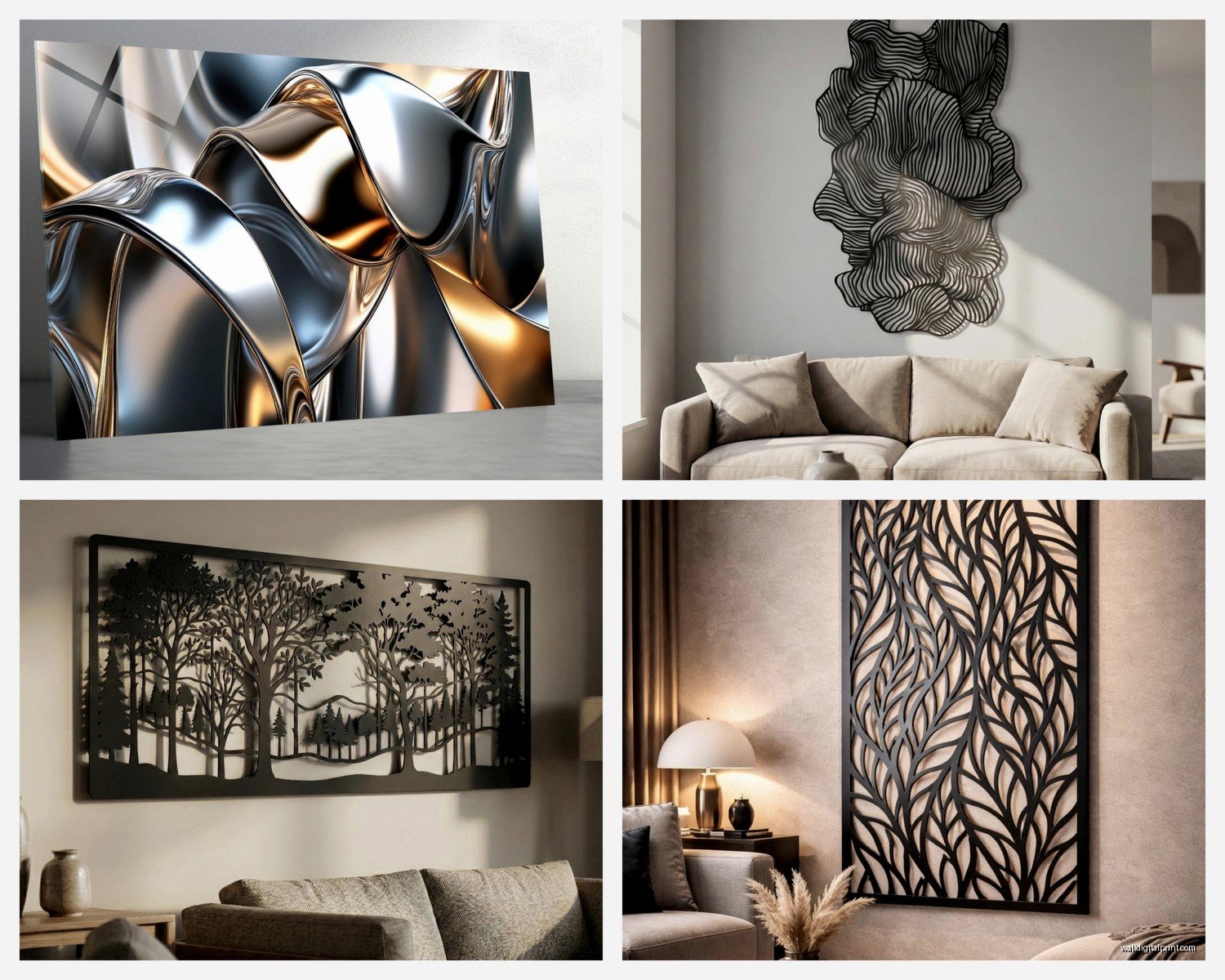
Hold the piece up (this is the two-person part) and mark where the hanging hardware hits the wall. Take it down, install your anchors or find your studs, put in your hooks or cleats. Then hang the piece.
But here’s the thing nobody tells you – some metal art has hanging hardware that’s really visible from the side angles. If your living room is set up where people see the wall from the side (like if it’s opposite the entry), you might want to mount it with hidden hardware or French cleats instead of obvious hooks and wire.
Height Guidelines That Work
The standard “eye level” rule says center the art at 57-60 inches from the floor. But with oversized pieces this can look weird. If your sculpture is like 6 feet tall, centering it at 60 inches means the top is way up near the ceiling.
What I do instead: position it so the bottom third of the piece hits around that 57-60 inch mark. This keeps the visual weight at eye level while letting the piece extend upward. Makes sense? It’s hard to explain without showing you but trust me on this.
Above furniture you want 6-8 inches of space between the furniture top and the bottom of the art. Less than that and it looks cramped, more than that and they feel disconnected from each other.
Maintenance Nobody Warns You About
Metal art collects dust like you wouldn’t believe. Those intricate cut-out designs? Dust magnets. I use a microfiber duster or sometimes just a soft brush attachment on the vacuum for bigger pieces.
For cleaning, it depends on the finish. Polished metals can usually handle a damp cloth with mild soap. Matte or powder-coated finishes just need dusting mostly. Raw or oxidized finishes… I leave those alone honestly unless something spills on them.
Oh and another thing – if you live somewhere humid or near the coast, even “rust-resistant” metals can develop issues over time. There are clear sealants you can apply but test them in an inconspicuous spot first because they can change the appearance slightly.
Where to Actually Buy These
I’ve ordered from probably two dozen different places at this point. Here’s the reality:
Etsy has tons of options from individual metal artists. Quality varies wildly but you can find really unique pieces. Read reviews carefully and ask the seller about the hanging hardware before ordering. Shipping costs can be brutal for large pieces.
Wayfair and Overstock have huge selections at various price points. The photos usually aren’t great though – things can look different in person. Return policies matter here because you might need to send something back.
Local metal artists and fabricators can do custom work which sounds expensive but sometimes isn’t that much more than mass-produced stuff. Plus you get exactly what you want in the exact size you need. I’ve had pieces made this way and the quality is usually better.
Home goods stores like HomeGoods or At Home have metal art but it’s hit or miss what they’ll have. Good for budget-conscious shopping if you’re flexible on style.
High-end galleries and art sites if you want investment pieces. We’re talking hundreds to thousands of dollars but they’re actual art not just decor.
Budget Expectations
So prices are all over the place but roughly:
- Small to medium pieces (under 36 inches): $50-200
- Large pieces (36-60 inches): $150-500
- Extra large (60+ inches): $300-1500+
- Custom or artist-made: $500-5000+ depending on complexity
More intricate designs cost more because they’re harder to cut and fabricate. Hand-finished pieces cost more than mass-produced. Thicker gauge metal costs more than thin. You get what you pay for mostly, though I’ve found some great deals on simpler geometric designs that look expensive but aren’t.
Common Mistakes I See All the Time
Buying something too small. Everyone underestimates how much wall space they actually have. That 40-inch piece you think is huge? It’ll look tiny on your 12-foot wall. Go bigger than you think you need.
Not considering the room’s sight lines. Where do you actually look at this wall from? If you only see it from the couch straight-on, that’s different than if you see it from the kitchen or entry too.
Ignoring the room’s existing style. A super industrial raw steel piece might not work in your French country living room no matter how much you love it. There needs to be some connection to your existing vibe.
Hanging it too high. So many people do this and then wonder why their room feels off. Lower is usually better than higher.
Not thinking about what’s next to or near the art. If you’ve got a gallery wall or shelves or a console table nearby, the metal art needs to work with all of that, not fight for attention.
My Current Favorites for Different Styles
For modern/contemporary living rooms, I’m really into these layered circular designs right now – multiple metal circles in different sizes and finishes that overlap. They’re dynamic without being too busy.
For industrial or loft spaces, raw steel geometric pieces or those map cutouts of cities work really well. The unfinished look fits the aesthetic.
Transitional or traditional rooms can handle metal art if you choose nature motifs or more classical designs. Metal leaves or botanical patterns in bronze or copper tones bridge that gap between traditional warmth and contemporary materials.
Bohemian or eclectic spaces are perfect for mixed metal pieces or those sculptural sunburst designs. You can layer metal art with other textures and it just works.
Minimalist living rooms need super simple lines. Single metal bars, simple wave patterns, basic geometric shapes in one finish. Let the material be the statement not the design complexity.
Okay I gotta wrap this up because I need to actually finish that mood board, but the main thing is really just about proportion and installation. Get those two things right and metal wall art can completely transform a living room. And don’t stress too much about finding the “perfect” piece – you can always change it out later if you get tired of it, that’s the nice thing about art versus like, permanent architectural features.
