Wall Art Guide, Wall Art Tutoriels
Large Graffiti Wall Art: Urban Street Art Murals
Jun
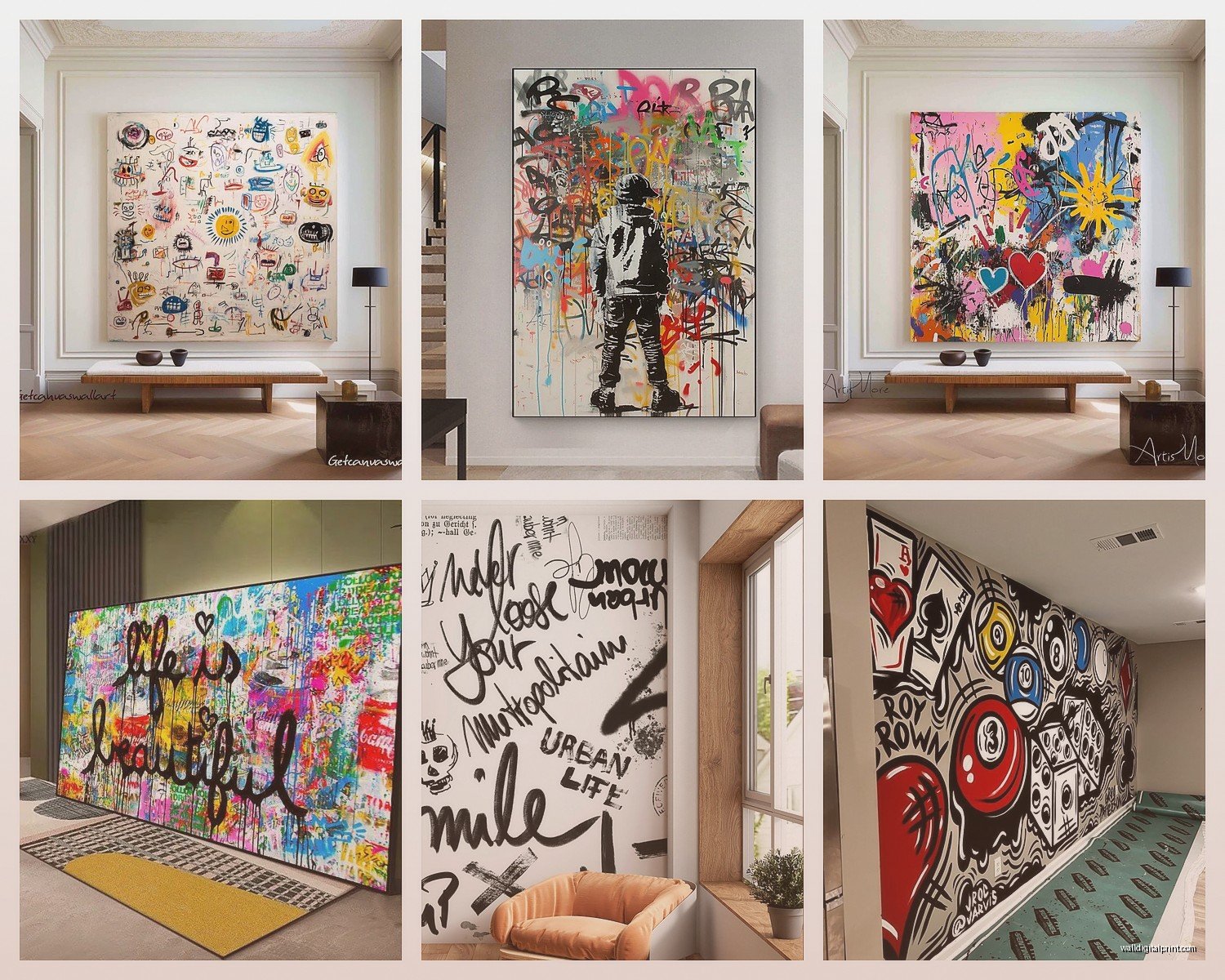
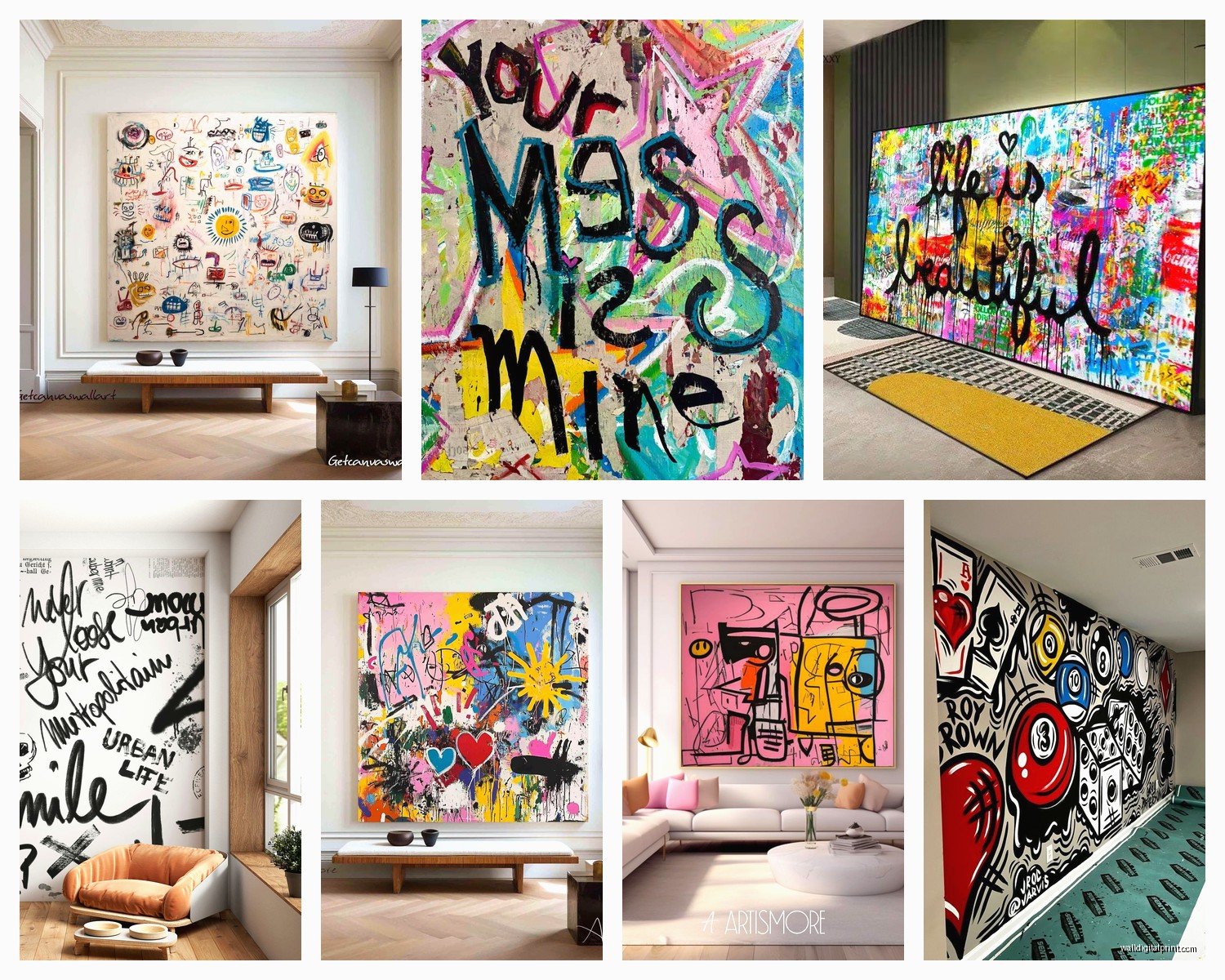
So I’ve been completely obsessed with large graffiti murals lately and honestly it started because I was watching this Netflix doc about street artists while reorganizing my studio and just… fell down the rabbit hole. Now half my clients want that urban edge in their spaces and I’ve learned SO much about what actually works versus what looks amazing on Pinterest but is a total disaster in real life.
Finding the Right Piece for Your Space
Okay so first thing – you gotta measure your wall and I mean actually measure it, not just eyeball it. I learned this the hard way when I ordered this incredible Banksy-style piece that was supposed to be 8 feet wide and it arrived and my client’s wall was only 6.5 feet because of the weird corner situation. Total mess.
The scale thing is HUGE with graffiti art. Like, what makes street art work is that bold, in-your-face energy, right? So if you go too small, it just looks like a poster you’re trying too hard with. I usually tell people to think bigger than feels comfortable. If you’re looking at a blank wall and thinking “maybe 4 feet wide would work,” you probably need 6 or 7 feet minimum.
Where to Actually Source These Things
There’s basically a few routes you can go and they’re all wildly different price points:
- Commission a local street artist directly – this is gonna run you anywhere from $500 to $5000+ depending on the artist
- Buy printed reproductions on canvas or vinyl – way more affordable, like $200-800 for large format
- Peel and stick wallpaper murals with graffiti designs – surprisingly good option, $150-400
- Actual original pieces from gallery artists – if you’ve got serious budget, $3000-50000+
I’ve used all of these and honestly? The peel and stick option is way better than it has any right to be. There’s this company called Wallshoppe that does custom prints and I used them for a loft project in Brooklyn last year and it still looks incredible.
Styles That Actually Work in Homes
Not all graffiti styles translate well from the street to your living room and this took me forever to figure out. Like, super aggressive gang-style tagging with harsh colors? That’s gonna be a no for most residential spaces unless you’re going for a very specific vibe.
What DOES work:
Abstract geometric graffiti – think bold shapes, dripping paint effects, but in a color palette that doesn’t scream “abandoned subway car.” I did this whole wall in a home office with blacks, whites, and one pop of electric blue and it was *chef’s kiss*.
Stencil-based street art – the Banksy aesthetic basically. Sophisticated, often has a message, works in dining rooms and entryways. My cat literally knocked over my coffee on the mood board for one of these projects and somehow the stain actually made it better? Anyway.
Typography-focused pieces – oversized words or phrases in graffiti lettering. These work amazing in gyms, teen bedrooms, creative studios. Just… please don’t do “Live Laugh Love” in graffiti font. I’m begging you.
Portrait work – street artists who do those incredible spray paint portraits. These can be stunning in modern spaces, especially if you go black and white with one accent color.
Colors That Won’t Make You Insane
This is gonna sound weird but the biggest mistake I see is people picking graffiti art with too many competing bright colors. Like yes, street art can be rainbow explosion amazing on a building, but in your bedroom where you’re trying to sleep? You’ll want to murder it within a week.
Stick to a max of 3-4 main colors and make sure at least one or two of them are neutrals. Black and white graffiti with one or two color pops – that’s the sweet spot. I have a piece in my own place that’s black, white, and this deep burgundy red and it works with literally everything.
Oh and another thing – consider your lighting. Graffiti art often has a lot of contrast and dimension, so you need proper lighting to make it pop. I always install at least one directional light or track lighting pointed at these pieces. Otherwise it just looks flat and muddy, especially if you’ve got a printed version.
Installation Methods That Don’t Suck
Okay so you’ve got your piece, now what? This part is actually super important because I’ve seen people completely ruin beautiful art with bad installation.
For canvas prints: Most large graffiti canvases come gallery-wrapped which means the image wraps around the edges. DO NOT frame these. Just don’t. It kills the whole street art vibe. Mount them directly to the wall with heavy-duty picture hangers – I use the ones rated for like 50+ pounds even if the piece is lighter because better safe than sorry.
For vinyl or peel-and-stick: You’re gonna need a helper for anything over 4 feet wide, trust me. Start from the center and work outward with a squeegee. Take your time. I rushed one of these once and had bubbles EVERYWHERE and had to peel it back and redo sections and it was a nightmare. Also, make sure your wall is actually clean and smooth – any texture will show through.
For commissioned murals: The artist usually handles this but you need to prep the wall. Fresh paint, smooth surface, good primer. Most street artists are used to working on rough surfaces but for indoor work they’ll want a proper base.
The Weird Technical Stuff Nobody Tells You
UV protection is actually a thing you need to think about if your wall gets direct sunlight. Printed graffiti art will fade like crazy without it. You can get UV-protective sprays or glass if you’re framing (though again, usually don’t frame these).
Also – and I learned this from a conservator friend – spray paint art can sometimes have a slight smell for a few weeks if it’s a fresh original piece. Not like toxic or anything, just that spray paint smell. It fades but if you’re sensitive to that stuff, maybe air out the room before installation.
wait I forgot to mention the whole interior vs exterior thing. Some people want to do graffiti murals on exterior walls and that’s cool but you need weather-resistant materials. Exterior acrylics, proper sealants, the whole deal. I worked with this artist in Portland who did an exterior mural and we had to seal it with like three coats of anti-graffiti coating which is hilarious when you think about it – graffiti-proof coating on graffiti.
Making It Work With Your Existing Decor
This is where people get nervous and honestly? Valid. Graffiti art is a statement piece so you gotta commit.
The trick is treating it like the star of the show. Everything else should support it, not compete with it. I usually go with:
- Minimal furniture in clean lines – think mid-century modern or industrial
- Neutral walls everywhere else – white, gray, even black can work
- Limited other art – maybe one or two small pieces max
- Industrial or modern lighting fixtures
- Concrete, metal, or reclaimed wood accents
But here’s the thing – I’ve also seen graffiti art work in unexpected spaces. Did a project last month where we put this gorgeous abstract graffiti piece in a space that had mostly vintage furniture and it was AMAZING because of the contrast. Sometimes breaking the rules works.
Budget Breakdown Real Talk
Since you’re probably wondering what this actually costs:
DIY budget option: $150-300 for peel-and-stick wallpaper mural from Etsy or similar. Looks good if you pick the right design and install it properly.
Mid-range: $400-1200 for a large format printed canvas or vinyl piece from art reproduction companies. This is where most of my clients land.
Investment level: $2000-5000 for commissioned work from a working street artist. You get exactly what you want, it’s original, and it’s gonna be a conversation piece forever.
Collector level: $10000+ for pieces from recognized street artists or gallery work. This is art investment territory.
I usually tell people to spend whatever makes sense for the room’s importance and your budget. Guest bedroom? Go cheaper. Main living space where you’ll see it every day? Maybe invest more.
Maintenance and Long-Term Stuff
Graffiti art is actually pretty low maintenance which is nice. Dust it occasionally with a microfiber cloth, that’s basically it. For canvas pieces, you can very gently vacuum with a brush attachment if dust builds up.
If you’ve got an actual spray paint mural on your wall, you can wipe it down with a slightly damp cloth but don’t use cleaning products unless you know they’re safe for the specific paint used.
The cool thing about graffiti-style art is that it’s supposed to look a bit rough and urban, so minor imperfections or slight fading actually adds to the aesthetic in a way. Unlike fine art where you’re trying to preserve pristine conditions forever.
Common Mistakes I See All The Time
Putting graffiti art in formal spaces where it just feels forced – like a traditional dining room with heavy drapery and a crystal chandelier and then… street art? It CAN work but you gotta commit to mixing the styles intentionally.
Going too literal – getting actual graffiti tags that say your name or something. Unless you’re a teenager or a professional skateboarder, this reads as trying too hard.
Ignoring scale – I mentioned this before but it’s so important. Too small and it looks wimpy. Too large and it overwhelms the space. You want it to command attention without making people feel claustrophobic.
Not considering the room’s purpose – aggressive, chaotic graffiti in a bedroom might mess with your ability to relax. Save the intense stuff for spaces where you want energy.
okay so funny story, I was sourcing pieces for a client and found this “artist” on Instagram selling “original street art” that was literally just printed screenshots of actual famous graffiti from around the world. Like straight up copyright infringement. So yeah, watch out for that. If the price seems too good to be true on a “Banksy original,” it’s because it’s absolutely fake.
Shop from reputable sources, check reviews, and for commissioned work, always look at the artist’s portfolio and ideally see their work in person first if you can.
The whole graffiti art thing in homes is still kinda having a moment and I don’t see it dying down anytime soon because people want that edge, that urban energy without actually living in a warehouse district. And when it’s done right? It’s absolutely stunning and gives a space so much personality.
Just measure your wall, pick colors that won’t drive you nuts, and commit to the vibe. That’s really all there is to it.