Wall Art Guide, Wall Art Tutoriels
Mediterranean Wall Art: Coastal European Greek Italian Decor
Jun
So I’ve been obsessing over Mediterranean wall art lately because honestly, after spending two weeks in Santorini last summer (while my cat destroyed my curtains back home, but that’s another story), I can’t get those blue and white walls out of my head. And the thing is, you don’t need to spend thousands to get that coastal European vibe in your space.
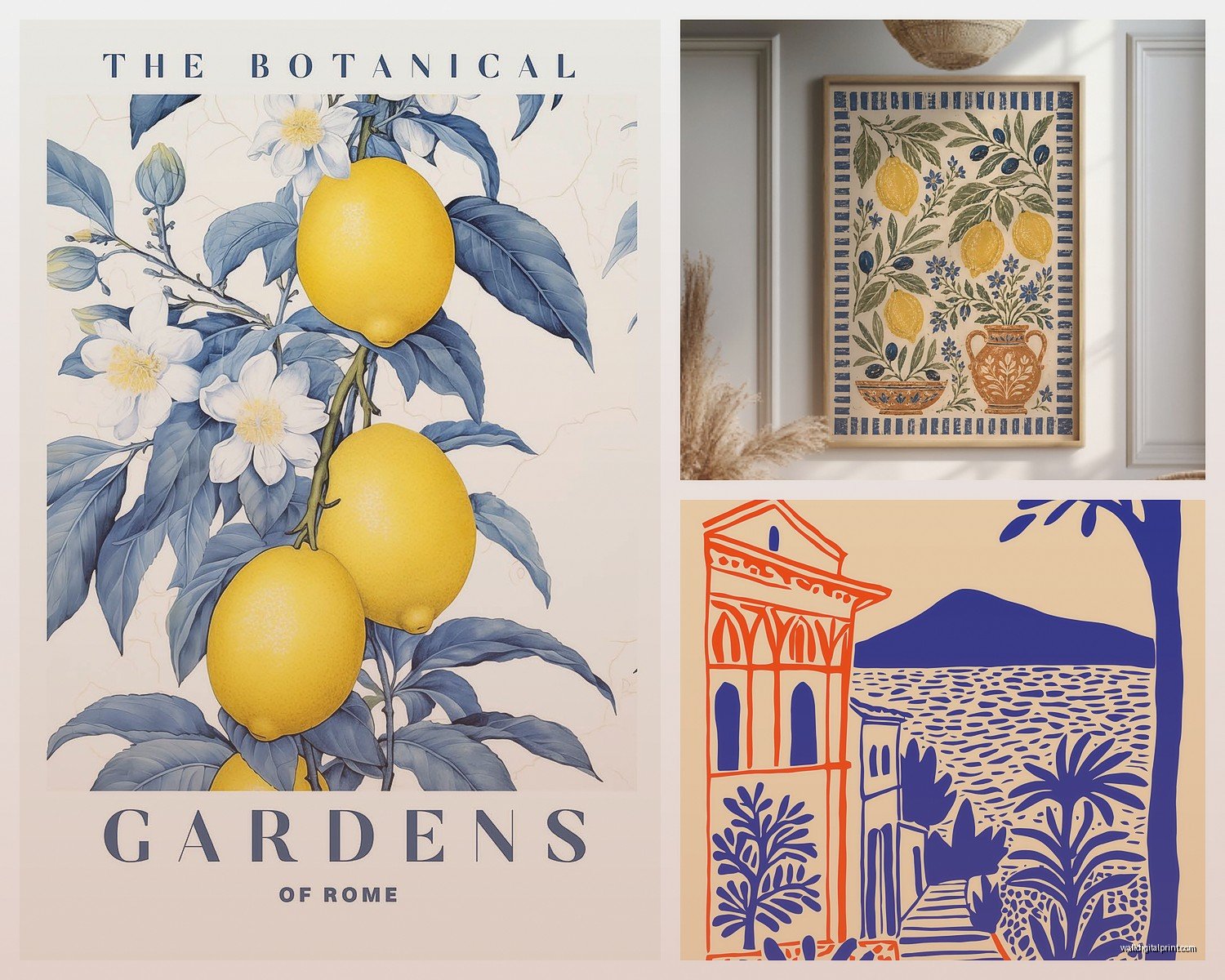
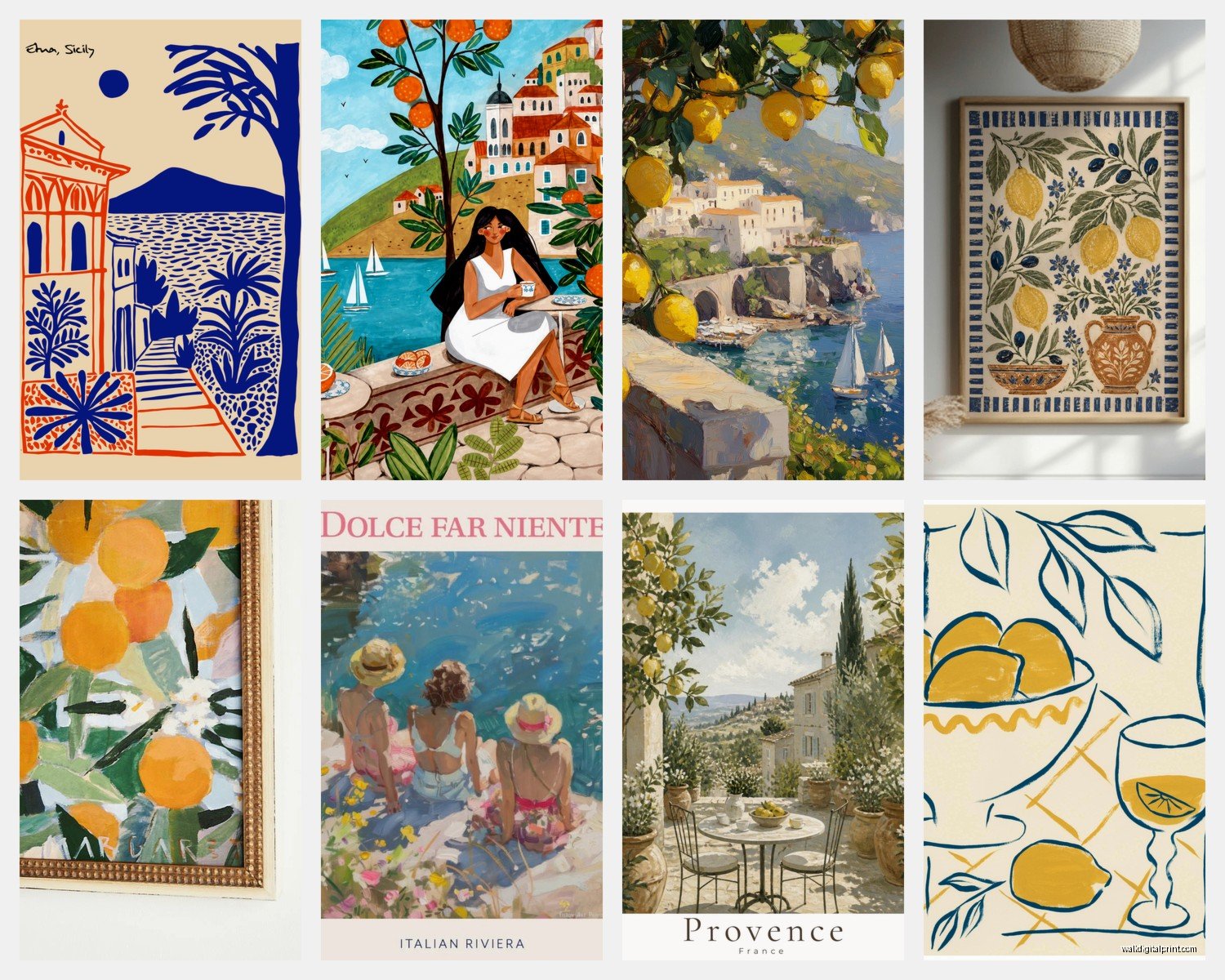
First thing—and I learned this the hard way—is that Mediterranean wall art isn’t just “any beach picture.” It’s super specific. You’re looking for those whitewashed buildings with blue domes, terracotta rooftops, olive branches, lemons, ancient Greek pottery motifs, or those really faded coastal scenes that look like they’ve been sitting in the sun for decades. The color palette is crucial: think cerulean blue, weathered white, terracotta orange, olive green, and sandy beige. If it’s got bright turquoise or hot pink, that’s more Caribbean or tropical, not Mediterranean.
Where to Actually Buy This Stuff
Okay so I’ve tested like…way too many sources. Etsy is honestly your best bet for prints because you can find Greek photographers selling actual photos from Mykonos or Positano. I found this shop called something like “AegeanPrints” that had gorgeous Santorini doorway shots for like $15 as digital downloads. You download the file, get it printed at a local print shop (I use a place near me that does 16×20 for about $25), and boom—you’ve got authentic art for under $50.
Society6 has tons of Mediterranean stuff but it’s hit or miss. The quality varies wildly depending on the artist. I ordered a Greek island sunset piece and the colors came out super washed out, but then I got an olive branch botanical print that was perfect. Their framing is expensive though, like $80+ for a medium frame, so I usually just buy the print.
For actual framed pieces, HomeGoods and TJ Maxx randomly get amazing Mediterranean art. Last month I snagged a three-piece set of Italian coastal villages for $60 total, already framed. The frames were decent quality too, not that flimsy stuff. You gotta go frequently though because it’s gone within days.
The Whole Gallery Wall Thing
Everyone wants to do a gallery wall but here’s what actually works—mix your mediums. Don’t just do all prints or all canvas. I typically combine:
- 2-3 framed photography prints of Greek architecture
- 1 canvas piece (usually a painted coastal scene)
- A woven wall hanging or macrame because it adds texture
- Maybe a small decorative plate if you can find authentic Greek or Italian pottery
- Dried olive branches in a wall-mounted vase
The trick is keeping your frame colors consistent. I stick with either all natural wood, all white, or all black. Mixing frame colors makes it look chaotic instead of curated. Natural wood frames give you that rustic Italian villa vibe, white frames feel more Greek island, and black frames…honestly I think black frames can look too modern for Mediterranean style unless you’re going for a really specific look.
Spacing matters way more than people think. I use 2-3 inches between frames, not more. Closer spacing makes it feel intentional, wider spacing just looks like you randomly hung stuff. And please, please use painter’s tape to map it out on the wall first. I’ve patched so many nail holes because I eyeballed it.
Size Combinations That Actually Work
Here’s a formula I use constantly: one large statement piece (like 24×36 or 30×40), two medium pieces (16×20), and three to four small pieces (8×10 or 11×14). The large piece doesn’t have to be centered—actually it often looks better offset to one side.
I did a whole wall in my client’s dining room last month with a massive Amalfi Coast canvas as the anchor piece on the left side, then built out to the right with smaller Greek doorway prints and a vintage-looking Italian map. Looked way more interesting than centering everything.
DIY Options That Don’t Look DIY
Okay this is gonna sound weird but I’ve made some of my favorite pieces myself. Not like painting—I can’t paint to save my life—but there are workarounds.
You can order high-res images from stock photo sites (I use Unsplash for free ones or pay for premium from Adobe Stock), get them printed large format, and frame them. I did this with a stunning photo of a Greek fishing boat and nobody believes I didn’t buy it from a gallery.
Another thing I’ve done is buy old frames at thrift stores, paint them white or that weathered blue-gray color, and put Mediterranean botanical prints in them. There are tons of free vintage botanical illustrations online (check out the New York Public Library digital collections). Print them on cream-colored cardstock and they look genuinely antique.
Wait I forgot to mention—you can also frame fabric. I bought this gorgeous Greek-inspired fabric with an olive branch pattern from a fabric store ($8 per yard), stretched it over foam board, and framed it. Looks like expensive textile art, cost me maybe $20 total.
Canvas vs. Framed Prints
So here’s my honest take after decorating probably fifty rooms with Mediterranean themes. Canvas works better for larger statement pieces and painted artwork. It’s got that casual, lived-in feel that matches the Mediterranean aesthetic. Plus no glare, which is huge if you’re hanging stuff opposite windows.
But for photography and detailed prints, I actually prefer framed under glass. The glass protects the print and somehow makes photos of Greek architecture look more crisp and real. Just get non-glare glass or acrylic if you can afford it (adds like $15-30 depending on size).
Canvas prints from places like CanvasDiscount or EasyCanvasPrints are pretty affordable—I’ve gotten 24×36 pieces for around $50-60. Quality is solid for the price. The really cheap canvas prints from Amazon can look…cheap. The canvas is too thin and you can see the wooden frame bars through it.
The Matting Debate
Mats make everything look more expensive, period. Even a $10 print looks upscale with a proper mat. For Mediterranean style, I usually go with:
- Cream or off-white mats (not bright white, too stark)
- Light gray mats for black and white photography
- Sometimes a subtle blue-gray if the artwork has blue tones
Double mats are extra but they seriously elevate the look. A thin inner mat in a contrasting color (like a thin blue inner mat with a cream outer mat) adds so much depth.
Specific Pieces I Keep Recommending
There’s this one print that like half my clients end up getting—it’s called “Santorini Blue Dome” and it’s everywhere on Etsy. Sounds generic but there’s a reason it’s popular. The composition is just perfect and it photographs well for Instagram if your friends care about that stuff.
For Italian coastal vibes, anything featuring the Amalfi Coast or Cinque Terre works. Those colorful stacked buildings are instantly recognizable. I found a triptych set on Wayfair (yeah, Wayfair sometimes has decent art) showing three different Cinque Terre villages for like $120 framed. Still looks good two years later.
Greek pottery and amphora illustrations are super underrated. They add that ancient, classical element without being too literal. I frame these in simple black frames and they look gallery-worthy.
Oh and another thing—vintage travel posters. There are reproduction prints of 1950s-60s travel posters for Greece, Italy, and the French Riviera that have this amazing retro Mediterranean feel. Different vibe than the typical blue-and-white stuff but still totally works.
Placement Strategy Room by Room
Living room: Go big or go home. This is where your statement wall should be. I usually do the gallery wall above the sofa or on the largest empty wall. If you’ve got a fireplace, a single large piece above the mantel works better than multiple small ones.
Bedroom: Keep it calmer. One or two medium pieces above the bed, or a pair of matching prints flanking the bed if you’ve got the wall space. I did matching olive branch botanicals in my own bedroom and it’s so peaceful.
Kitchen: This is perfect for smaller Mediterranean food-themed art—lemons, olives, wine, herbs. I love a little gallery of 8×10 prints in simple frames. You can even lean them on open shelving instead of hanging if you’re renting or don’t wanna put holes in tile backsplash.
Bathroom: People forget about bathroom art but a small Mediterranean print or two makes such a difference. Just make sure it’s in a moisture-resistant frame or canvas. I’ve had good luck with canvas in bathrooms actually.
Hallways: Perfect for a linear gallery wall. I line up 4-6 same-size frames in a row down a hallway. Keeps it simple but fills the space nicely.
Common Mistakes I See All the Time
Hanging stuff too high. The center of your art should be at eye level, which is roughly 57-60 inches from the floor. I see so many people hang things way up near the ceiling and it looks awkward.
Mixing too many different Mediterranean regions. Like, Greek blue and white with Italian Tuscan terracotta with French Provence lavender…it gets muddy. Pick one regional aesthetic and stick with it, or at least keep the color palette cohesive.
Buying art that’s too small for the wall. This is the biggest one. A tiny 11×14 print on a huge empty wall looks lost. When in doubt, size up. I’d rather have one large piece than three small ones that feel scattered.
Not considering your existing decor. If your furniture is modern minimalist, super ornate gilded Mediterranean frames might clash. The art should complement your space, not fight with it.
Budget Breakdown Real Talk
You can totally do a full Mediterranean gallery wall for under $200 if you’re strategic:
- Digital downloads from Etsy: $10-15 each, get 4-5 prints = $60
- Local printing: $20-30 per print = $120
- Thrifted or basic frames: $10-20 each = $80
- Total: around $260 but you could cut costs by doing fewer larger pieces
Mid-range budget ($300-500) gets you better frames, maybe one or two pre-framed pieces from HomeGoods, and higher quality prints.
If you’ve got $500+, you can invest in some original art from Greek or Italian artists on Saatchi Art or similar platforms. I’ve found gorgeous original watercolors of Santorini for $300-600 that become genuine conversation pieces.
Styling Around the Art
The wall art is just the starting point honestly. To really nail the Mediterranean vibe, you gotta think about what’s around it. I always add:
Natural textures like woven baskets, rattan mirrors, or driftwood pieces near the art. Creates that coastal, organic feel.
Live plants or dried botanicals. Olive branches, eucalyptus, lavender…they reinforce the Mediterranean garden aesthetic. I put a small olive tree in a terracotta pot on the console table below my Mediterranean gallery wall and it ties everything together.
Blue and white ceramics or pottery displayed on shelves near the art. Doesn’t have to be authentic Greek pottery—even ginger jars or blue and white vases work.
Textiles in complementary colors. Throw pillows in those Mediterranean blues and creams, linen curtains, maybe a woven throw blanket.
The lighting matters too. Warm-toned bulbs (2700K) make Mediterranean art look way better than cool white bulbs. And if you can add a picture light above a key piece, it looks super sophisticated.
Mixing Modern with Mediterranean
This is tricky but totally doable. My apartment is pretty modern and I’ve worked in Mediterranean art by keeping frames simple and clean-lined. No ornate gold frames—just natural wood or matte black. The subject matter is Mediterranean but the presentation is contemporary.
You can also go for more abstract or minimalist interpretations of Mediterranean themes. Like a really simple line drawing of a Greek column, or an abstract painting in Mediterranean colors rather than a literal landscape.
Black and white photography of Mediterranean scenes works great in modern spaces too. Removes the color question entirely but you still get those iconic architectural shapes and compositions.
Okay so I think that covers most of what I’ve learned through way too much trial and error. The main thing is just start with one piece you really love and build from there. Don’t try to do the whole wall in one shopping trip because you’ll overthink it and probably spend too much. I’ve built my favorite gallery walls over months, adding pieces as I found them.