Wall Art Guide, Wall Art Tutoriels
Metal Gecko Wall Art: Lizard Reptile Sculpture Decor
Jul
So I’ve been obsessing over metal gecko wall art lately and honestly it started because a client wanted something “unexpected but not weird” for their sunroom and I fell down this whole rabbit hole. These lizard sculptures are actually way more versatile than you’d think, but there’s definitely a right way and a wrong way to use them.
The Weight Thing Nobody Tells You
Okay first thing – these metal geckos are HEAVY. Like way heavier than they look in photos. I ordered this gorgeous copper one from this Etsy shop thinking it’d be like hanging a picture frame and nope. The thing was like 8 pounds and my cat literally jumped when I unpacked it because it made such a loud thunk on my table.
You’re gonna need proper wall anchors. Not those little plastic things that come with command strips. Real drywall anchors or if you’re lucky enough to hit a stud, use that. I learned this the hard way when a client texted me at like 11pm because their gecko had fallen off the wall during dinner. So embarrassing.
For plaster walls you need toggle bolts. For brick or concrete you’ll want masonry screws. Don’t try to shortcut this part because these pieces are an investment and also you don’t want a metal lizard falling on someone’s head.
Measuring the Space Before You Buy
Most metal geckos come in sizes ranging from like 8 inches to over 3 feet. The sizing thing is tricky because they photograph smaller than they actually are? I always tell people to tape out the dimensions on their wall with painter’s tape before ordering. Sounds extra but it’s saved me from so many returns.
Small geckos (8-15 inches) work great for gallery walls or clustered arrangements. Medium ones (16-24 inches) are your versatile middle ground. Large geckos (24+ inches) need to be statement pieces with breathing room around them.
Style Categories That Actually Matter
There are basically four main styles and they do NOT all work in the same spaces, despite what Pinterest wants you to believe.
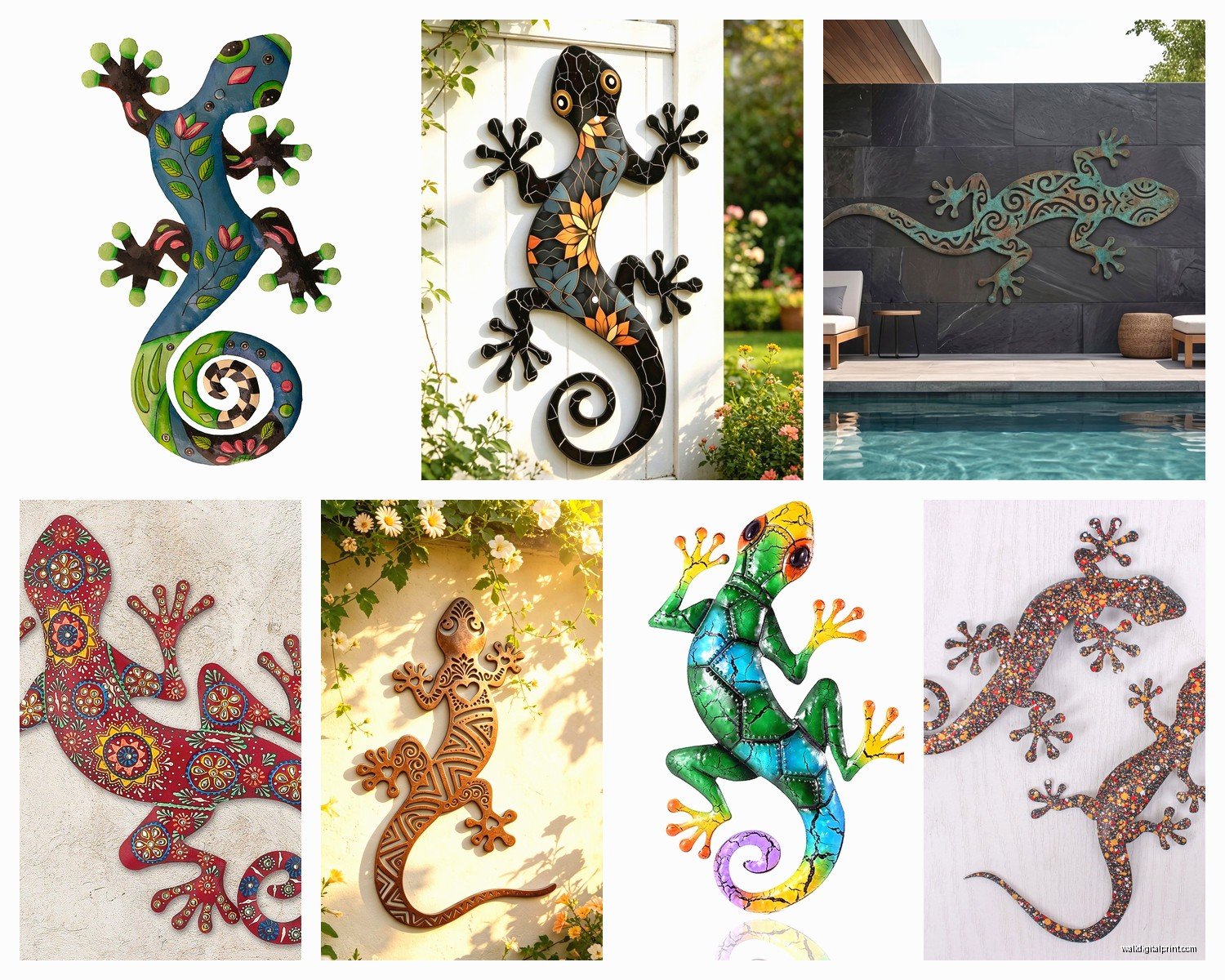
Realistic Detailed Geckos
These have textured scales, detailed toes, realistic eye placement. They’re usually made from thicker gauge metal and often hand-painted or patina’d. I use these in spaces that lean traditional or transitional. They work surprisingly well in libraries, home offices, covered patios.
The thing with realistic ones is they can read as kitschy if you’re not careful. You gotta balance them with other natural elements – plants, wood, stone. I put one in a client’s bathroom surrounded by potted ferns and it looked intentional instead of random.
Abstract Geometric Geckos
These are made with cut metal shapes, sometimes with negative space, very modern. Love these for contemporary spaces, minimalist designs, industrial lofts. They’re usually lighter weight too which is nice.
The best geometric ones have interesting shadow play. Mount them a half inch off the wall using spacers (usually included) so they cast shadows. Changes the whole vibe. I have one in my kitchen and depending on the time of day it looks completely different.
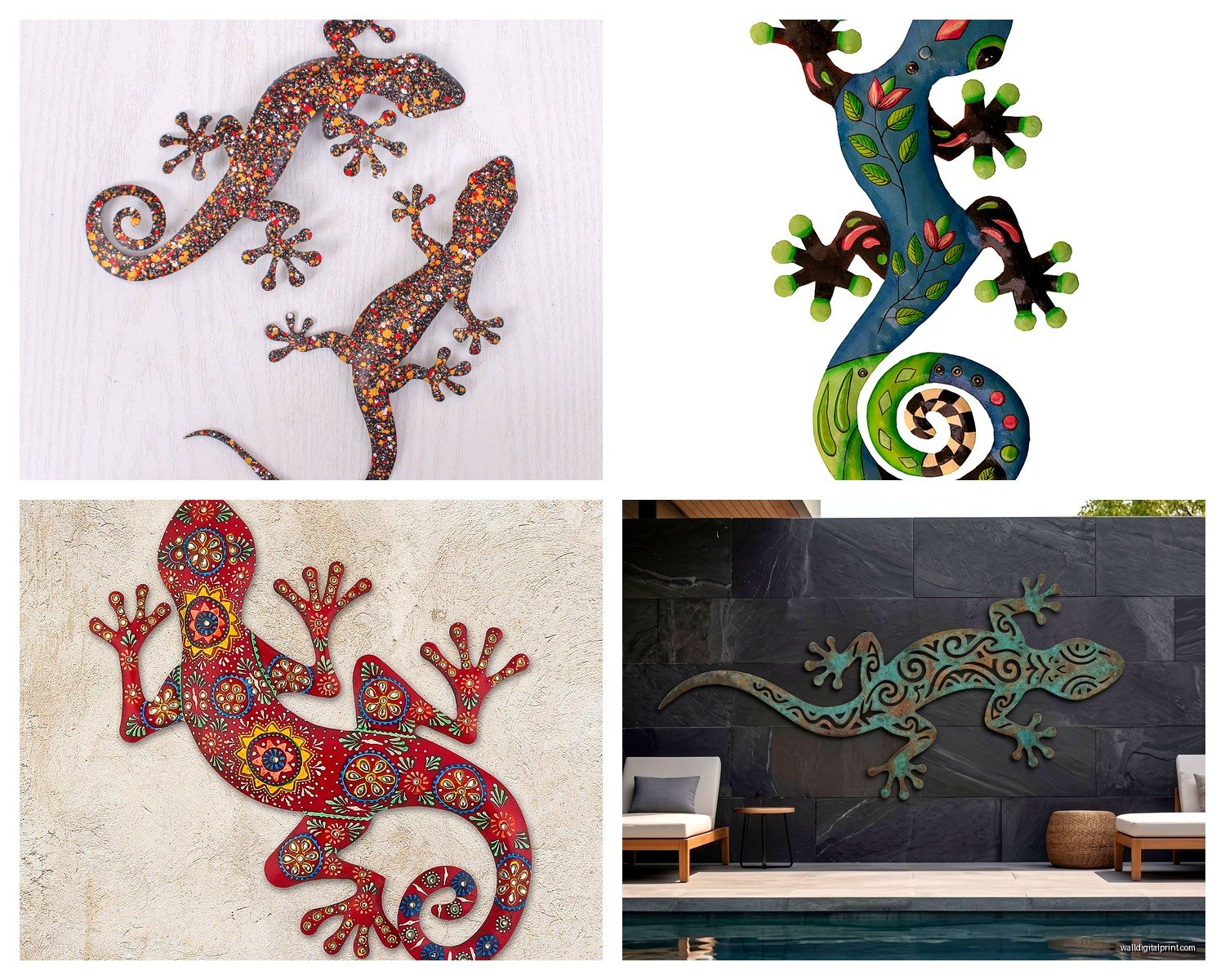
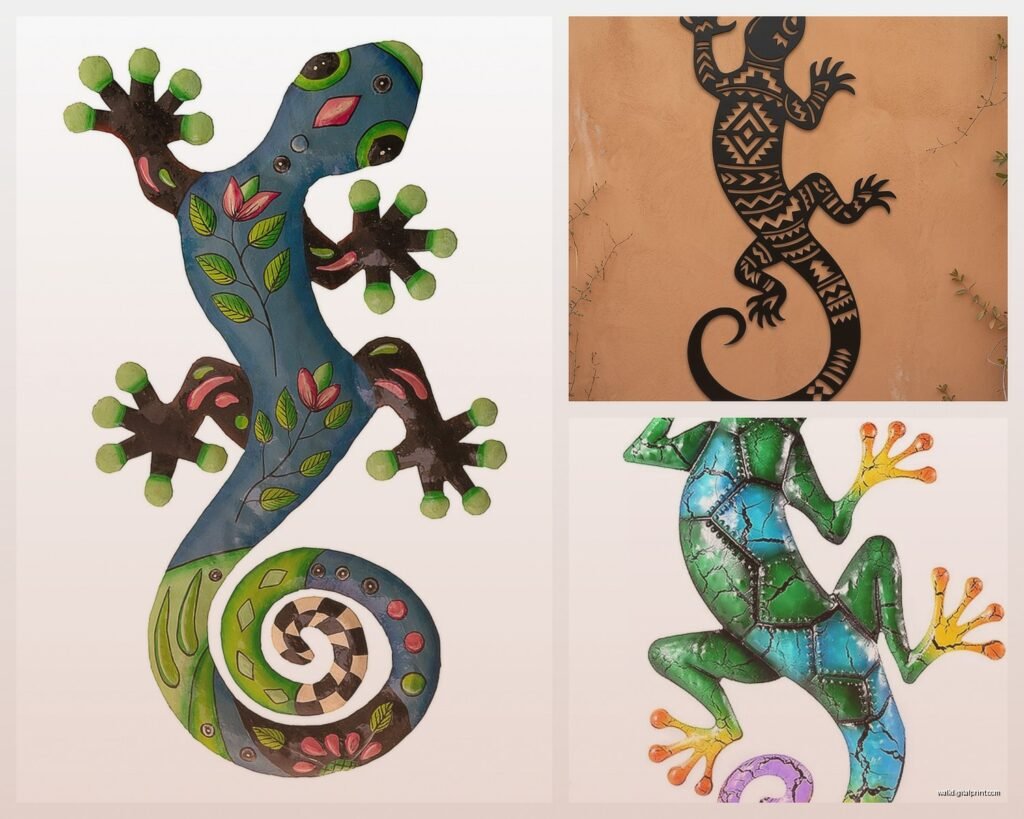
Colorful Painted Metal Geckos
Bright blues, greens, oranges, sometimes with glass or bead embellishments. These are very Southwestern or tropical coastal. They can be tricky because the colors need to pull from your existing palette or they just look random.
I used a turquoise and purple one in a beach house and it was perfect. Tried to use a similar one in a farmhouse style home and it was all wrong. These need the right context.
Rustic Patina Geckos
Copper, bronze, or iron with natural oxidation or applied patina. These develop character over time, especially outdoors. My favorite for covered porches, garden walls, or rustic interiors.
The patina will continue to change if they’re exposed to weather and humidity, which I actually love? But some people hate it, so make sure you know what you’re getting into. You can seal them if you want to preserve a specific look.
Where to Actually Put Them
Okay so location is everything with these. I’ve seen geckos look amazing and also look completely ridiculous based purely on placement.
Exterior Walls and Patios
This is where geckos shine honestly. They look natural climbing up outdoor walls, around doorframes, near water features. The metal holds up to weather (as long as it’s designed for outdoor use – check this before buying).
I cluster smaller geckos like they’re actually climbing. Put one near the ground, one mid-wall heading up, maybe one near the roofline. Creates movement and looks intentional. Don’t just stick one in the middle of a blank wall and call it done.
For covered patios, larger statement geckos work great centered above seating areas. Pair them with string lights or hanging plants.
Bathroom Walls
Weird suggestion but hear me out. Bathrooms are often these forgotten spaces decoration-wise and a metal gecko adds personality without taking up counter space. I put them on the wall opposite the mirror so you see them reflected, or on a side wall near the tub.
Just make sure your bathroom has decent ventilation because humidity and metal can be iffy depending on the finish. Sealed or powder-coated pieces are fine. Raw steel not so much.
Stairwell Walls
That awkward tall wall space going up stairs? Perfect gecko territory. The climbing motion of the lizard follows the upward movement of the stairs. I usually do an arrangement of 2-3 different sizes creating a diagonal line.
Kitchen Backsplash Areas
Not ON the backsplash obviously, but on adjacent walls or the side of cabinets. Adds an unexpected element. I did this in my own kitchen on the wall next to the fridge and people always comment on it. Keep them away from the stove area though because heat and grease buildup.
Bedroom Accent Walls
Smaller geckos can work above headboards or on side walls. I wouldn’t go huge in a bedroom because it can feel too busy when you’re trying to relax. But a subtle bronze or copper gecko on a textured wall? Very calming actually.
Color and Finish Combinations
The finish you choose changes everything about how the piece integrates into your space.
Natural metal finishes (copper, bronze, steel) work with basically any color scheme. They’re your safe bet. I tend to match them to other metal finishes in the room – if you have brushed nickel fixtures, a silver-toned gecko. Oil-rubbed bronze fixtures, go with darker patina.
Painted finishes need to either match your accent colors exactly or provide intentional contrast. Don’t pick a random color and hope it works. Pull actual paint chips or fabric swatches and compare.
Verdigris (that blue-green copper patina) is gorgeous but very specific. Works with teals, navy, cream, natural wood. Doesn’t work with everything else basically.
Mixing Metals
You can mix different metal geckos in the same space but keep the style consistent. Like three different sizes of geometric copper geckos in varying patinas looks curated. One realistic gecko, one abstract gecko, one painted gecko all together looks chaotic.
Lighting Considerations
This is gonna sound weird but lighting makes or breaks these pieces. Metal reflects and absorbs light differently than other wall art.
If you have the option, add an uplight or spotlight aimed at the gecko. The shadows created by the dimensional metalwork are honestly half the appeal. I installed small picture lights above two large geckos in a hallway and it transformed them from “okay I guess” to “wow that’s cool.”
Natural light is amazing for geckos near windows. The changing light throughout the day creates different shadow patterns and highlights different aspects of the metalwork.
Avoid placing them where they’ll get harsh direct glare though. Like directly across from a bright window at certain times of day. The reflection can be too intense.
Styling Around Them
Geckos shouldn’t just float alone on a blank wall (usually). They need context.
With Plants: This is my go-to. Hang trailing plants like pothos or string of pearls near your gecko so it looks like it’s climbing through foliage. Or place potted plants on shelves around it. The organic shapes complement each other.
With Other Wall Art: You can include geckos in gallery walls but they need enough space. Don’t crowd them. I usually put a gecko at one end of a gallery wall as an anchor piece with framed art on the other side. Creates balance without competition.
With Mirrors: Positioning a gecko so it’s visible in a mirror creates depth and makes the space feel larger. Just make sure it looks intentional and not accidental.
With Shelving: Mount floating shelves with the gecko “climbing” between or around them. Add small plants, books, or decorative objects on the shelves. Creates a whole vignette.
Maintenance Real Talk
Metal geckos collect dust like crazy because of all the crevices and dimensional details. I dust mine every couple weeks with a microfiber cloth or one of those Swiffer duster things.
For outdoor pieces, spray them down with a hose a few times a year. If you’re in a coastal area with salt air, wipe them down more frequently to prevent corrosion.
Some finishes need occasional waxing to maintain the sheen. Check manufacturer instructions. I use Renaissance Wax on my bronze pieces maybe twice a year.
If rust spots develop on iron pieces (and they will eventually if outdoors), you can either embrace it as part of the patina or remove it with fine steel wool and reseal.
Shopping Tips From Someone Who’s Ordered Too Many
Etsy has the most unique handmade options but read reviews carefully about shipping and packaging. I’ve received bent pieces before because of poor packing.
Home decor stores like Pier 1 (RIP) and HomeGoods sometimes have geckos but the quality is hit or miss. Good for trying out the look without major investment though.
Garden centers and outdoor furniture stores often carry weather-resistant options designed specifically for exterior use.
Check the hanging mechanism before buying. Some come with keyhole hangers (easy), some with wire (annoying), some with nothing at all (you’re on your own). Factor in if you’ll need to buy additional hardware.
Look at the actual dimensions in the listing. Some sellers measure including the tail curl, some measure just the body, some measure the longest point. It’s inconsistent and frustrating.
Price Ranges
Small mass-produced geckos: $15-40
Medium quality pieces: $40-100
Large handmade or artistic pieces: $100-300+
Custom commissioned work: $300+
You generally get what you pay for. The cheap ones are thinner metal and the paint chips easily. Mid-range offers good quality for most applications. High-end pieces are truly art and worth it if you love them.
Common Mistakes I’ve Seen
Hanging them too high. They should be at eye level or slightly above, not up near the ceiling where no one can appreciate the detail.
Using just one small gecko on a massive wall. Scale matters. Either go bigger or use multiples.
Mixing too many different animal sculptures. Like a gecko, a butterfly, a dragonfly all on the same wall just reads as cluttered. Pick one type and commit.
Putting outdoor pieces indoors or vice versa. They’re finished differently for a reason.
Not considering the room’s existing theme at all. A gecko can work in most styles but it needs some thought about how it fits.
oh and another thing – if you have actual geckos or lizards as pets, your guests WILL comment on the wall art. Just prepare yourself for a lot of “oh I thought that was real for a second” conversations. My friend has a bearded dragon and she put a metal gecko in her living room and apparently everyone asks about it constantly.
Anyway that’s basically everything I’ve learned through trial and error with these things. They’re genuinely cool pieces when done right, just need more thought than people expect. Start with one, see how you like it, then add more if it works for your space. Don’t go crazy and order five at once like I did that one time when I was binge-watching that nature documentary series.