Wall Art Guide, Wall Art Tutoriels
Metal Sunflower Wall Art: Sculptural Yellow Garden Bloom
Oct
So I’ve been obsessing over metal sunflower wall art lately and honestly it started because a client wanted something “cheerful but not tacky” for her breakfast nook and I went down this whole rabbit hole. Let me tell you what I’ve learned because there’s actually a lot more to this than just slapping a metal flower on your wall.
Why Metal Sunflowers Actually Work
Okay so first thing, metal sunflowers have this weird advantage over other wall art because they’re sculptural, right? They catch light differently throughout the day which is something flat art just can’t do. I tested this in my own kitchen—hung one near a window and the shadows it creates in afternoon light are actually really cool. My cat keeps trying to bat at the shadows which is…annoying but also kinda proves the point about dimension.
The yellow thing is tricky though. You’d think yellow is just yellow but metal finishes come in everything from pale buttery tones to this almost amber-orange situation. I made the mistake of ordering one online that looked like a soft yellow in photos and it showed up looking like a school bus. Not cute.
Types You’ll Actually Encounter
There are basically three categories and nobody tells you this upfront:
Powder-Coated Steel
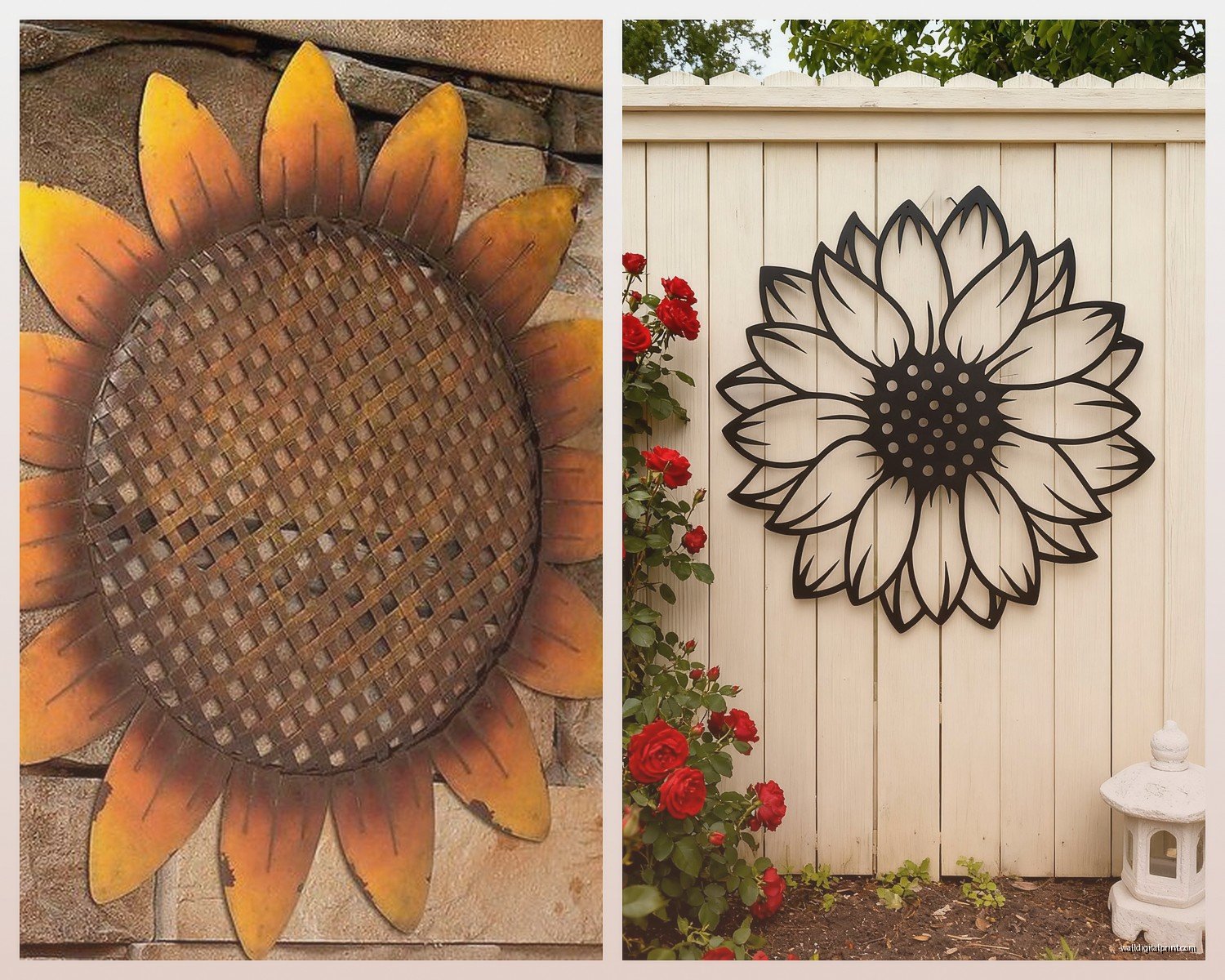
This is your most common option. They coat steel with colored powder and bake it on. Super durable, weather-resistant if you wanna use it outside. The finish is matte usually which I actually prefer because it doesn’t get that cheap shiny look. Downside is if it chips—and it will chip if you’re not careful mounting it—you’ll see silver metal underneath.
Hand-Painted Metal
These are gonna be pricier but the color variation is prettier. Each petal might have slight differences in shade which makes it look more organic. I found this amazing one at a craft fair last summer where the artist had layered like three different yellows. It looked expensive even though it was only $85.
Rusted or Patina Finish
Wait I forgot to mention—some are deliberately rusted which sounds weird but can actually look really good in the right space. They’re usually copper or iron that’s been treated to develop that aged look. Not yellow obviously but more of a burnt orange-brown. My friend has one in her garden and it’s held up for three years through Michigan winters.
Size Matters More Than You Think
This is where everyone screws up including me the first time. That cute 12-inch sunflower you’re eyeing? It’s gonna look like a coaster on your wall. I’m serious. Metal wall art needs to be bigger than you think to have any presence.
For a standard wall, you want at least 24 inches diameter minimum. I usually go 30-36 inches for main focal points. If you’re doing a gallery wall situation with multiple pieces, you can mix smaller ones but even then nothing under 18 inches.
Oh and another thing—measure your wall space before you fall in love with something. I cannot tell you how many times I’ve seen people buy a gorgeous 48-inch piece for a space that’s only 36 inches wide. It’s gonna crowd the space and look awkward no matter how beautiful it is.
The Weight Issue Nobody Talks About
Metal art is HEAVY. Like surprisingly heavy. That pretty sunflower might weigh 8-15 pounds depending on gauge of the metal. Standard picture hanging hooks are not gonna cut it. You need actual wall anchors or you’re gonna wake up at 3am to a crash.
I use toggle bolts for drywall or masonry anchors if I’m going into brick. And honestly? I always use two mounting points even if the piece only has one hanger, because I’ve had too many tilt over time.
Where to Actually Buy These
Okay so you’ve got options and they’re all wildly different in quality:
Etsy: This is where I find the most unique stuff. Search “metal sunflower wall art” and you’ll get everything from mass-produced imports to actual artists welding custom pieces. Read reviews obsessively. Look for shops that show actual photos of their work in real homes not just stock images.
Home Depot/Lowe’s: Surprisingly decent selection in their garden decor section. The quality is mid-range but the prices are reasonable—usually $30-80 range. I bought one from Lowe’s for a client’s covered patio and it’s held up fine for two years.
Amazon: It’s a gamble. You’ll find cheap options that look amazing in photos and arrive looking like they were made from soda cans. But sometimes you strike gold. I filter by “Ships from USA” to avoid the really questionable stuff and only buy things with actual photo reviews.
Local craft fairs/art shows: This is gonna sound weird but this is where I’ve found my favorite pieces. You pay more but you’re getting actual craftsmanship. Plus you can see exactly what you’re getting.
The Outdoor vs Indoor Question
So most metal sunflowers are marketed as outdoor art but here’s the thing—they look really good indoors too. I’ve used them in kitchens, breakfast nooks, covered porches, garden sheds turned into studios. The trick is matching the finish to the location.
Outdoor needs powder-coat or weather-resistant paint. It’s gonna fade eventually no matter what anyone tells you. Even the “UV resistant” stuff will lose vibrancy after a couple years in direct sun. I’ve learned to embrace that as part of the patina but some people hate it.
Indoor you have more flexibility. You can do hand-painted finishes, mixed metals, even ones with fabric or wood elements incorporated. Just keep them away from high-moisture areas unless they’re specifically sealed.
Maintenance Real Talk
They get dusty. Like really dusty because all those petals and crevices trap everything. I use a microfiber duster or compressed air every few months. For outdoor pieces, I hose them down once a year and let them air dry completely.
If you get rust spots on something that’s not supposed to be rusted, you can sand it lightly and touch up with spray paint. I keep a collection of yellow spray paints now because of this—learned that lesson after trying to find an exact match for something I’d had for a year.
Styling These Things
Okay so you’ve bought your metal sunflower and now you’re staring at your wall wondering what you’ve done. Here’s what actually works:
Solo statement piece: One large sunflower centered on a wall. This works great in minimalist spaces or where you want a clear focal point. Leave breathing room around it—at least 6-8 inches from furniture or other wall elements.
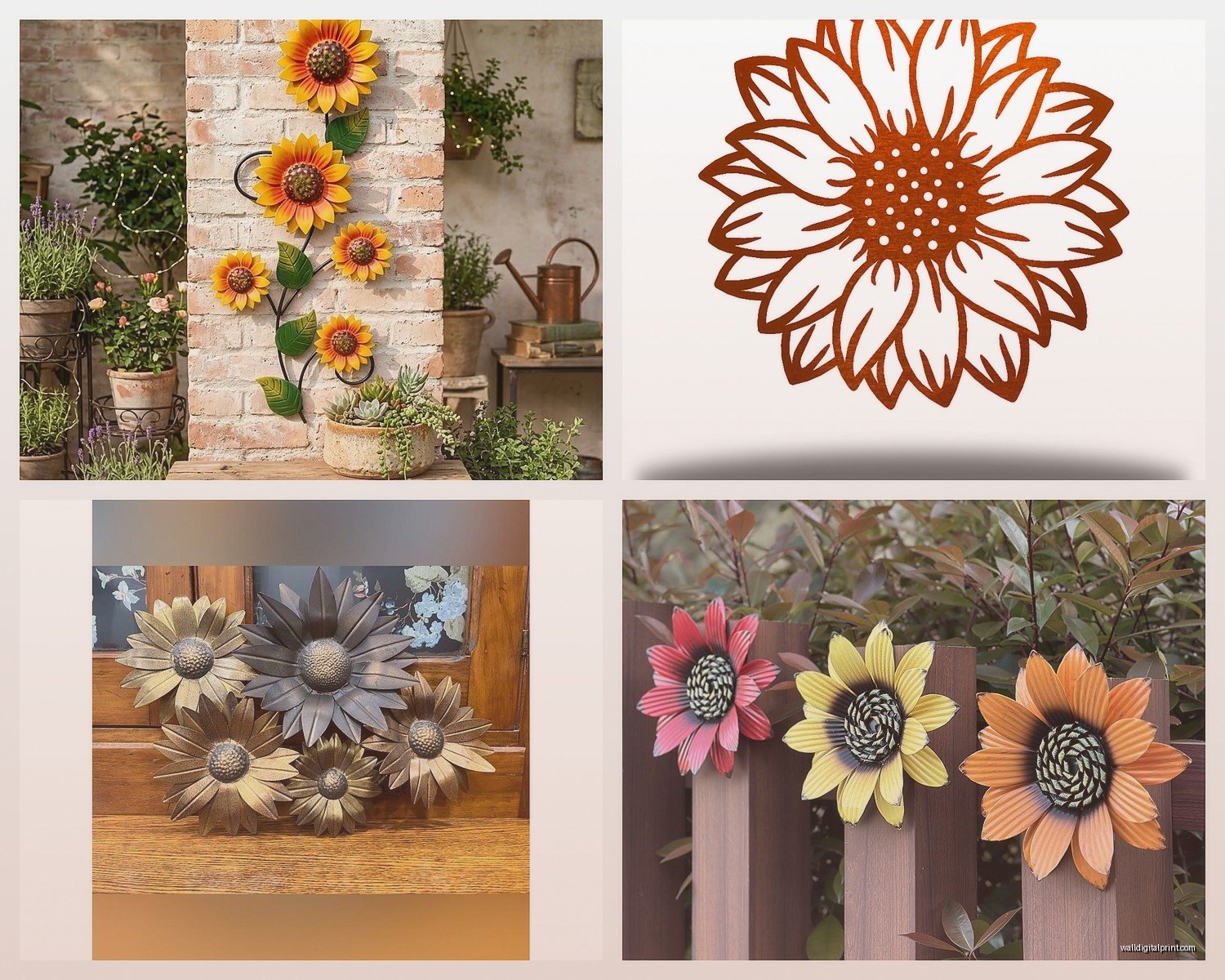
Cluster grouping: Three different sizes grouped together. I do this a lot—like a 36-inch, 24-inch, and 18-inch arranged in a triangle formation. Mix in some metal leaves or butterflies if you wanna get extra.
With other garden elements: Combine with metal dragonflies, birds, or vine designs. This can look really cohesive on a fence or exterior wall. Just watch that it doesn’t get too theme-y unless you’re specifically going for a garden aesthetic.
Mixed with real plants: This is my favorite actually. Hang metal sunflowers near real climbing plants or in a screened porch with hanging baskets. The contrast between artificial and living is really cool when done right.
Color Coordination That Actually Matters
Yellow is tricky because it can clash with a lot of colors if you’re not careful. Here’s what I’ve found works:
Works great with: navy blue, gray, white, natural wood tones, sage green, rust orange
Gets complicated with: red (too primary school), purple (can look Easter-y), pink (rarely works unless you’re going for a specific cottage vibe)
The metal finish itself matters too. Brushed metal petals with yellow centers look more modern. Fully painted bright yellow reads more casual and garden-y. Distressed or antiqued yellow feels farmhouse.
I had this whole situation last month where a client had gray walls with navy accents and we added a large brushed metal sunflower with just yellow highlights on the petal tips. Looked expensive and sophisticated instead of cute and cottage-y.
Installation Tips From Someone Who’s Messed This Up
Measure twice, drill once. I know everyone says this but with metal art it’s extra important because the mounting holes are where they are—you can’t just shift things around like you can with wire-hung frames.
Use a level. Metal sunflowers are usually circular so your eye will immediately notice if they’re crooked. I use a small torpedo level and mark my holes with painters tape before drilling.
If you’re mounting on brick or stone, rent a hammer drill. Regular drills will make you miserable and you’ll probably crack something. Ask me how I know.
For really heavy pieces, mount them to a stud if possible. Use a stud finder and plan your placement around where the studs actually are rather than trying to force it.
The Hanging Method That Changed Everything
Okay this is gonna sound extra but I started using French cleat systems for my heavier pieces and it’s so much better. You mount one piece to the wall, one to the back of your art, and they lock together. Makes it easy to remove for cleaning or if you wanna rearrange, plus it distributes weight really well.
You can buy French cleat kits online or make them from metal strips. For a 30-inch sunflower I’d definitely go this route.
Common Problems and How to Fix Them
Paint chipping: Touch up with spray paint in thin layers. Let each coat dry completely. It won’t be perfect but from a few feet away you won’t notice.
Rust where you don’t want it: Sand with fine-grit sandpaper, prime with rust-inhibiting primer, repaint. Or just let it rust if it’s outdoor art—sometimes the patina looks better anyway.
Wobbly mounting: This happens when toggle bolts loosen over time. Remove, install fresh anchors, remount. Don’t try to just tighten existing ones because you’ll strip the drywall.
Fading: There’s no real fix for UV fade except repainting. I’ve done this with spray paint and it’s tedious but doable. Mask off any mixed-metal elements carefully.
Price Reality Check
You can find metal sunflower wall art from like $15 to $500+ and the quality difference is real. The super cheap ones are usually thin gauge metal that bends easily and has that obviously spray-painted look. They’re fine for temporary seasonal decor but won’t last.
Sweet spot for quality is usually $60-150 for a good 24-30 inch piece. You’re getting decent thickness metal, quality finish, and it’ll actually last multiple seasons outdoors.
Above $150 you’re usually paying for artist-made pieces, larger sizes, or really intricate details. Sometimes worth it, sometimes not. I have a $200 sunflower that’s absolutely gorgeous with hand-hammered petals and I have a $75 one from a garden center that I love just as much.
Oh and watch for sales—garden centers clear out metal art in fall and you can get amazing deals. I bought three pieces last October at 60% off for clients and myself.
The thing nobody tells you is that these pieces develop character over time, especially outdoor ones. That perfectly yellow sunflower from last spring might have some rust spots and faded areas by next spring and that’s kinda the point? It starts looking like it belongs in your space rather than something you just hung up.
Anyway I gotta stop because I’m at my favorite coffee shop and they’re about to close but hopefully this helps you figure out which metal sunflower situation is right for your space.