Wall Art Guide, Wall Art Tutoriels
Metal Tree Wall Art: Sculptural Nature Designs
Jul
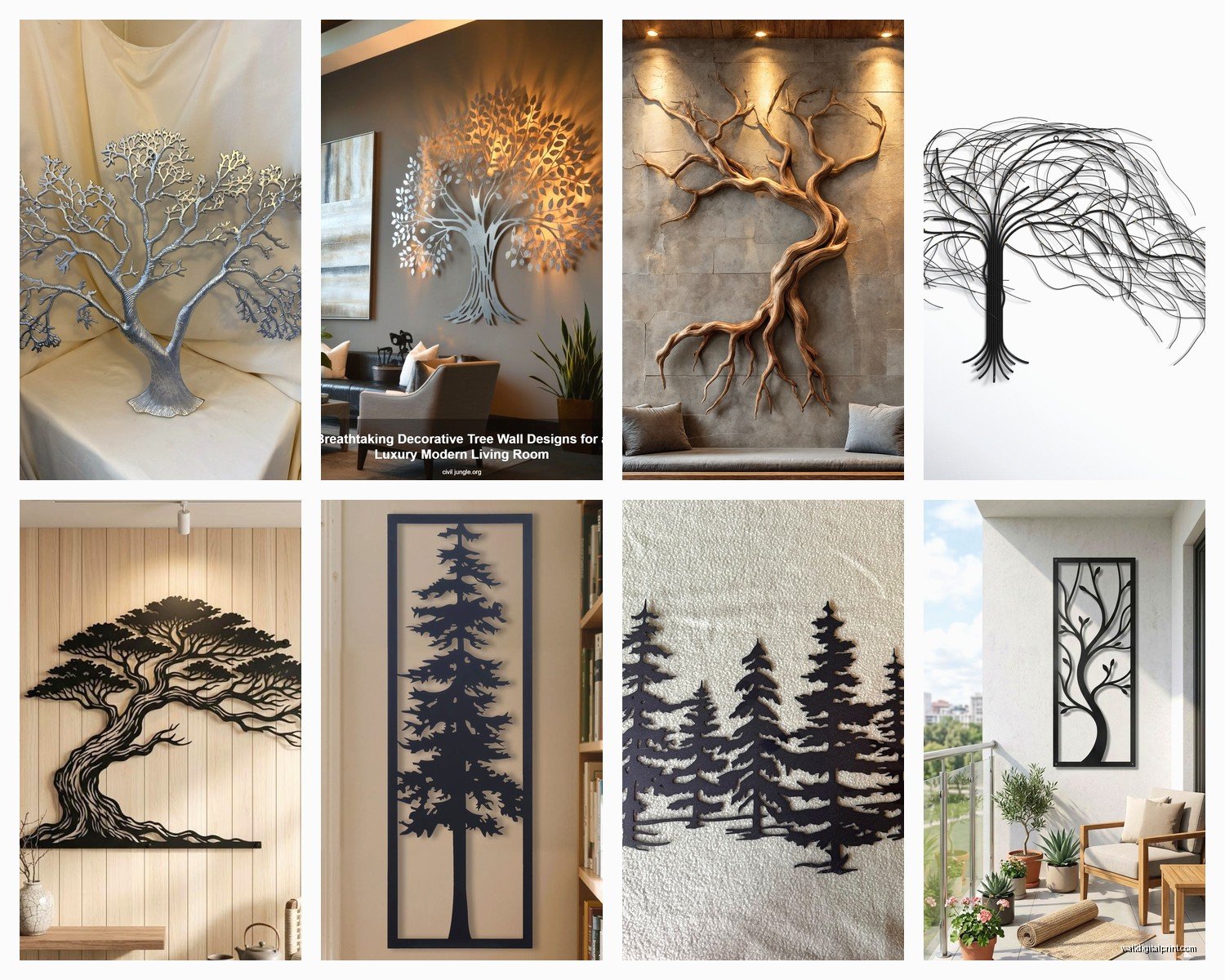
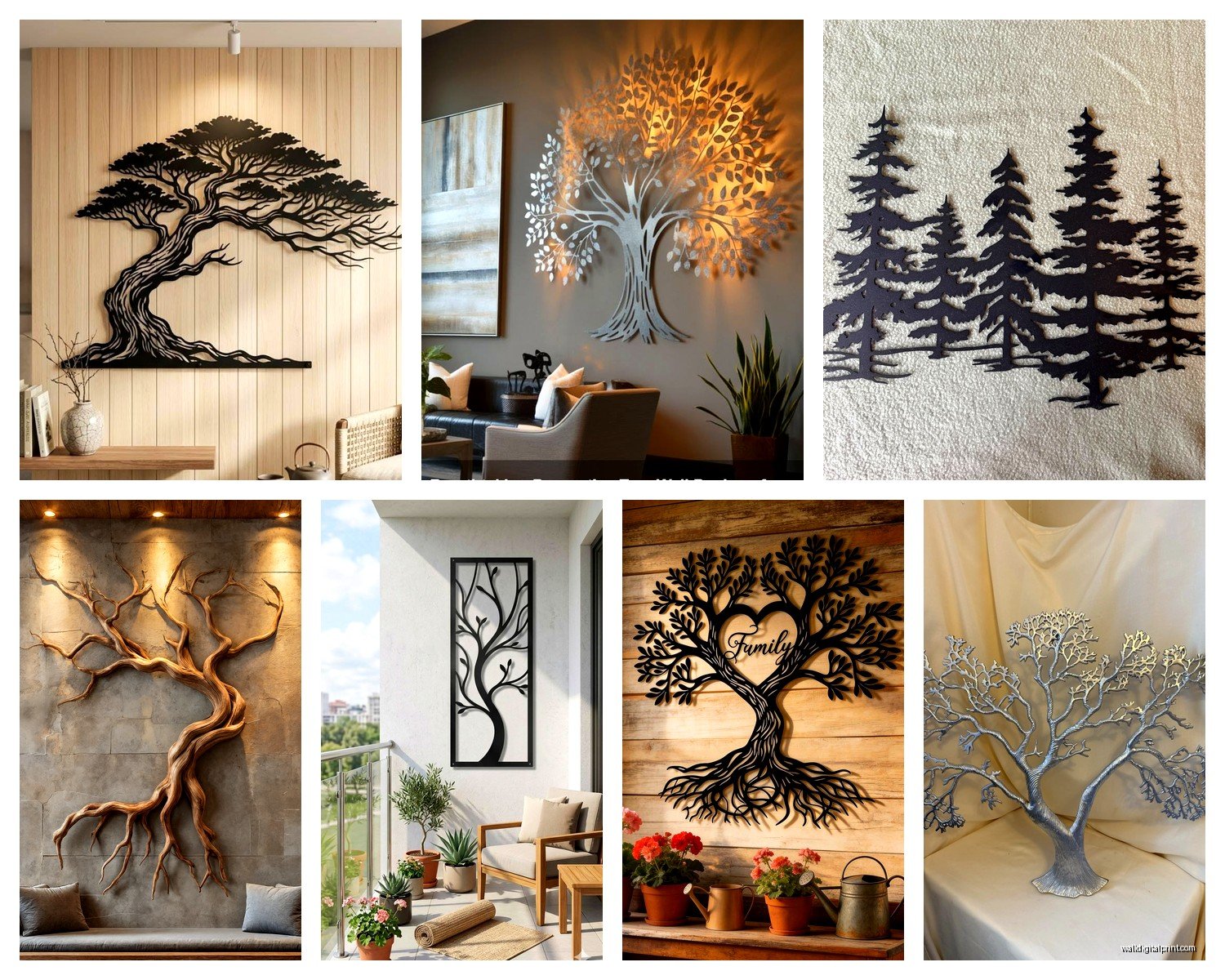
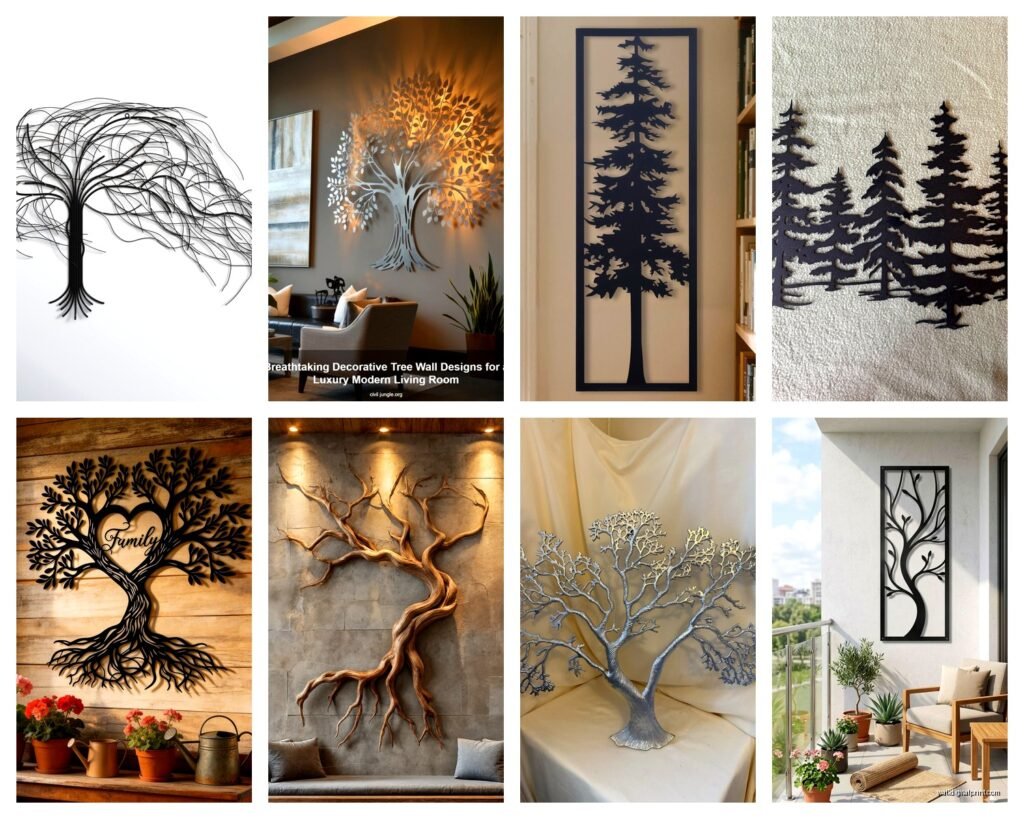
So I’ve been obsessing over metal tree wall art lately and honestly it started because I walked into this client’s house and they had this massive copper willow tree piece that just… completely transformed their boring dining room wall. Like I stood there for a good minute just staring at it while my coffee got cold.
The thing about metal tree art is it’s not like hanging a regular painting where you just eyeball the center and hope for the best. These sculptural pieces have weight distribution issues, they cast shadows that change throughout the day, and some of them have branches that stick out like 6 inches from the wall which sounds cool until you realize you’re gonna walk into them every single time.
Picking the Right Metal and Finish
Okay so first thing – the metal type actually matters way more than I thought. I used to think metal was just metal but nope. Copper develops this gorgeous patina over time, especially if you put it somewhere with humidity changes. I’ve got one in my bathroom (don’t judge, the wall was huge and empty) and it’s gone from bright penny color to this deep brownish-green in like 8 months. Some people hate that aging thing but I’m obsessed with it.
Steel pieces are usually powder-coated and they stay pretty consistent. My friend Sarah has had a black steel oak tree in her living room for three years and it looks identical to day one. Which is great if you want predictability but kinda boring if you ask me.
Bronze is the fancy option and yeah it costs more but it’s got this warmth that the other metals don’t. I styled a penthouse last year with a bronze weeping willow and the way it caught the afternoon light through those floor-to-ceiling windows… anyway I’m getting off track.
Finish Options You’ll Actually See
The finishes come in matte, brushed, or polished usually. Matte is forgiving – doesn’t show fingerprints or dust as much. Polished looks stunning in photos but you’re gonna be wiping it down constantly. I learned this the hard way with a polished stainless steel piece that showed every single smudge from when the installers touched it.
Brushed is the middle ground and honestly what I recommend most. It’s got texture, catches light interestingly, but doesn’t demand constant maintenance.
Size and Scale Without Making Your Room Look Ridiculous
This is where everyone screws up including me the first time. You cannot judge size from online photos. That “large” tree sculpture might be large for a powder room but pathetic on your 12-foot living room wall.
Here’s what I do now – I measure the wall space obviously, but then I tape out the dimensions on the wall with painter’s tape. Sounds excessive but I’ve prevented so many “oh god this is tiny” moments. You want the piece to take up roughly 2/3 to 3/4 of the wall width for a statement piece. Anything smaller and it looks like you’re afraid of commitment.
Height-wise, the center of the sculpture should be at eye level which is usually around 57-60 inches from the floor. But if your tree has a tall canopy design, you might need to adjust lower so the whole thing doesn’t feel like it’s floating away.
Oh and another thing – consider the branch spread. Some of these metal trees have branches that extend in a 3D way and stick out from the wall. I’ve got one that projects about 4 inches and I constantly forget about it when I’m vacuuming. My dog walked into it once and now he gives that wall a wide berth.
Installation Without Destroying Your Walls
Okay so funny story – I thought I could just use Command strips on my first metal tree piece because I didn’t wanna put holes in my freshly painted wall. The thing crashed down at 2am and scared me so bad I dropped my phone in the toilet. Don’t be me.
These sculptures are heavy. Like surprisingly heavy. A medium-sized piece can easily be 15-20 pounds, larger ones can hit 40+ pounds. You need proper anchoring.
What You Actually Need
- Stud finder – not optional unless you enjoy wall repairs
- Level – your eyes lie to you, trust the bubble
- Drill with appropriate bits
- Wall anchors if you can’t hit studs (get the heavy-duty toggle bolts)
- A second person because holding a 30-pound metal tree while trying to mark holes is impossible
Most metal tree art comes with hanging hardware but sometimes it’s inadequate. I always check the weight rating on whatever mounting system comes with it. If the piece weighs 25 pounds and the included hardware says it holds 20 pounds, I’m buying better hardware.
For drywall without studs, I use toggle bolts rated for at least double the weight of the piece. Yeah it makes bigger holes but your sculpture won’t end up on the floor.
Style Combinations That Work
So metal tree art is weirdly versatile which surprised me. I was convinced it only worked with industrial or modern farmhouse aesthetics but nope.
In modern minimalist spaces, go for clean-lined geometric tree designs in black or silver. The sculptural element adds warmth without cluttering the clean aesthetic. I used a really abstract metal tree – like barely recognizable as a tree, more like branching lines – in a minimalist office and it was perfect.
For bohemian or eclectic rooms, copper or bronze pieces with intricate branch work look amazing. Layer them with textiles and plants and suddenly your tree art becomes part of this whole nature-inspired vibe.
Traditional spaces can handle metal trees too but you gotta be careful. Ornate designs with leaves and detailed bark texture work better than ultra-modern geometric ones. I paired a bronze tree with very realistic leaves in a traditional dining room and it bridged the gap between classic and contemporary.
Industrial spaces are obvious – raw steel, maybe some rust finish, chunky bold designs. This is where metal tree art really shines because it is literally made from industrial materials.
Color Coordination
If your walls are white or neutral, you can go bold with copper or bronze. The metallic warmth pops without overwhelming. Darker walls look great with silver or lighter metals – creates contrast without disappearing into the background.
I made the mistake once of putting a dark bronze tree on a charcoal wall and you could barely see it unless the light hit just right. Looked dramatic in photos but in person it was just… gone.
Lighting Considerations You’re Probably Not Thinking About
This is gonna sound weird but lighting makes or breaks metal tree art. The sculptural shadows are half the appeal and if you don’t have light hitting the piece from an angle, you’re missing out.
Natural light is amazing if you have it. Position the tree on a wall perpendicular to windows so the changing daylight creates different shadow patterns throughout the day. I’ve watched my copper birch tree go from subtle shadows in morning light to dramatic silhouettes at sunset and it’s better than TV sometimes.
For artificial lighting, wall washers or picture lights work great. You want the light source offset, not directly in front of the piece. I use adjustable track lighting so I can play with the angle until the shadows look right.
Uplighting from below creates this dramatic effect but can feel theatrical. I used it in a modern living room with a large metal oak tree and visitors always commented on it. Might be too much for everyday spaces though.
Maintenance and Care
Good news – metal tree art is pretty low maintenance. Dust it occasionally with a microfiber cloth. That’s basically it for sealed or powder-coated pieces.
Copper and bronze that you want to patina naturally, just leave them alone. If you hate the patina developing, you can seal it with a clear coat but honestly that defeats the purpose of having living metal art.
If you get scratches on powder-coated pieces, touch-up paint exists but matching the exact color is tricky. I’ve had better luck embracing small imperfections as character.
For outdoor-rated pieces (yes these exist), check them seasonally for rust if they’re steel. Copper and aluminum handle weather better but still benefit from occasional cleaning.
Where to Actually Buy These
Etsy has independent metal artists and you can get custom sizes which is clutch for weird wall dimensions. Quality varies wildly though so read reviews carefully. I’ve gotten stunning one-of-a-kind pieces and also received something that looked like a middle school shop class project.
Wayfair and Overstock have huge selections at various price points. The photos can be misleading about size and quality, but return policies are usually decent.
Home goods stores like West Elm or CB2 carry curated selections. Pricier but quality is consistent and you can sometimes see them in person.
Local metal artists at craft fairs or galleries – this is where I’ve found my favorite pieces. More expensive upfront but the craftsmanship is usually superior and you’re supporting actual artists not factories.
Price Ranges
Small pieces (under 24 inches): $50-$150
Medium pieces (24-40 inches): $150-$400
Large statement pieces (40+ inches): $400-$1000+
Custom commissioned work: $800-$3000+
Don’t cheap out too much. I bought a $35 “large metal tree” once and it was flimsy painted tin that looked like a craft store clearance item. Spend at least $100 for something that looks intentional.
Combining Multiple Pieces
Wait I forgot to mention – you can do tree clusters or forest arrangements. I did this in a stairwell with three different-sized birch trees in varying metals and it created this whole ascending forest vibe.
Space them with intention though. Too close and they look crowded, too far and they seem unrelated. I use the rule of thirds usually – divide the wall space into thirds and position the trees at those division points.
Mix metals carefully. Copper and bronze work together, silver and black work together, but mixing warm and cool metals can look confused unless you really commit to an eclectic vibe.
You can also do a single large tree as the focal point with smaller metal nature elements like leaves or birds scattered around it. Creates a whole ecosystem feeling without being too matchy-matchy.
My cat knocked over a plant while I’m writing this and now there’s dirt everywhere but anyway…
Common Mistakes to Avoid
Hanging too high – seriously everyone does this, keep it at eye level
Ignoring the 3D projection – measure how far branches extend and make sure you have clearance
Putting delicate detailed pieces in high-traffic areas where they’ll get damaged
Forgetting about the weight and using inadequate mounting
Choosing a style that fights with your existing decor instead of complementing it
The biggest mistake though is being too timid with size. A too-small metal tree on a big wall looks apologetic. Go bigger than you think you need, it’ll probably be just right.
I gotta wrap this up but honestly metal tree wall art is one of those things that sounds gimmicky until you see a really good one installed properly and then you’re like oh okay I get it now. The sculptural quality adds dimension that flat art just can’t, and the way the metal catches and reflects light makes the piece feel alive in a way that changes throughout the day.
Just measure twice, mount securely, and don’t be afraid to go bold with size. And maybe keep your dog away from it for the first few weeks.