Wall Art Guide, Wall Art Tutoriels
Mini Wall Art: Small Accent Pieces & Gallery Walls
May
So I’ve been obsessing over mini wall art lately because my nephew’s apartment has these weird narrow walls between the windows and I was like, okay, we need to make this work without it looking cluttered or sad. And honestly? Small pieces are way harder than just slapping up one big canvas.
First thing—and I learned this the hard way after buying like fifteen 4×6 prints that went nowhere—you gotta decide if you’re doing a gallery wall situation or strategic single pieces. They’re completely different vibes and approaches. Gallery walls with mini pieces need at least 9-12 items to not look like you just… forgot to finish decorating? But single accent pieces can totally work alone if you place them right.
The Actual Sizes That Work
Okay so “mini” is kinda vague. In my world, I’m talking about anything from 4×4 inches up to about 8×10. Once you hit 11×14, that’s regular art territory. The sweet spot for small accent pieces is honestly 5×7 and 6×8—they’re small enough to cluster but big enough that you can actually see what they are from across the room.
I tested this in my own hallway (which is basically a bowling alley, thanks 1960s architecture). Anything smaller than 5×5 just disappeared unless you were right on top of it. My cat knocked down a 4×4 piece twice before I even noticed it was crooked, that’s how invisible it was.
Where Small Pieces Actually Make Sense
Here’s where I put them constantly:
- Those awkward spaces next to door frames where a big piece looks stupid
- Above light switches—sounds weird but it works
- In bathrooms where you’ve got like 8 inches between the mirror and the ceiling
- Stairway walls where the angle gets weird
- Shelving units mixed with books and plants
- Next to larger art as a companion piece
I had a client who wanted to fill the space between her kitchen cabinets and ceiling, and we did this whole line of 6×6 botanical prints in matching black frames. Looked intentional instead of “I ran out of cabinet space.”
The Gallery Wall Thing Everyone’s Doing
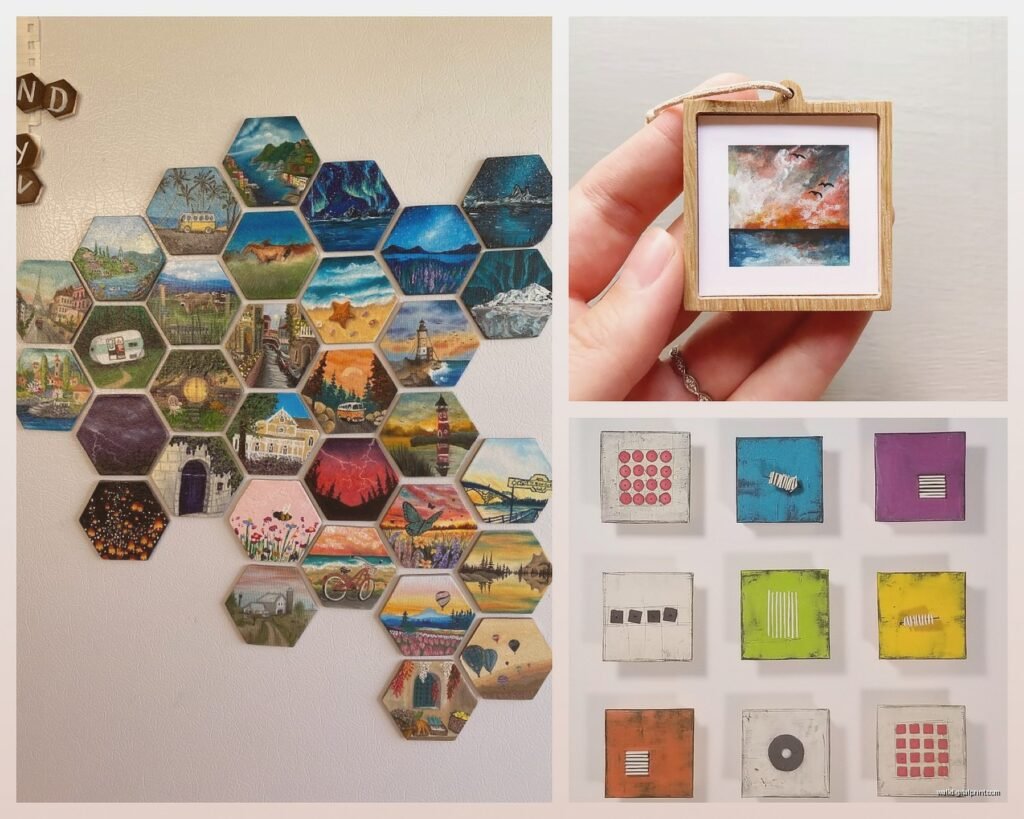
Okay so gallery walls with mini art. I’ve installed probably 30 of these at this point and here’s what actually works versus what Pinterest tells you works.
You need an anchor. Even with all small pieces, pick one that’s slightly larger or has a bolder frame or more visual weight. Put that one first—and yeah, I mean literally hang it first, not just plan it first. I use that as my center point and build around it.
The spacing thing is gonna make or break this. With small pieces, keep them closer together than you think—like 1.5 to 2 inches apart max. When you space them too far apart, your eye doesn’t read it as a collection, it just looks like random stuff floating on a wall. I learned this by doing it wrong approximately eight times before my mentor was like “Sophia, they need to talk to each other.”
My Actual Process for Planning Gallery Walls
I’m gonna sound like everyone’s mom but seriously, lay it out on the floor first. Take a picture from above. Look at it on your phone. Your phone doesn’t lie—if it looks weird in the photo, it’ll look weird on the wall.
I use painter’s tape to mark the outer boundaries on the wall. Just the perimeter, not every single piece because I’m not a masochist. Then I start with the middle/anchor piece and work outward.
Oh and another thing—measure your wall height and mark the center point. The center of your gallery wall cluster should be around 57-60 inches from the floor, which is average eye level. I see so many DIY gallery walls that are weirdly high or low because people just started hammering wherever.
Mixing Frame Styles Without Looking Chaotic
This is where people get nervous. You can totally mix frame colors and styles with mini art, but you need a connecting element. Pick one:
- All the same mat color (white mats with different frames is super forgiving)
- All the same frame color with different styles
- All the same frame style in different colors
- A consistent color palette in the actual artwork
I did a wall in my office with all different vintage frames from thrift stores—brass, wood, black metal—but every single print was black and white photography. The artwork unity made the frame chaos work. If I’d had colorful art AND mixed frames, it would’ve been a mess.
Wait I forgot to mention—if you’re buying new frames, IKEA’s FISKBO frames in 4×6 and 5×7 are like stupidly affordable and they come in a bunch of colors. I buy them in bulk. The 4×6 ones are literally under two dollars. You can do a whole gallery wall for like thirty bucks in frames.
What to Actually Put in Them
So content matters more with small pieces because you’re gonna be closer to them usually. Super detailed photographs get lost—you need bold, simple compositions. Here’s what I use constantly:
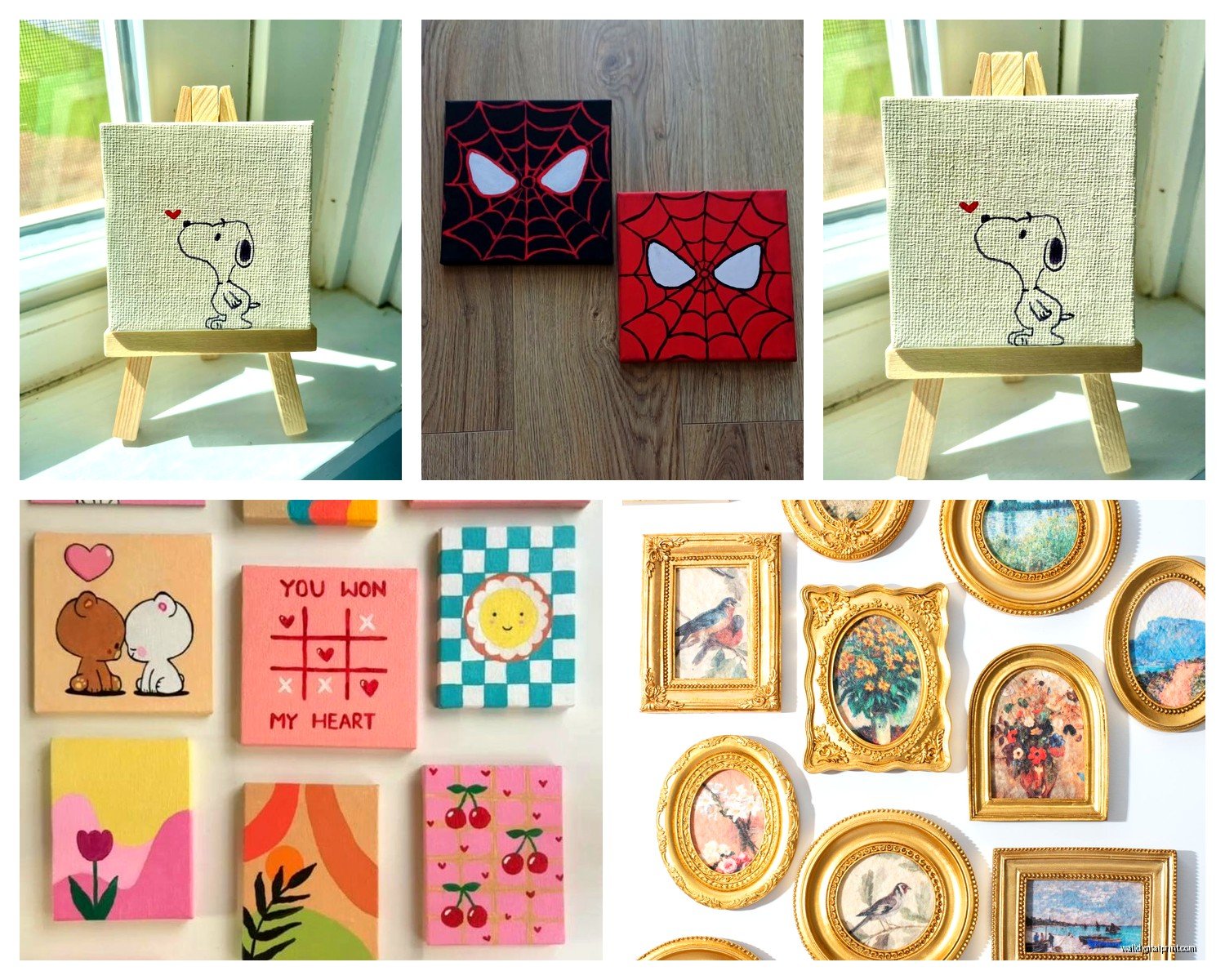
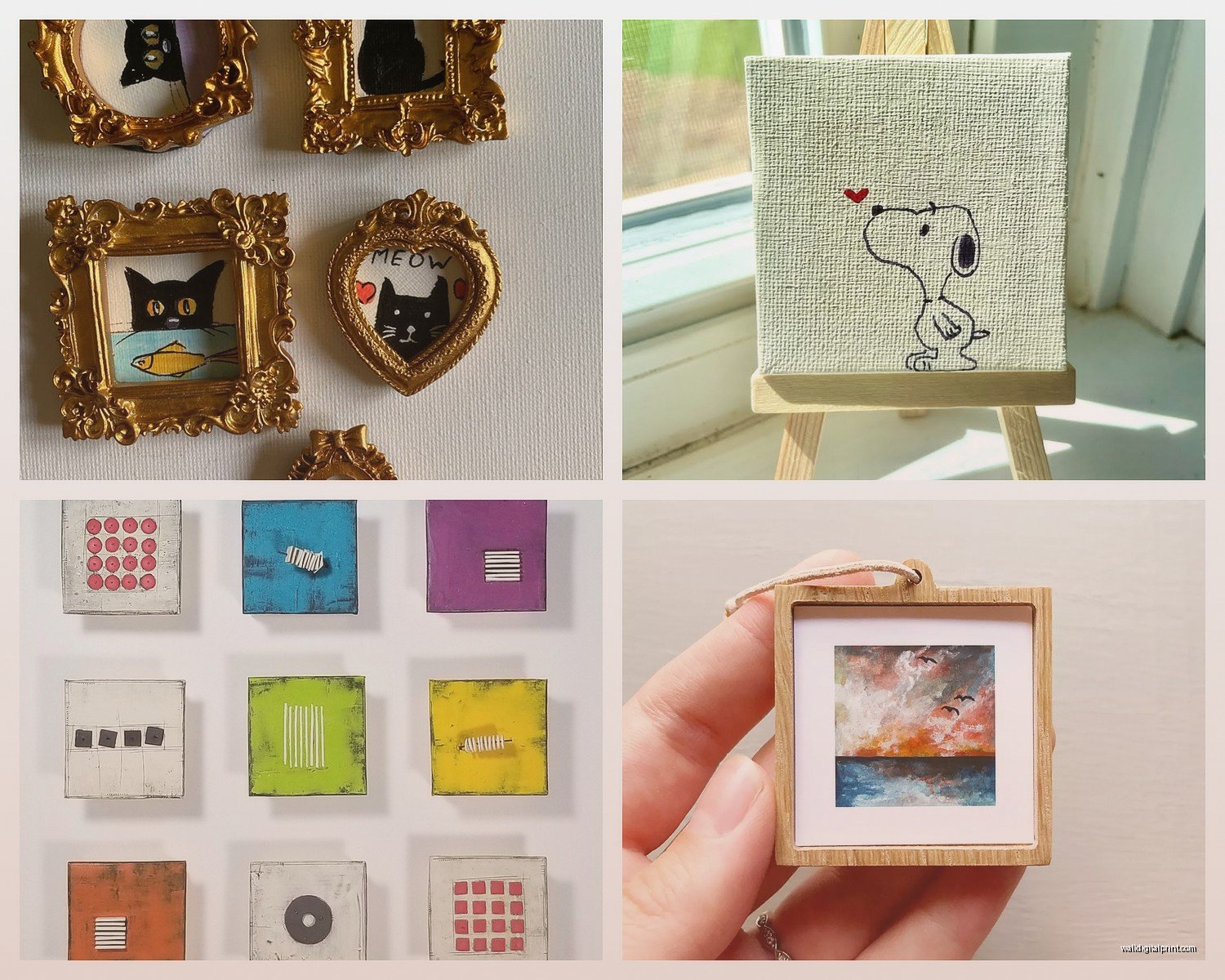
- Line drawings and simple illustrations
- Botanical prints with clean backgrounds
- Abstract geometric stuff
- Typography prints (but not those cheesy “live laugh love” things please)
- Vintage stamps or postcards
- Small original watercolors
- Book pages or sheet music for a vintage vibe
Etsy is obviously a goldmine for printable art. I have a whole folder of downloads I’ve bought over the years. Society6 does small prints too, and their quality is actually pretty consistent. For original stuff, I hit up local art markets—small pieces from emerging artists are usually affordable and you get something nobody else has.
This is gonna sound weird but I’ve framed fabric swatches before. Got this gorgeous William Morris reproduction fabric, cut it into 6×6 squares, and framed eight of them in a grid. Looked expensive, cost basically nothing.
The Technical Stuff Nobody Talks About
Hanging mini art is annoying because the hardware is tiny and if you’re off by half an inch, it’s super noticeable in a cluster. I use these Command picture hanging strips for anything under 8×10—the small ones hold up to 3 pounds which is plenty. No holes, easily adjustable, and my landlord doesn’t hate me.
For gallery walls, I’ve started using the gallery wall kits from Amazon that come with a paper template. You tape the template to the wall, hammer through it, then tear it off. Saves so much measuring and remeasuring and standing back and squinting and measuring again.
Level apps on your phone work fine, but honestly? I bought a cheap laser level for like fifteen bucks and it changed my life. You can project a horizontal line across the whole wall and align all your pieces to it.
Lighting Makes a Huge Difference
Small art needs good lighting or it disappears into the wall. If you’ve got overhead lighting, you’re probably fine, but if your mini gallery wall is in a dim corner, consider adding a picture light or even just a small LED strip above it. I installed battery-operated puck lights above a client’s bathroom gallery wall and it went from “cute I guess” to actually being a focal point.
Common Mistakes I See Constantly
Going too matchy-matchy. If every frame is identical and every mat is identical and all the art is the same size, it looks like a hotel. You need some variation.
Hanging them too high. I said this already but I’m saying it again because it’s the number one thing. Most people hang art too high. Your gallery wall center should be at eye level when you’re standing, not when you’re on a ladder.
Not committing to enough pieces. Three tiny frames on a big wall looks unfinished. If you’re doing small art, you need quantity. Either cluster a bunch together or don’t bother with small pieces at all.
Forgetting about visual weight. A heavy black frame with a dark print has more visual weight than a thin gold frame with a light watercolor. Distribute the heavier pieces around your gallery wall so they’re not all clumped on one side.
Budget-Friendly Approaches
I’m gonna be real, you can do this cheap. Thrift stores have small frames constantly—like piles of them. Buy them, spray paint them all the same color if needed, done. Printable art from Etsy ranges from free to like eight bucks usually. Print at home if you have a decent printer, or upload to Walgreens/CVS photo printing for better quality.
My nephew’s apartment wall that I mentioned? We did twelve 5×7 frames, all spray painted matte black, with free botanical prints I found from a museum archive online. Total cost was maybe forty dollars including the spray paint and printing.
For original art on a budget, check out student art shows at local colleges. I’ve bought beautiful small originals for $20-50. Also, paint your own if you’re feeling brave—abstract stuff is forgiving and small canvases are cheap.
When to Skip Mini Art Entirely
Not every space needs small art. If you have a huge empty wall, a gallery wall of mini pieces is gonna look scattered unless you do like 20+ pieces, which is a lot of commitment. Sometimes one big canvas is just the better move.
Also if your wall has a lot of architectural detail—like paneling or textured wallpaper—small pieces get lost. You need simpler backgrounds for mini art to read properly.
And honestly? If you’re not willing to plan it out, skip the gallery wall. Random small frames scattered around with no thought process just looks messy. Either commit to the layout or go bigger and simpler.
Quick Styling Tips
Layer small framed pieces on shelves and mantels instead of hanging everything. It’s less permanent and you can switch things around easily.
Use small art in unexpected places—the inside of a bookshelf, leaning against the backsplash in a kitchen, on a bathroom counter propped against the wall.
Create a salon wall where you mix small and medium pieces together. The variety in sizes actually makes the small ones more interesting.
Try a grid layout if you’re nervous about asymmetry. Nine identical frames in a perfect 3×3 grid is always gonna look intentional and clean.
Okay I think that covers most of what I’ve learned through trial and error and that one time I had to redo an entire gallery wall because I didn’t use a level and everything was tilted like 3 degrees. My cat was judging me from the couch the whole time, which didn’t help.