Wall Art Guide, Wall Art Tutoriels
Modern Wall Art: Contemporary Design Trends 2026
May
So I just got back from this gallery opening and honestly the wall art trends for 2026 are kinda wild but also way more accessible than you’d think. Like, you don’t need to drop $3000 on a single piece anymore to look current.
Oversized Abstract Pieces Are Still Having a Moment
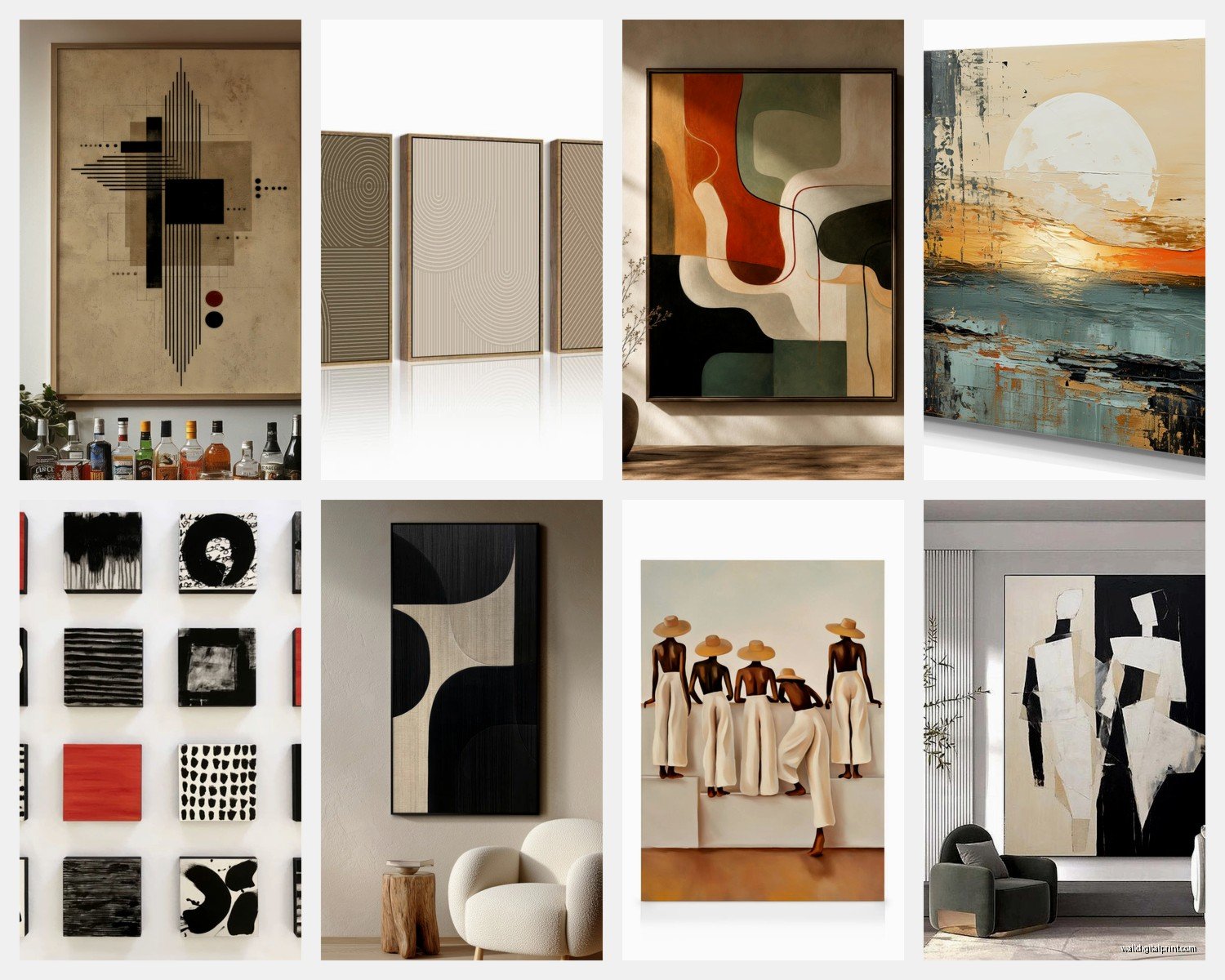
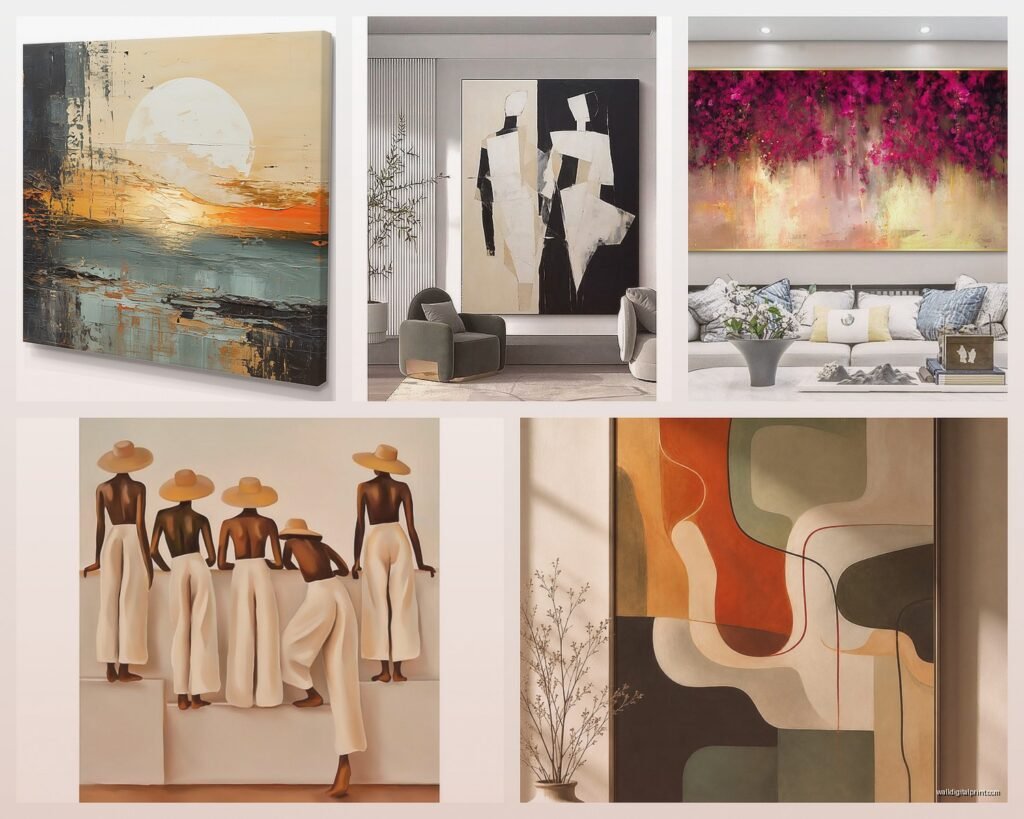
Okay so first thing – those massive abstract pieces? Still absolutely everywhere but the vibe has shifted. We’re moving away from the millennial pink and navy blue combo (thank god) and into these muddy tertiary colors. Think burnt sienna mixed with olive green, or this gorgeous dusty mauve that looks almost grey in certain light. I bought one for my dining room last month and my sister thought I’d painted it myself because it had this really organic, unfinished quality to it.
The trick with these is scale. Like actually measure your wall because I cannot tell you how many times clients send me photos like “does this look right” and it’s a 24×36 inch piece on a 12-foot wall and it just looks… sad? You want something that takes up at least 60-70% of your wall space if you’re going for that statement piece energy.
Where to Actually Find Affordable Large-Scale Art
- Saatchi Art has been killing it with emerging artists – filter by size first
- Etsy shops that do custom sizing (there’s this one seller, ArtByMara something, who’ll paint to your exact dimensions)
- Minted’s new artist program launched in late 2025 and they have way better quality than before
- Local art schools during grad shows – seriously this is where I find 80% of my coolest pieces
Oh and another thing – if you’re gonna go big, get it professionally hung. I tried to DIY a 48×60 inch canvas last year and put three holes in my wall before admitting defeat. The hanging service at most frame shops is like $75 and totally worth it.
Sculptural Wall Art Is Taking Over Flat Surfaces
This is where things get interesting. We’re seeing this huge shift toward three-dimensional wall pieces. Not quite sculpture, not quite painting… somewhere in between. I installed this woven fiber piece in a client’s entryway last week that literally sticks out 6 inches from the wall and casts these incredible shadows throughout the day.
The materials are getting really experimental too. Plaster relief work, ceramic tile installations, metal with patina finishes, even preserved moss arrangements (though those need more maintenance than sellers let on, just FYI). My friend bought one of those moss walls and forgot to mist it for like two weeks and it basically turned into expensive dried herbs.
Mixing Textures on One Wall
What’s actually working right now is creating a textural gallery wall instead of just different frame styles. So like:
- One woven piece
- A metal sculpture
- Maybe a traditional framed print
- Some ceramic tiles mounted on risers
The key is keeping the color palette super tight – like three colors max across all pieces. Otherwise it looks like a craft fair exploded on your wall (been there, had to redo it).
Digital Art and Projection Mapping
Okay this is gonna sound weird but digital frames have finally gotten good enough that they don’t look tacky anymore. Samsung’s The Frame TV evolved and now there are actual digital art displays that cycle through pieces and the resolution is insane. I was super skeptical but saw one at my dentist’s office of all places and had to stop and ask about it.
The cool part is you can subscribe to art services – there’s one called Depict that curates contemporary digital art and your display changes monthly. It’s like $30/month which seems expensive until you realize buying one original piece costs way more and you’re stuck with it forever.
Projection Art for Renters
Wait I forgot to mention – if you’re renting and can’t put holes in walls, projection art is becoming huge. These compact projectors that cast art onto blank walls. I tested one in my bedroom (the Capsule 3 I think?) and you can project anything from moving abstract patterns to static images. It’s perfect for that one weird wall that’s too small for furniture but too big to leave empty.
My cat absolutely hates it though, she keeps trying to catch the projected images and runs into the wall. It’s hilarious but also concerning.
Line Art But Make It Complex
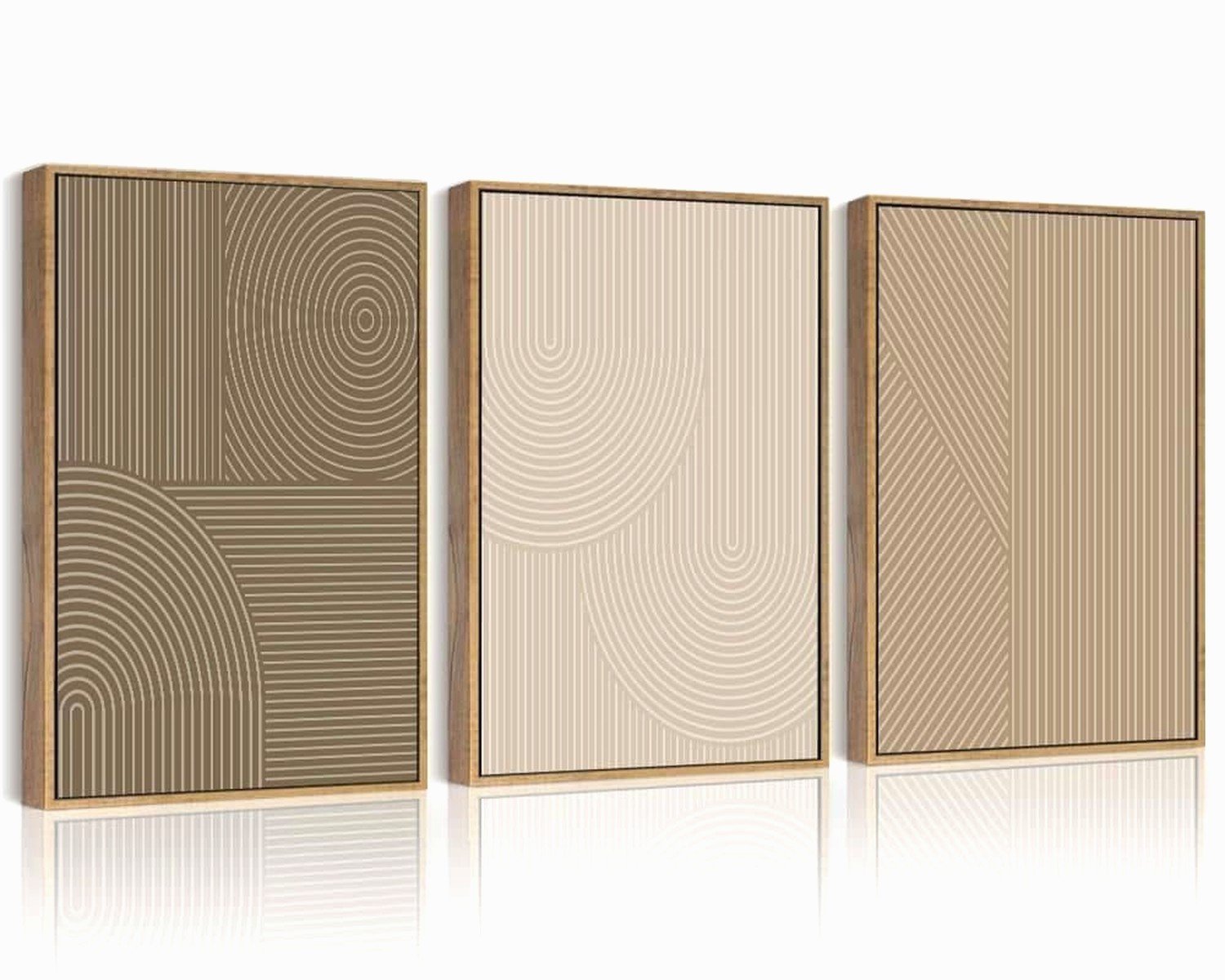
Remember when everyone had those single-line face drawings? Yeah that’s evolved. The line art trend is still here but it’s gotten way more intricate. We’re talking layered line work, multiple exposure effects, basically line drawings that look simple from far away but have crazy detail up close.
There’s this artist I found on Instagram – I wanna say her handle is something like @lines.and.spaces – who does these architectural line drawings that are partially geometric and partially organic and they’re just stunning. The price point is reasonable too, like $200-400 for an original.
DIY Line Art (If You’re Brave)
Full transparency, I tried making my own line art piece during a slow week in January and it took me literally 14 hours. BUT if you have a decent hand and some patience, here’s what actually worked:
- Get heavyweight paper or canvas – minimum 140lb
- Use Micron pens in various sizes (the 01 and 03 are workhorses)
- Sketch lightly in pencil first no matter what anyone says about “just going for it”
- Work in sections so you don’t smudge everything with your hand
- Get it professionally scanned and printed if you want multiple versions
Or just buy one from an actual artist because they’re way better at it and your time is valuable.
Vintage Photography Prints in Modern Frames
This trend is so good right now. Taking vintage black and white photography – like actual vintage stuff from the 60s and 70s, not Instagram filters – and putting them in super minimal modern frames. The contrast between old and new is just *chef’s kiss*.
I’ve been hunting through estate sales and online archives for these. The Library of Congress has tons of public domain photos you can download in high res and print yourself. There’s also this site called Photomyne where people upload scanned family photos and some are available for licensing.
The framing is crucial though. You want really thin black or natural wood frames – nothing ornate. Let the photo be the star. And mat them generously. Like 4-6 inches of mat on all sides. It gives them breathing room and makes even a small print feel important.
Monochromatic Installations
Okay so this is super specific but it’s showing up everywhere in 2026 – entire walls dedicated to one color but in different mediums and shades. I did this in my office with various blue pieces and it’s weirdly calming. You’d think all one color would be boring but the different textures and tones create this subtle depth that’s really sophisticated.
For this to work you need like 5-7 pieces minimum. Mix paintings, prints, maybe a textile piece, some photography. All in variations of your chosen color. Navy to sky blue, or cream to chocolate brown, or sage to forest green. The gradient effect happens naturally when you arrange them.
My client canceled yesterday so I spent an hour comparing different “white” artworks online and there are literally hundreds of shades. Warm white, cool white, off-white with grey undertones, white with cream undertones… it’s overwhelming but also kinda fascinating?
Art That Responds to Light
This is super trendy right now – pieces that look completely different depending on lighting conditions. Iridescent paints, metallic leafing, pieces with translucent layers. I have this one print that’s done with interference pigments and it literally changes color as you walk past it. Looks purple from one angle, green from another.
There’s also art printed on metallic paper or with metallic inks that catches light throughout the day. Way more interesting than static matte prints. A bit more expensive but the effect is worth it if you have good natural light in your space.
Backlit Options
Some artists are creating pieces specifically designed to be backlit. Like you mount LED strips behind them and the light shines through certain areas. It’s dramatic but you gotta be careful it doesn’t look like a hotel lobby. The ones that work best have subtle backlighting, not like Vegas sign level brightness.
Sustainable and Natural Materials
Can’t ignore this trend – art made from reclaimed wood, recycled materials, natural fibers. It’s not just greenwashing anymore, artists are creating genuinely beautiful work with sustainable materials. There’s this whole movement of using plant-based dyes and organic canvases.
I’m seeing a lot of pressed botanical art too. Not the grandma-style pressed flowers in oval frames but modern interpretations – large-scale ferns pressed under glass, arrangements of preserved plants in shadow boxes, even pieces where the artist has embedded actual plant materials into handmade paper.
The only downside is these pieces can be fragile. I learned this the hard way when I bought a gorgeous dried grass installation and my dog’s tail knocked it right off the wall. Had to get it repaired and now it lives in a room she’s not allowed in.
Typography and Text-Based Art
Words on walls are still happening but the aesthetic has matured. We’ve moved past “Live Laugh Love” and into actual poetry excerpts, literary quotes, or abstract text pieces where the words are almost illegible but create a visual pattern.
Foreign language text is huge right now too. Arabic calligraphy, Japanese characters, Sanskrit – but please please please make sure you know what it actually says. I had a client who bought this “beautiful Chinese art” and hung it in their dining room and their neighbor informed them it was a menu from a restaurant.
Custom text art is also pretty accessible now. Sites like Minted and Artifact Uprising let you create prints with your own text in various fonts and layouts. I made one with coordinates of places I’ve lived and it actually turned out really cool.
Smaller Gallery Walls with Breathing Room
The gallery wall isn’t dead but it’s evolved. Instead of cramming 20 pieces together in a salon-style hang, we’re doing 3-5 carefully chosen pieces with significant space between them. Like 6-8 inches minimum. It looks more curated and less cluttered.
The formula that’s working: one large anchor piece (maybe 24×36), two medium pieces (16x20ish), and one or two small pieces (8×10). Arrange them in an asymmetrical but balanced way. Not in a grid, not in a perfect line, just… balanced. This is where it helps to lay everything out on the floor first and take a photo to see how it looks.
Oh and matching frames are back in. Not necessarily identical but same color/finish across all pieces. It unifies the look without being matchy-matchy boring.
Regional and Cultural Art
There’s this cool shift toward showcasing art from specific regions or cultures. Not in an appropriation-y way but genuinely supporting artists from different backgrounds. Indigenous art, African contemporary art, South Asian modernist pieces – they’re finally getting mainstream gallery representation.
If you’re gonna go this route, buy from actual artists or galleries that represent them properly. Not from HomeGoods or whatever. Do like ten minutes of research about the artist and the cultural context. It makes the piece more meaningful and ensures the artist actually gets paid fairly.
I recently bought this beautiful piece from a Navajo artist through an Indigenous-owned gallery and the whole experience was educational and the art is stunning. Cost more than buying random stuff online but worth every penny.
Mixed Media Getting Weird (in a Good Way)
Artists are combining materials in unexpected ways and honestly some of it is incredible. Paint with embroidery, photography with hand-drawn elements, digital prints with physical objects attached. The boundaries between mediums are just dissolving.
Saw this piece last week that was a printed photograph with actual dried flowers glued onto it where flowers appeared in the image. Sounds gimmicky but it was actually beautiful and added this tangible element that made you want to get close and examine it.
The only thing with mixed media is it’s harder to clean and maintain. Can’t just wipe it down. Gotta dust carefully around all the dimensional elements. But if you’re not a total slob it’s fine.
Okay I think that covers most of what’s actually current and not just trend-forecaster nonsense. The main thing is buy what you genuinely like because you’re gonna be looking at it every day. Trends are fun to know about but don’t stress if your style doesn’t match what’s “in” right now.