Wall Art Guide, Wall Art Tutoriels
Wings Wall Art: Angel & Bird Wing Symbolic Designs
Jun
So I’ve been absolutely obsessed with wings wall art lately and honestly it started because this client wanted something “spiritual but not too churchy” for her meditation room and I went down this whole rabbit hole of angel wings versus bird wings and the symbolism is actually way more specific than you’d think.
The Whole Angel Wings Thing Actually Matters
Okay so angel wings are tricky because they can go really tacky really fast. Like there’s a massive difference between the giant Instagram-worthy white feathered wings everyone was mounting in their entryways in 2019 (still see those sometimes and they’re… a choice) versus actual artistic representations that don’t make your house look like a themed restaurant.
The best angel wing pieces I’ve found are either really minimalist line drawings or they go the opposite direction and are super ornate vintage-style reproductions. There’s no good middle ground honestly. I tested this theory by hanging different styles in my own hallway for like three months each and the mid-range realistic ones just felt weird. Too literal maybe?
What you want is either sculptural metal wings—the kind with individual feather cutouts that create shadows on the wall—or printed art that treats wings more abstractly. I found this incredible set at an estate sale that’s just gold leaf on black canvas showing wing outlines and it’s perfect because it reads as wings but also just looks like interesting geometric shapes from certain angles.
Size Matters More Than You Think
This is gonna sound weird but wing art follows different size rules than regular wall art. Because wings are symmetrical and they suggest movement upward, you can actually go bigger than you normally would in a space. Like I put 4-foot wingspan metal wings in a room with 8-foot ceilings and it should’ve overwhelmed the space but it didn’t? The vertical emphasis tricks your eye into thinking the ceiling is higher.
But also small delicate wing prints feel too timid most of the time. You need either big statement pieces or clusters of smaller wing studies. One medium-sized angel wing painting just floating on a wall looks unfinished.
Bird Wings Are Where It Gets Really Interesting
Oh and another thing—bird wing symbolism is super specific depending on the bird. I didn’t know this until I was sourcing pieces for a nature-themed clinic and had to actually research what different wings meant.
Eagle wings are obviously about freedom and power and America and all that. They’re great for offices or studies, anywhere you want that ambitious energy. But they’re also kinda masculine-coded so if you’re going for softer vibes maybe skip these.
Dove wings are peace and spirituality but in a gentler way than angel wings. I use dove wing imagery in nurseries and bedrooms a lot. There’s this beautiful watercolor series I keep recommending that shows dove wings mid-flight with really soft gray and white tones.
Raven or crow wings are having a moment right now and I’m here for it. They bring in that dark academia aesthetic without being goth. The black feathers have this iridescent quality that good artists capture with blues and purples in the shadows. These work amazing in libraries or reading nooks or anywhere you want it to feel a bit mysterious.
Hummingbird and Small Bird Wings
Wait I forgot to mention—hummingbird wings are incredible for small spaces because they’re all about joy and energy but in a compact way. The wing structure is so different from larger birds, almost insect-like, and there’s some really cool macro photography art that shows the detail. I hung a series of four hummingbird wing studies in a tiny powder room and people always comment on them.
Sparrow and small songbird wings read as humble and everyday magic. They’re good for kitchens or breakfast nooks, spaces where you want warmth without being too precious about it.
Material Choices That Actually Work
Okay so I’ve tested a LOT of different materials for wing wall art because my cat knocked over a metal wing sculpture last year and I had to replace it and ended up trying like six different versions.
Metal sculptures: These are my favorite for dramatic impact. Look for powder-coated steel or iron, not the cheap tin stuff. You want some weight to it. The individual feather cutouts create the best shadows but they collect dust like crazy—I have to hit mine with compressed air every few weeks.
Canvas prints: Fine but basic. The problem with canvas wing prints is they often look too flat. Wings are all about dimension and texture, so a straight print doesn’t always capture that. If you go canvas, look for pieces with some painted texture or mixed media elements.
Wood carved or burned: This is where it’s at for rustic or boho spaces. I found this artist on Etsy who does pyrography wing designs on reclaimed barn wood and they’re stunning. The wood grain becomes part of the feather texture. Kinda pricey though.
Acrylic or resin: Modern and sleek. There are these cool translucent acrylic wing pieces that you mount with standoffs so they float off the wall. They catch light in interesting ways. I used frosted acrylic angel wings in a contemporary condo and they looked expensive as hell.
Feather and mixed media: Real feathers, fabric, metallic leaf, all that. These can be gorgeous but they’re high maintenance and if you have pets or kids just skip it. I learned this the hard way.
Placement Strategy That Nobody Talks About
This is important—wings have directional energy so where you place them changes the whole vibe of the room.
Wings pointing upward feel aspirational and spiritual. Good above beds (but not directly above where you sleep because that can feel heavy), behind altars or meditation spaces, in entryways where you want an uplifting first impression.
Wings spread horizontally feel protective and embracing. These work amazing behind seating areas like sofas or reading chairs. It’s like the wings are sheltering that space.
Folded or downward wings feel contemplative and grounding. I use these in bathrooms or dressing areas, places where you’re being intimate and quiet.
Single wings versus pairs is a whole thing too. Pairs are balanced and complete, good for formal spaces or anywhere you want symmetry. Single wings feel more dynamic and modern, like capturing a moment of movement. I actually prefer single wing designs most of the time because they’re less expected.
The Height Rule I Swear By
Hang wing art slightly higher than you would regular art. Because wings suggest upward movement, they look best when there’s some space below them. I usually go 60-65 inches to center instead of the standard 57. Unless they’re huge statement wings, then I actually go lower so you can see the detail.
Color Symbolism You Should Know
White wings are the obvious angel/purity thing but they’re also really versatile because they work with any color scheme. The trick is finding white wings with enough texture or shadowing that they don’t disappear on light walls.
Black wings are dramatic and protective. They’re having a moment in modern farmhouse and industrial spaces. I’m personally a bit tired of the all-black wing trend but it does photograph really well.
Gold or metallic wings bring in luxury and divine energy. These can go tacky fast though—look for subtle metallic accents rather than full-on gold spray paint situations. Brass and copper tones are safer than bright gold.
Natural bird coloring—browns, grays, iridescent blues and greens—these ground a space and bring in that nature connection. I use realistic bird wing art in spaces that need to feel calm and organic.
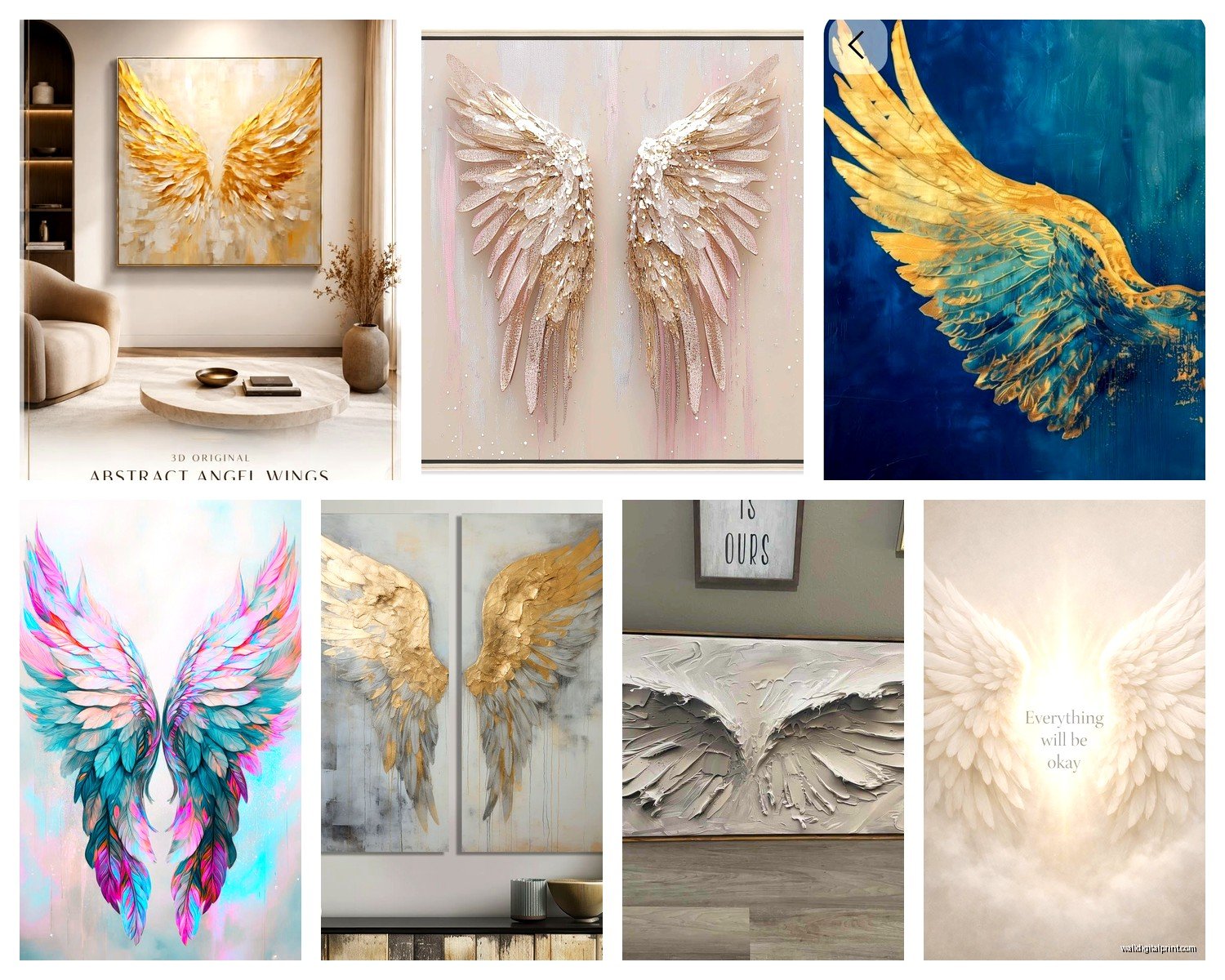
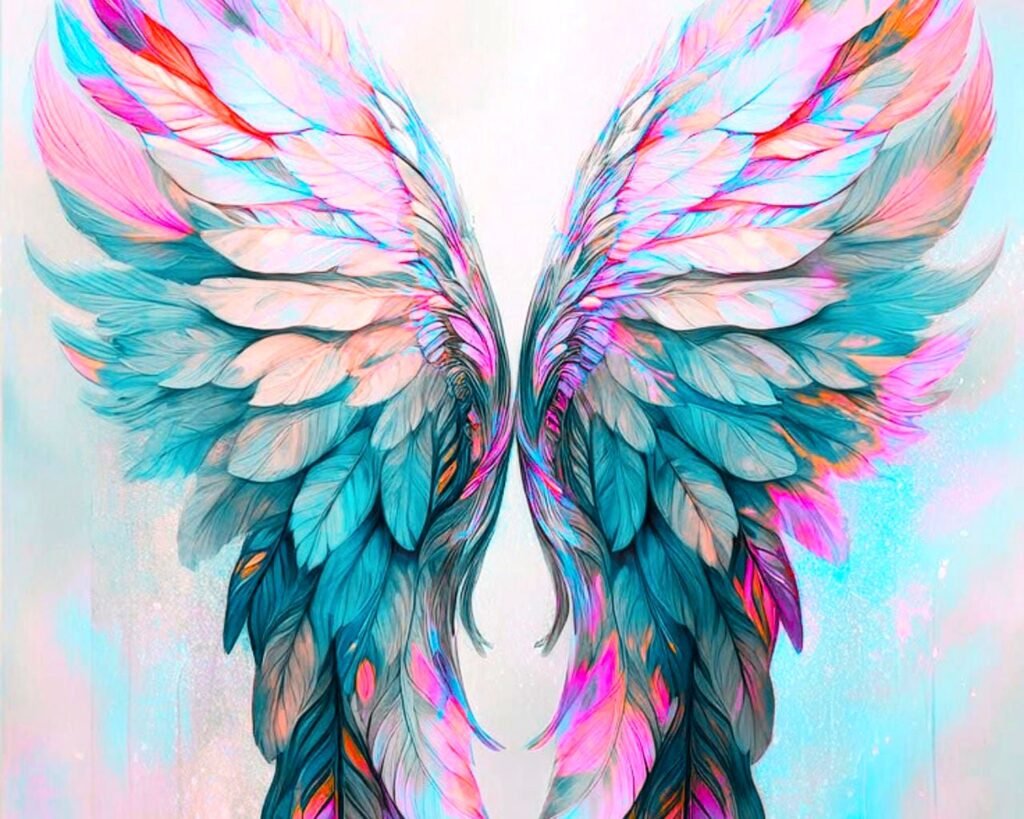
Colorful or rainbow wings are playful and contemporary. There’s this street art style wing mural trend that uses bright colors and I’ve seen it work in creative studios and kids’ spaces but it’s very specific. Not for everyone.
Mixing Wing Styles in One Space
Okay so funny story, I accidentally created this whole wing gallery wall because I couldn’t decide between an angel wing print and a vintage bird anatomy illustration and I just… hung them both? And then kept adding to it and now I have seven different wing pieces on one wall and it actually works.
The key to mixing wing styles is having a unifying element. For mine it’s black frames and a consistent color palette (all black and white with gold accents). But you could also unify through:
- All the same art medium (all photographs or all illustrations)
- Similar frame style even if different sizes
- Consistent matting approach
- Chronological theme like vintage scientific illustrations
- Geographic focus like “wings of the Pacific Northwest”
Don’t mix realistic and abstract on the same wall though. That’s where it gets messy. Pick one approach and stick with it.
The Spiritual Stuff If You’re Into That
Look I’m not super woo-woo but I’ve had enough clients ask about the energy of wing art that I’ve picked up some things. In feng shui, wings in the career/helpful people area (front right of your home) are supposed to bring support and opportunities. Wings in the relationship corner can symbolize freedom within partnership which is either good or concerning depending on your situation.
Angel wings specifically are considered protective in most spiritual traditions. A lot of people put them near entryways or children’s rooms for that guardian energy. I stay neutral on this stuff but I will say that intention matters—if you hang wings thinking they’re protective, you’ll probably feel more secure in that space just from the psychological association.
Bird wings connect you to specific animal medicine if you believe in that. Owl wings for wisdom, hawk wings for perspective, swan wings for grace and transformation. There are whole books about this if you wanna go deep.
Where to Actually Find Good Wing Art
Etsy is honestly your best bet for unique pieces but you gotta wade through a lot of manufactured print-on-demand stuff. Search for “original wing art” or “handmade wing sculpture” to filter better.
Estate sales and antique shops sometimes have incredible vintage bird prints and scientific illustrations. I found a set of 1920s ornithology wing studies for like forty bucks and they’re worth way more.
Local art fairs are good for finding sculptural wing pieces. Metalworkers and woodworkers often do wing designs.
For high-end stuff, galleries that focus on nature art or spiritual art usually have wing pieces. Expect to pay though.
HomeGoods and those stores have mass-produced wing art that’s fine for temporary solutions but it usually looks kinda cheap in person. The metal ones are better than the printed canvas ones there.
Avoiding the Instagram Cliché
The giant white feathered angel wings that everyone takes photos in front of? They’re fun for events or retail spaces but they date your home immediately. If you want wings that’ll still look good in five years, go more artistic and less literal.
Same with the rose gold geometric wire wings—they were everywhere in 2018 and now they scream “I decorated from a specific Target collection.” Not that there’s anything wrong with that but just know they’re trendy not timeless.
The wing styles that seem to endure are vintage scientific illustrations, quality metal sculptures with artistic interpretation, and abstract or minimalist representations. Basically anything that’s more about the concept of wings than trying to replicate actual wings.
I’m watching my neighbor’s dog this week and he keeps barking at my metal wings when the sun hits them a certain way so that’s been fun. Anyway.
Quick Fixes for Common Wing Art Problems
If your wings feel too religious and you want more neutral energy, pair them with secular elements like geometric art or abstract pieces. Context changes perception.
If they’re too dark or heavy, add lighting. Picture lights or uplighting can make black wings feel dramatic instead of gloomy.
If they’re getting lost on the wall, create a backdrop with paint. A darker wall color behind white wings or vice versa gives them definition.
If the scale feels off, it probably is. Wing art is hard to visualize from online photos. Cut out paper templates before you commit to placement.
The main thing is wings are such a loaded symbol that you gotta be intentional about what you want them to communicate in your space. They’re not neutral art—they bring specific energy whether you’re thinking about it consciously or not.