Wall Art Guide, Wall Art Tutoriels
3D Metal Wall Art: Dimensional Steel Sculptural Relief
Sep
So I’ve been totally obsessed with 3D metal wall art lately and honestly it started because a client wanted something “dramatic but not too much” in their dining room and I went down this rabbit hole of dimensional steel pieces that I can’t seem to climb out of.
What Actually Makes These Different from Regular Metal Art
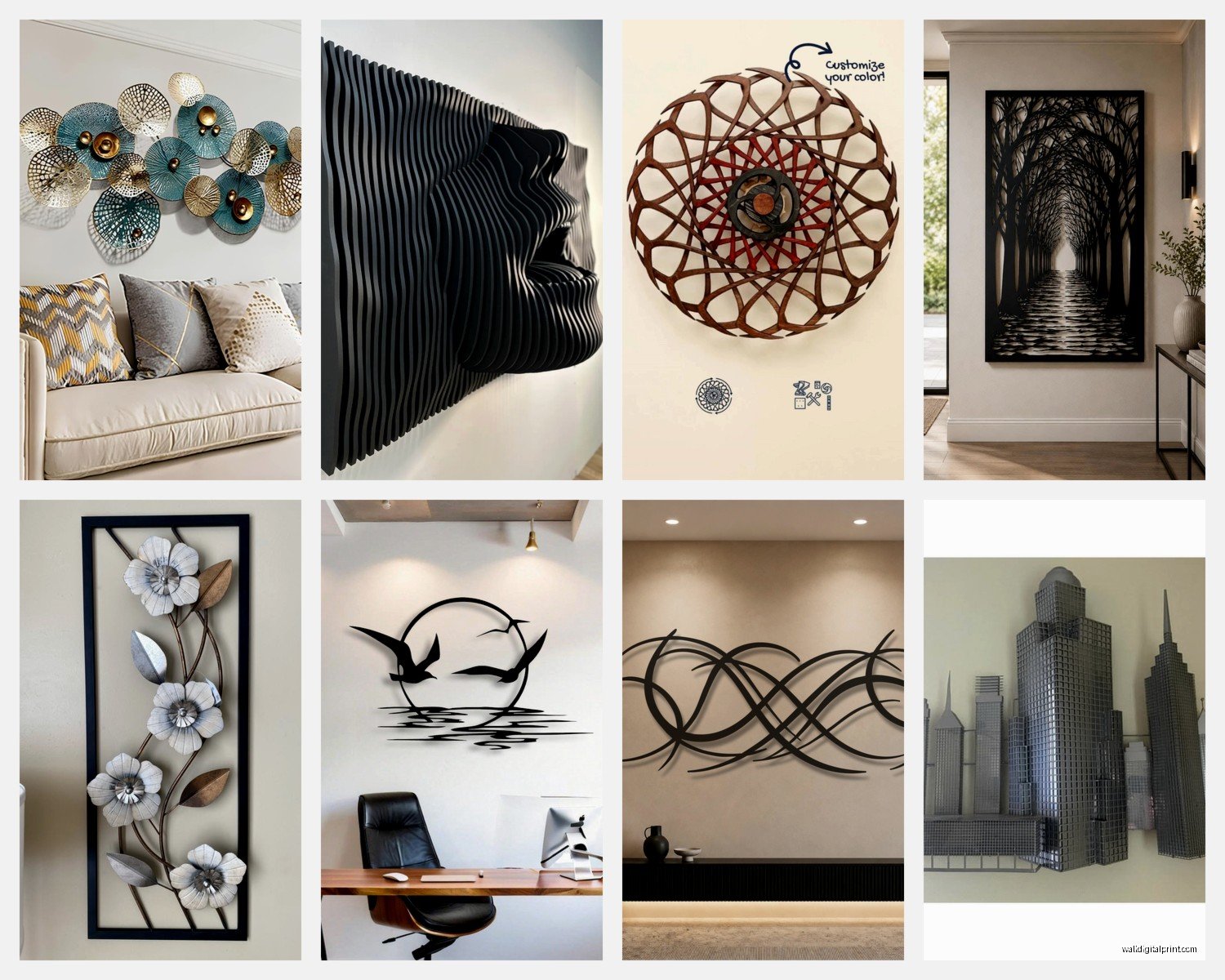
Okay so here’s the thing – when people say 3D metal wall art they usually mean pieces that have actual depth, like they’re not just flat cutouts. We’re talking sculptural relief work where parts of the design stick out from the wall at different levels. I spent way too much time (my dog was literally staring at me like “walk please?”) measuring the projection depths on different pieces and they range from like half an inch to sometimes 8-10 inches jutting out from the wall.
The dimensional aspect is what makes them catch light differently throughout the day which is honestly the whole point. A flat metal piece looks the same at noon and 6pm but these sculptural ones? Completely different shadows and highlights.
Types You’ll Actually See When Shopping
There’s basically three categories I keep running into:
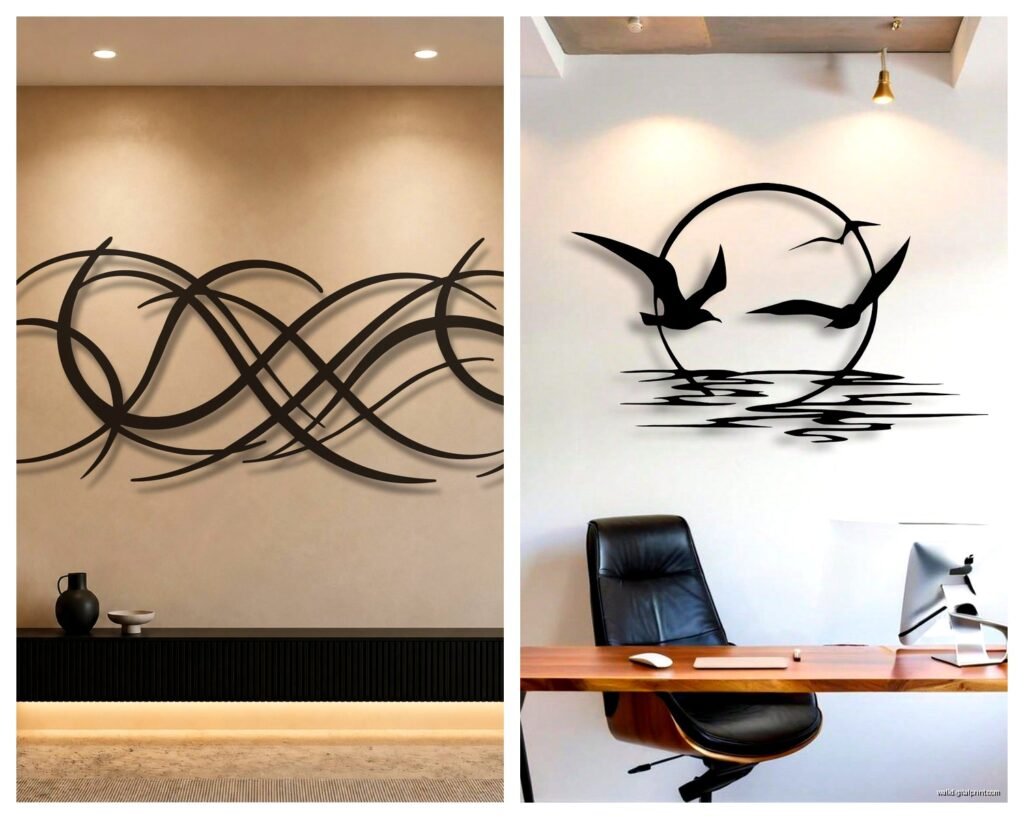
Geometric abstract stuff – think overlapping circles, angular shapes, that modern minimalist vibe. These are everywhere right now and range from $80 to like $600 depending on size and whether it’s powder-coated or just raw steel.
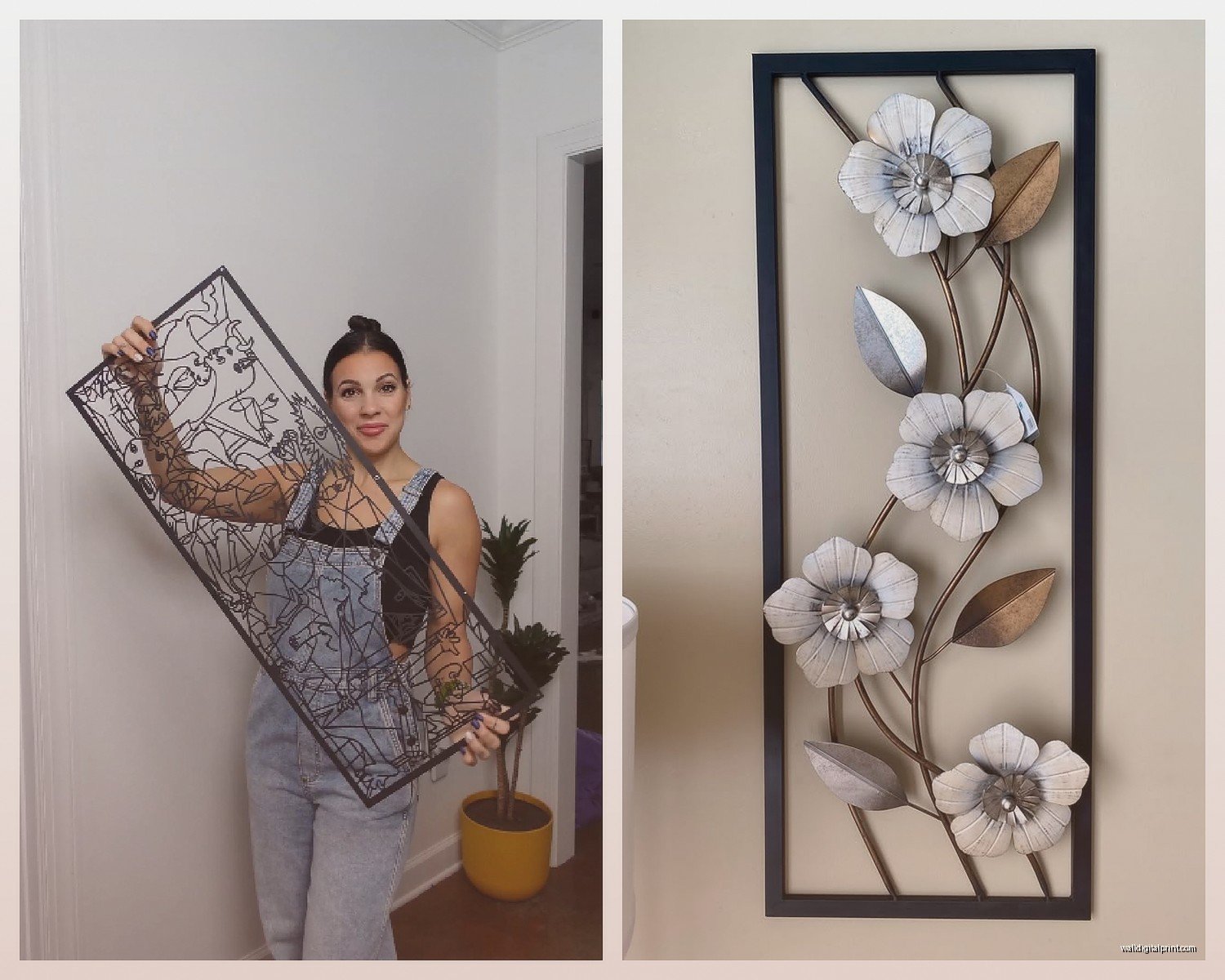
Nature-inspired – leaves, trees, ocean waves, mountains. I just installed this aspen tree one in a client’s entryway and it has different layers of branches that create crazy depth. These tend to be a bit pricier because there’s more detail work.
Industrial/architectural – gears, cityscapes, structural elements. Very urban loft aesthetic. My favorite one I’ve worked with had different finishes on each layer which made it feel more complex than it actually was.
Materials Matter More Than You’d Think
Most of what you’ll find is made from:
- Cold-rolled steel – this is the heavy duty stuff, usually powder-coated or painted
- Stainless steel – lighter, won’t rust, more expensive obviously
- Aluminum – way lighter which matters for installation but can look cheaper if it’s too thin
- Mixed metals – copper accents with steel base, brass details, etc.
The gauge of the metal actually matters. I learned this the hard way when I ordered what looked like a substantial piece online and it arrived and was so flimsy it wobbled when you touched it. Look for 16-gauge or lower numbers (which means thicker metal, it’s backwards and confusing). 18-gauge is okay for smaller pieces but anything larger than like 24 inches wide should be sturdier.
Where to Actually Buy These
Wait I forgot to mention – Etsy is honestly my secret weapon for this stuff. There are metalworkers on there doing custom dimensional pieces and you can often get something made to your exact size specs for less than mass-produced gallery prices. I have like three sellers I keep going back to.
For ready-made stuff:
West Elm and CB2 have decent options but you’re paying the markup. Their quality control is good though which matters when you’re dealing with something heavy hanging over someone’s couch.
Wayfair has a huge range from cheap to investment pieces. Read the reviews religiously because the product photos can be super misleading about actual depth and finish quality.
Local metal artists – if you have any art districts or maker spaces near you, this is where you find the really unique stuff. I found a sculptor who does these incredible layered mountain ranges that photograph like flat images but in person they’re like 6 inches deep.
Installation is Where People Mess Up
Okay so funny story, I once watched someone try to hang a 40-pound metal sculpture with those little sawtooth hangers that come with picture frames and yeah that lasted about 15 minutes before it crashed down. Luckily it was before the client moved in but still.
What You Actually Need
For pieces under 10 pounds – decent picture hangers are fine, just make sure you’re hitting a stud or using proper drywall anchors.
For 10-30 pounds – you’re gonna want heavy-duty picture hangers or better yet, install D-rings on the back of the piece and use wall anchors rated for at least double the weight. I use the Hillman Monkey Hooks for drywall and they’re honestly great.
For 30+ pounds – French cleats all the way. This is gonna sound weird but once you learn how to install French cleats you’ll want to use them for everything. It’s basically two interlocking pieces where one mounts to the wall and one to the artwork, and they slide together. Super secure and you can adjust positioning easily.
The stud finder thing – if your piece has multiple hanging points, try to hit at least one stud. Mark it with painter’s tape before you start drilling because I’ve definitely lost track of where the stud was after measuring three times.
Spacing from the Wall
This matters more with dimensional pieces because they already project outward. You want maybe half an inch to an inch of space behind the piece so it doesn’t sit flat against the wall – this creates better shadow depth. Some pieces come with built-in standoffs (little spacers) but if not you can use bumpers or even just washers behind your mounting hardware.
Placement Tips That Actually Work
I’ve installed probably 50+ of these things at this point and here’s what I’ve learned:
Height matters differently – with flat art you do that standard “center at 57 inches” rule but with sculptural pieces you sometimes want them higher because you’re seeing them from different angles as you walk through the room. I usually go 60-65 inches to center for dimensional work in living spaces.
Lighting is everything – seriously get some picture lights or wall washers. I was just watching The Bear the other day (completely unrelated but so good) and even their kitchen had dramatic lighting and it made me think about how much difference it makes. These pieces are designed to cast shadows so give them light to work with. Uplighting from below can be super dramatic if that’s your vibe.
Don’t center everything – this is my personal thing but I love offsetting dimensional pieces, especially over furniture. Instead of centering it over the sofa, shift it to one side and balance with other elements. Creates more visual interest.
Maintenance and Care
Most powder-coated or painted pieces just need dusting. I use a microfiber cloth and maybe compressed air for intricate designs where dust settles into the crevices.
For raw steel or untreated metal – these will develop patina over time which some people love but if you want to preserve the original finish you’ll need to seal it. Renaissance Wax is what museums use and it works great for metal art too. Just apply thin coats every six months or so.
Rust can happen with untreated steel especially in humid climates. Some pieces are deliberately rusted for that industrial look but if yours isn’t supposed to rust and it starts, you can use naval jelly to remove it then seal the metal.
Sizing Guidelines
This trips people up constantly. The general rule is your art should take up about 2/3 to 3/4 the width of the furniture below it but with dimensional pieces I actually go a bit smaller because they have more visual weight.
Like over a standard sofa (around 84 inches wide) I’d do:
- Single piece: 48-56 inches wide
- Gallery arrangement: total width around 60 inches
For statement walls with no furniture, you can go bigger and more dramatic. I did a 6-foot wide layered cityscape in a client’s office and it’s the first thing everyone comments on.
Combining Multiple Pieces
Oh and another thing – you can do arrangements with dimensional art but it’s trickier than with flat pieces. Keep spacing wider (4-6 inches between pieces minimum) so each sculpture has room to create its own shadow patterns. I usually stick to odd numbers and vary the depth of the pieces – like one that projects 3 inches, one at 6 inches, one at 2 inches.
Custom vs Ready-Made
If you’re gonna go custom, expect to pay $200+ for something small and decent quality. I had a piece made recently that was 40×30 inches with three layers of geometric shapes and it was $850 but it’s exactly the right colors and dimensions for the space. Sometimes that’s worth it.
Ready-made is obviously cheaper and faster. The quality range is huge though. I’ve seen $60 pieces from HomeGoods that look fine from 10 feet away and $2000 gallery pieces that are actual art investments.
Common Problems and Fixes
The piece looks smaller in person than online – measure everything twice, check the dimensions in the listing, and use painter’s tape to outline the size on your wall before buying. I do this for clients every time now.
Colors don’t match the photo – metal finishes photograph weird. Oil-rubbed bronze can look black online but brownish in person. If color matching matters, order samples or ask the seller for photos in natural light.
It’s too heavy for your wall – older plaster walls or thin drywall might need extra reinforcement. You can add blocking behind the drywall or mount a piece of plywood to studs first, then mount the art to that.
The shadows are wrong – this sounds weird but I’ve had pieces where the sculptural elements faced the wrong direction for the room’s natural light. You can sometimes flip or rotate the piece, or just add artificial lighting to control the shadow patterns.
Trends I’m Seeing Right Now
Mixed materials are huge – steel with wood elements, metal with acrylic, copper and brass combinations. There’s this one artist doing steel frames with resin pours in the negative spaces and they’re stunning.
Kinetic elements are starting to show up more – pieces with parts that move slightly with air currents. Not full mobiles but subtle motion that adds another dimension.
Oversized single-layer pieces instead of complex multi-layer – like one giant leaf cutout that’s 5 feet tall but only projects 2 inches from the wall. More minimalist but still dimensional.
The key thing I always tell people is don’t buy it just because it’s trendy or because it fills a blank wall. These pieces are substantial both physically and visually, so make sure you actually love it because you’re gonna be looking at it every day and it’s not exactly easy to swap out like a canvas print.