Wall Art Guide, Wall Art Tutoriels
3D Wall Art for Living Room: Dimensional Main Space Relief
Sep
So I’ve been obsessing over 3D wall art lately because honestly flat walls just feel so…boring? And I spent like three weeks testing different pieces in my own living room after a client asked me about it and I realized I didn’t have good answers.
The thing about dimensional wall art is it completely changes how light moves through your space. I hung this metal wave sculpture above my couch and depending on the time of day it looks totally different because of shadows and the way light hits the raised surfaces. Game changer.
What Actually Counts as 3D Wall Art
Okay so this is gonna sound obvious but I had a friend who thought 3D wall art meant those lenticular prints that change when you walk past them. No. We’re talking about pieces that physically come off the wall—sculptures, reliefs, layered wood, metal installations, that kind of thing.
The categories I’ve found most practical for living rooms:
- Metal wall sculptures (the geometric ones are having a moment)
- Layered wood art—usually laser cut with different depths
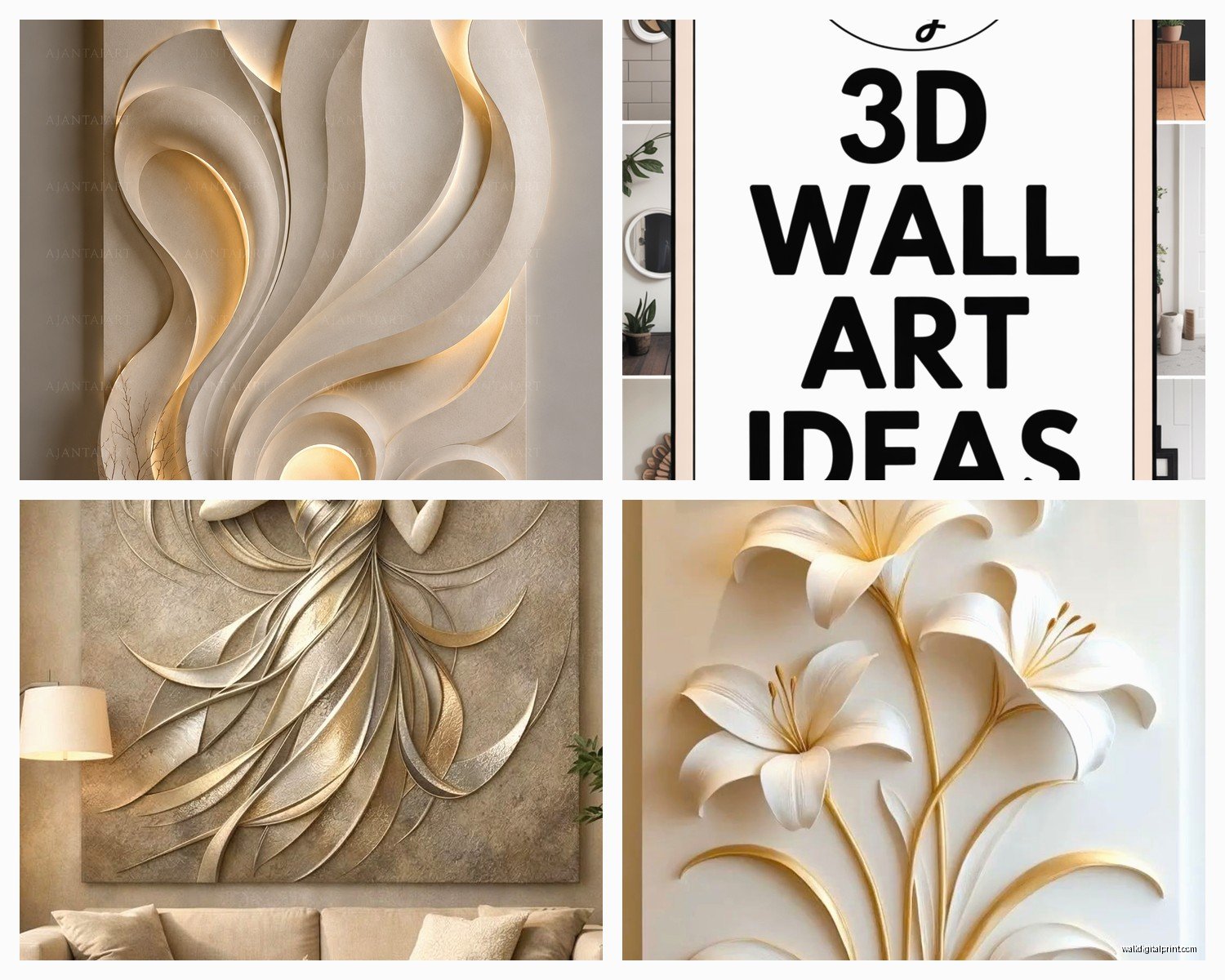
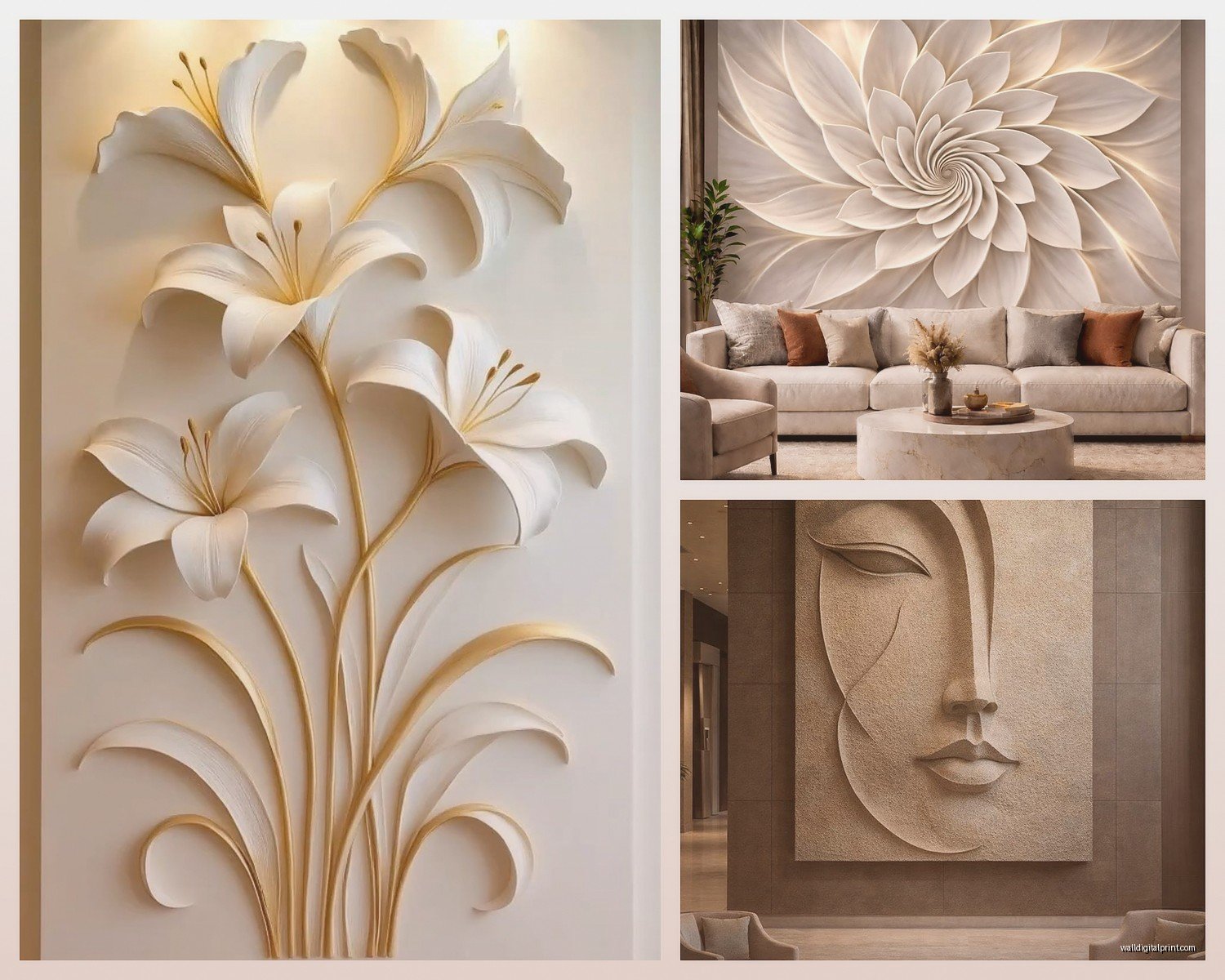
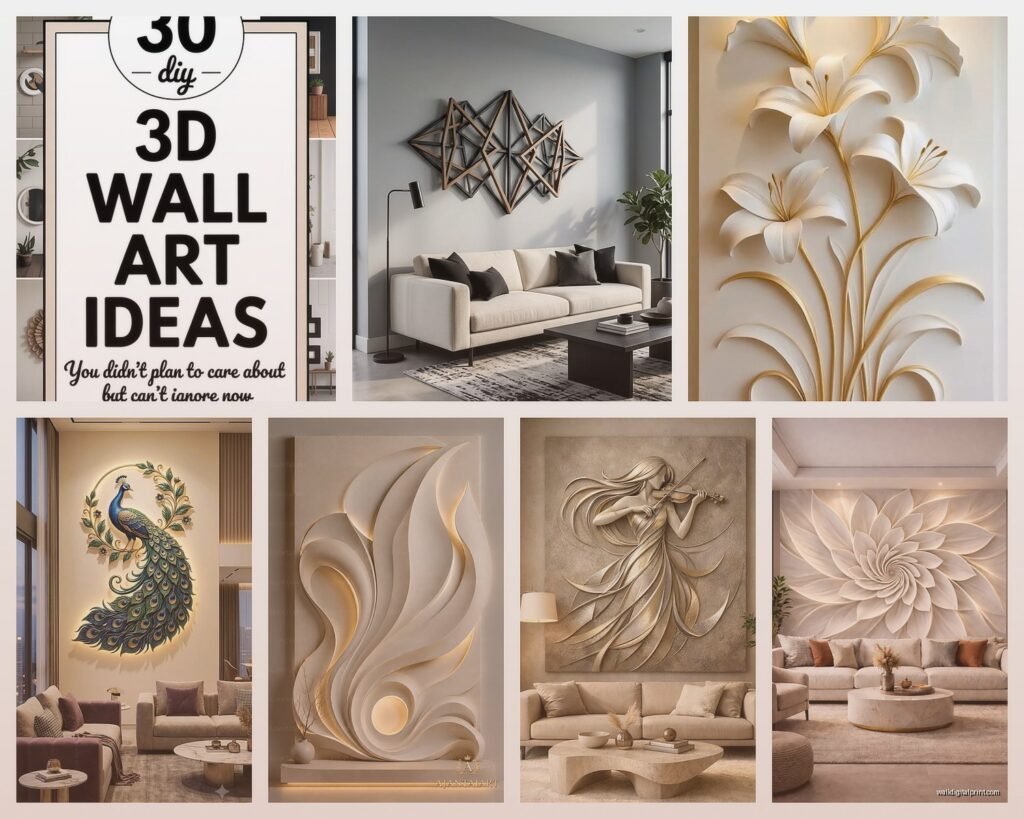
- Ceramic or plaster reliefs
- Mixed media assemblages
- Fabric or textile dimensional pieces
- Shadow boxes with objects arranged inside
Each type works differently depending on your wall color and lighting situation which I’ll get into because it actually matters more than you’d think.
Size and Scale Without Losing Your Mind
I made this mistake in my own place first so learn from my pain. I ordered this gorgeous geometric brass piece online, looked perfect in the photo, arrived and it was like…the size of a dinner plate. Looked ridiculous on my 12-foot wall.
Here’s what I do now and tell everyone: measure your wall space obviously but think in thirds. If you’ve got a standard sofa (around 7-8 feet), your wall art should be roughly two-thirds that width. So you’re looking at something in the 50-60 inch range. You can go smaller if you’re doing a gallery cluster but a single statement piece needs presence.
The depth matters too. Most 3D pieces project anywhere from 2 to 8 inches off the wall. For living rooms I usually stick to the 3-5 inch range because anything deeper starts interfering with furniture placement and you don’t want people bumping into it when they walk past the couch.
Oh and another thing—consider your ceiling height. Standard 8-foot ceilings can handle most dimensional art fine but if you’ve got tall ceilings like 10+ feet you might want something that extends higher vertically to fill the space properly.
Materials That Actually Work in Real Life
I’ve tested probably 15 different material types at this point and here’s what holds up:
Metal is my go-to for most clients. It’s durable, doesn’t fade, easy to clean (just dust it), and the way it catches light is unmatched. I’ve got a brushed aluminum piece that’s been up for two years and looks identical to day one. The downside is weight—you need serious anchors. I learned this when a wrought iron piece nearly pulled out of drywall at 2am and scared my cat so badly she didn’t come out from under the bed for like six hours.
Wood adds warmth that metal can’t match. The layered wood pieces especially—where they stack different cut shapes to create depth—those photograph beautifully and work in basically any style from modern to rustic. But wood can warp in humid climates. I had a client in Florida whose wooden relief started separating at the glue points after a year. If you live somewhere humid, look for sealed or treated wood specifically.
Ceramic and plaster give you that organic textured look which is very trendy right now. The white plaster reliefs especially—super minimalist, very gallery-like. They’re fragile though. Not great if you have kids or if you’re clumsy (me, I’m clumsy). I watched my friend’s toddler throw a toy car directly into her expensive ceramic wall piece and yeah that was an expensive afternoon.
The Lighting Situation Nobody Talks About
This is where most people mess up including past me. 3D wall art needs proper lighting or it just looks like weird bumpy stuff on your wall.
Natural light is amazing if you have it. I positioned a copper geometric piece on a wall that gets afternoon sun and the shadows it creates are incredible—changes throughout the day like a sundial situation.
But if your living room doesn’t get great natural light or you want it to look good at night you gotta add artificial lighting. Picture lights mounted above the piece work but they can look formal. What I’ve been doing lately is installing adjustable wall sconces on either side angled toward the art. Gives you control over the shadow depth and drama.
Track lighting or recessed spotlights work too if you’re doing a renovation anyway. Just angle them to hit the piece from the side not straight-on. Straight lighting flattens all that beautiful dimension you paid for.
Wait I forgot to mention—LED strip lights behind the piece can create a halo effect which looks super modern but only works with certain styles. I did this with a metal tree sculpture and it looks amazing at night but might be too much for traditional spaces.
Installation Without Destroying Your Walls
Okay so this is critical. These pieces are heavy and weirdly balanced because of the 3D elements.
For anything over 15 pounds you need wall anchors minimum. I use toggle bolts or molly bolts for drywall. If you can hit a stud that’s obviously better but dimensional art is rarely the exact width to span studs conveniently.
French cleats are honestly the best solution for heavy pieces. It’s a mounting system where one piece attaches to the wall and one to the art and they interlock. Super secure and you can adjust positioning before you commit. I use them for anything over 25 pounds now.
Some pieces come with their own mounting hardware which is great but check what it actually is. I’ve seen “included hardware” that was literally just two picture hooks which is insane for a 30-pound metal sculpture.
The Wire vs. Bracket Debate
If your piece has wire on the back DON’T just hang it from that wire on a single hook. The weight distribution is bad and the piece will tilt forward creating weird shadows and looking off-balance. Use two hooks minimum to keep it flush against the wall.
Better option is D-rings on the back corners with corresponding hooks on the wall. Keeps everything level and secure.
Styles That Work in Different Living Room Vibes
I’ve tested this across probably 50+ living rooms at this point between my own projects and client work.
Modern/Contemporary: Geometric metal pieces, abstract dimensional art, anything with clean lines and metallic finishes. I’m obsessed with these multi-layer circular designs right now—they’re like modern sunbursts but actually cool. Black metal on white walls is *chef’s kiss* but also very trendy so might feel dated in five years.
Mid-century: Wooden dimensional pieces with walnut or teak tones, retro-style dimensional wall hangings, anything with that 70s texture vibe. There are these amazing carved wood panels that look very Brutalist-meets-Scandinavian that work perfectly.
Bohemian: Macrame wall hangings (yes these count as 3D), woven fiber art, mixed media pieces with natural materials. Rattan dimensional pieces are having a moment. I just installed one in my bedroom actually and my dog thinks it’s a toy which is problematic but it looks great.
Industrial: Raw metal sculptures, iron or steel pieces with visible welds, reclaimed wood dimensional art. The rougher and more textured the better for this style.
Traditional: This is trickier because traditional leans flat but you can do classic relief panels, ornate plaster medallions arranged artistically, or shadowboxes with collected objects that tell a story.
Color Coordination That Actually Makes Sense
Your wall color matters SO much with dimensional art because it affects shadow depth and visual impact.
Light walls (white, cream, light gray) make shadows more dramatic which emphasizes the 3D effect. This is why museums use white walls. A black metal piece on a white wall will have maximum shadow definition.
Dark walls minimize shadows which can either be good or bad depending on the piece. I did a brass sculpture on a charcoal wall and it looked elegant but lost some dimensional impact. Had to add more directed lighting to compensate.
The piece itself—metallics work with literally everything which is why I default to them. Gold and brass read warm, silver and chrome read cool. Match to your other metal finishes (hardware, light fixtures) for a cohesive look.
Colored dimensional art is risky. I mean it can work but you’re committing to a specific palette. Natural wood tones are safer—they’re neutral enough to work with multiple color schemes if you redecorate later.
Budget Reality Check
You can find decent dimensional wall art from like $50 to literally thousands of dollars. Here’s what I’ve learned about price points:
Under $100: Mostly smaller pieces, mass-produced but can still look good. Check Target, West Elm, CB2. The quality won’t be heirloom-level but for a first attempt or a rental it’s fine.
$100-$300: Sweet spot for most people. You get better materials, more interesting designs, medium to large sizes. This is where I shop for most client projects. Etsy has amazing stuff in this range from independent artists.
$300-$1000: High-quality materials, unique designs, often handmade or limited production. If your living room is your showpiece room this is worth it.
Over $1000: Art gallery territory. Investment pieces, usually from known artists or designers. I have one client who spent $3000 on a massive copper installation and honestly it’s stunning but you gotta really love it.
Practical Stuff Nobody Mentions
Dust accumulates like crazy on dimensional surfaces. All those crevices and raised areas trap dust and depending on the finish it shows. I dust mine every two weeks with a microfiber cloth or a soft brush attachment on the vacuum for intricate pieces.
Pets can be weird about dimensional wall art. My cat was terrified of a new metal piece for three days and then decided it was fine. Dogs sometimes bark at them initially because of the shadows. Just FYI.
If you’re renting check your lease about wall holes. Some dimensional pieces need serious anchoring that leaves bigger holes than standard picture hooks. Might need to patch and paint when you move which is annoying.
Think about the view from different angles. Some dimensional art only looks good from straight-on. Others are designed to look interesting from the side too which matters if your living room has multiple entry points.
The trend cycle is real with this stuff. Those metal tree branch sculptures everyone had five years ago now feel dated. If you want something timeless stick with abstract geometric shapes or classic relief patterns rather than literal representations of things.
My Current Favorites That Actually Work
I’m really into layered geometric shapes right now—hexagons, triangles, circles arranged in patterns with varying depths. They work in basically any style and the visual interest is consistent.
Topographic map art where they laser cut elevation layers is cool for people who want something personal. You can get your hometown or a meaningful location rendered in dimensional wood layers.
Metal wave sculptures are everywhere right now but they genuinely look great especially in coastal or contemporary spaces. The movement they create is dynamic without being too busy.
White plaster organic shapes—very minimalist, very now. They photograph well which matters if you’re into that. Easy to clean too which I appreciate.
Okay so this is gonna sound weird but I’ve been experimenting with arranging multiple smaller dimensional pieces together instead of one large statement piece and it’s working surprisingly well. Like five or six different metal geometric shapes clustered on one wall creates this cool curated gallery vibe without the stuffiness of traditional frames.
Just make sure whatever you choose you actually like looking at it because you’re gonna see it every single day and dimensional art is harder to swap out than a flat print since the installation is more involved. I learned that lesson when I got tired of a piece after six months but was too lazy to deal with patching all the anchor holes so it stayed up for another year and I resented it the whole time.
The main thing is don’t overthink it too much—test the scale with paper templates on your wall first, make sure your installation is solid, and pick something that makes you happy when you walk into your living room. That’s really all that matters.