Wall Art Guide, Wall Art Tutoriels
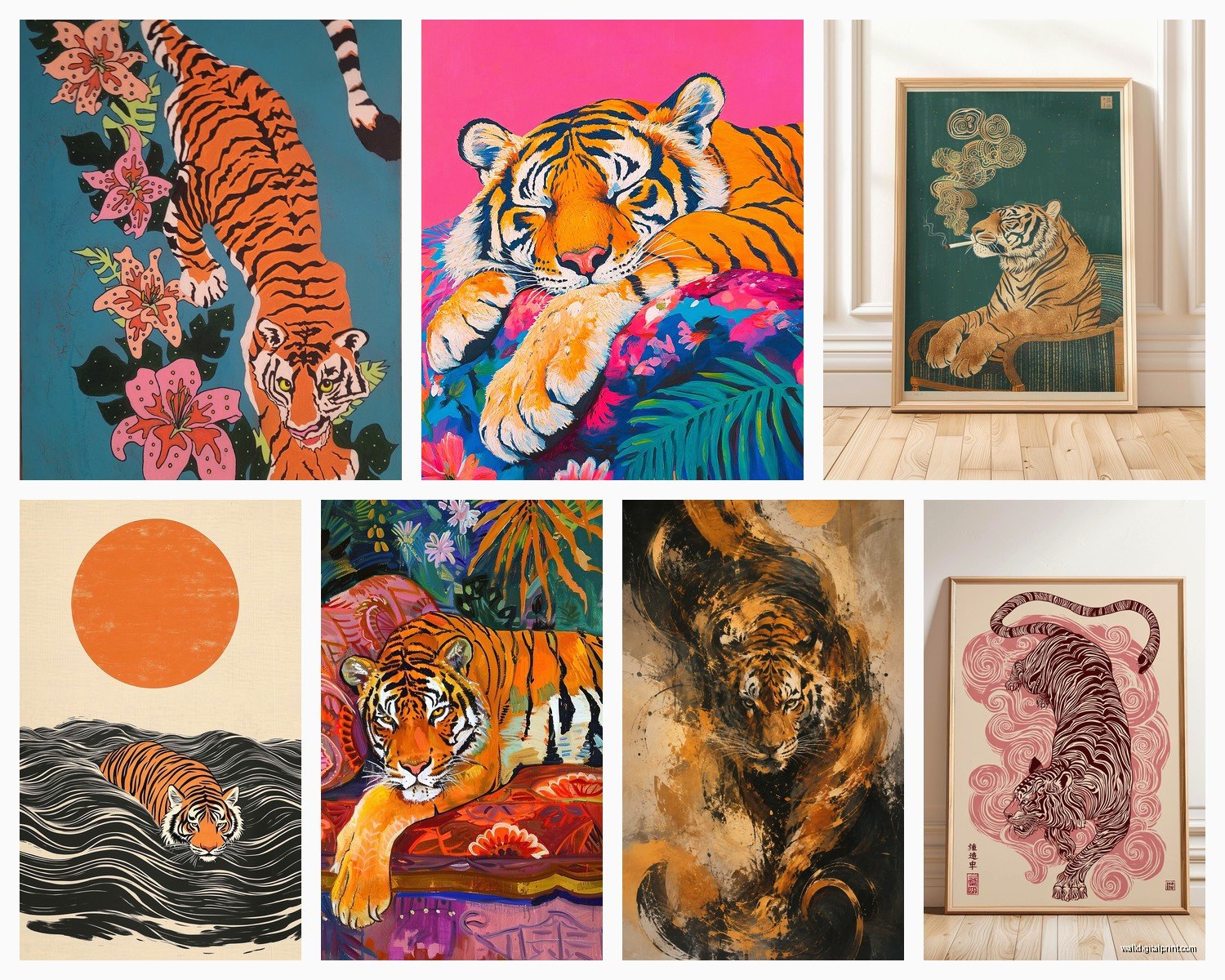
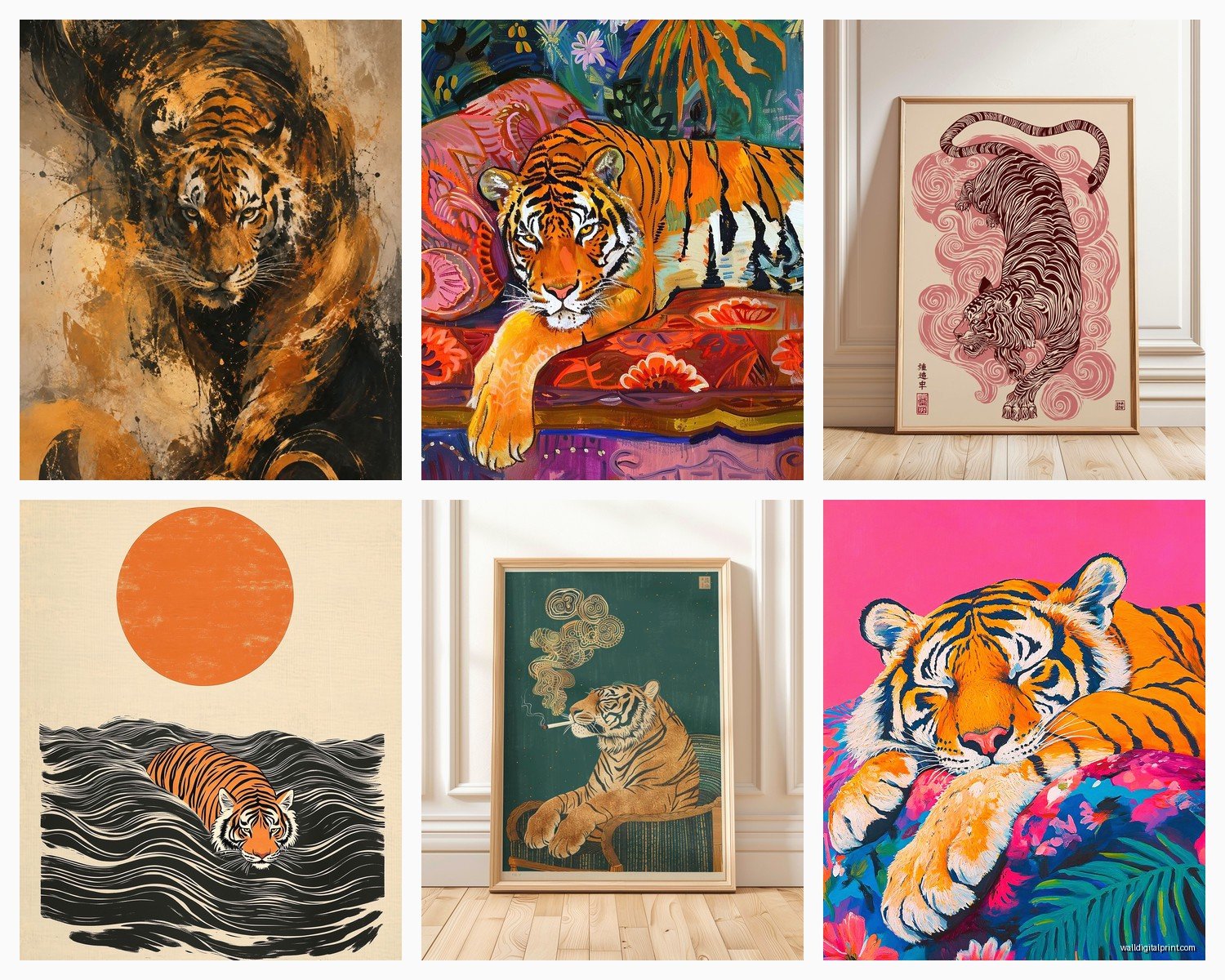
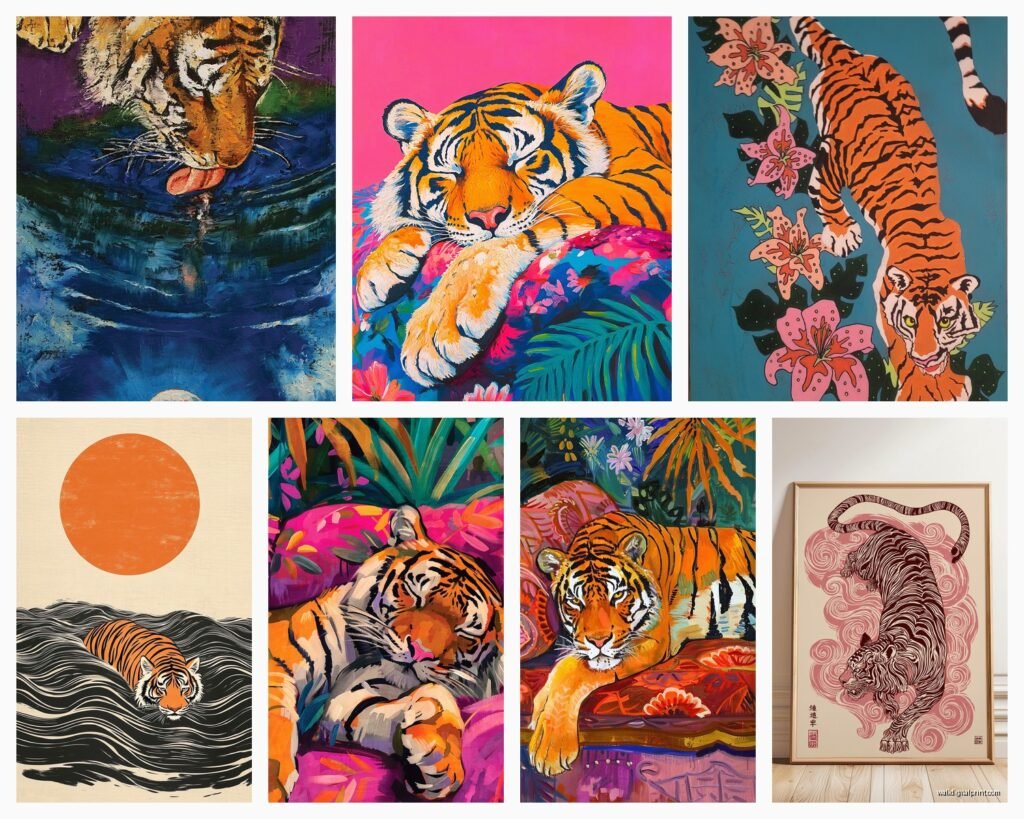
Tiger Wall Art: Big Cat Striped Jungle Powerful Animal
Sep
So I’ve been obsessing over tiger wall art lately because honestly, there’s something about having a powerful big cat staring at you from across the room that just changes the entire vibe. My client last month wanted to turn her boring home office into something with actual presence and we went down this whole rabbit hole of tiger pieces.
First Things You Need to Figure Out
Okay so before you even start looking at specific pieces, you gotta know what style actually fits your space. I made this mistake with my own living room where I bought this gorgeous hyperrealistic tiger print and it just… clashed horribly with my mid-century modern furniture. Like completely wrong energy.
Tiger art basically falls into a few categories and this matters more than you’d think:
- Photorealistic prints – these are the intense close-ups of actual tigers, super detailed
- Watercolor or abstract interpretations – softer, more artistic vibe
- Geometric or line art tigers – minimalist, modern aesthetic
- Vintage circus or jungle book style – retro, nostalgic feel
- Black and white photography – dramatic, high contrast
The photorealistic ones work amazing in modern spaces with clean lines. I used one in a client’s office with all white walls and black furniture and it became this incredible focal point. But if you’ve got a bohemian thing going or lots of patterns already, the watercolor versions integrate way better.
Size Actually Matters More Than You Think
This is where people mess up constantly. They see a cool tiger piece online, order it, and then it arrives and it’s either comically small or overwhelming. I’ve done this twice now because I’m terrible at visualizing dimensions.
For above a couch, you want something that’s roughly two-thirds to three-quarters the width of your furniture. So if your couch is 84 inches, you’re looking at like 56-63 inches of art width. Could be one large piece or a triptych situation.
For a feature wall with nothing in front of it, you can go bigger and bolder. I have a 60×40 inch tiger piece in my hallway and it’s genuinely the first thing people comment on. My dog barked at it for three days straight when I first hung it which was… entertaining.
Oh and another thing – consider the viewing distance. If you’re hanging tiger art in a bedroom where you’ll see it from across the room, bigger reads better. But in a small powder room or entryway where you’re up close? Medium sized works perfectly because you can actually appreciate the details.
The Canvas vs Print vs Metal Debate
So here’s where it gets interesting because the material completely changes how the tiger imagery comes across.
Canvas prints give you that gallery feel and they’re pretty forgiving with imperfect walls. The texture adds depth to the image. I’ve ordered from several places and the quality varies wildly – you want at least 300 GSM canvas weight or it looks cheap and flimsy. Stretched canvas (where it wraps around wooden frames) is gonna cost more but looks way more finished than rolled canvas you have to frame yourself.
Metal prints though… okay this is gonna sound weird but they make tiger eyes look absolutely incredible. The way light reflects off metal creates this luminous quality. I used an aluminum print for a client’s modern industrial loft and the tiger’s amber eyes literally seemed to glow depending on the time of day. They’re more expensive but super durable and you can clean them easily which matters if you’re putting art in kitchens or bathrooms.
Framed prints behind glass are classic but here’s the issue – glare. If you have windows or lights that’ll reflect, it becomes this annoying thing where you can’t actually see the tiger properly from certain angles. I learned this the hard way in my dining room.
Where to Actually Buy Decent Tiger Art
I’ve tried like fifteen different sources at this point because I kept being disappointed with quality versus price.
Etsy has tons of independent artists doing really unique tiger interpretations. I found this artist who does tigers with gold leaf accents that are absolutely stunning. The nice thing about Etsy is you can often request custom sizes. Shipping takes forever sometimes though and quality control is hit or miss since you’re dealing with individual sellers.
Society6 and Redbubble are solid for modern graphic design versions. Their print quality is consistently good and they offer the same design across different materials so you can get a tiger print as a canvas, framed print, or even tapestry. Prices are reasonable but nothing feels super unique since these designs get sold to lots of people.
For photorealistic stuff, I’ve had good luck with wildlife photography sites. There are photographers who specialize in big cats and sell limited edition prints. More expensive but the quality is noticeably better – you can see individual whiskers and the depth in the fur texture.
wait I forgot to mention – check return policies before ordering. Some places charge restocking fees or don’t accept returns on custom sizes which is annoying if the color doesn’t match your space.
Color Considerations That Actually Matter
Tigers are orange, black, and white obviously, but the surrounding elements and overall tone of the piece change everything about how it’ll work in your room.
If your space is mostly neutral – grays, whites, beiges – a vibrant orange tiger becomes your color accent. This works really well but you gotta commit to it. I did this in a client’s living room and we pulled orange into throw pillows and a small side table to tie it together.
Black and white tiger photography is way more versatile. It reads as sophisticated and works with literally any color scheme. Less dramatic than color but also less risky if you’re unsure.
Then there’s tigers in jungle settings with lots of green foliage. These bring in nature vibes and work beautifully in spaces with plants or natural wood elements. My friend has one in her bedroom with tons of houseplants and it creates this whole sanctuary feeling.
Blue-toned or cool-toned tiger art exists too – usually more abstract or artistic interpretations. These work surprisingly well in coastal or contemporary spaces. Less common but worth considering if orange doesn’t fit your palette.
Styling Around Your Tiger Art
Okay so you’ve got your tiger piece, now what? This is where people either nail it or make it look disconnected from the rest of the room.
The tiger should be your dominant feature on that wall – don’t overcrowd it with other art. Maybe one or two smaller complementary pieces if you’re doing a gallery wall, but the tiger needs breathing room. I see people try to create these cluttered arrangements and it just diminishes the power of having a tiger staring into your soul.
Lighting makes such a huge difference. Picture lights or track lighting aimed at your tiger art creates drama and emphasis. In my office I have a simple spotlight above my tiger canvas and it completely transforms the piece at night. Creates shadows and depth that aren’t there during the day.
Consider what furniture sits below or near the art. Dark furniture grounds a colorful tiger piece. Light furniture lets it pop more dramatically. I moved a black console table under my tiger print and it suddenly looked way more intentional.
Specific Placement Ideas That Actually Work
Living room above the couch is classic for a reason – it’s a natural focal point where people’s eyes go when they enter the room. Go big here, don’t be timid. A wimpy small tiger piece above a large couch looks apologetic.
Home office behind your desk creates this power vibe. I’m literally looking at mine right now while I’m typing this. There’s something motivating about having a powerful predator in your peripheral vision when you’re working. My productivity genuinely increased after I hung it which sounds ridiculous but it’s true.
Bedrooms can work but be thoughtful about it. Some people find intense animal eyes too stimulating for a sleep space. I’d suggest the wall opposite your bed rather than directly above the headboard. Or go with a calmer, more artistic interpretation rather than aggressive close-up teeth-baring situation.
Entryways and hallways are perfect for tiger art because you’re creating impact in transitional spaces. These areas can handle bold dramatic pieces since you’re not spending extended time there.
Dining rooms work surprisingly well, especially if you do dinner parties. It becomes a conversation piece. Just maybe avoid super aggressive hunting scenes if you want people to enjoy their meal.
The Triptych Thing Everyone Asks About
Three-panel tiger art is super popular right now and I have mixed feelings. When done well, it’s stunning – the tiger’s face split across three canvases creates this cool movement and lets you work with larger total dimensions on walls where one huge piece wouldn’t fit.
But you gotta hang them correctly. The spacing between panels should be 2-3 inches max. I see people hang them too far apart and it just looks disconnected. Also make sure they’re level – even a slight tilt is super obvious with triptychs.
The other thing is some triptychs have the image split awkwardly where like, one eyeball is on one panel and it looks weird up close. Try to find ones where the composition works across the panels naturally.
Framing Options If You Go That Route
If you’re buying a print that needs framing, the frame choice matters as much as the art itself.
Black frames are safe and work with everything. They create definition and work especially well with colorful tiger images where you want clear boundaries.
Natural wood frames bring warmth and work great with jungle scene tigers. They connect the piece to organic elements in your space.
Floating frames where there’s a gap between the art and frame create this modern gallery look. More expensive but worth it for statement pieces.
No frame at all with wrapped canvas edges is super popular and works well in casual or modern spaces. Just make sure the image wraps around the edges nicely – some prints have white edges that look unfinished.
Quick Installation Tips
Use proper hanging hardware based on weight. Canvas prints are lighter than framed glass pieces. I once had a framed tiger print fall off the wall at 3am and it was genuinely terrifying – sounded like someone breaking in. Turns out I’d used command strips that weren’t rated for the weight.
For heavy pieces, find studs or use proper drywall anchors. The little plastic ones that come with frames are usually garbage.
Hang art at eye level generally – about 57-60 inches from the floor to the center of the piece. Exception is above furniture where you want the bottom of the art about 6-8 inches above the furniture top.
Use a level. Seriously. Eyeballing it never works as well as you think it will.
Stuff to Avoid
Don’t buy tiger art just because it’s on sale if it doesn’t actually fit your style. I have a rolled canvas in my closet that I bought during a flash sale and it’s been there for eight months because it doesn’t work anywhere in my house.
Avoid super low resolution prints especially if you’re going large. Blurry tiger fur looks terrible. If you’re buying online, zoom into the product images to check detail quality.
Skip pieces with cheesy quotes or words unless that’s specifically your vibe. “Live fierce” or whatever overlaid on a tiger image usually reads as trying too hard.
Don’t match your tiger art too literally with orange decor everywhere. It becomes theme-y rather than sophisticated. Pull in the accent colors subtly instead.
Maintenance Stuff Nobody Mentions
Canvas prints collect dust especially if they have texture. Use a soft brush or microfiber cloth to dust them gently every few months. Don’t spray cleaner directly on canvas.
Metal prints you can actually wipe down with glass cleaner which is nice for kitchens or high-traffic areas.
Framed prints behind glass – use glass cleaner obviously but be careful not to let moisture seep behind the glass. I ruined a print once by being too aggressive with Windex.
Keep art out of direct sunlight if possible. Colors fade over time even with UV protective glass. I learned this when my tiger print by the window started looking washed out after a year.
Anyway that’s basically everything I’ve figured out through trial and error with tiger wall art. The main thing is just commit to it – if you’re gonna have a powerful jungle cat on your wall, own that choice and make it a real focal point rather than treating it like an afterthought. The whole point is that primal powerful energy so lean into it.