
Wall Art Guide, Wall Art Tutoriels
80 Inch Wall Art: Nearly Seven-Foot Wide Statement Pieces

Oct
So I just finished installing this absolutely massive 80-inch piece in a client’s dining room and honestly, my arms are still sore, but let me tell you everything I learned because this size is no joke.
Why Anyone Would Actually Want Art This Big
Okay so first thing – when you’re looking at walls that are like 12-15 feet wide, normal art just disappears. I learned this the hard way in my own loft about three years ago. Put up what I thought was a “large” 40-inch piece and it looked like a postage stamp. These nearly seven-foot wide pieces actually make sense in specific situations and you gotta know if your space is one of them.
The places where 80-inch art actually works: above king beds with those massive upholstered headboards, long dining room walls, behind sectional sofas (especially those L-shaped ones everyone’s buying), two-story entryways, and honestly any wall that’s more than 10 feet wide. My cat keeps sitting in front of the TV while I’m trying to watch The Bear and I keep thinking about how that wall behind my couch could handle something this size but anyway.
The Math Part Nobody Wants to Do
Your wall width needs to be at minimum 120 inches (that’s 10 feet) for an 80-inch piece to look proportional. The rule I use is that art should take up about 60-75% of the furniture width OR wall width, whichever you’re working with. So if you’ve got a 108-inch sofa, an 80-inch piece is actually perfect mathematically.
Height is where people mess up constantly. You need like 9-10 foot ceilings minimum unless you’re doing a horizontal piece that’s not super tall. I’ve seen people cram these into 8-foot ceiling rooms and it just feels oppressive? The piece should have breathing room – at least 8-10 inches from the ceiling.
The Actual Installation Problem
Wait I forgot to mention the most important thing – you physically cannot do this alone. I don’t care how strong you are. An 80-inch canvas, even if it’s relatively lightweight, is awkward and unwieldy and you need two people minimum, three is better.
Weight Distribution Options
- French cleats – my go-to for anything over 50 pounds, super secure
- Heavy-duty wire with two D-rings – works for lighter canvas pieces under 30 pounds
- Z-bar hanging system – commercial grade, expensive but worth it for really heavy pieces
- Multiple anchor points – usually 3-4 across the back for weight distribution
The french cleat thing is gonna sound complicated but it’s literally just two interlocking pieces of wood or metal. One mounts to the wall (into studs, always into studs), the other attaches to your art. They hook together and the weight distributes evenly. I used to be scared of installing them but now I won’t hang anything heavy without one.
Finding Studs in Older Homes
This is gonna sound weird but I’ve found studs in 1920s homes by literally knocking and listening. Those electronic stud finders lie constantly in old plaster walls. You’re looking for studs that are probably 16 or 24 inches apart. Mark at least 2-3 studs for an 80-inch piece because you need multiple anchor points.
If you absolutely cannot find studs where you need them, heavy-duty toggle bolts rated for 100+ pounds can work in drywall, but I’m always nervous about this with something so expensive. My general rule is studs for anything over $500 or 40 pounds.
Material Options and What They Actually Mean
Okay so funny story, a client once ordered an “80-inch metal wall sculpture” without checking the weight and it was 87 pounds. We needed four people and basically built a custom mounting system. So yeah, material matters a lot.
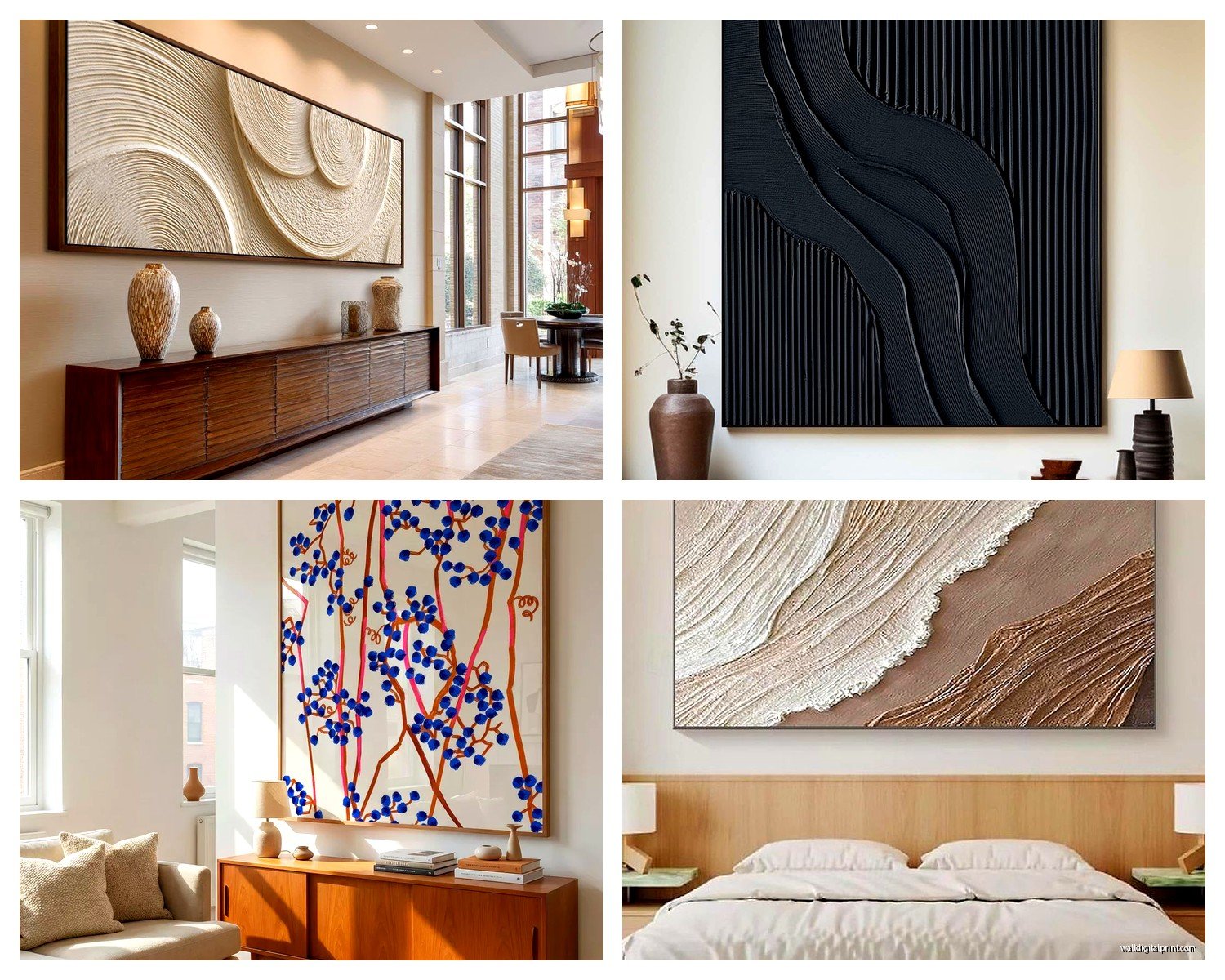
Canvas Prints
The most common and usually the lightest option. A quality 80-inch canvas typically weighs 15-30 pounds depending on frame depth. Look for gallery-wrapped edges (where the image wraps around the sides) so you don’t need a frame. The cheap ones have visible staples on the sides and it looks unfinished.
I’ve ordered from places like Elephantstock and iCanvas for clients – they do custom sizes and the quality is decent for the price. You’re looking at $400-900 for something this size in canvas.
Framed Prints
Way heavier, usually 40-60 pounds for an 80-inch piece with a substantial frame. The advantage is you can do paper prints or photographs which often have better detail than canvas. But the frame itself adds so much weight and cost.
If you go this route, get the frame from the same place doing the print. I tried to save money once by getting a print made and framing it separately and the measurements were off by half an inch and it was a nightmare.
Metal and Wood Art
These range wildly. Thin metal prints might be 20-35 pounds. Thick wood plank art or heavy metal sculptures can be 60-100+ pounds. Always check weight before ordering because your installation complexity and cost goes up dramatically with heavier pieces.
Where to Actually Buy These Things
My client canceled last week so I spent like two hours comparing 80-inch options online and here’s what I found.
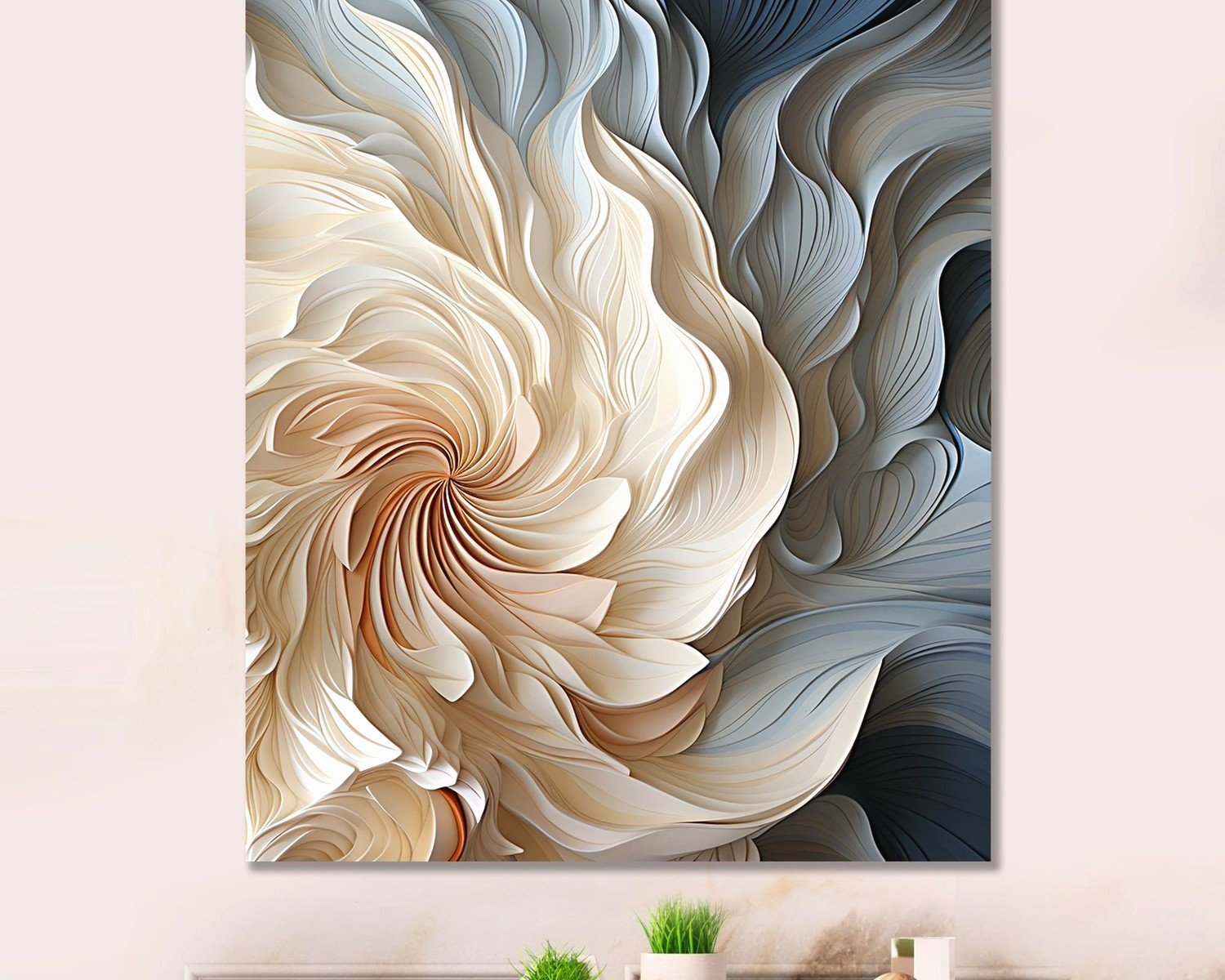
Etsy has independent artists doing custom 80-inch pieces, usually canvas or wood. Price range is all over – $300 to $3000. You can often request custom colors which is huge for matching existing decor.
Wayfair and Overstock have lots of options in the $400-1200 range. The quality is hit or miss honestly. Read reviews obsessively and look for photos from buyers, not just the professional shots.
Minted does large-scale art prints and you can frame them – their framing is actually good quality but expensive. An 80-inch framed piece there might run $1500-2500.
Art galleries and local artists – if you want something original, this is obviously the way but you’re looking at several thousand minimum. I curated a show last year and the 80-inch pieces were starting at $4000 for emerging artists.
Society6 and Redbubble have expanded their size options and you can get canvas or framed prints up to 80 inches. Quality is good enough for most residential spaces, prices around $500-1000.
Custom Commission Route
If you go custom, get everything in writing – dimensions, materials, timeline, shipping arrangements, installation hardware. I had a commissioned piece show up without any hanging hardware attached and the artist was like “oh I thought you’d handle that” and we had to figure out how to attach a cleat to the back without damaging the piece.
Shipping and Delivery Nightmares
Oh and another thing – shipping costs for 80-inch art are INSANE. We’re talking $200-600 depending on material and fragility. And most places ship via freight which means it arrives on a pallet and you need to be there to receive it.
Check if installation is included. Some higher-end galleries include white-glove delivery and installation. For a heavy piece, this is worth paying extra for because professional installers have the right equipment and insurance.
I once tried to save money by doing standard shipping on a 72-inch piece (not quite 80 but close enough) and it arrived with corner damage. The whole insurance claim process took two months. Now I always pay for better shipping with art this size.
Style Considerations That Actually Matter
Abstract Works Best at This Scale
Realistic or detailed images can look strange when blown up to 80 inches unless they’re specifically designed for it. Abstract art, geometric patterns, and bold color blocks tend to work better because your eye doesn’t focus on individual details as much.
Color Commitment
You’re committing to these colors being a dominant feature in your room. I usually pull 2-3 colors from the art and repeat them in pillows, throws, or smaller accessories. But like, don’t go overboard – you want the art to stand out, not blend into a matchy-matchy situation.
Horizontal vs Vertical
Most 80-inch pieces are horizontal because that’s how our wall spaces tend to work. But I did see an amazing vertical 80-inch piece in a stairwell once and it was stunning. Just way less common and harder to find.
Lighting This Monster
You absolutely need dedicated lighting for art this large or it just becomes a dark void on your wall at night. Picture lights that mount to the frame work for smaller pieces but look dinky on 80-inch art.
Track lighting or adjustable ceiling spots are better. Position them about 30-40 degrees from the wall, aimed at the center of the piece. You want even illumination without glare. LED track lights are worth the investment because you’re not constantly changing bulbs.
Wall washers are another option – these are recessed lights that create even illumination across a large surface. You’d need 2-3 for an 80-inch piece depending on your ceiling height.
Common Mistakes I See Constantly
- Hanging it too high – center should be at 57-60 inches from the floor
- Not accounting for furniture height – if it’s above a sofa, leave 6-10 inches between the furniture and the bottom of the art
- Choosing a busy pattern for a room that already has a lot going on
- Skimping on installation hardware and having it crash down (I’ve seen this twice and it’s devastating)
- Ordering without checking actual room dimensions – measure twice, order once
The Sofa Situation
This is super specific but important – if you’re hanging above a sofa, the sofa back height matters so much. Standard sofas are about 30-36 inches tall at the back. You need at least 6 inches of space between sofa and art, preferably 8-10 inches. So your art is starting at 38-46 inches off the floor. If the piece is 40 inches tall (common for 80-inch wide horizontal pieces), the top is at 78-86 inches. That’s why you need those high ceilings.
Alternatives If Your Space Isn’t Right
Okay so if you’re reading this and realizing your space can’t handle 80 inches, there are options. A gallery wall of smaller pieces can create visual impact across the same width. Or go with 2-3 coordinating panels that together span 80 inches but each individual piece is more manageable.
Triptychs are having a moment and they’re way easier to hang than one massive piece. Three 26-inch panels with 1-2 inches between them gives you that 80-inch span but each piece weighs less and is easier to level.
Budget Reality Check
Let me break down actual costs because the art itself is just the beginning:
- Art piece: $400-4000+ depending on original vs print, material, artist
- Shipping: $150-600 for something this size
- Installation hardware: $30-150 (cleats, bolts, wire, tools)
- Professional installation if needed: $150-400
- Lighting: $100-500 if you’re adding dedicated fixtures
So even if you find a $400 canvas print, you’re realistically spending $700-1000 all-in. For an original from a known artist with professional installation and lighting, you could easily hit $6000-8000.
Protecting Your Investment
UV-protective glass if you’re framing, but at 80 inches this is expensive and heavy. For canvas, keep it out of direct sunlight. I had a client whose gorgeous abstract faded in just 18 months because it was on a west-facing wall with afternoon sun.
Insurance – if you’re spending serious money, add it to your homeowners or renters policy as a scheduled item. Regular policies might not cover high-value art pieces.
Cleaning is just dusting with a microfiber cloth for canvas. Don’t use any cleaners unless the manufacturer specifically says it’s okay. For glass-covered pieces, standard glass cleaner is fine but spray the cloth, not the glass, so liquid doesn’t seep behind the frame.
Wait I should mention that if you live somewhere humid, canvas can warp over time. I’ve seen it happen in coastal homes. Some people use dehumidifiers in art-heavy rooms which seems excessive but does protect the investment.
Making the Final Decision
Take a photo of your wall and use a photo editing app to mock up different art options. Or go old school and tape paper to the wall in the exact dimensions – live with it for a few days and see if the scale feels right. I do this with every client before we order anything expensive.
Order samples if possible – some print-on-demand places will do smaller test prints so you can see colors and quality. Spending $50 on a sample beats getting a $2000 piece that’s the wrong tone.
And honestly, trust your gut. If you keep coming back to a certain piece, that’s usually the right one. I’ve talked clients out of “safe” choices into bolder ones and they’re always happier. At this size, you want something that makes you feel something every time you walk in the room.
