
Wall Art Guide, Wall Art Tutoriels
Wall Art and Decor: Comprehensive Design Guide
Mar
So I’ve been getting this question literally every week and honestly the whole color thing with wall art is where most people completely mess up their spaces, like they’ll buy this gorgeous print and then wonder why their room feels “off”…
okay first – the actual color wheel isn’t as scary as design school makes it seem
You need to know like three basic relationships and you’re good. Complementary colors (the ones across from each other – think blue and orange, red and green) create drama and energy. I used this in my living room with a deep teal wall and burnt orange abstract piece and guests literally always comment on it. Analogous colors sit next to each other on the wheel – like blue, blue-green, and green – and they’re way more chill, harmonious vibes.
Then there’s triadic which is three colors evenly spaced but honestly unless you‘re going for something really bold or you’ve got a maximalist thing going on, I’d skip this one for wall art. It can read as chaotic real fast.
The 60-30-10 rule but make it actually work
This is gonna sound super formulaic but it genuinely works. Your room should be 60% dominant color (usually walls, big furniture), 30% secondary color, and 10% accent. Your wall art falls into either that 30% or 10% category depending on size and impact.
I had a client last month who had gray walls (60%), navy sofa (30%), and we added this amazing mustard yellow geometric print as the 10% accent. The piece was only like 24×36 inches but it completely transformed the space because that pop of warm yellow was exactly what the cool-toned room needed.
matching vs complementing (there’s a difference and it matters)
Don’t try to match your art to your throw pillows exactly. That catalogue-perfect look feels staged and honestly kinda soulless? Instead, pull one color from your art and echo it in accessories.
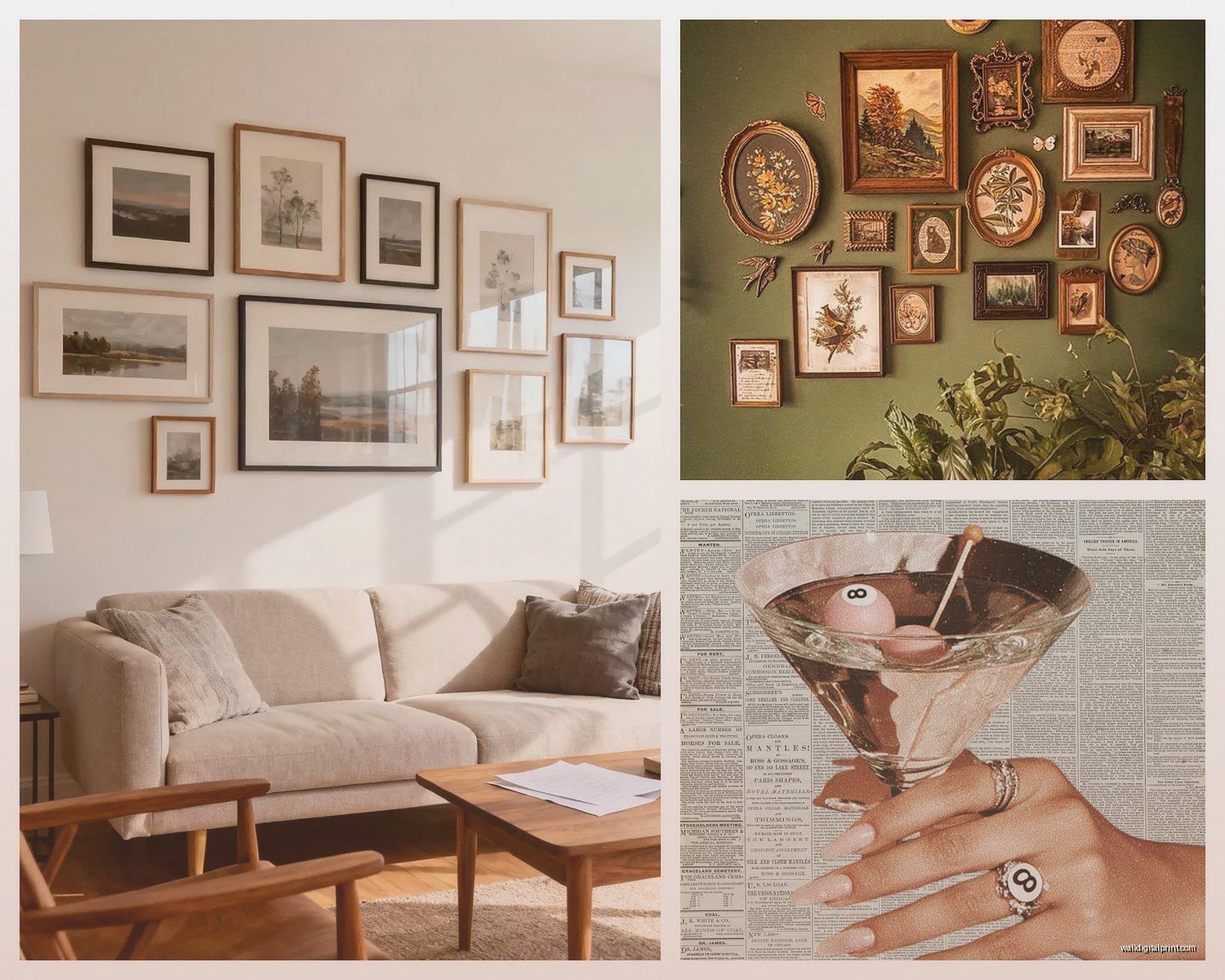
Like I’ve got this abstract piece above my credenza that’s mostly cream and gray with these random pops of terracotta. I didn’t go buy terracotta everything – I added one terracotta vase and a rust-colored blanket on the nearby chair. That’s it. The repetition creates cohesion without being matchy-matchy.
warm vs cool undertones will save your life
This is where people get tripped up constantly. You can have a blue room and blue art and have it look completely wrong because the undertones are fighting each other. Cool blues have green or purple undertones, warm blues lean toward turquoise or have gray warmth to them.
I spent like two hours last Tuesday (my morning client canceled so I went down a rabbit hole) comparing art prints online and the undertone thing became SO obvious. Same “navy blue” looked completely different depending on whether it leaned cool or warm.
Quick test: hold your art option next to your existing colors in natural light. If something feels “off” but you can’t pinpoint why, it’s probably an undertone clash.
neutrals aren’t boring they’re strategic
Okay so neutral art gets a bad rap but it’s actually genius for certain situations. If your room already has a lot of color happening – patterned rug, colorful furniture, bold wall color – neutral art gives your eye a place to rest.
Black and white photography, cream abstracts, grayscale drawings… these work especially well in:
- Rooms with multiple patterns (the art becomes a visual break)
- Spaces with colorful furniture that you don’t wanna compete with
- Rental situations where you can’t paint but the walls are that builder-grade beige
- Minimalist aesthetics obviously
I’ve got a black and white line drawing in my bedroom above the bed and the room has sage green walls, terracotta bedding, and wood tones everywhere. That neutral art keeps it from feeling overwhelming.
adding color to neutral spaces (without freaking out)
If your whole space is neutral – grays, whites, beiges, blacks – your wall art is literally the easiest way to introduce color without commitment. You’re not repainting or buying a new sofa, you’re just hanging something.
Start with colors that have gray or beige undertones if you’re nervous. Dusty rose, sage green, muted gold, soft coral… these all play nice with neutral schemes. The super saturated bright colors can work too but they’re bolder moves.
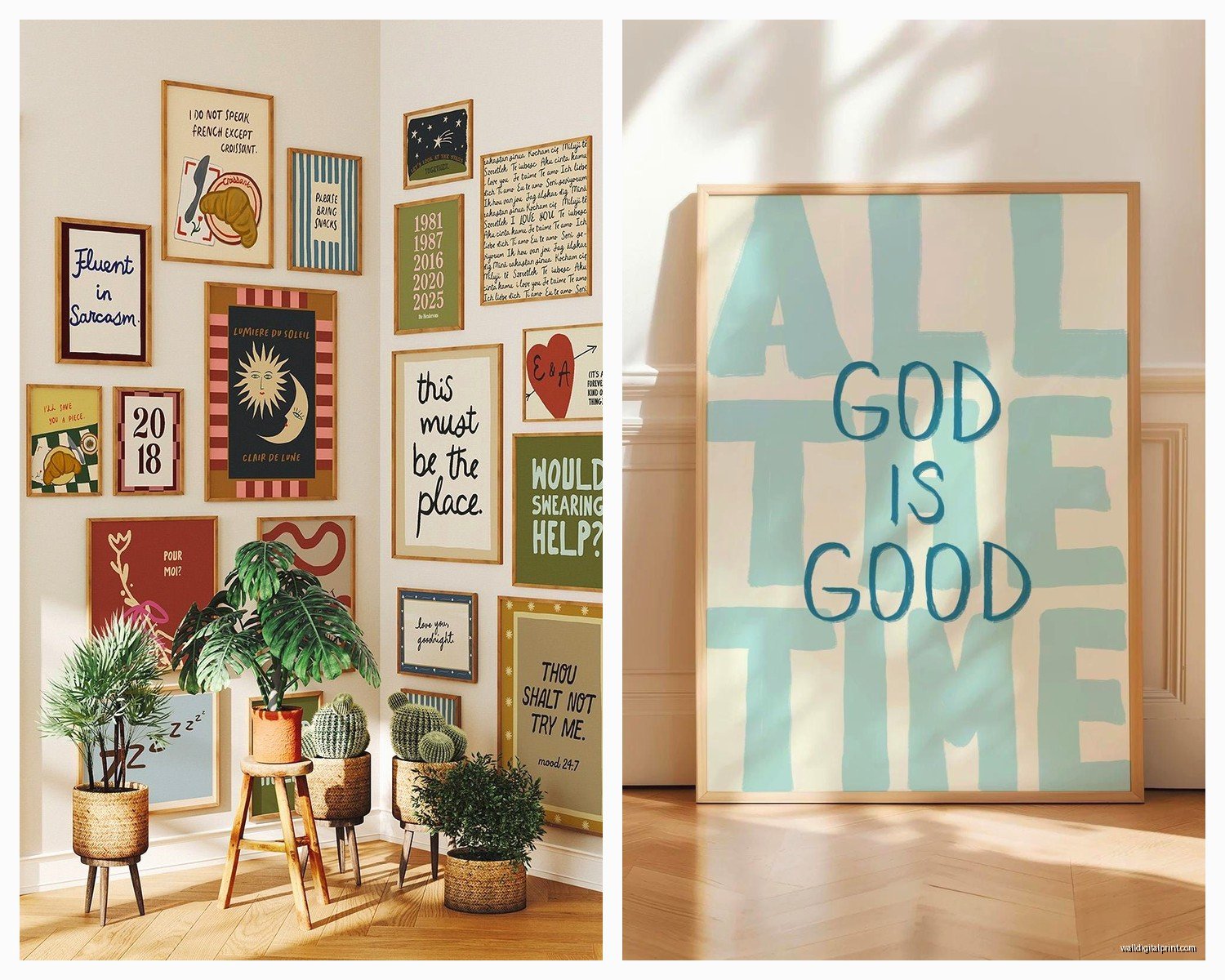
My friend just did this in her apartment – all white and gray everything, then added this gorgeous dusty blue and blush pink abstract. Completely changed the energy but didn’t feel jarring because those colors were soft enough.
the psychology part (yeah it’s real)
Colors actually do affect mood and it’s not just woo-woo stuff. Blues and greens are calming – great for bedrooms and bathrooms. Reds and oranges are energizing – good for dining rooms, home offices where you need motivation, workout spaces.
Yellows are tricky because they can be cheerful but also anxiety-inducing if too bright or if there’s too much. I use muted yellows or gold tones instead of that bright lemon yellow.
Purples read as creative and luxurious but can feel heavy. I usually recommend purple as an accent in art rather than the dominant color unless you’re really into it.
room by room color strategies
Living room: you can go bolder here because it’s a social space. Complementary color schemes work great. Don’t be afraid of saturated colors.
Bedroom: stick with analogous color schemes or neutrals with one soft accent color. I’ve got mostly blues and greens in bedroom art for clients because that calm vibe helps with sleep.
Kitchen/dining: warm colors actually stimulate appetite (there’s research on this). Reds, oranges, warm yellows in your art can make these spaces feel more inviting.
Bathroom: whatever makes you happy honestly but cooler tones tend to feel cleaner and spa-like if that’s your thing.
Home office: this depends on your work but I find that one energizing accent color in art helps with focus. My office has mostly neutral art with pops of coral.
working with existing furniture colors
If you’ve got a colorful sofa or statement furniture piece, your art should either complement it or provide contrast – there’s no in-between that works well.
Complementing: pull 1-2 colors from the furniture into your art. If you have a teal velvet chair, look for art that includes teal plus other colors.
Contrasting: use the color wheel to find the complement. That teal chair would look amazing with coral or rust-toned art nearby.
What doesn’t work: art that has kinda-sorta-similar-but-not-quite colors. Like if your sofa is emerald green, don’t get art with olive green. Either match the emerald or go with a completely different color family.
oh and another thing about wood tones
Wood furniture has color too and people forget this. Warm wood tones (oak, pine, teak) pair well with warm colors in art – oranges, reds, warm greens, gold. Cool wood tones (some walnuts, ebonized woods) work better with cool colors – blues, purples, cool greens, silver.
My dining room has this massive walnut table with cool undertones and I specifically chose art with blue and deep green because warm-toned art looked weird with it.
metallics as a color category
Gold, silver, copper, brass in your art frames or within the artwork itself – these count as colors in your scheme. Gold reads warm and pairs with warm color palettes. Silver reads cool and works with cool palettes. Copper is warm. Brass can go either way depending on the finish.
I’m obsessed with mixing metals in frames lately (I know that used to be a design “no” but whatever). A gallery wall with mixed metal frames actually looks more collected and interesting than all matching.
seasonal rotation trick
This is gonna sound extra but swapping out smaller art pieces seasonally is way easier than redecorating and keeps things fresh. I have “warm season” art with oranges, reds, and golds that I put up fall/winter, and “cool season” art with blues and greens for spring/summer.
You don’t need multiple pieces for every wall – just a few key spots that are easy to swap. My cat knocked over one of my summer pieces last week and the frame broke so… maybe secure them better than I did.
the testing phase people skip
Before you buy or commit, test it. Most online art places have decent return policies. Order it, live with it for a few days, see how it looks in different lighting.
Or if you’re crafty, buy a cheap poster in similar colors from like Target or wherever and tape it up for a week. See if you still like the color scheme after living with it. I’ve talked so many people out of purchases this way because what looked good in theory felt wrong in their actual space.
Lighting changes everything too. That gorgeous blue might look purple in your north-facing room. That coral might look too orange under warm LED bulbs. Test in your actual conditions.
common color mistakes I see constantly
Too many colors. More than 4-5 colors in a room (including your art) starts reading as chaotic unless you really know what you’re doing. Pick a palette and stick to it.
Ignoring the ceiling and trim colors. White trim and ceiling are standard but if yours aren’t white, they’re part of your color scheme and your art needs to work with them.
Buying art that matches only one thing in the room. It’ll look disconnected. Your art should relate to at least 2-3 elements in the space.
Going too safe. All neutral everything can feel flat and uninspired. Even one piece with actual color can make a difference.
Forcing a color you don’t actually like because it’s “on trend” or someone said it would work. If you hate yellow, don’t put yellow art in your house, I don’t care what the color wheel says.
the saturation and brightness thing
Two pieces can be the same color but completely different saturation levels and brightness. A dusty rose and a hot pink are both “pink” but create totally different vibes.
Match saturation levels for cohesion. If your room has mostly muted, dusty colors, bright saturated art will look out of place (unless that’s intentional). If everything is bright and saturated, muted art might look dull.
I learned this the hard way with a gallery wall where I mixed super saturated modern prints with muted vintage botanicals and it just looked… off. Replaced the vintage ones with prints that had similar saturation to the modern pieces and suddenly it worked.
working with patterns
Patterned art adds another layer of complexity. The colors within the pattern all count toward your room’s color scheme. A floral print with ten different colors is bringing all ten colors into your space.
If you’re using patterned art, keep other patterns in the room simpler or in similar colors. Or go full maximalist and embrace the chaos but that’s a whole different aesthetic.
Solid color art is easier to work with if you already have patterned textiles, wallpaper, or rugs happening. It balances things out visually.
Okay I think that covers most of it… the main thing is just to actually look at how colors interact in YOUR space with YOUR lighting instead of following rules blindly. Take photos on your phone because sometimes the camera picks up color clashes your eye misses, it’s weird but true.
