Wall Art Guide, Wall Art Tutoriels
Wall Art for Living Room Metal: Modern Metalwork Designs
Apr
So I’ve been working with metal wall art for like seven years now and honestly it’s become my go-to recommendation for living rooms because it just… works? Like even when clients are hesitant about it at first.
Why Metal Actually Makes Sense in Living Rooms
Okay so the thing about metal art is it catches light differently throughout the day and that’s something photographs or canvas prints just can’t do. I have this one piece in my own living room—brushed copper with this geometric pattern—and it literally looks different at 8am versus 6pm. My cat keeps staring at it when the sun hits it which is hilarious but also proves my point.
The durability factor is huge too. I’ve replaced so many canvas pieces for clients because they fade or the corners get damaged, but metal? That stuff lasts. You’re paying more upfront usually but you’re not replacing it in three years.
Types of Metal Finishes You’ll Actually See
Brushed Metal Finishes
This is probably where most people should start honestly. Brushed aluminum or steel has this subtle texture that doesn’t scream for attention but adds depth. I used a brushed nickel piece above a client’s sectional last month and it was perfect because their room already had a lot going on with patterned pillows and stuff.
The maintenance is super low—just dust it occasionally. No special cleaners needed which my clients always appreciate because who has time for that.
Powder-Coated Metal
Wait I forgot to mention powder coating is basically a colored finish that’s baked onto the metal. It comes in literally any color you can imagine. I’ve used matte black powder-coated pieces probably a hundred times because they work in modern spaces but also surprisingly well in traditional rooms as a contrast element.
The powder coating protects against rust which matters if you live somewhere humid. My cousin in Florida had issues with untreated metal art getting spotty after like a year, so yeah… consider your climate.
Oxidized and Patina Finishes
This is gonna sound weird but I actually love the verdigris (that blue-green patina) copper pieces for the right space. They bring in color without being paint, if that makes sense? Like it’s still sophisticated and architectural.
Natural rust finishes are trendy right now—that industrial look—but be careful because some pieces are sealed and some aren’t. If it’s not sealed, it WILL continue to rust and you might get particles falling off. Ask before you buy.
Size and Scale Stuff Nobody Tells You
Okay so funny story, I once ordered what I thought was a massive metal tree sculpture for a client based on online measurements and it arrived and was like… maybe 18 inches tall. Always, always check dimensions twice.
For above a sofa, you want your metal art to be about two-thirds to three-quarters the width of the sofa. So if you have an 84-inch couch, you’re looking at roughly 56-63 inches of art width. You can do one large piece or a grouping that adds up to that measurement.
Going Oversized
Large-scale metal pieces (like 4-5 feet wide) make such a statement but you gotta have the wall space. I mean obviously, but I’ve had clients try to cram huge pieces onto walls with windows and outlets and it just doesn’t work. Measure your clear wall space first.
The weight is something to think about too. Metal art can be HEAVY. Anything over 20 pounds needs proper anchoring—I’m talking wall anchors rated for the weight, not just a basic nail. My client canceled last month so I spent an hour comparing different hanging systems and French cleats are honestly the most secure for heavy pieces.
Design Styles That Actually Exist
Geometric and Abstract
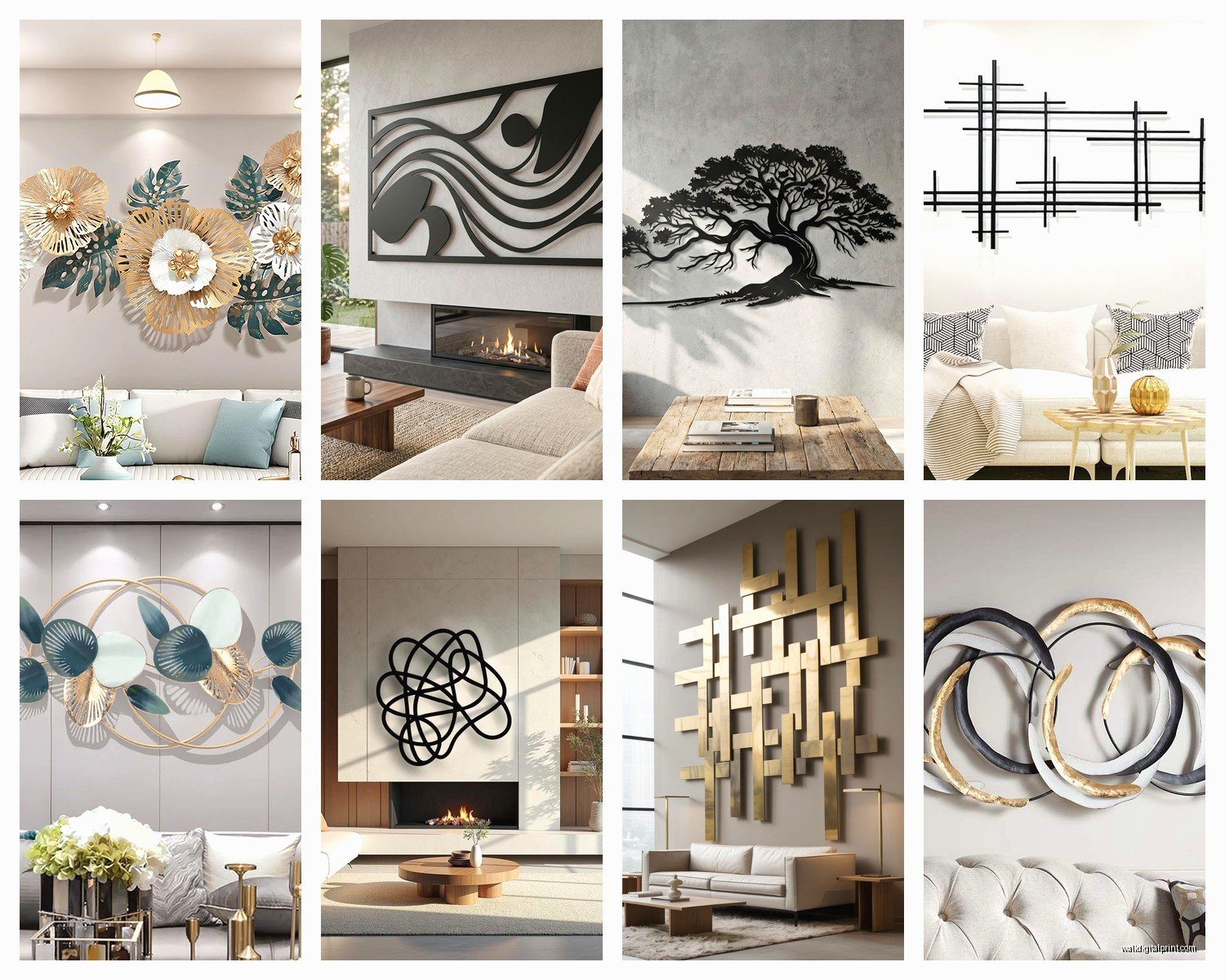
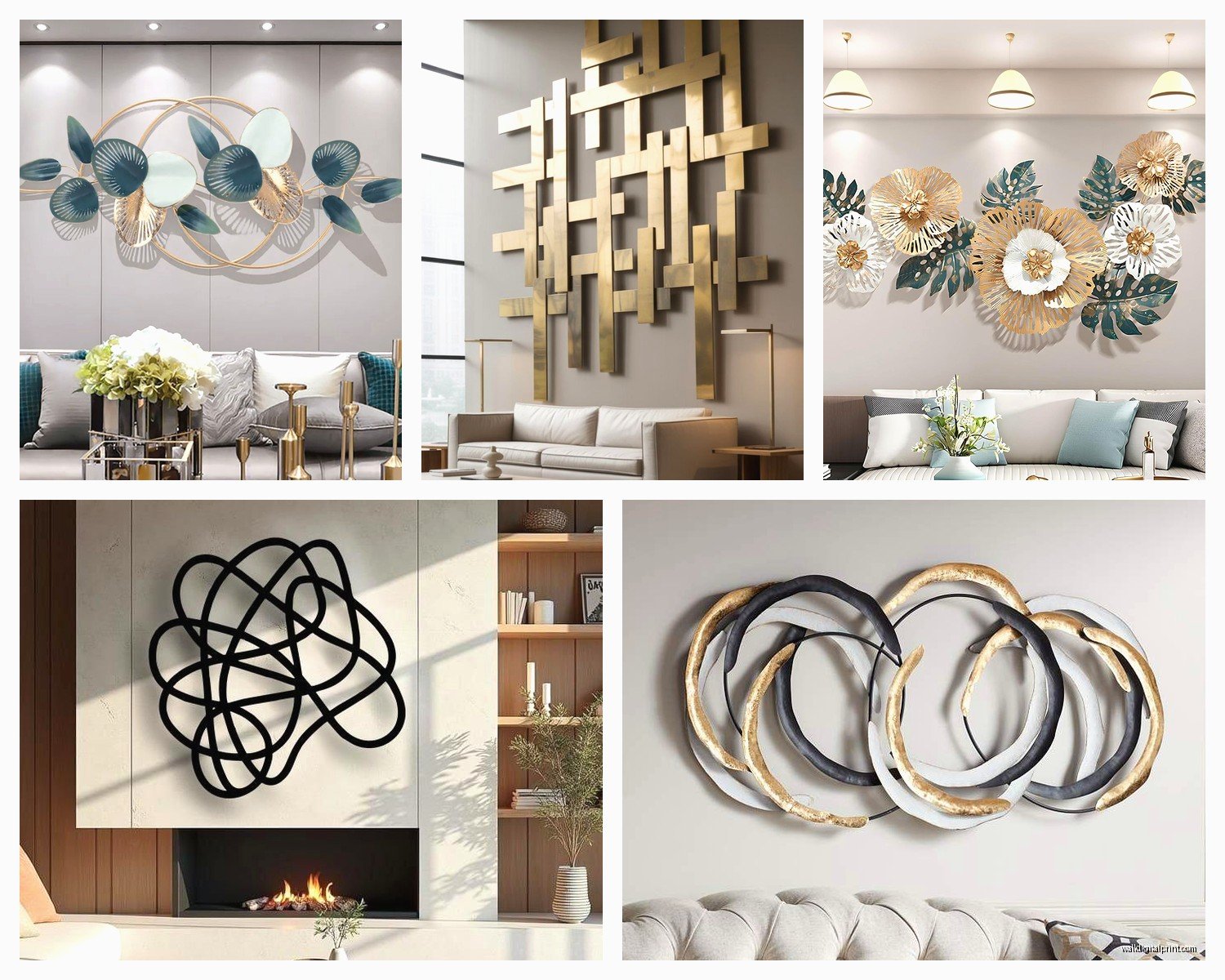
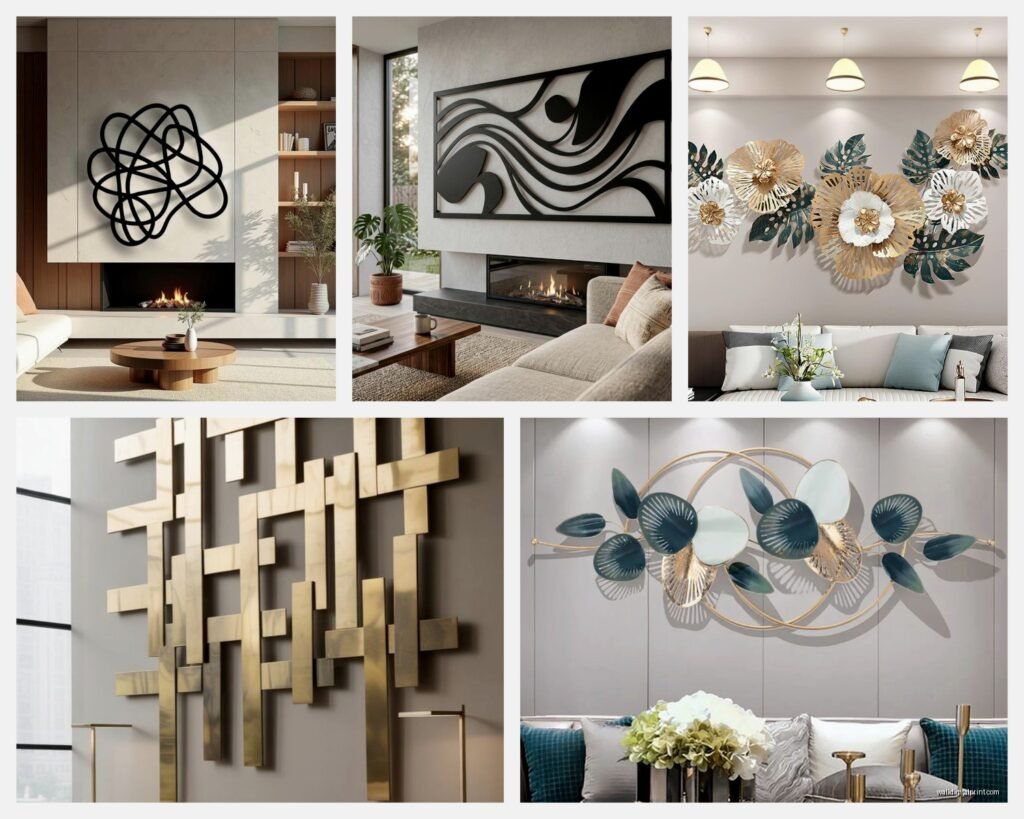
These are everywhere right now. Interlocking circles, hexagons, linear patterns… they read as modern without being too cold. I usually recommend geometric metal art for minimalist spaces or as a counterpoint to softer, curvier furniture.
Three-dimensional geometric pieces are cool because they create shadows on the wall behind them. That shadow play adds another layer of visual interest that changes throughout the day.
Nature-Inspired Metalwork
Metal trees, leaves, branches, florals—this category is huge. The trick is finding ones that don’t look too literal or crafty, you know? I look for stylized interpretations rather than super realistic representations.
There’s this one company that does metal monstera leaves in brass and copper tones and I’ve used them in probably five different projects. They bring in that organic element without being precious about it.
Typography and Word Art
Metal letters and phrases can work but they’re tricky. I generally avoid anything too… inspirational? Like if it’s something you’d see on a Pinterest quote graphic, maybe skip it. But custom metal typography with your family name or a meaningful word in a cool font can be really elegant.
Color Coordination and What Actually Looks Good
Metallic finishes count as neutrals in my book, which means they play well with most color schemes. Gold and brass tones bring warmth—I pair these with navy, emerald, burgundy, or even blush pink.
Silver, steel, and chrome read cooler. They work beautifully with grays, blues, whites, and blacks. The contrast can be really striking.
Oh and another thing, mixed metal is totally fine now. That old rule about matching all your metals? Ignore it. I regularly mix brass art with chrome lamps with copper accents. Just make sure one finish is dominant (like 60-70% of the metallics in the room) and the others are accents.
Matte vs. Shiny
This matters more than people think. High-polish chrome or mirror-finish stainless can be almost too reflective in bright rooms—like you’ll get glare that’s actually annoying. Matte and brushed finishes are more versatile.
That said, I did use a high-gloss gold sunburst mirror/sculpture thing in a dim living room with north-facing windows and it helped bounce light around. So context matters.
Installation Tips From Someone Who’s Hung Way Too Many of These
Most metal art comes with hanging hardware but it’s often inadequate honestly. For pieces under 10 pounds, a couple of picture hangers are usually fine. Anything heavier needs proper wall anchors.
Drywall anchors are your friend. Toggle bolts if the piece is really heavy or if you’re hanging it where there’s no stud. I always try to hit at least one stud if possible though.
Spacing for Multi-Piece Sets
If you’re doing a gallery wall situation with multiple metal pieces, keep spacing consistent—usually 2-3 inches between pieces works well. I lay everything out on the floor first and take a photo to see how it looks before committing to holes in the wall.
Painters tape on the wall to mark positions is clutch. You can move it around until it feels right without making any permanent marks.
Where to Actually Buy This Stuff
West Elm and CB2 have decent metal art selections—mid-range pricing, contemporary styles. I’ve ordered from both multiple times without issues.
For budget-friendly options, Target occasionally has surprisingly good metal pieces. HomeGoods is hit-or-miss but when you find something good there, the price is usually great.
Etsy is amazing for custom or unique metalwork. I’ve worked with several metal artists there who do commissioned pieces. Just read reviews carefully and confirm dimensions before ordering.
Wait I forgot to mention, some pieces come as DIY kits where you assemble them yourself. This can save on shipping costs for large pieces but make sure you’re okay with that before buying.
Maintenance Reality Check
Metal art is low maintenance but not zero maintenance. Dust accumulates in the crevices of textured pieces—I use a soft brush attachment on a vacuum for detailed pieces, or just a microfiber cloth for simpler designs.
For fingerprints or smudges on polished finishes, a damp cloth usually works. Avoid harsh chemicals unless the manufacturer specifically recommends something.
If you have unsealed copper or brass that’s developing patina and you don’t want it to, you can use a metal polish. But honestly? I usually tell clients to embrace the patina because it adds character.
Outdoor-Rated vs. Indoor-Only
Some metal art is rated for outdoor use—it’ll say so in the description. These pieces have protective coatings that handle humidity and temperature changes better. If you live somewhere with high humidity or you’re hanging art near a bathroom or kitchen where steam is a factor, outdoor-rated might be worth considering even for indoor use.
Mixing Metal Art With Other Art Types
You don’t have to commit to all-metal art in your living room. I actually think mixing metal pieces with canvas, photography, or even woven wall hangings creates more visual interest.
The key is balancing the visual weight. Metal pieces tend to have more physical presence because of their dimension and reflectivity, so pair them with art that can hold its own—bold colors, large scale, strong compositions.
I did this whole wall last year where we had a large metal geometric piece flanked by two black and white photography prints in simple frames. The metal provided the focal point and texture while the photos balanced it out horizontally. Worked perfectly.
Common Mistakes I See People Make
Going too small is probably the biggest one. People get nervous about scale and end up with these tiny pieces that just float awkwardly on a big wall. When in doubt, size up.
Hanging things too high is another one—the center of your art should be at eye level, which is usually around 57-60 inches from the floor. Unless you’re hanging above furniture, then you want the bottom of the art about 6-8 inches above the sofa or console.
Not considering the wall color before choosing the finish. Dark metal on a dark wall can disappear. You need contrast—either in color or finish (like matte on glossy or vice versa).
Price Ranges and What You Get
Budget pieces (under $100) are usually smaller, simpler designs, possibly mass-produced. They’re fine for starter pieces or if you’re renting and don’t want to invest heavily.
Mid-range ($100-500) is where you get better craftsmanship, more interesting designs, larger sizes. This is my sweet spot for most client projects honestly.
High-end ($500+) includes artist-made pieces, large-scale installations, custom work. The quality difference is noticeable—thicker metal, more intricate welding, unique designs you won’t see everywhere.
I watched three episodes of that new thriller series while researching metal art suppliers last week and honestly found some great new sources, so that time wasn’t totally wasted.
Investment-Worthy Pieces
If you’re gonna splurge on one piece, make it a large-scale focal point for your main living room wall. Quality metal art holds its value better than most decor items, and a really stunning piece can literally transform a room.
Look for artists who do limited editions or one-of-a-kind pieces. The resale value is better, plus you have something unique.
Okay so that’s basically everything I’ve learned from years of working with metal wall art. The main thing is just to not overthink it—choose something that makes you happy when you look at it, make sure it’s proportional to your space, and hang it securely. The rest kinda takes care of itself.