Wall Art Guide, Wall Art Tutoriels
Metal Living Room Wall Art: Sculptural Focal Points
Apr
So I’ve been obsessing over metal wall art lately because honestly, nothing transforms a living room quite like the right sculptural piece, and I spent like three hours last weekend helping my neighbor pick one out while my cat kept walking across my laptop.
First thing you gotta know is that metal wall art isn’t all created equal. There’s actually like five main types you’ll run into, and they each give completely different vibes. You’ve got your laser-cut steel pieces which are super popular right now, wrought iron which feels more traditional, brushed aluminum that’s lightweight and modern, copper or brass that develops this gorgeous patina over time, and then mixed metal sculptures that combine everything.
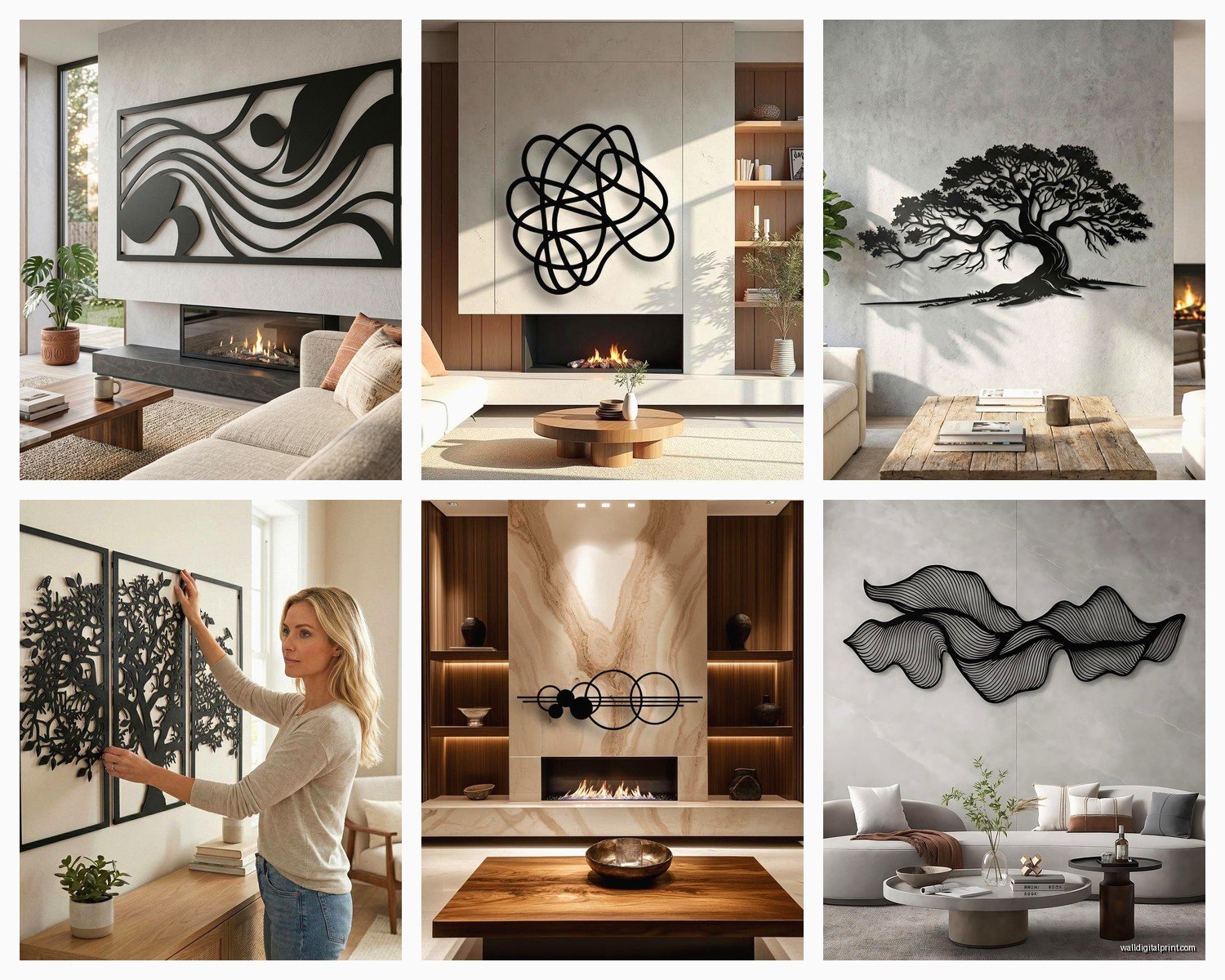
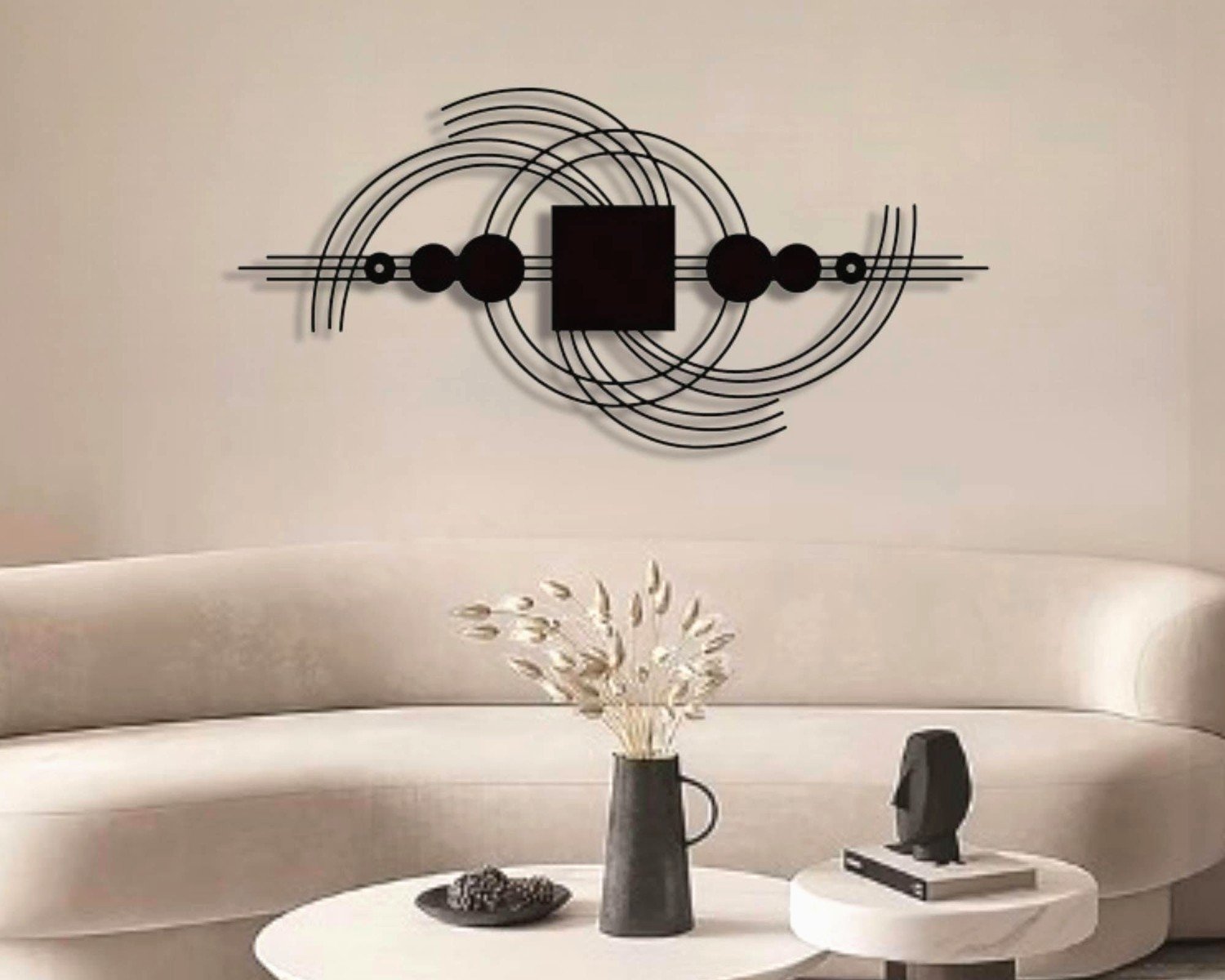
The laser-cut stuff is what I usually steer people toward first because it’s versatile and comes in literally every design imaginable. I just mounted this massive geometric piece in a client’s living room last month, like 48 inches wide, and the shadows it casts when the afternoon light hits it… honestly makes the whole room. These pieces are typically flat against the wall but the cutout patterns create this dimensional effect that’s really striking. Price-wise you’re looking at anywhere from $80 for smaller pieces up to $500+ for those huge statement walls.
Weight and Wall Mounting Basics
Okay so funny story, I once hung a metal sculpture that I thought would be fine with regular picture hangers and it literally pulled out of the drywall at 2am and scared me half to death. Metal is HEAVY, way heavier than you think it’s gonna be when you’re just looking at it online.
For anything under 10 pounds you can probably get away with regular wall anchors, but honestly I just use heavy-duty ones regardless because why risk it. The toggle bolt anchors are your best friend here. For pieces over 20 pounds you really need to find studs or use those heavy-duty picture hanging systems with the rails.
Most quality metal art comes with mounting hardware but sometimes it’s garbage, not gonna lie. I always check the D-rings or hanging wire situation before I even start. If the piece only has wire and it’s over 15 pounds, I usually add D-rings myself because wire can slip and then your whole sculpture is crooked forever and it’ll drive you insane.
Finish Types and What Actually Happens Over Time
This is where people get surprised. That gorgeous copper piece with the shiny finish? It’s gonna change. Copper and brass develop patina which some people love and some people hate, so you need to know what you’re getting into.
I have this copper sunburst thing in my own living room and after about eight months it went from bright penny-colored to this deeper brownish tone with some green undertones. I personally love it but my sister visited and asked if I’d “let it get dirty” so… yeah, not everyone’s thing. If you want to keep copper bright you gotta seal it with a clear lacquer or plan to polish it occasionally with copper cleaner.
Steel pieces usually come powder-coated or painted, and that finish is pretty durable. I’ve had powder-coated steel art in high-humidity rooms and it holds up great. Raw steel though, that’ll rust, which again might be the aesthetic you want but know it’s gonna happen.
Aluminum is basically the low-maintenance option. It doesn’t rust, it’s lightweight, and brushed aluminum has this contemporary look that works in modern spaces. The downside is it can look a bit cheap if you go too budget-friendly, like under $60 or so.
Size and Proportion Rules That Actually Matter
Everyone asks me about sizing and look, the standard rule is your wall art should take up about 60-75% of the available wall space, but with sculptural metal pieces I actually go bigger sometimes because they have negative space built into the design.
Like, a laser-cut tree sculpture might be 60 inches tall but half of it is literally cut away, so it doesn’t feel as heavy visually as a solid 60-inch painting would. This means you can size up without overwhelming the room.
For over a sofa, you want the art to be roughly 2/3 the width of your sofa. So if you’ve got a standard 84-inch sofa, you’re looking at something around 56 inches wide, or you could do a grouping of smaller pieces that adds up to that width.
Height-wise, the center of your piece should be at eye level, which is usually around 57-60 inches from the floor. But here’s where I cheat that rule… if you’ve got a really tall sculptural piece with most of its visual weight at the top, I’ll hang it a bit lower so it doesn’t look like it’s floating away.
Style Matching Without Being Boring
The whole matchy-matchy thing is dead, thank god, but you still want some cohesion. I’ve found metal wall art is actually super forgiving because metal itself is kind of neutral.
In traditional spaces, wrought iron scrollwork or nature-inspired designs work beautifully. I did this iron branch sculpture in a room with crown molding and antique furniture and it bridged the gap between classic and contemporary perfectly.
For modern minimalist rooms, geometric patterns in black steel or silver aluminum are your jam. Clean lines, abstract shapes, maybe some asymmetry. I’m working on a project right now with these floating metal rectangles in different sizes and it’s giving very expensive gallery vibes for like $200.
Industrial or farmhouse spaces can handle basically anything metal honestly, but I lean toward pieces with visible welds, raw finishes, or mixed metals. That reclaimed look works great here.
Oh and another thing, metallic finishes in your art should pick up on other metals in the room but they don’t have to match exactly. Like if you’ve got brass table lamps, a copper wall sculpture will complement them even though they’re different metals. It’s more about warm vs cool tones.
Lighting Considerations You Can’t Ignore
This is gonna sound weird but the lighting situation in your living room will make or break metal wall art. I learned this the hard way with a client who bought this gorgeous piece and then couldn’t figure out why it looked flat and boring.
Metal reflects and plays with light, that’s like its whole thing. If your sculpture is on a wall with no light hitting it, you’re missing half the effect. I always try to position metal art where natural light will hit it during the day, or I add accent lighting.
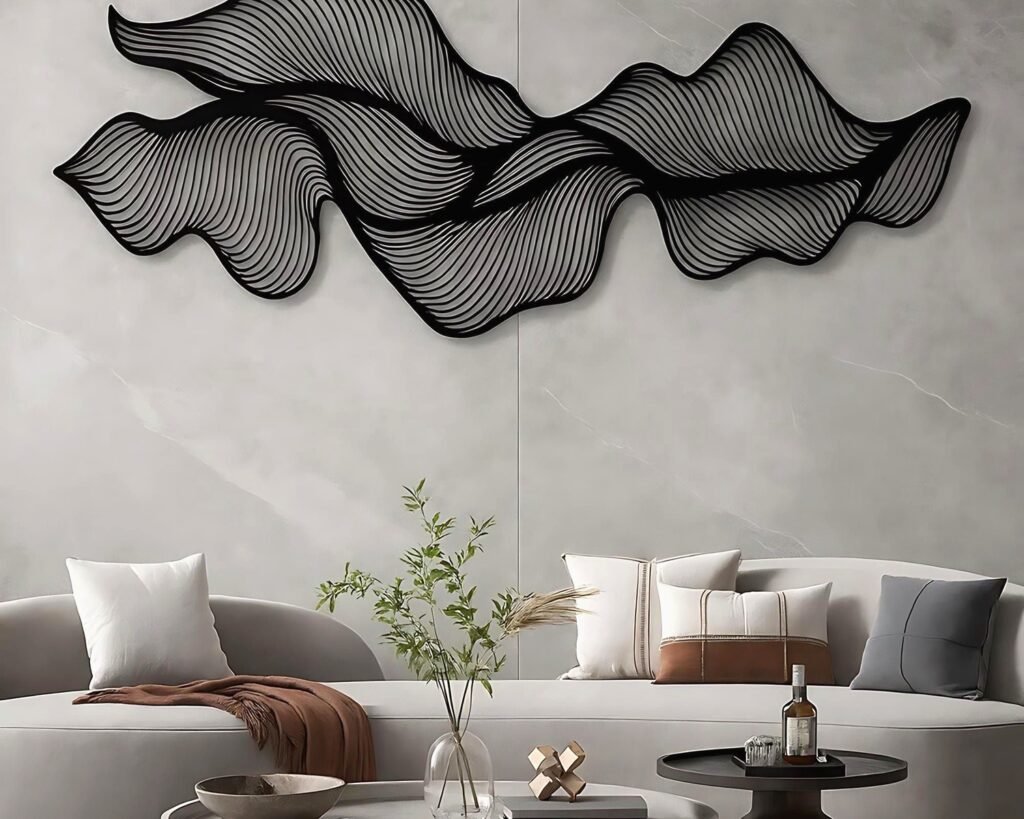
Those little LED picture lights or track lighting aimed at the sculpture create amazing shadows and highlights. With dimensional pieces especially, the interplay of light and shadow adds so much depth. I installed an uplight behind a metal wave sculpture once and the shadows it threw on the ceiling were honestly better than the sculpture itself.
Matte finishes are more forgiving with lighting but polished or reflective finishes need strategic placement. You don’t want glare from windows or lamps bouncing directly into people’s eyes.
Where to Actually Buy This Stuff
Okay so you’ve got a range of options depending on budget. Wayfair and Overstock have huge selections in the $50-$300 range, and honestly some of it is decent quality. I’ve ordered from both and the hit rate is maybe 70%… sometimes the metal is thinner than expected or the finish looks cheap in person, but their return policies are solid.
Etsy is where I find the really unique handmade pieces. There are metalworkers on there doing custom work and one-of-a-kind sculptures. Prices vary wildly but you’re supporting actual artists and can often request custom sizes or finishes. I got this incredible metal mountain range piece from an Etsy seller in Colorado and it’s probably my favorite thing in my living room.
West Elm and CB2 have curated selections that trend more expensive but the quality is consistently good. You’re paying for design and finish quality here, usually $200-$600 range.
For high-end investment pieces, local art galleries and artist studios are the way to go. I’ve connected clients with metal sculptors who create museum-quality work, and yeah you’re spending $1000+ but you’re getting actual art that’ll last forever.
Homegoods and TJMaxx sometimes have metal wall art and it’s hit or miss, but when you find something good it’s like 60% off retail. I check whenever I’m there because you never know.
Multi-Piece Arrangements vs Single Statement
So there’s two approaches here and both work, just depends on your space and style. A single large statement piece is bold and easy to hang, one and done. It anchors the room and becomes the focal point immediately.
But I’ve been doing more multi-piece arrangements lately because they let you customize the composition to your specific wall. Like, if you’ve got a weird wall with a window on one side, you can arrange smaller metal pieces to work around it.
The trick with groupings is to lay them out on the floor first and take a photo from above so you can see the composition before putting holes in your wall. I use painter’s tape to mark positions on the wall before committing.
Keep spacing consistent between pieces, usually 2-4 inches depending on the size. And vary the sizes within the grouping… three pieces of the exact same size look awkward, but three different sizes arranged thoughtfully looks intentional.
Maintenance Real Talk
Metal wall art is pretty low maintenance but not zero maintenance. Dust accumulates in the crevices of detailed pieces and it’s annoying to clean. I use a soft brush attachment on my vacuum for intricate scrollwork, or those microfiber dusters for simpler pieces.
For polished finishes, occasional wiping with a slightly damp microfiber cloth keeps them looking fresh. Don’t use harsh cleaners unless the manufacturer specifically says it’s okay, because you can strip protective coatings.
If you’ve got outdoor-rated metal art that you’re using indoors (which is totally fine), it’s already sealed for the elements so it’s extra durable. I actually prefer outdoor-rated pieces for high-humidity areas like near a fireplace or in rooms with lots of plants.
Wait I forgot to mention, if you’re hanging metal art above a fireplace, make sure it’s not gonna get too hot. Most metal can handle warmth but extreme heat can damage finishes or even warp thinner pieces. Ask me how I know… actually don’t, it was embarrassing.
Color and Patina Options
Beyond natural metal finishes, there’s a whole world of colored and treated metals. Powder-coated pieces come in basically any color and the finish is super durable. I’ve used matte black metal art in probably 20 different projects because it’s so versatile.
Rusted or oxidized finishes are having a moment, especially in farmhouse and industrial spaces. These pieces are treated to look aged and weathered, and the orange-brown tones add warmth to a room. Just make sure it’s sealed so you’re not getting rust dust everywhere.
Painted metal art is usually less expensive and gives you more color options, but check that the paint is actually adhered well. Cheap painted pieces can chip easily, especially during shipping or installation.
Some artists use heat treatments or chemical processes to create rainbow effects or gradient colors on steel, and those pieces are stunning but usually pricier because the process is labor-intensive.
Honestly at this point I’ve probably tried every type of metal wall art in different spaces and the biggest lesson is just… don’t overthink it but also don’t rush it. Live with your space for a minute, figure out where your eye naturally goes when you walk in the room, and that’s probably where your focal point should be. Metal sculptures have this presence that canvas art doesn’t, so choose something that actually speaks to you rather than just filling a blank wall.