Wall Art Guide, Wall Art Tutoriels
Modern Coastal Wall Art: Contemporary Beach Clean Lines
Jun
So I’ve been absolutely obsessed with modern coastal wall art lately and honestly it’s not what you think when someone says “beach decor” because we’re NOT doing the whole weathered wood anchor situation or those vintage beach signs your aunt has in her bathroom.
Contemporary coastal is completely different and I literally just finished helping a client transform her living room from nautical nightmare to this incredibly sophisticated beach vibe that doesn’t scream tourist trap. Let me tell you what actually works.
The Whole Clean Lines Thing Makes Sense Now
Okay so clean lines in coastal art basically means you’re looking for pieces that have simple shapes, minimal color palettes, and zero clutter. Think one perfect wave rendered in like three shades of blue-gray against white. Not a sunset with seventeen colors and a sailboat and seagulls and someone’s initials carved in driftwood.
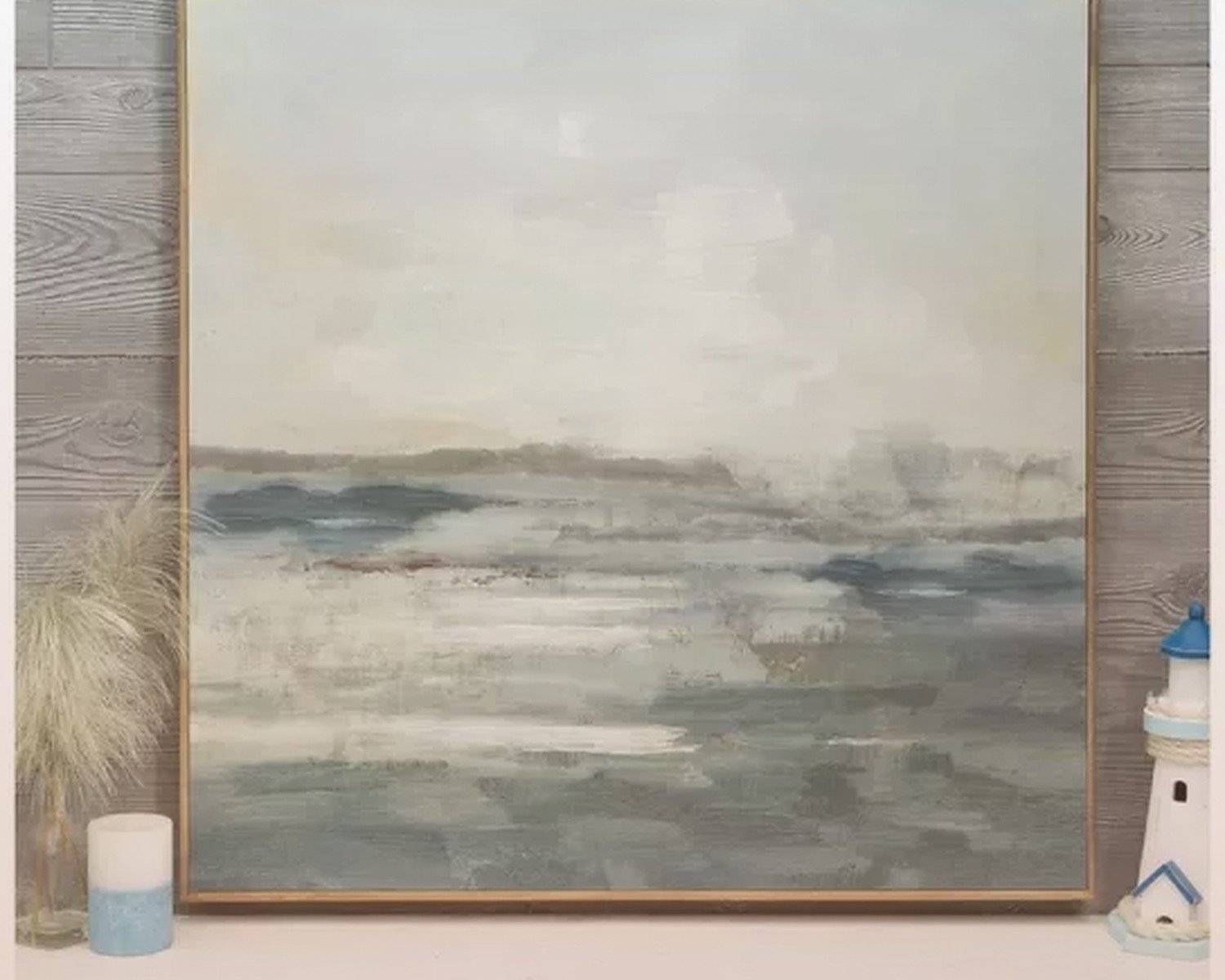
I found this amazing abstract ocean piece last month that’s literally just horizontal stripes in sand, seafoam, and slate blue. That’s it. My sister looked at it and was like “that’s so expensive for stripes” but when you hang it above a low-profile sofa with clean-lined furniture around it? The whole room just breathes differently.
The key is that modern coastal takes the FEELING of the beach without being literal about it. You want someone to walk in and feel calm and airy, not feel like they’re in a Jimmy Buffett song.
What Actually Looks Good Size-Wise
This is gonna sound weird but I have a whole formula now after hanging probably fifty pieces in beach houses this year. For above a sofa, you want your art to be roughly two-thirds to three-quarters the width of the sofa. I always bring painter’s tape and tape out the dimensions on the wall first because my client in Del Mar didn’t believe me and bought this tiny 16×20 print for above her massive sectional and we both just stood there like welp.
Large scale stuff works better in modern coastal anyway because:
- It makes a statement without being busy
- You can go more abstract and minimal when it’s big
- Small prints tend to look more traditional/cottage-y which isn’t what we’re doing
- One big piece is cleaner than a gallery wall of beach stuff
I’m really into oversized single panels right now, like 48×36 or bigger. Or if you’re doing a diptych or triptych situation, make sure there’s only about 2-3 inches between panels. I saw someone with like 8 inches between and it totally killed the flow.
Colors That Don’t Make It Look Like A Beach Themed Restaurant
Oh and another thing – the color palette is everything here. You gotta move away from bright turquoise and coral and sunny yellow. I know, I know, those ARE beach colors technically, but they read as tropical or kitschy.
Contemporary coastal sticks to:
- Soft grays and charcoals
- Muted blues (think stormy ocean not Caribbean)
- Sandy beiges and warm whites
- Occasional deep navy as an accent
- Maybe a very muted sage or seafoam if you need green
I just bought this piece that’s almost entirely white and pale gray with just the suggestion of waves in texture rather than color and it’s probably my favorite thing I own right now. My cat knocked it off the credenza last week and I genuinely almost cried before I realized it wasn’t damaged.
The metallics work too – gold or brass can warm things up, silver keeps it cool. I mixed a black and white ocean photograph with a brass frame in a client’s entryway and added brass sconces on either side. Super clean, super modern, still totally coastal.
Avoid These Color Combos
Seriously skip bright orange with turquoise, anything with red (unless it’s super muted), lime green, hot pink. Even if you see it styled cute on Instagram, it’s gonna age badly and look more Miami Vice than modern California coast.
Types of Art That Work
I’ve tested SO many different styles and here’s what actually delivers that contemporary beach vibe without trying too hard.
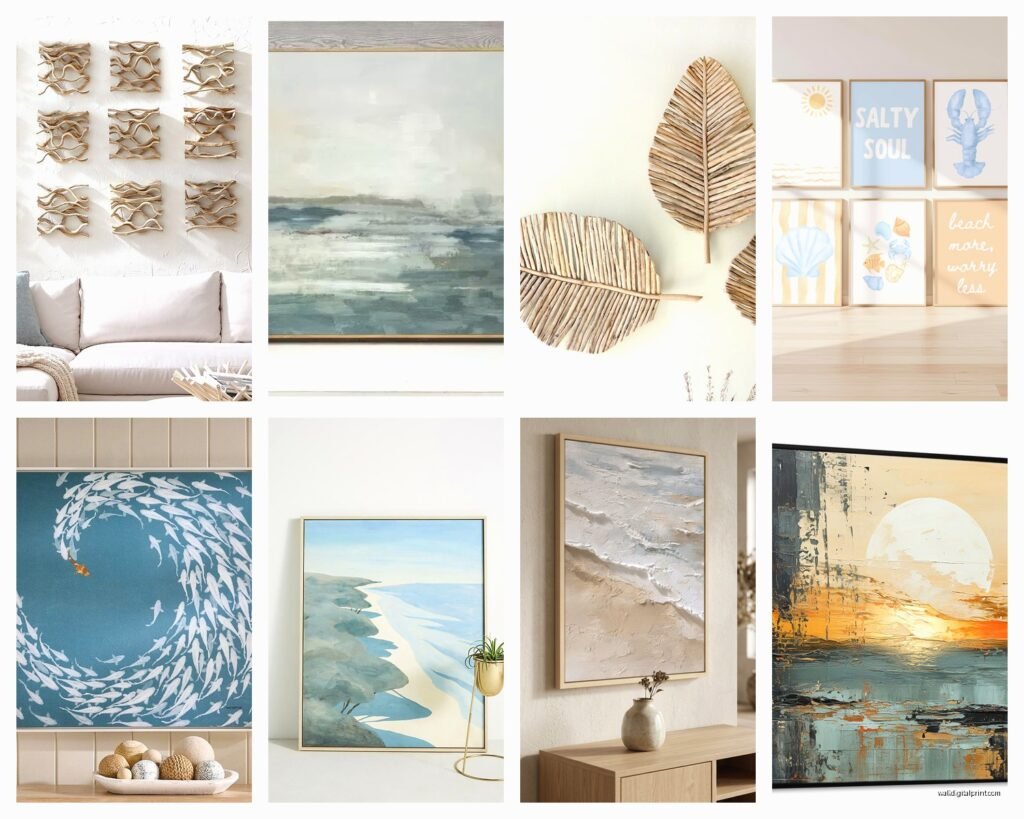
Abstract ocean paintings are probably the easiest win. You want ones where you can FEEL the water but it’s not a realistic seascape. Like you know those paintings where it’s just gestural brushstrokes suggesting movement and depth? Those. I have a client who has this massive abstract in blues and grays that could be water or could be sky or could be clouds and that ambiguity is perfect.
Minimalist line drawings of coastal elements are having a moment. Single line wave drawings, simple horizon lines, abstract beach grass rendered in black ink. These work great in series – like three matching black frames with three different minimal coastal drawings.
Aerial beach photography – wait I forgot to mention this earlier but this is probably the most popular thing I’m sourcing right now. Those drone shots of beaches from above where you see the geometric patterns of waves, sand, and maybe tiny people? When they’re printed large and the colors are desaturated a bit, they’re incredibly sophisticated. Not your standard beach snapshot at all.
Textured pieces bring in that organic coastal feeling without being obvious. I’m talking thick impasto paintings where you can see the texture of paint mimicking waves, or mixed media with actual sand incorporated. Just make sure it still has those clean lines and isn’t too rustic looking.
Framing Choices Matter More Than You Think
Okay so funny story, I spent an entire Saturday – my client canceled so I had free time – comparing frame styles at this art supply place and taking photos of the same print in different frames. The difference is wild.
For modern coastal you want:
- Thin frames in black, white, natural wood, or metal
- Floating frames work great for canvas pieces
- No ornate gold frames unless they’re very sleek and modern
- No distressed or weathered frames (that’s traditional coastal)
- White mats if you’re matting – keeps it clean and bright
I’m really into the barely-there metal frames right now, like those thin brass or black metal ones that are maybe half an inch wide. They frame the art without competing with it.
Sometimes no frame at all is the move – a gallery-wrapped canvas with the image continuing around the edges. Super clean, very contemporary. Just make sure the sides are finished nicely because you’ll see them.
Installation Height
Hang art so the center is at eye level, which is usually around 57-60 inches from the floor. But honestly I adjust based on the room – if you have low furniture, you might go a bit lower so it relates to the furniture better. Above a sofa, I usually do 6-8 inches above the sofa back.
Mixing Modern Coastal Art With Your Existing Stuff
You don’t have to start from scratch which is good because that gets expensive fast. I’m literally watching this home renovation show right now where they’re doing a whole beach house and buying everything new and I’m like that’s not realistic for most people.
Here’s what I do – start with one statement piece of modern coastal art and build around it. If you have traditional furniture, the contemporary art actually creates this really cool contrast. I have a client with this gorgeous traditional tufted sofa in gray linen and we hung a very modern abstract ocean piece above it and the mix is chef’s kiss.
The art can be the thing that bridges your existing style toward coastal without making you redecorate everything. Like if you have mid-century modern furniture, modern coastal art is a natural fit. If you’re more traditional, choose coastal art with a bit more realism or softer colors to ease the transition.
Where to Actually Find Good Pieces
This is what everyone asks me and honestly there’s no one perfect source. I’m constantly hunting.
Minted and Artfully Walls have good selections of contemporary coastal art in various price points. You can get prints starting around $50 or invest in larger pieces. The quality is solid and they have tons of framing options.
Etsy is hit or miss but I’ve found incredible original pieces from individual artists. Search for “abstract ocean painting” or “minimalist coastal art” not just “beach art” because that brings up all the cottage-y stuff. You can commission custom sizes too.
West Elm and CB2 have surprisingly good coastal art that actually looks modern. It trends a bit safe but if you need something quick that you know will work, they’re reliable.
Local art fairs and galleries if you want something unique. I found this amazing photographer who does black and white coastal landscapes that are so moody and dramatic. Can’t find that stuff mass-produced.
Oh and Society6 lets artists upload designs and you can get them in various sizes and formats. I’ve ordered several pieces from there. Quality varies by what you order – the framed prints are better than the canvas in my experience.
Styling Around Your Coastal Art
The art shouldn’t exist in isolation. I learned this the hard way when I hung a beautiful piece and the shelf below it was cluttered with random stuff and it totally killed the vibe.
Keep surfaces relatively clear and intentional. Maybe a sculptural object in white or wood, a small plant, some books stacked horizontally. Not seventeen little beach finds and candles and frames.
The rest of your room should support that clean-lined contemporary feeling:
- Furniture with simple profiles, no heavy ornamentation
- Textiles in natural materials like linen, cotton, jute
- Minimal window treatments or none at all if you have good light
- Wood tones that are either very light or warm medium, not orange-y
- Lots of white or light walls to keep things airy
I always add texture through throws and pillows rather than pattern. Like a chunky knit throw or linen pillows with subtle texture. Pattern can work but keep it geometric or very subtle.
Lighting Your Art Properly
Wait I forgot to mention lighting earlier but it’s huge. You can have the most beautiful modern coastal art and if it’s in a dark corner or poorly lit, it won’t have the same impact.
Natural light is obviously ideal – hang your art where it gets good daylight but not direct harsh sun that’ll fade it. If you’re lighting it artificially, picture lights are great for that gallery feel. Or use adjustable track lighting or recessed lights with adjustable heads to spotlight the piece.
I’m obsessed with the warm white LED bulbs that are around 3000K – they’re bright enough to show the art clearly but warm enough to feel inviting. Cool white bulbs can make everything feel sterile.
Common Mistakes I See All The Time
Okay so people get excited about coastal vibes and then immediately over do it. I get it, I’ve done it too.
Too many beach references – if you have coastal art AND a rope mirror AND driftwood sculpture AND shell collection AND striped pillows, it’s too much. Pick one or two coastal elements and let them shine.
Wrong scale – that tiny print is not gonna cut it. Go bigger than you think you need.
Too literal – realistic paintings of lighthouses and boats read as traditional. Abstract and minimal reads as contemporary.
Ignoring your architecture – modern coastal art looks weird in a super traditional space unless you’re deliberately doing that eclectic mix thing. Consider your bones.
Forgetting about texture – flat prints only get you so far. Mix in some texture whether that’s through the art itself or how you layer it with other elements.
I just helped someone who had bought like five small beach prints from HomeGoods and scattered them around and wondered why it looked cluttered. We replaced them with two larger pieces and suddenly the whole room felt more expensive and intentional.
Anyway that’s basically everything I’ve figured out about modern coastal art over the past couple years of working with it constantly. The main thing is just keep it simple, keep it clean, and let the pieces breathe instead of crowding everything with beach stuff. Quality over quantity always wins with this style.