
Wall Art Guide, Wall Art Tutoriels
Cat Wall Art: Feline Decor & Whimsical Cat Portraits
Jun
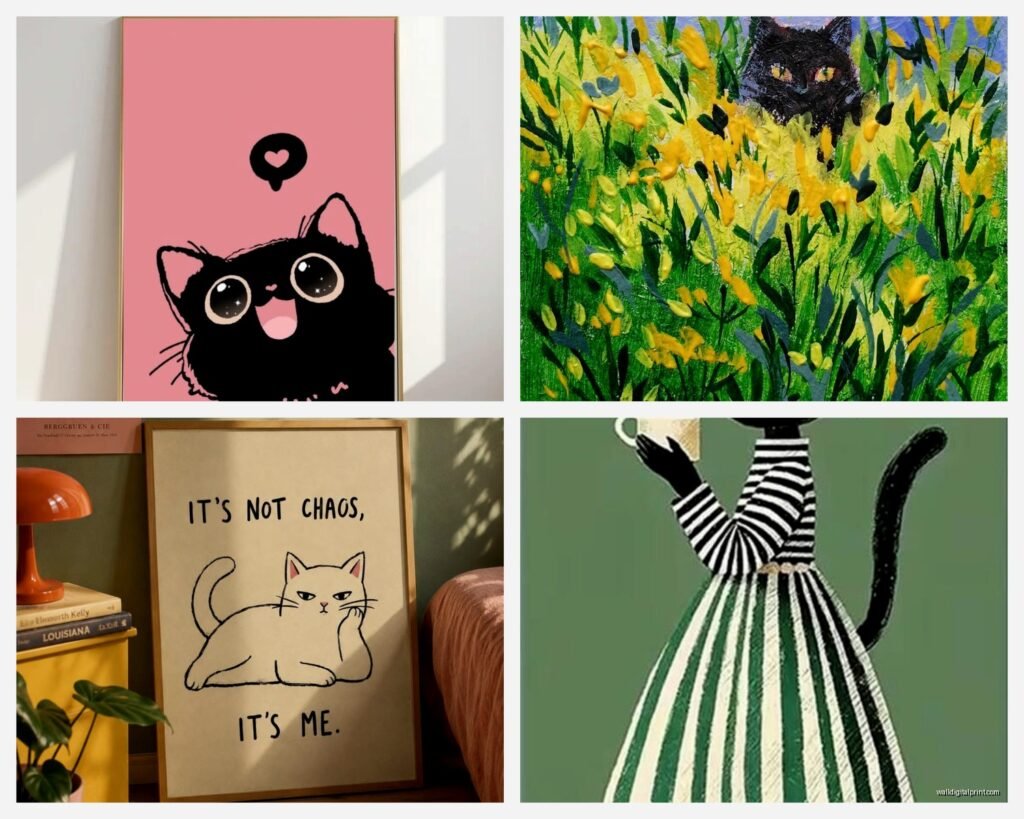
So I’ve been decorating with cat art for like three years now and honestly it started because a client kept insisting she wanted “sophisticated cat decor” which I thought was gonna be impossible but turns out there’s this whole world of actually good feline wall art that doesn’t look like your aunt’s kitchen from 1987.
Finding Cat Art That Doesn’t Look Ridiculous
Okay so the first thing you gotta know is that cat wall art exists on this massive spectrum from “genuinely beautiful abstract piece that happens to feature a cat” to “literal cartoon cat in a teacup with glitter.” Both are valid if that’s your vibe but I’m assuming you want something that looks intentional and stylish, not like you panic-bought decor at HomeGoods.
The trick is looking for pieces where the cat is treated as an actual subject worthy of artistic interpretation rather than just being cutesy. I’ve found my best pieces on Etsy from independent artists, and also weirdly at estate sales because apparently people in the 1960s and 70s were really into stylized cat prints. My living room has this vintage lithograph of a Siamese cat that I paid $15 for at an estate sale and everyone asks where I got it.
Style Categories That Actually Work
Line drawings are probably the easiest to incorporate because they’re minimal and work with basically any decor style. Just simple black lines on white or cream paper showing a cat’s silhouette or face. I have three of these in my hallway in mismatched vintage frames and it looks way more expensive than it was. You can find printable versions on Etsy for like $5-8 or buy actual prints for $20-40 depending on the artist.
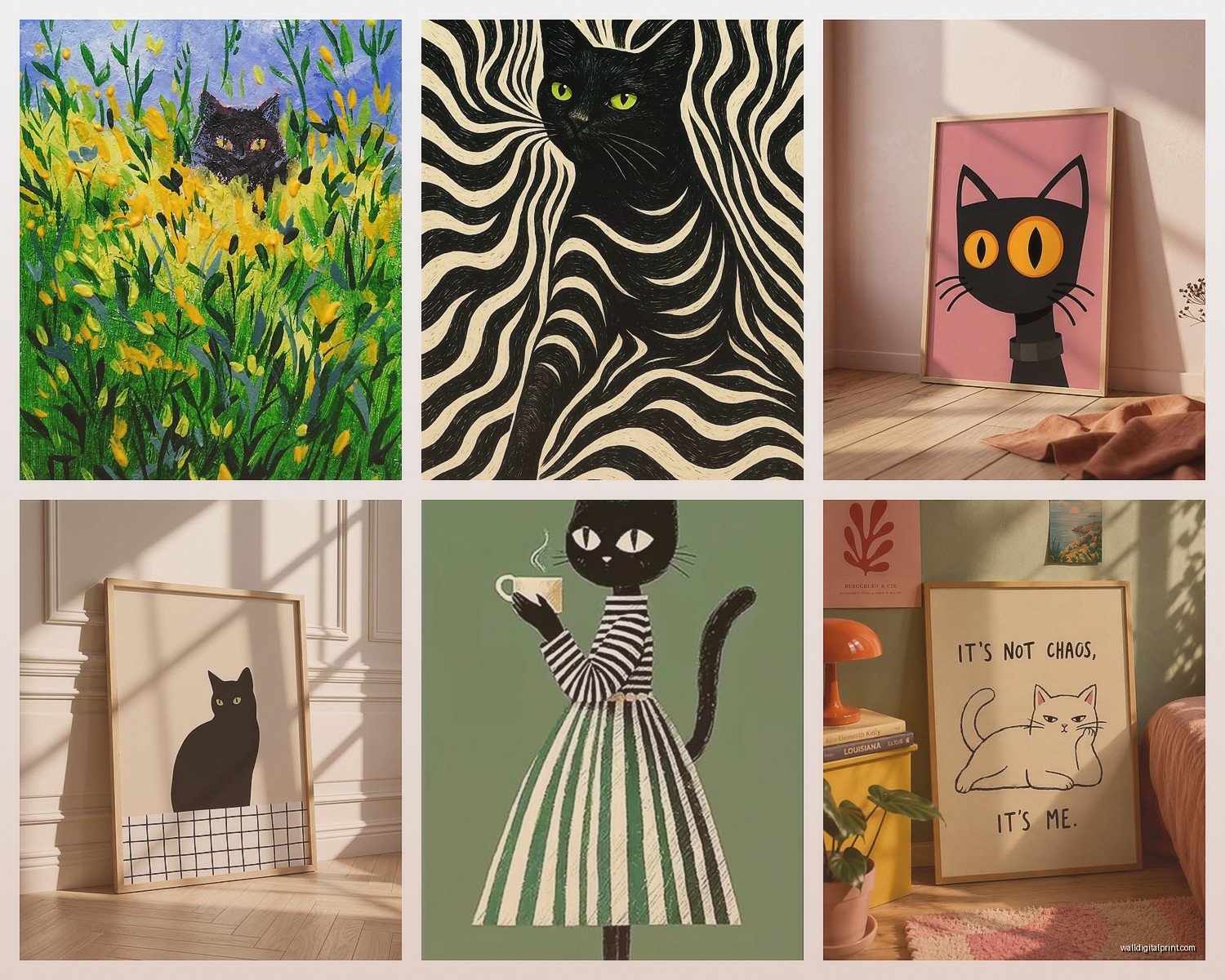
Watercolor cat portraits are hit or miss but when they’re good they’re REALLY good. Look for ones with interesting color palettes that match your existing room colors. I made the mistake once of buying this gorgeous watercolor cat in blues and greens and then realized I had literally nothing in my bedroom that coordinated with it. Now it’s in my office where I have that teal chair.
Vintage-style poster art is having a moment and honestly it works so well for cat themes. Think mid-century modern aesthetic, geometric shapes, limited color palettes. There’s this whole genre of cat art inspired by 1950s travel posters and advertising that looks incredibly chic. I put one in a client’s kitchen and her husband didn’t even realize it was “cat decor” until like three months later because it just looked like cool vintage art.
Where to Actually Put This Stuff
So placement is weirdly important with cat art because it can either look intentional or it can look like you’re one cat away from being on a reality show about collectors. The key is treating cat art the same way you’d treat any other art subject… which sounds obvious but people get weird about it.
Living rooms can handle larger statement pieces or a gallery wall situation. I did a whole gallery wall in my living room that’s like half cat art and half other subjects and nobody notices that it’s cat-heavy unless I point it out. Mix your cat pieces with landscapes, abstracts, or botanical prints and suddenly it’s just “eclectic art collection” instead of “cat lady shrine.”
Bedrooms are perfect for more whimsical or colorful cat portraits because it’s your private space and you can be more playful. I have this ridiculous portrait of a cat wearing a crown in my bedroom and it makes me happy every morning even though I’d never put it in a public space. My niece calls it “the royal cat” and honestly that’s fair.
h3>The Gallery Wall Approach
Oh and another thing about gallery walls – don’t make them all cat art unless you’re really committing to a theme. I use the rule of thirds where like one-third of the pieces feature cats and the rest are complementary subjects. Works way better visually and doesn’t overwhelm the space.
Start with your largest piece first and build around it. I learned this the hard way after putting like 47 nail holes in my wall trying to figure out spacing. Use paper templates or that blue painter’s tape to map everything out before you commit. Spacing should be 2-3 inches between frames consistently – I use my hand width as a rough guide which is probably not professional but it works.
Framing Makes or Breaks Everything
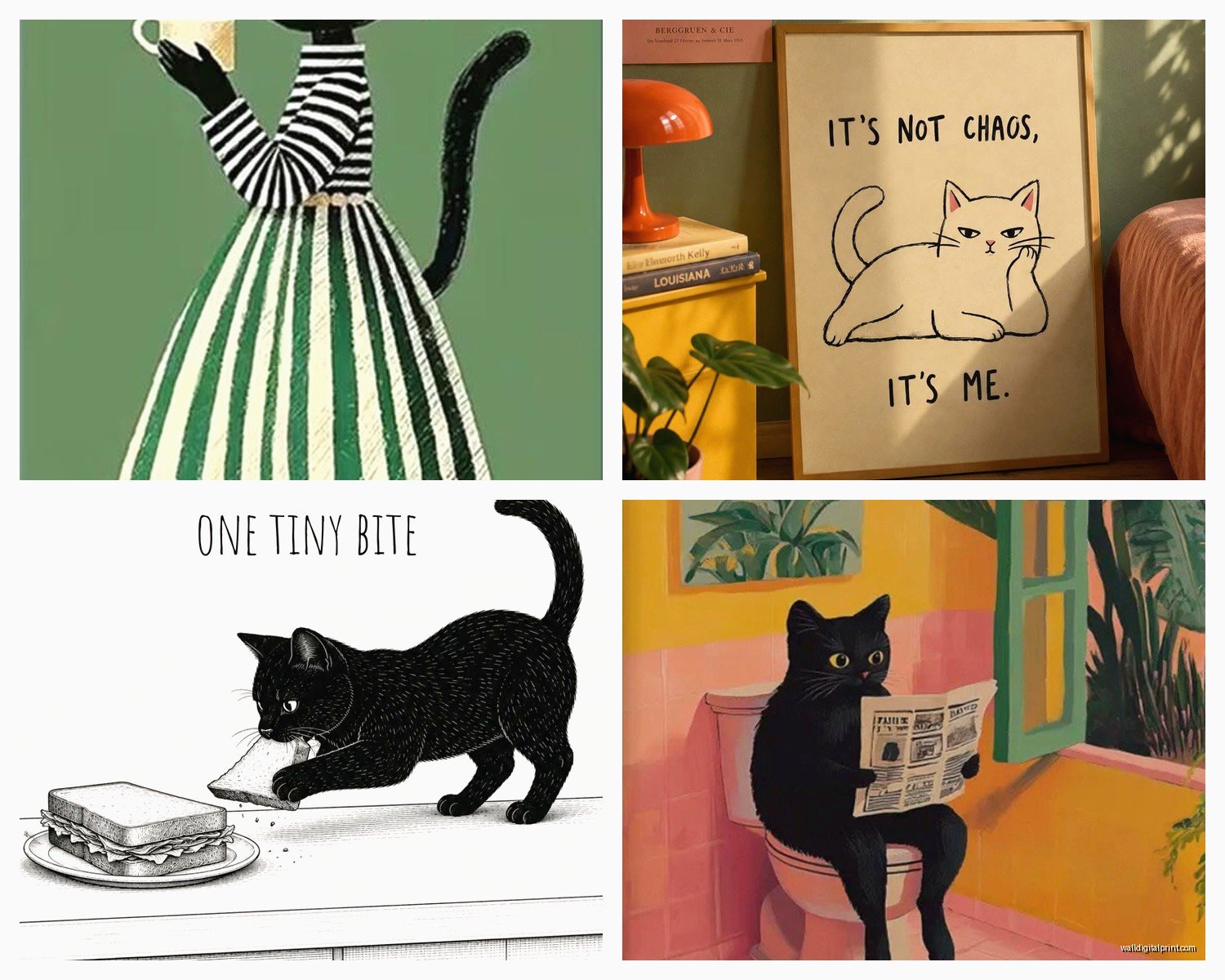
This is gonna sound obvious but good framing elevates cheap art and bad framing ruins expensive art. I’ve bought $10 prints from Etsy and put them in $40 frames from Target and people assume they’re expensive art. The reverse is also true – I once had this beautiful commissioned cat portrait that I stuck in a cheap Amazon frame and it looked terrible.
For modern or minimalist spaces, go with simple black or white frames with clean lines. For traditional or eclectic spaces, you can get more ornate but keep it consistent within each room. I have all black frames in my office and all natural wood frames in my dining area and it helps create visual cohesion even though the art subjects vary wildly.
Mat boards are worth it for smaller prints. They add visual weight and make an 8×10 print look substantial in a 11×14 or 16×20 frame. White or cream mats are safest but I’ve done black mats for dramatic effect with black and white cat photography and it looked amazing.
Sizing and Scale Issues
Wait I forgot to mention this earlier but size matters SO much and people always get this wrong. A tiny 8×10 print alone on a huge wall looks sad and lost. You need either a large piece (at least 24×36 for a focal point) or a collection of smaller pieces grouped together.
My general rule: measure your wall space and aim for art that takes up about two-thirds to three-quarters of the available width. So if you have a 60-inch wide wall space above your couch, you want your art or art grouping to be roughly 40-45 inches wide.
For spaces above furniture, hang art so the center is at eye level when you’re standing, which is usually around 57-60 inches from the floor. But if it’s above a couch or console table, the bottom of the frame should be 6-8 inches above the furniture. I literally wrote these measurements in my phone notes because I was tired of googling them constantly.
Different Cat Art Styles for Different Rooms
Okay so funny story – I was watching this documentary about Japanese cat art while eating dinner last night and realized I’ve been unconsciously organizing my recommendations by room type so let me actually break that down properly.
Kitchen and Dining Spaces
Vintage food advertisement style art with cats works surprisingly well here. There are these reproduction prints from old French advertisements featuring cats that look perfect in kitchen spaces. Keep it light and playful – this isn’t the room for dark moody cat portraits.
I also love botanical prints with cats incorporated into them for dining rooms. There’s something about the combination of florals and felines that feels fancy but not too serious. Plus it ties in nicely if you have plants in the space.
Home Office or Study
This is where you can go more sophisticated and artistic. Black and white photography of cats, serious painted portraits, or abstract interpretations work great. I have this charcoal drawing of a cat’s face that’s partially abstract and it’s my favorite piece in my office. Cost me $85 from an artist on Instagram and worth every penny.
Library cats are also a whole aesthetic – vintage photos or prints of cats among books looks perfect in a study or home library. There’s something very literary and intellectual about it that balances out the inherent whimsy of cat decor.
Bathrooms
This is gonna sound weird but cat art actually works really well in bathrooms, especially powder rooms where you can be more playful. Small framed prints, vintage advertisements for cat products, or whimsical illustrations all work. Just make sure frames are sealed properly because humidity is real.
I have this tiny vintage print of a cat in a bathtub in my guest bathroom and it’s probably the most commented-on piece of art in my entire house. People love unexpected art in bathrooms.
Mixing Mediums and Textures
Don’t just stick to prints and paintings – dimensional cat art adds so much interest. I have this carved wood cat silhouette that creates beautiful shadows on the wall and it adds texture to an otherwise flat gallery wall. Metal cat sculptures, ceramic wall hangings, or even textile art like embroidered cat pieces can break up the monotony of framed prints.
Macramé cat wall hangings are having a moment right now and I was skeptical but they actually look really good in bohemian or eclectic spaces. Just don’t overdo it – one textile piece per wall maximum or it starts looking like a craft fair.
Color Coordination Strategy
So here’s what actually works – pick 2-3 colors from your existing room palette and look for cat art that incorporates those colors. My living room is navy, cream, and brass accents so I specifically looked for cat art with blue tones or neutral colors with warm metallic frames.
Black and white cat art is your friend when you can’t find colors that match because it literally goes with everything. I probably have more black and white cat prints than color ones just because they’re so versatile. You can always add color through the mat board or frame if you want to tie it into your room’s palette.
Monochromatic cat portraits in unexpected colors can be really striking – I’ve seen gorgeous pieces that are entirely in shades of pink, or teal, or even yellow that become statement pieces because of the bold color choice.
Budget-Friendly Options That Don’t Look Cheap
Look, not everyone wants to drop $200 on cat art and that’s totally reasonable. Printable art on Etsy is honestly your best friend – you download the file, get it printed at a local print shop or even FedEx Office, and frame it yourself. Total cost is usually under $30 per piece.
I’ve also found amazing cat art at places like Society6 or Redbubble where independent artists upload their work and you can buy prints in various sizes. Quality is generally good and prices are reasonable, usually $20-50 depending on size.
Thrift stores and estate sales are goldmines if you’re patient. I’ve found vintage cat prints, needlepoints, and even paintings for under $20. They need reframing usually but the art itself is often really unique and high quality. My best find was a 1970s screenprint of a cat that I paid $12 for and it’s probably my favorite piece.
Commission vs Ready-Made
I’ve commissioned three cat portraits and bought probably thirty ready-made pieces and here’s the thing – commissions are worth it if you have a specific vision or want a portrait of your actual cat, but they’re expensive and take time. Expect to pay $150-500 depending on the artist and size.
Ready-made art is obviously faster and cheaper but you’re limited to what exists. I usually recommend starting with ready-made pieces to establish your style and then maybe commissioning one special piece later if you want something custom.
For pet portraits specifically, make sure you give the artist really good reference photos – clear, well-lit, showing your cat’s personality. I made the mistake of sending one blurry photo for my first commission and the result was… fine but not great. Second time I sent like ten photos and the artist captured my cat perfectly.
What Doesn’t Work
Okay real talk – some cat art is just bad and won’t look good no matter how you style it. Those mass-produced canvas prints from discount stores with weird proportions and blurry printing always look cheap. Canvas prints in general can be fine but make sure the printing quality is actually good before you buy.
Anything with cheesy text overlay usually reads as kitschy rather than stylish unless that’s specifically your aesthetic. “Home is where my cat is” type stuff can work in certain spaces but it’s really limiting and dated quickly.
Super photorealistic cat paintings can veer into uncanny valley territory – they’re technically impressive but often don’t look great on walls because they’re too intense. Some artistic interpretation usually works better than trying to replicate a photograph exactly.
Lighting Considerations
This matters more than you’d think – art needs proper lighting to look good. I added picture lights above my two main cat portraits and it completely transformed how they look. You can get battery-operated LED picture lights for like $25-40 and they make such a difference.
Avoid hanging art in direct sunlight because it’ll fade over time, especially watercolors and prints. I learned this when my favorite print faded noticeably after one summer near a south-facing window. Now I’m paranoid about UV protection and use museum glass for anything I really care about.
If you can’t add dedicated picture lighting, make sure the art is positioned where it gets decent ambient light from your existing fixtures. Dark corners make even beautiful art look dull and uninspiring.
Creating Cohesion Across Multiple Rooms
If you’re putting cat art in multiple rooms, there should be some connecting thread – similar frames, similar color palette, or similar artistic style. My whole house has a mix of vintage and modern cat art but they all have similar muted color palettes so it feels cohesive even though the styles vary.
You don’t want every room to have cat art though – I keep it to like three or four rooms max. My kitchen has no cat art, my bedroom has one piece, living room has several, office has two. It creates variety and prevents the whole house from feeling theme-y.
My cat is literally sitting on my desk right now judging me for writing this much about cat art but whatever, this stuff actually matters if you want your space to look intentional rather than accidental. The key is treating cat art as legitimate art rather than novelty decor and being thoughtful about placement and framing just like you would with any other subject matter.
