Wall Art Guide, Wall Art Tutoriels
Islamic Wall Art for Living Room: Calligraphy & Geometric Designs
Jun
So I’ve been deep in the Islamic wall art rabbit hole for like three months now because my client wanted to redesign her living room with more cultural pieces, and honestly? It completely changed how I think about wall decor. Let me just dump everything I learned because this stuff is way more complex than those generic prints you see on Etsy.
The Calligraphy Situation
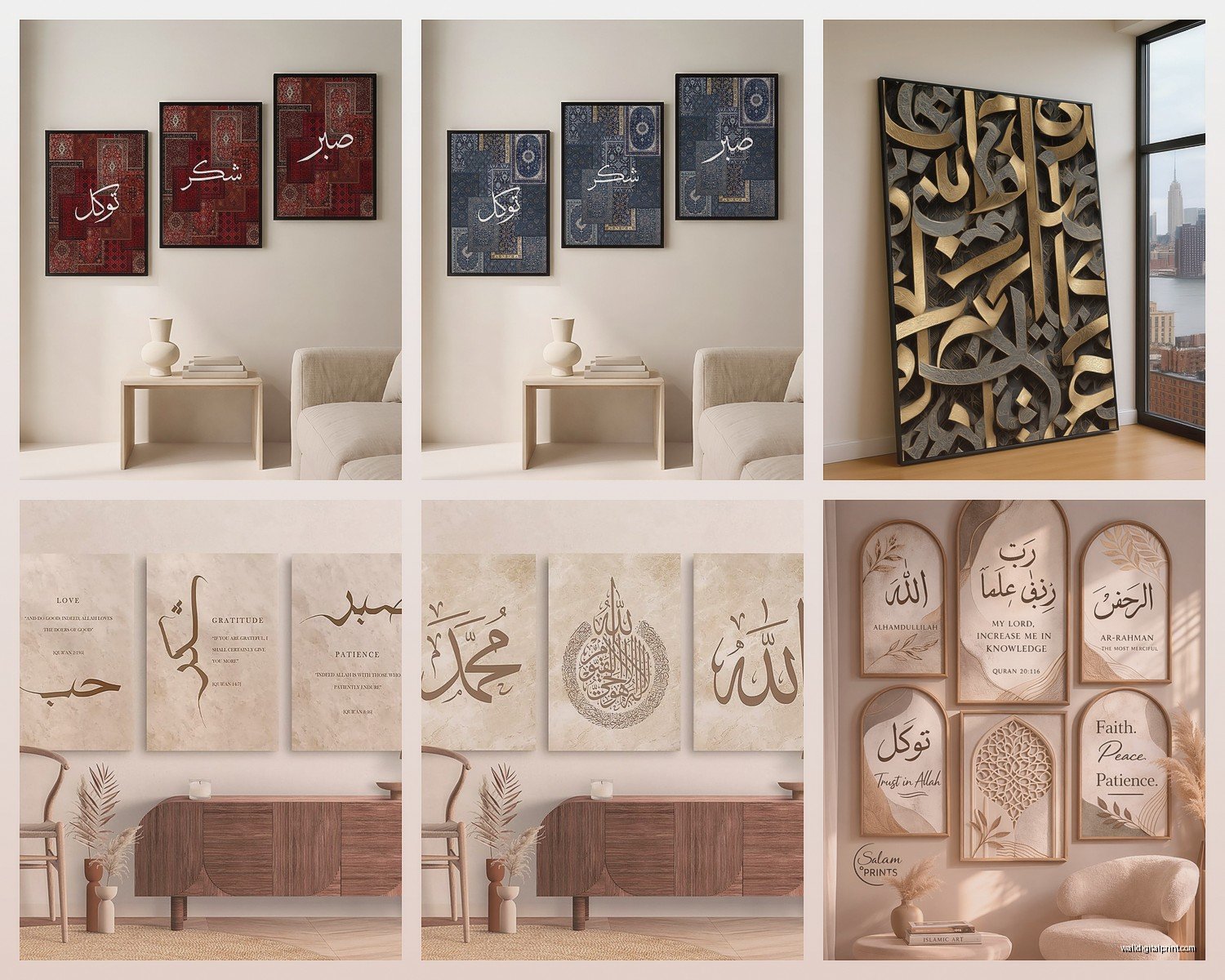
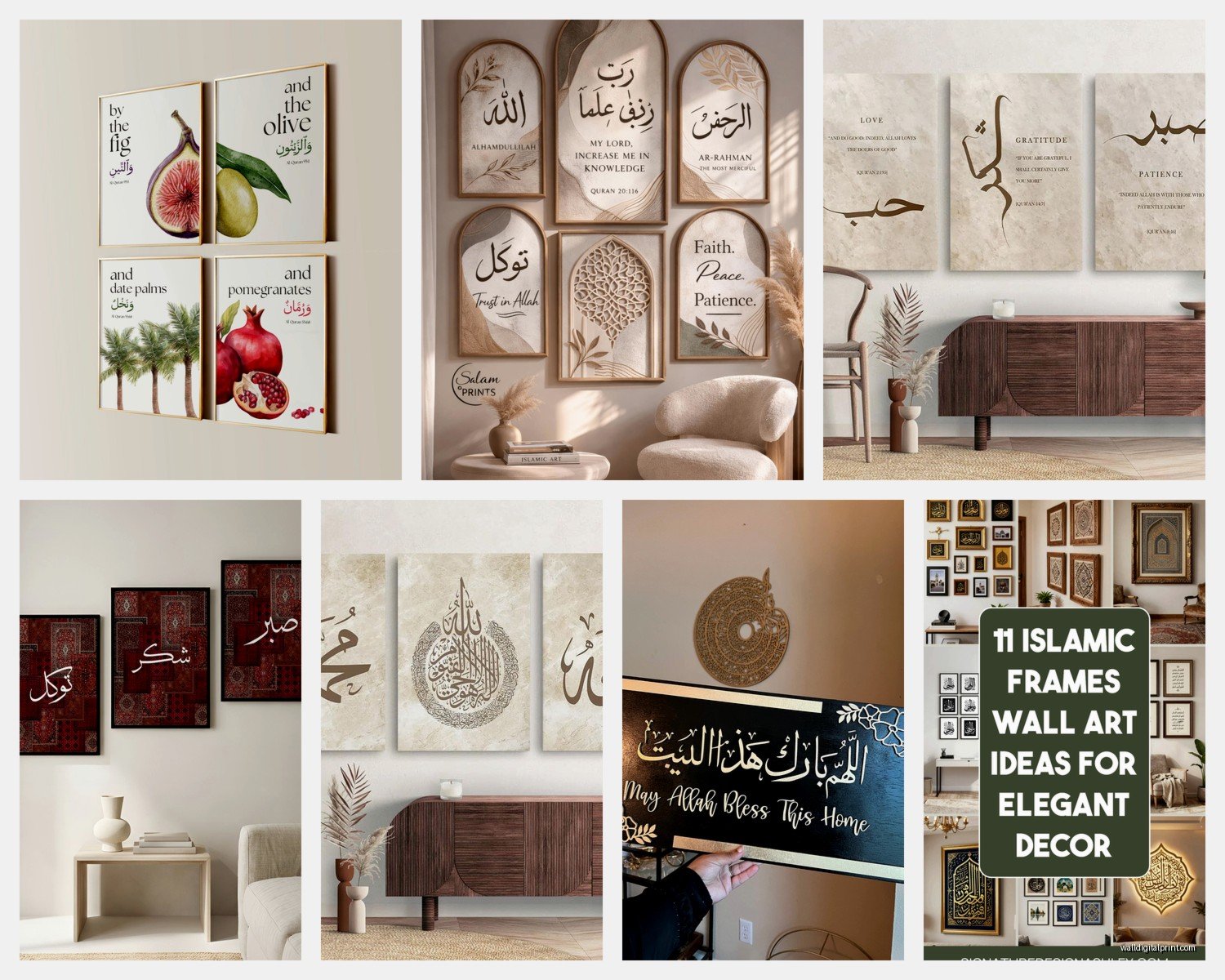
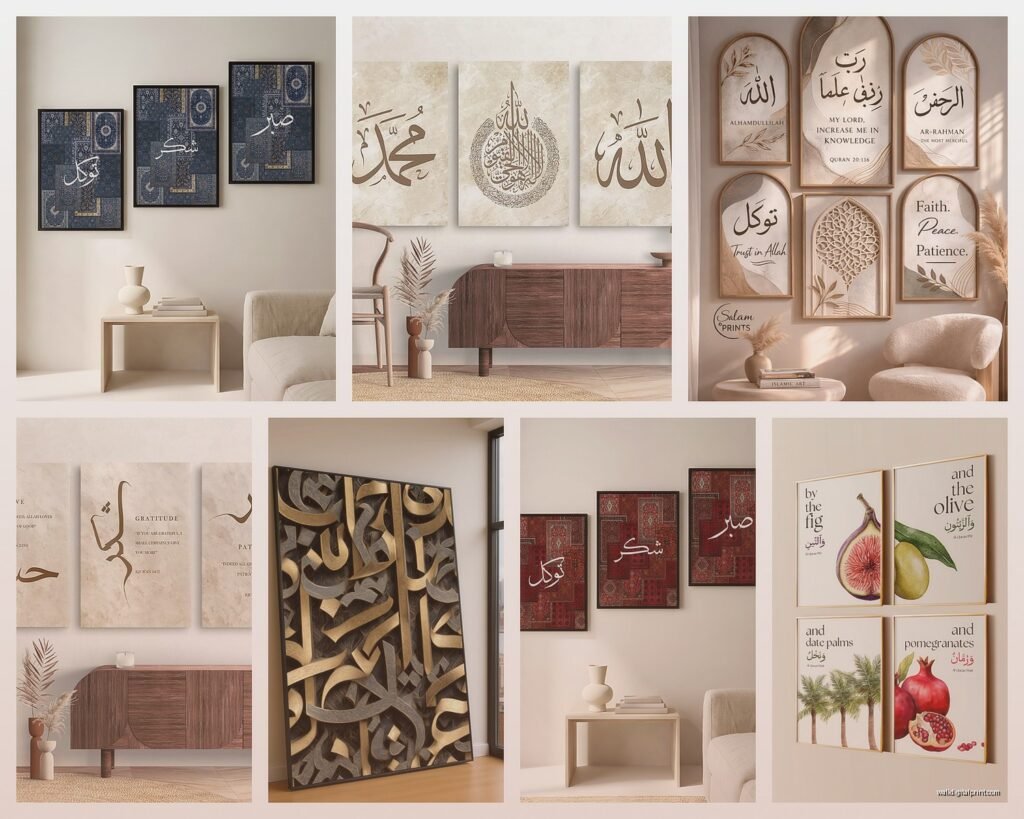
Okay so first thing – Islamic calligraphy isn’t just “pretty Arabic letters.” There are like seven different styles and they each have totally different vibes. Thuluth is the one you see everywhere, it’s got those elegant flowing curves and looks amazing above a sofa. Kufic is more angular and geometric, super modern looking actually. I put a Kufic piece in my own living room and people always think it’s contemporary art until they get closer.
The phrases matter too. Most common ones are Ayat al-Kursi (the Throne Verse), Bismillah (In the name of God), or the 99 names of Allah. My client specifically wanted “Alhamdulillah” which means “praise be to God” because she says it like fifty times a day anyway. You want something that resonates with you personally, not just what looks good in someone’s Instagram post.
Size and Placement Reality Check
Here’s what nobody tells you – that gorgeous 3-piece calligraphy set you’re eyeing? It’s gonna look completely different in your actual space. I learned this the hard way when I ordered what I thought was a large canvas and it arrived basically the size of a textbook.
For above your sofa, you want the art to take up about two-thirds to three-quarters of the sofa width. So if you’ve got a standard 84-inch sofa, you’re looking at roughly 56-63 inches of art width. You can do this with one massive piece or a triptych. The triptych thing is actually really popular right now and it works because you can adjust the spacing between panels to fill your exact wall space.
Height-wise, hang it so the center of the piece is at eye level when you’re standing, which is usually around 57-60 inches from the floor. But honestly if you have high ceilings like over 9 feet, you might wanna go a bit higher because otherwise it looks weirdly low and makes your ceiling feel even taller in a bad way.
Geometric Patterns Are Having a Moment
Wait I forgot to mention – geometric Islamic art is actually easier to work with than calligraphy in some ways because it’s less literal. Like if you’re not Muslim but you appreciate the aesthetic, geometric pieces don’t have the same religious text element to consider.
The patterns are based on mathematical principles which sounds boring but creates these insanely intricate designs. They’re meant to represent infinity and the underlying order of creation, but practically speaking they just look really cool and sophisticated. My cat knocked over my coffee while I was researching this stuff and I spent an hour cleaning it up and watching YouTube videos about sacred geometry at the same time.
Color Schemes That Actually Work
Traditional Islamic art uses a lot of blues, teals, golds, and deep reds. But here’s the thing – you don’t have to go full traditional unless that’s your vibe. I’ve seen black and white geometric pieces that look incredibly modern and sleek. Rose gold metallic on navy blue. Even pastel versions for people with lighter, airier living rooms.
Your living room’s existing palette matters more than authenticity honestly. If you’ve got a neutral beige and gray space, a piece with gold or copper metallic accents will pop without overwhelming. If your room is already colorful, black and white Islamic art can actually ground everything.
One trick I use: pull a minor accent color from your existing room and make that the dominant color in your Islamic art piece. So if you have gray walls with teal throw pillows, get art that’s primarily teal with gold or white accents. Makes everything feel intentional instead of like you just stuck random art up there.
Material Options Because It Actually Matters
Canvas is the most common and it’s fine, but the quality varies SO much. Cheap canvas prints look flat and the colors can be muddy. You want gallery-wrapped canvas that’s at least 1.5 inches thick so it has some presence on the wall.
Metal prints are becoming really popular for geometric designs especially. The metallic surface makes gold elements actually shimmer and catch light throughout the day. I installed one in a client’s living room that faces west and the way it glows during sunset is kind of ridiculous in a good way.
Wood cutouts are another option – these are usually geometric patterns laser cut from wood and mounted on a contrasting background. They add actual dimension and shadow which makes the piece more dynamic. Only downside is they’re usually more expensive and you gotta be careful with direct sunlight because wood can fade or warp over time.
Acrylic glass prints look super high-end and modern. The colors are vibrant and the glossy finish gives everything depth. They work really well in contemporary spaces but might look too modern if you’re going for a traditional vibe.
The Frame Debate
Okay so funny story, I got into a whole argument with another designer about whether Islamic art should be framed or not. She insisted everything looks better framed. I think it depends entirely on the piece and your space.
Calligraphy pieces often look better framed, especially if they’re on paper or if you want that gallery feel. Black frames for modern spaces, gold or dark wood for traditional. White frames can work but they need to be substantial otherwise the art gets lost.
Geometric patterns on canvas? I usually skip the frame and go for gallery-wrapped edges where the pattern continues around the sides. Cleaner look, more contemporary, and honestly cheaper because frames are expensive.
If you do frame, use a mat. It creates breathing room around the art and makes everything look more intentional. For Islamic art I usually go with an off-white or light cream mat rather than pure white because it feels warmer.
Where to Actually Buy This Stuff
Etsy has tons of options but the quality is all over the place. Read reviews carefully and look at customer photos not just the listing photos. I’ve ordered from sellers who clearly photoshopped their mock-ups to look better than the actual product.
There are specialized Islamic art stores online – IslamicArtStore, ModernWallArt1, LaModaHome. They tend to have better quality control but they’re pricier. You’re paying for artists who actually understand the art form versus someone who just downloaded some patterns and stuck them on canvas.
Local Islamic bookstores or cultural centers sometimes sell art or can connect you with local artists. I found an amazing calligrapher through a community center who did a custom piece for way less than I expected. Plus you’re supporting actual artists which feels good.
If you’re on a budget, printable art from Etsy works. Download the file, take it to a print shop or FedEx, and get it printed on quality paper or canvas. Then frame it yourself. I’ve done this for clients who wanted to try out Islamic art without committing to an expensive piece first.
Mixing Islamic Art With Other Styles
This is where people get nervous but honestly it’s not that hard. Islamic art actually plays really well with mid-century modern because both emphasize clean lines and geometric shapes. I put a geometric Islamic piece next to a Scandinavian print in my client’s living room and they complement each other perfectly.
With bohemian style it’s almost too easy – the patterns and colors naturally fit. Just don’t go overboard or it’ll look cluttered. Pick one statement Islamic piece and keep surrounding art simpler.
Minimalist spaces are trickier because you need the right piece. A single large-scale calligraphy piece in black and white can work beautifully. Or a subtle geometric pattern with lots of negative space. The art should feel like it’s part of the minimal aesthetic not fighting against it.
Traditional or classic living rooms can handle more ornate Islamic art with gold details and rich colors. This is where you can bring in those jewel tones and metallic accents without it feeling over-the-top.
Lighting Makes or Breaks Everything
I cannot stress this enough – lighting transforms Islamic art. Picture lights or track lighting aimed at your art piece makes such a difference especially with metallic elements or textured pieces. The shadows from wood cutouts or the shimmer from gold foil becomes way more dramatic with proper lighting.
If you can’t install dedicated art lighting, position the piece where it gets natural light during the day but not direct harsh sunlight. Late afternoon indirect light is perfect. For evening, make sure you have lamps that cast light toward the wall where your art hangs.
LED strip lights behind the canvas create a backlit effect that’s super modern and makes the art appear to float off the wall. I did this with a geometric piece and it became the focal point of the entire room. You can get color-changing LEDs if you wanna get fancy but warm white usually looks best.
Common Mistakes People Make
Hanging it too high. Seriously everyone does this. Eye level means eye level, not ceiling level.
Buying art that’s too small for the wall space. When in doubt go bigger. A piece that’s too small looks like an afterthought.
Not considering the rest of the room before buying. That gorgeous teal and gold piece might clash horribly with your burgundy sofa. Take photos of your room with you when shopping or at least have paint swatches of your wall colors.
Getting trendy instead of timeless. Islamic art has been around for centuries – lean into classic designs unless you’re absolutely sure about that millennial pink geometric pattern.
Forgetting about the art when arranging furniture. Your beautiful new wall art shouldn’t be blocked by a lamp or partially hidden behind a plant. Plan your furniture layout with the art in mind.
Multiple Pieces and Gallery Walls
You can definitely create a gallery wall with Islamic art but it takes more planning than with random prints. The key is maintaining some visual consistency – either stick to all calligraphy or all geometric, or mix them but keep the color palette unified.
I like doing a main large piece as the anchor and surrounding it with smaller complementary pieces. So maybe a big calligraphy canvas in the center with smaller geometric prints around it in matching colors.
Keep spacing consistent – about 2-3 inches between frames. Lay everything out on the floor first and take a photo so you know exactly where each piece goes when you’re up on the ladder with a hammer.
Odd numbers work better visually. Three pieces, five pieces, seven. Not sure why but it just looks more balanced.
Custom vs Ready-Made
Ready-made is obviously easier and cheaper. You get it quickly and you know exactly what you’re getting. But custom lets you get the exact phrase, style, size, and colors you want.
I commissioned a custom piece for a client who wanted her children’s names in Arabic calligraphy. Took six weeks and cost more but it’s completely unique and meaningful to her family. For something that personal it’s worth the investment.
If you’re going custom, communicate clearly about size, colors, and style. Get a digital mockup before the artist starts if possible. And ask about their return or revision policy – some artists will do minor tweaks, others won’t.
Maintenance and Care
Dust regularly with a soft microfiber cloth. Don’t use cleaning products unless the manufacturer specifically says it’s okay.
Keep away from humidity – so not directly over a humidifier or in a room that gets really steamy. Canvas can warp and colors can fade.
If you have pieces with actual gold leaf or metallic elements, be extra gentle. Those surfaces can scratch or flake if you’re rough with cleaning.
Rotate pieces if you have multiples to prevent uneven fading from sun exposure. Or just use UV-protective glass if you’re framing.
Every few months check that hanging hardware is secure. Nothing worse than your beautiful art crashing down because a wire snapped.
Oh and another thing – if you’re renting, use command strips rated for the appropriate weight instead of putting holes in the wall. They make ones that hold up to 16 pounds now which is enough for most canvas art.
Anyway that’s basically everything I’ve learned from obsessing over this stuff. Your living room is gonna look amazing once you pick the right piece and actually hang it at the correct height which apparently nobody does naturally.