Wall Art Guide, Wall Art Tutoriels
Tree of Life Outdoor Wall Art: Weather-Resistant Sculptures
Jun
So I’ve been installing these tree of life sculptures outside for like three years now and honestly the weather-resistant thing is WAY more complicated than anyone tells you upfront. My neighbor just asked me about this yesterday while I was trying to get my dog to stop barking at the mail truck, and I realized most people have no idea what they’re actually buying.
The Metal Situation Nobody Explains Properly
Okay so here’s the thing about “weather-resistant” – it’s not all the same. I learned this the hard way when a client bought this gorgeous copper piece that was supposed to patina beautifully and instead it just looked…crusty? Like not in a charming way.
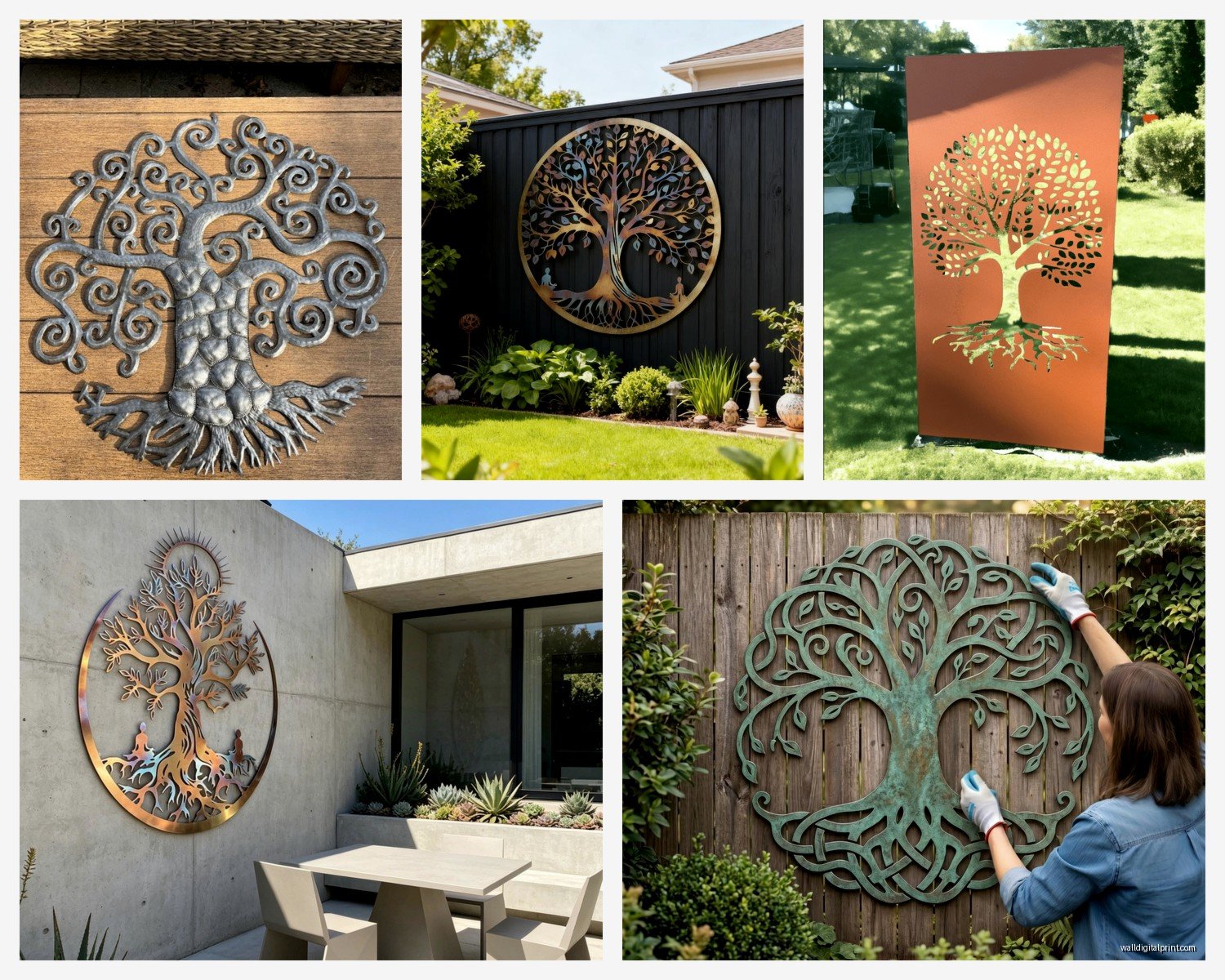
Powder-coated steel is gonna be your most common option and honestly it holds up pretty well. The powder coating is baked on at like super high temperatures so it bonds with the metal. I’ve got one on my back fence that’s been there through two winters and it still looks decent. You’ll see some fading after about 18 months if it gets direct sun all day, but nothing terrible.
Raw steel or iron that’s meant to rust – this is intentional patina and some people LOVE it. I have mixed feelings? It looks amazing and organic but you gotta be okay with rust stains potentially dripping onto whatever’s below it. Put it on vinyl siding and yeah…you might have issues. Brick or stone underneath works way better.
Aluminum doesn’t rust which is great but it’s lighter so in windy areas you need to really secure it. Had one client in a coastal area where the wind just destroyed her mounting brackets because we underestimated the force.
Size Actually Matters More Than You’d Think
This is gonna sound weird but I spent like an entire afternoon last month just holding different sizes against walls because the dimensions online are so misleading. A 24-inch sculpture sounds reasonable until you realize that’s measured diagonally or whatever and it’s actually way bigger than the space you had in mind.
Here’s what I tell people: go outside with a tape measure and actually mark out the dimensions with painter’s tape. Stand back. Look at it from where you’ll actually see it most – from the patio, from inside through the window, from the driveway. I cannot tell you how many times someone orders a 36-inch piece thinking it’ll be a statement piece and it just…disappears on a large wall.
For standard fence sections (6 feet tall), a 24 to 30-inch diameter works well. Bigger walls or the side of a house, you can go 36 to 48 inches easy. Smaller than 20 inches tends to look like an afterthought unless you’re clustering multiple pieces.
The Mounting Nightmare
Oh and another thing – nobody talks about how you’re actually gonna hang these things. Most come with keyhole hangers on the back or maybe hooks. Cool. But outdoor walls aren’t like indoor drywall situations.
For wood fences, you need exterior screws (not nails, trust me) that go into the actual fence posts if possible, not just the thin boards. The posts are what give you stability. I use 3-inch exterior deck screws usually.
For brick or stone, you’re gonna need masonry anchors. Get the actual good ones from the hardware store, not the cheap plastic things. Tapcon screws work great. You’ll need a hammer drill with a masonry bit. It’s louder than you expect and my cat hides under the bed every time.
For stucco, similar deal but be gentler because stucco can crack. Pilot holes are your friend.
Vinyl siding – okay this is tricky. You can’t just screw into vinyl because it expands and contracts with temperature. You need to find the wood sheathing behind it or use siding hooks specifically designed for this. The hooks slip under the siding panel and you hang the art from those. Works surprisingly well but weight limits are real.
What Actually Holds Up Outside
I tested this myself kinda accidentally because I’ve now seen the same sculptures in different climates. My sister lives in Arizona, I’m in the Pacific Northwest, and I curate pieces for clients everywhere from Florida to Colorado.
- Powder-coated metal with UV protection – lasts the longest with minimal maintenance, especially in dark colors weirdly enough
- Corten steel (the rusty look) – actually super durable once it forms that stable rust layer, takes about 3-6 months to fully develop
- Painted metal without proper sealing – starts chipping within 6 months usually, especially around edges
- Resin or composite materials – lighter and won’t rust but can fade FAST in direct sun, like noticeably in one summer
The UV thing is important. Some manufacturers add UV inhibitors to their coating and some don’t. You can’t always tell from the listing but if it specifically mentions UV resistance, that’s a good sign. Without it, colors bleach out real quick.
Style Variations That Actually Look Different
So tree of life designs all have the same basic concept but the execution varies a ton. I’ve probably sourced like 50 different versions at this point.
Celtic knot style – super intricate, lots of interwoven branches and roots. These look amazing up close but from far away the detail gets lost. Better for smaller spaces where people will actually get near it.
Minimalist geometric – cleaner lines, more modern. These work better on contemporary homes. I put one on a mid-century modern house last spring and it was perfect. The simpler design also means fewer crevices where moisture can collect.
Naturalistic with leaves – individual leaf cutouts on the branches. Pretty but more surface area means more potential for the coating to fail over time. Also catches wind more.
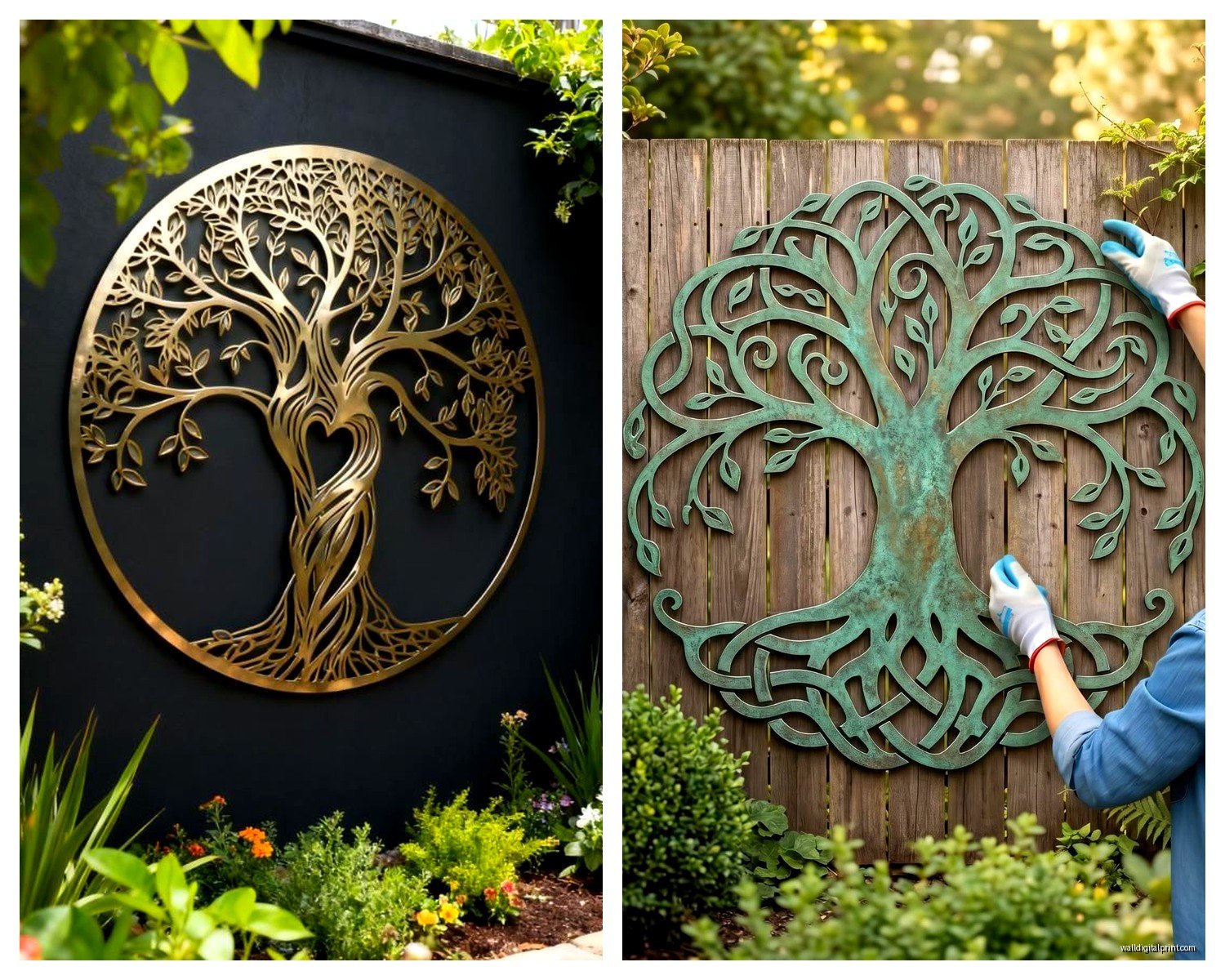
Mandala-inspired circular designs – the tree forms a perfect circle. These are having a moment right now. They photograph really well which is probably why they’re all over Instagram.
Wait I forgot to mention – some have integrated solar lights or are designed to backlight at night. The solar ones are neat in theory but the battery life usually degrades after a year or two. Just something to consider if that feature is pushing the price up significantly.
Color Choices and What Happens to Them
Black or dark bronze – safest bet, hides dirt and any minor deterioration, doesn’t fade as noticeably
Oil-rubbed bronze or aged finishes – also good, the intentionally uneven coloring means natural aging blends in
Bright colors (turquoise, red, copper penny) – these can look AMAZING initially but you’re committing to more maintenance. Expect to clean them regularly and maybe reseal every couple years.
Metallic finishes – depends entirely on the quality. Cheap metallic spray paint flakes off. Proper metallic powder coating holds up much better.
Natural metal colors that patina – copper turns green/blue (verdigris), steel turns orange/brown. Make sure you actually like the aged look before committing because there’s no stopping it outdoors.
The Maintenance Reality Check
Okay so funny story, I told a client these were “maintenance-free” and then her piece got covered in pollen and bird droppings and she called me kinda annoyed. So yeah, nothing outside is truly maintenance-free.
What you actually need to do:
Every few months – spray it down with a hose, maybe use a soft brush if there’s buildup. That’s honestly it for powder-coated pieces.
Once a year – check the mounting hardware, make sure screws haven’t loosened. Apply a coat of car wax to powder-coated finishes if you want extra protection (I do this, takes 10 minutes).
For raw metal – if you want to stop the rusting process at a certain point, you can apply a clear sealer. But most people who choose this look want it to continue developing.
For painted metal – touch up chips immediately with exterior metal paint or they’ll spread. Keep a small container of matching paint if you can.
I’m gonna be honest, I rarely do any of this consistently on my own pieces and they’re fine. But I’m also okay with an imperfect weathered look.
Where to Actually Mount These Things
This seems obvious but placement matters so much for longevity.
Covered porches or under eaves – best option, protected from direct rain and harsh sun. Your sculpture will last way longer here.
South-facing walls – maximum sun exposure, expect faster fading but also faster drying after rain which prevents moisture issues.
North-facing walls – less sun damage but stays damp longer, better for rust-finish pieces actually.
Near sprinklers or water features – avoid this unless you want constant water spots and faster deterioration.
Right above ground – moisture wicks up from soil, not ideal. Keep at least a foot of clearance.
On gates that move – adds stress to mounting points, use extra anchors.
My back wall is partially covered by a pergola and that piece still looks new after two years while the one on my open fence has faded noticeably. Just reality.
Price Ranges and What You Get
Under $50 – usually thin metal, basic powder coating, simple designs. Fine for covered areas or if you view it as temporary decor. I’ve bought these for staging and they work.
$50-$150 – mid-range, better thickness (look for 16-gauge steel or thicker), more durable finishes, more intricate designs. This is the sweet spot for most people honestly.
$150-$300 – heavy-duty metal, premium powder coating with UV protection, often handcrafted details, larger sizes. Worth it if it’s going in a prominent spot.
Over $300 – you’re getting into art territory. Custom pieces, maybe hand-forged, unique designs. I curate these for clients who want something nobody else has.
The cheap ones aren’t necessarily bad, you just gotta have realistic expectations about lifespan. I’ve seen $35 pieces that looked great for a year before starting to deteriorate.
Installation Tips Nobody Tells You
Use a level. Seriously. What looks straight when you’re eyeballing it usually isn’t. I’ve reinstalled so many of these because they were slightly crooked and it drove people crazy.
Have someone help you hold it while marking holes. These are awkward shapes and trying to do it solo is frustrating.
Step back repeatedly during installation. What looks centered up close might look off-center from 10 feet away.
If mounting on a fence, wait for a calm day. Wind catches these and makes positioning impossible.
Consider the shadow it’ll cast. Some designs create cool shadows at certain times of day which is a bonus feature if you position it right.
Test your drill bit size with scrap material first, especially for masonry. Too big and your anchor won’t hold, too small and you might crack something.
Specific Recommendations Based on Climate
Hot and dry (desert climates) – any powder-coated metal works great, avoid dark colors on south-facing walls because the metal gets insanely hot to touch
Humid and rainy – stainless steel or aluminum over regular steel, make sure there’s good drainage design so water doesn’t pool in crevices
Coastal/salt air – marine-grade aluminum or stainless steel, regular steel will corrode faster, even powder-coated
Cold winters with snow – avoid pieces with horizontal surfaces where snow accumulates, weight can bend thinner metal, powder coating can crack if it’s cheap stuff
High wind areas – smaller pieces or extra anchoring points, lighter materials like aluminum might not work well
I’m in the PNW so constant moisture is my issue. I’ve learned to prefer designs where water runs off easily rather than collecting in little pockets.
Oh and another thing about wind – if you hear it rattling against the wall, add small rubber bumpers behind it. You can get adhesive door bumpers from any hardware store. Saves the noise and prevents wear on both the sculpture and your wall.
Common Problems and Fixes
Fading color – clean thoroughly, apply automotive wax for protection, or embrace it as character
Rust bleeding onto wall – seal the back with clear spray sealant, add a barrier between sculpture and wall (small spacers)
Loose mounting – tighten screws, might need larger anchors or different mounting location
Bent branches or elements – carefully bend back by hand for thin metal, heavier pieces might need pliers, work slowly to avoid cracking powder coating
Bird nests in branches – this happens more than you’d think with intricate designs, just remove gently when empty, maybe add deterrent spikes if it’s recurring
Paint chipping – clean, light sand, spray paint for metal in matching color, clear coat over it
Most issues are fixable if you catch them early. I check mine every time I’m doing yard work, takes two seconds.
The thing is these sculptures can last 10+ years outside if you choose decent quality and do minimal maintenance. Or they can look rough after one season if you get the cheapest option and put it in the worst possible spot. It’s really about matching the right piece to your specific situation and being realistic about what “weather-resistant” actually means for your climate.