Wall Art Guide, Wall Art Tutoriels
Oriental Wall Art: Asian East Asian Traditional Decor
Aug
So I just got back from this estate sale where I found the most incredible hand-painted silk scroll and it reminded me you were asking about oriental wall art, right? Let me just dump everything I know because I’ve been curating Asian pieces for clients for like six years now and I have Thoughts.
First Things First: What Actually Counts as Oriental Wall Art
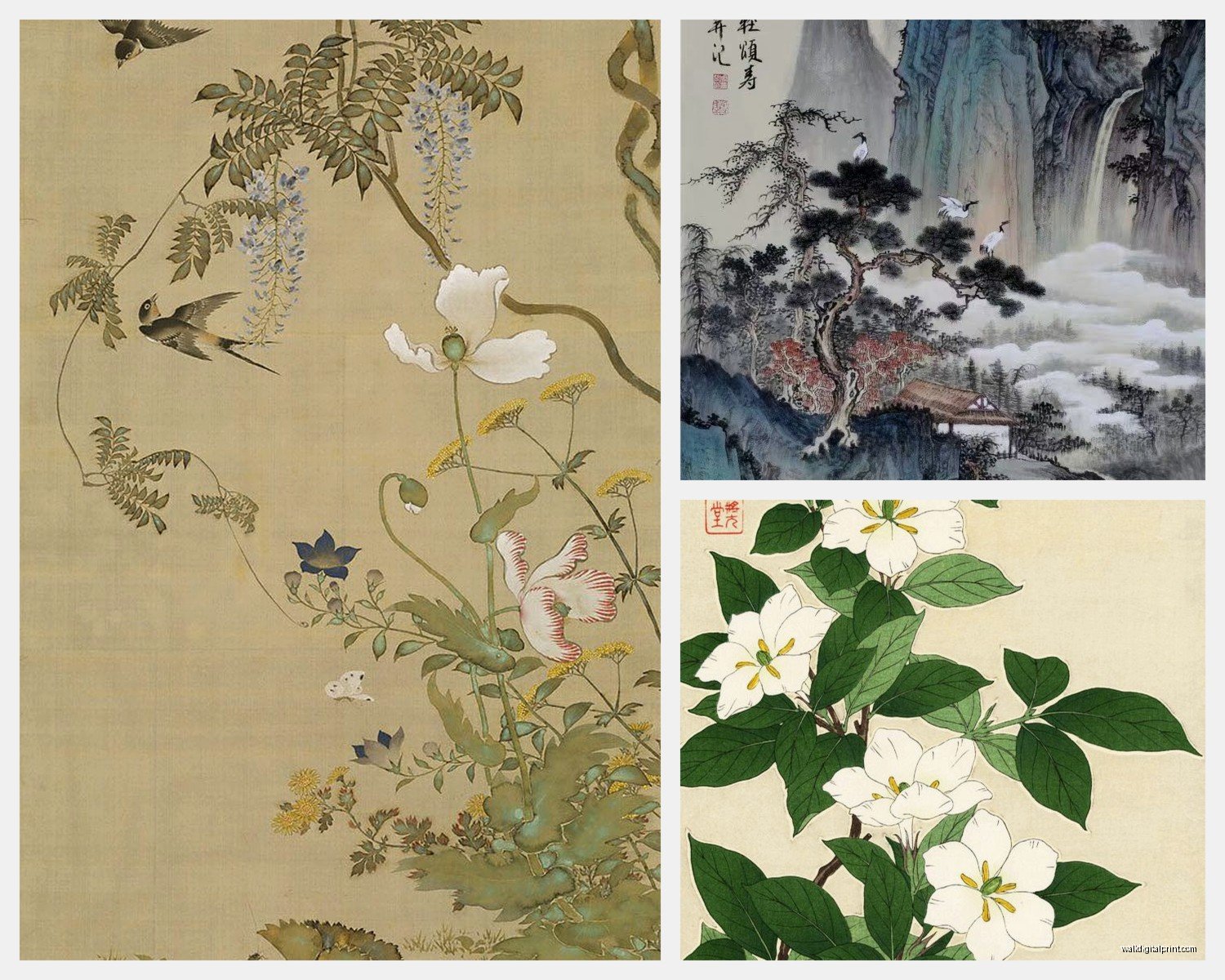
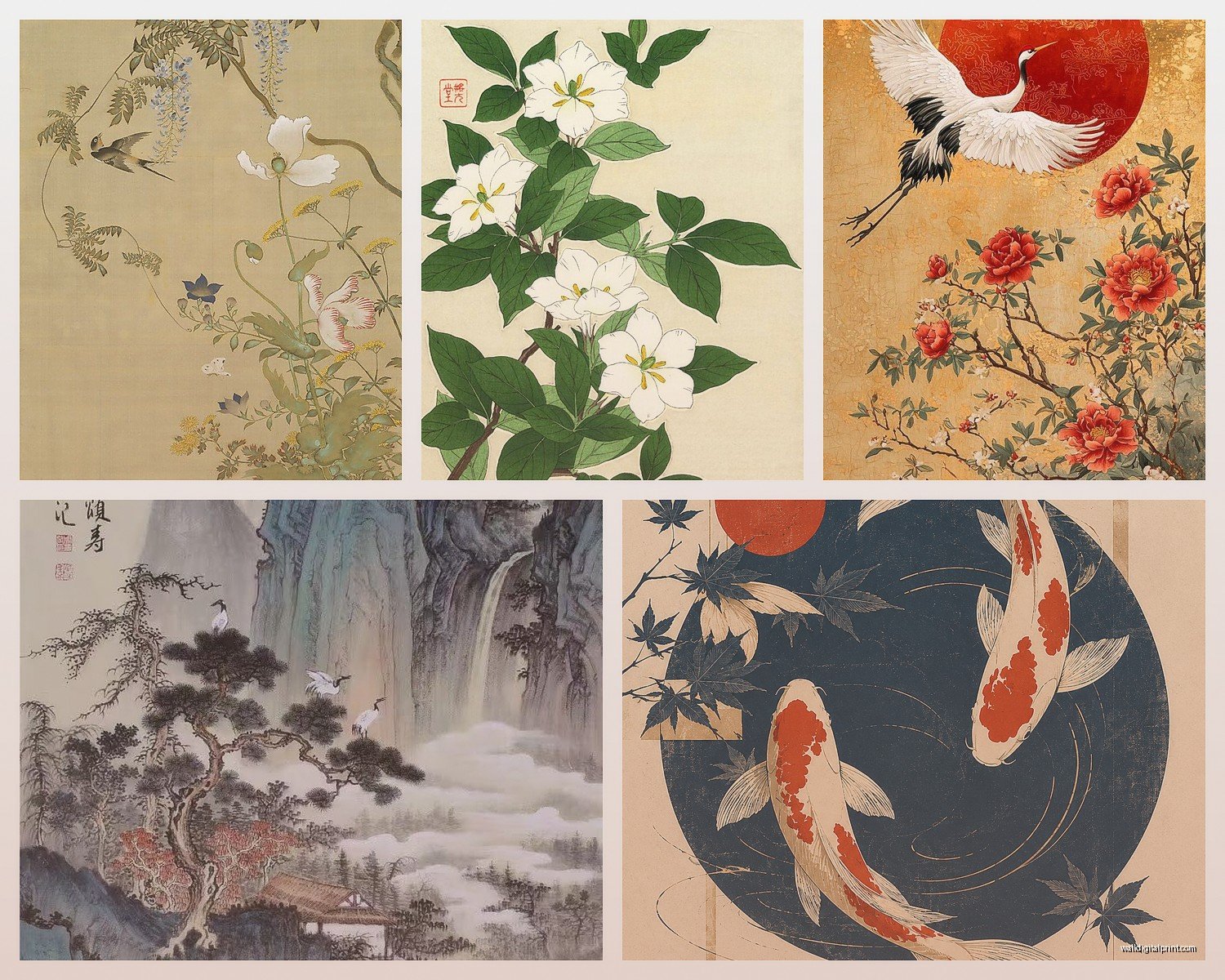
Okay so here’s the thing – when people say oriental wall art they usually mean Chinese, Japanese, Korean, or Vietnamese traditional pieces. The styles are actually super different though. Japanese art tends to be more minimal with lots of negative space, Chinese stuff is often bolder with symbolism everywhere, Korean pieces have this gorgeous muted color palette that I’m obsessed with.
The main types you’ll see are woodblock prints (ukiyo-e if they’re Japanese), hand-painted scrolls, calligraphy pieces, painted screens that you can hang, and then modern reproductions of all of the above. I’m gonna be real with you – reproductions are totally fine if you’re on a budget, just don’t let anyone sell you a $500 “vintage” piece that’s actually a print from 2015.
Where to Actually Buy This Stuff
I’ve wasted so much money learning this the hard way. Etsy has some legit sellers but you gotta dig. Look for shops based in Japan, China, or Korea – they’re usually more authentic and way cheaper than the American resellers who mark everything up 300%. I found this one seller in Kyoto who does beautiful hand-printed woodblocks for like $80 when the same thing at that boutique in SoHo was $400.
Estate sales and antique shops are hit or miss but that’s where the real treasures are. Bring your phone and reverse image search anything that looks too perfect. My neighbor got burned buying what she thought was a 1920s Japanese print that turned out to be from Pier 1.
Online: 1stDibs if you’ve got money to blow and want museum-quality stuff, Chairish for mid-range vintage, eBay if you know what you’re looking for and can spot fakes. Oh and there’s this site called Japan Objects Store that I recommend to literally everyone – they have curated collections and actually explain what you’re buying.
How to Pick Pieces That Won’t Look Ridiculous
This is gonna sound weird but the biggest mistake I see is people buying one random piece with koi fish because they think it looks “Asian” and calling it a day. It ends up looking like a doctor’s office waiting room, you know?
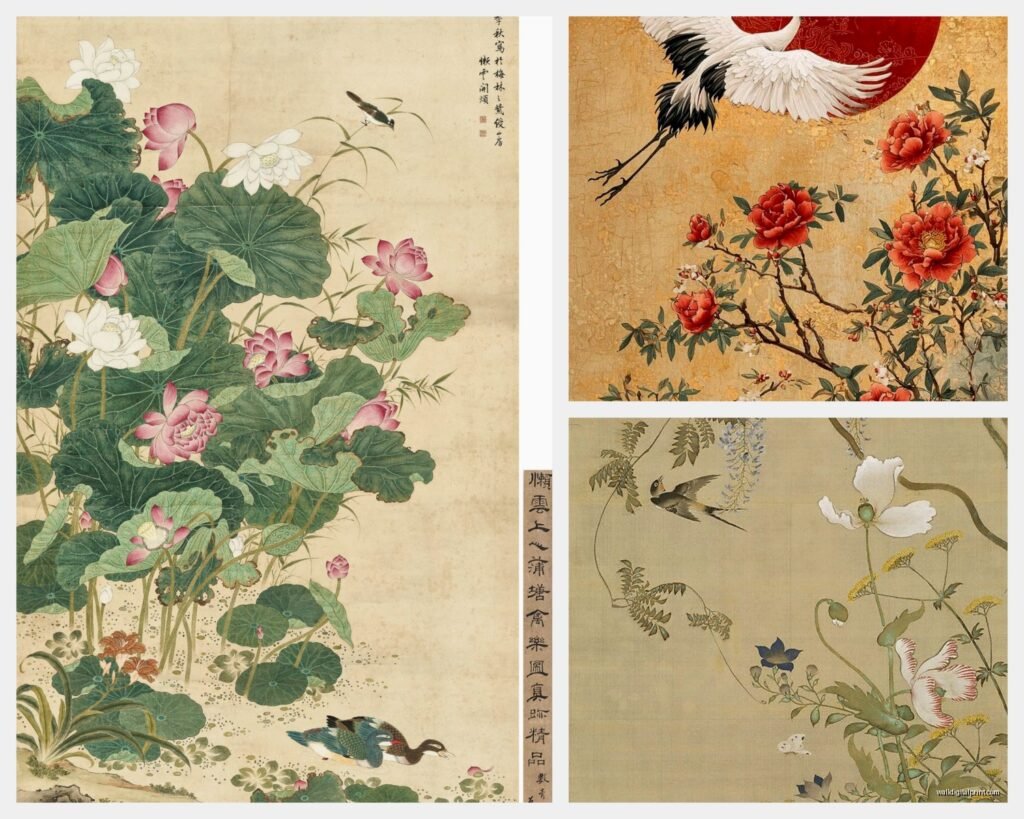
Instead, think about the actual aesthetic you want. Do you want serene and minimal? Go Japanese with simple ink paintings or a single scroll with calligraphy. Want drama and color? Chinese painted panels or those gorgeous Korean folk paintings with birds and flowers. Vietnamese lacquer art is underrated too – super glossy, really detailed, different vibe entirely.
Color palette matters SO much. Traditional Japanese art uses lots of indigo, black, muted greens, soft browns. Chinese art has more red, gold, bright green, that imperial yellow color. If your room is all neutrals and you hang a bright red Chinese prosperity painting it’s gonna clash like crazy.
Symbolism You Should Probably Know About
I’m not saying you need to become an expert but knowing basic symbolism helps you not accidentally hang something weird. Like:
- Cranes mean longevity and good fortune – safe choice for anywhere
- Peonies are romance and prosperity – great for bedrooms or dining rooms
- Dragons are power and strength but also specifically masculine energy – maybe not for your daughter’s nursery
- Koi fish swimming upstream mean perseverance – I see these in home offices a lot
- Cherry blossoms are about life’s impermanence which sounds depressing but they’re actually just really pretty
- Bamboo represents resilience and flexibility
Calligraphy pieces are trickier because you should actually know what they say. I had a client who almost bought this beautiful scroll that said “toilet” in Chinese characters because she thought it looked elegant. Get someone to translate before you commit.
Hanging and Display Situations
Okay so scrolls are traditionally hung with a decorative rod at top and bottom. You can get these mounting kits on Amazon for like $15 – just make sure the rod matches your wall color or the art itself. They’re supposed to hang freely and move a little with air flow, that’s intentional.
For woodblock prints or paintings under glass, treat them like any other framed art but consider the frame carefully. Traditional Japanese frames are super simple – thin black or natural wood. Chinese pieces sometimes look amazing in those chunky carved wooden frames with the dark finish. Modern frames can work too but stick to simple – you don’t want a baroque gold frame on a minimalist ink painting.
Positioning is weirdly important. In traditional Japanese homes, scroll paintings go in the tokonoma (that alcove thing) and they actually rotate them seasonally. You don’t need to do that but hanging a winter scene in summer feels off somehow. I usually suggest having a few pieces you can swap out.
Height-wise, same rules as Western art – center should be at eye level roughly 57-60 inches from the floor. But honestly if it looks good to you that’s what matters.
Mixing Styles Without Looking Like a Confused Museum
Here’s what works: Pick one dominant style and stick with it in each room. Like, my living room is all Japanese – I’ve got a triptych of Hiroshige prints, a small scroll with calligraphy, and a vintage woodblock of Mount Fuji. They’re different pieces but same aesthetic family.
What doesn’t work: Random piece from every Asian country scattered around. It just looks like you went to HomeGoods and bought everything in the “global” section.
You CAN mix Asian art with Western stuff though. I do it all the time. A Japanese ink painting looks incredible next to modern abstract art – both use negative space and bold gestures. Chinese landscape paintings work with traditional European oil paintings if you’re going for that collected-over-time look.
My apartment has a Korean moon jar painting next to a Matisse print and somehow it works because the color palettes talk to each other. My cat knocked over a plant while I was arranging them and I just left everything where it landed which is probably not helpful advice but sometimes happy accidents happen.
Size Matters More Than You Think
Traditional scrolls can be LONG – like floor to ceiling long. Make sure you have the wall space before you buy. I once ordered a scroll online without checking dimensions and it was literally 6 feet tall. Looked amazing but I had to rearrange my entire dining room.
For smaller spaces, consider kakemono (those vertical Japanese scrolls) in smaller sizes, or do a grouping of small woodblock prints. Three or four small prints arranged together have more impact than one medium-sized piece floating alone on a big wall.
Horizontal scrolls (emakimono) are harder to place unless you have a long horizontal wall space like above a sofa or credenza.
Caring for This Stuff So It Doesn’t Fall Apart
Real silk scrolls and old paper prints are delicate, gonna just say that upfront. Keep them out of direct sunlight or the colors will fade like crazy. I learned this when a client’s gorgeous antique scroll turned completely beige in one summer because it was across from a west-facing window.
Humidity is also a thing – too dry and paper gets brittle, too humid and you get mold. If you live somewhere super humid, maybe stick with modern reproductions or lacquer pieces that can handle it.
Dust gently with a soft brush, never use cleaning products. For valuable pieces, honestly just get them professionally cleaned every few years.
If you’re storing scrolls, roll them loosely and keep them in acid-free paper. Don’t fold them ever.
The Reproduction Question
Look, not everyone can afford a genuine Edo period woodblock print and that’s totally fine. Good reproductions exist and they look great on the wall. Just be honest with yourself about what you’re buying.
Things to check:
- Is it actually hand-printed or digitally printed? Hand-printed reproductions using traditional methods are worth more
- What’s it printed on? Rice paper or similar = better quality, regular poster paper = cheap
- Limited edition or mass produced? Limited prints with certificates are more collectible
- Who’s the seller and what’s their reputation?
I have both antique pieces and modern reproductions in my own collection. The repro of “The Great Wave” in my bathroom cost $40 and makes me happy every morning. No shame in that game.
Modern Takes on Traditional Styles
There are contemporary artists doing really cool interpretations of traditional Asian art. They’re using traditional techniques but with modern subjects or colors. It’s a way to get the aesthetic without the “I’m trying too hard to be authentic” vibe.
This artist I follow does Japanese-style woodblocks of American cities and they’re incredible – all the technique and composition rules of ukiyo-e but the subject is like the Brooklyn Bridge or something.
Common Mistakes I See All the Time
Hanging pieces too high – I don’t know why but people do this with Asian art specifically. It should be at normal viewing height, not floating near the ceiling.
Buying pieces that are too small for the wall – one tiny scroll on a huge wall looks lost. Go bigger than you think you need or create a grouping.
Mixing too many different styles in one space – I mentioned this already but it’s such a common problem. Pick a lane.
Not considering the room’s purpose – super detailed busy pieces in a bedroom can feel overwhelming. Save those for living areas where you want visual interest.
Fake vintage that’s obviously fake – if you’re gonna buy reproductions just own it, don’t try to pass off that $30 Amazon print as an antique.
Oh and another thing – matching your art too perfectly to your throw pillows or whatever. Asian art should feel like a collected piece with history and meaning, not like it came from a box set.
Building a Collection Over Time
You don’t need to buy everything at once. Actually please don’t because you’ll probably regret at least one impulse purchase. I started with one vintage Japanese print I found at a flea market for $20. Didn’t even know what it was, just loved the colors.
Then I started researching, learning about different styles and periods, figuring out what I actually liked versus what I thought I should like. Now I have maybe 15 pieces I rotate through and each one has a story or connection.
Start with what draws you in emotionally, then learn about it. That order matters. If you start by trying to buy the “right” thing you’ll end up with boring safe choices that don’t actually speak to you.
Wait I forgot to mention – local Asian cultural centers and museums sometimes have gift shops with really nice reproductions and imports. The prices are usually fair and you’re supporting good organizations. Plus the staff can actually tell you about what you’re buying which is rare.
Anyway I gotta wrap this up because I’m meeting a client in twenty minutes but seriously just start with one piece you love and build from there. Don’t overthink it too much – if it makes you happy when you look at it, that’s literally the only thing that matters.