Wall Art Guide, Wall Art Tutoriels
Large Floral Wall Art: Oversized Flower Botanical Designs
Aug
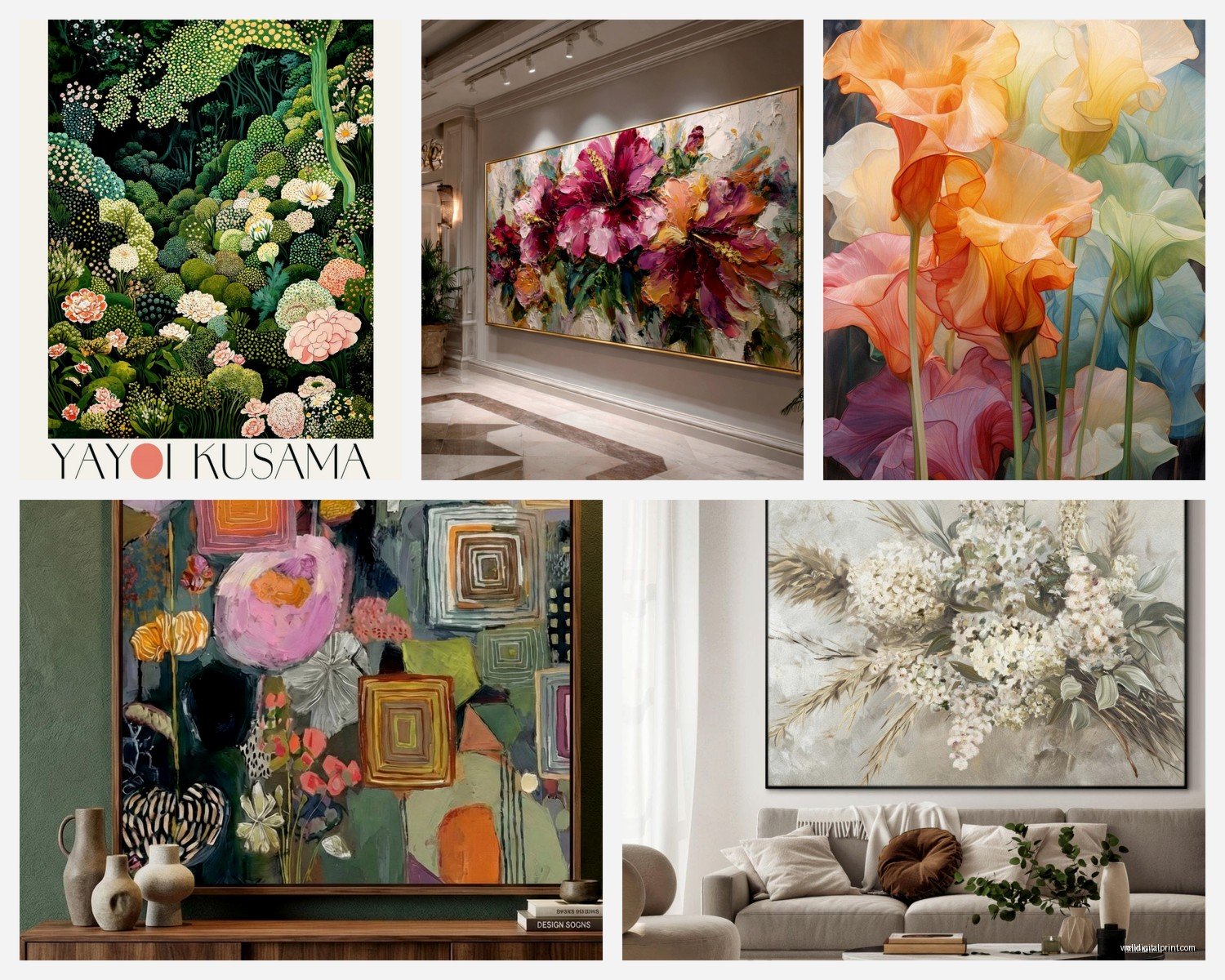
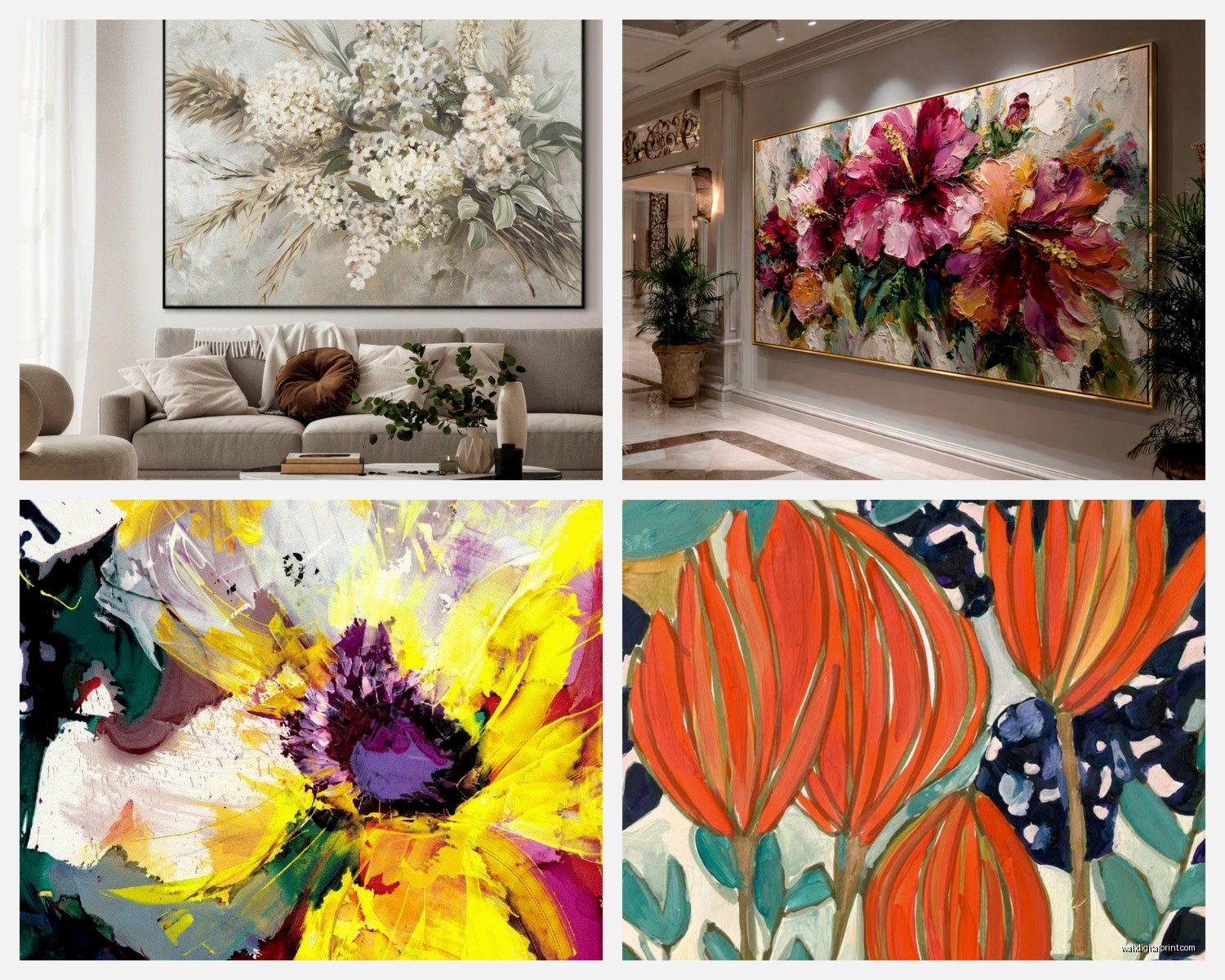
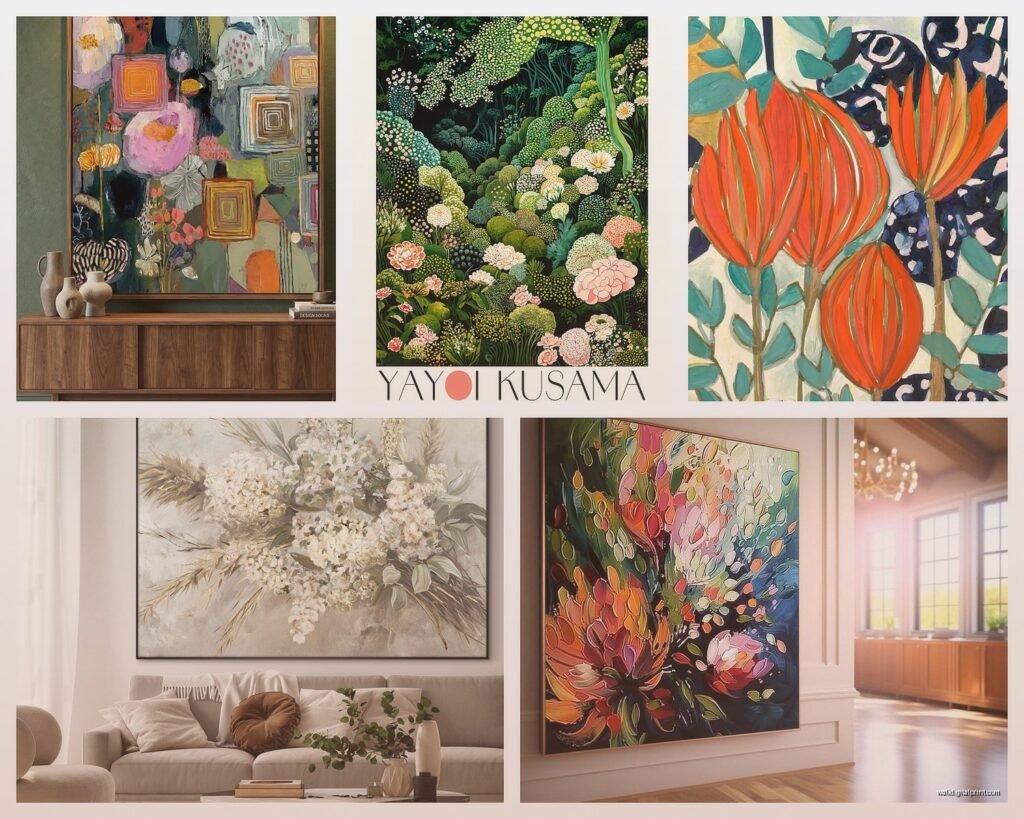
So I’ve been obsessing over large floral wall art lately and honestly it’s become this whole thing where I’m like… how did I not realize sooner how much of a difference scale makes? Like I spent years doing these little 16×20 prints and then one client was like “I want something HUGE” and it totally changed how I think about botanical designs.
Why Size Actually Matters More Than You Think
Okay so here’s the thing about oversized floral art – it needs to be at least 40 inches on one side to really count as “large” in my book. I see people buying 30×40 and calling it oversized but when you put it on the wall it still reads kinda… medium? The sweet spot I’ve found is anywhere from 48×60 to like 60×80 inches. That’s when you get that jaw-drop moment.
My dog literally barked at the first massive peony print I hung because it was so different from what was there before, which was hilarious but also proved the point that scale creates impact.
Where to Actually Find Good Oversized Floral Prints
Alright so you’re gonna want to start with these options and I’ll be real about what works:
Print-on-Demand Sites
Society6 and Minted let you scale up to pretty big sizes. I’ve ordered from both and the quality varies wildly depending on the artist’s original file resolution. Always check the DPI before ordering anything over 40 inches or you’ll end up with pixelated roses that look like they’re from 2005.
Etsy Digital Downloads
This is gonna sound weird but I’ve had better luck buying high-res digital files on Etsy and getting them printed locally at a professional print shop. Way cheaper than you’d think. I found this seller who does vintage botanical scans and the files are like 300 DPI at massive sizes. Printed a 54×72 magnolia for like $180 total versus the $600 framed version I saw at West Elm.
Local Art Fairs and Artist Studios
If you want original stuff (which, not necessary but sometimes the vibe is just different), hit up local artists. I’ve curated shows and the artists doing oversized florals usually have smaller prints too but if you ask about commissioning a large piece, they’re often down. Got a 5-foot wide abstract poppy painting this way for $800 which felt like a steal.
The Styles That Actually Work at Large Scale
Not every floral design translates well when you blow it up. I’ve learned this the hard way.
Abstract and Painterly Florals
These are honestly the easiest to work with because imperfections become part of the art. Loose brushstrokes, watercolor bleeds, that impressionist vibe – it all looks intentional when it’s huge. I just finished a client’s living room with this massive abstract peony situation that’s mostly blush pink and sage green with barely-there outlines. From far away it reads as floral but up close it’s just pretty color fields.
Vintage Botanical Illustrations
The super detailed scientific drawings from like the 1800s? Those are *chef’s kiss* at large scale. There’s something about seeing all that intricate line work blown up to 50 inches that makes people stop and stare. I did a whole gallery wall of oversized botanical prints in a hallway – different flowers but all from the same era, all black and white line drawings on cream backgrounds. The detail you can see when they’re that big is insane.
Minimalist Single Stem Designs
One flower, tons of negative space, huge scale. This works so well in modern spaces. Think one giant tulip on a white background taking up a 48×60 canvas. The simplicity at that size becomes a statement. I’m working on a project right now where we’re doing a single monstera leaf (okay technically not a flower but botanical adjacent) that’s literally 6 feet tall and it’s gonna be incredible.
What Doesn’t Work (Trust Me)
- Busy patterns with tons of small flowers – they just look chaotic and overwhelming at 5 feet wide
- Super trendy styles that’ll date themselves – I’m looking at you, 2019 pampas grass everything
- Anything with a heavy black border or frame design built into the print – limits your actual framing options
- Really dark moody florals unless your room has incredible natural light, otherwise it’s just a black hole on your wall
Framing These Monsters (The Part Everyone Underestimates)
Oh and another thing – framing large art is where your budget can spiral real fast. Custom framing a 60×80 piece can easily run $800-1200. Here’s what I actually do:
Canvas Wraps
For the right style of art, gallery-wrapped canvas looks finished without a frame. The print wraps around the edges of a 1.5 or 2-inch deep frame. Way more affordable. I’ve gotten 54×72 canvas wraps for $200-300 from local print shops.
Simple Float Frames
If you need a frame, go simple. A thin wood or metal float frame in black, white, or natural wood. Don’t do anything ornate at this scale unless you’re going for like… formal dining room energy.
The IKEA Hack
Wait I forgot to mention – IKEA sells some large frames (the RIBBA series goes up to like 24×35 but their BJÖRKSTA frames come with art already but you can swap it) and people online have figured out how to DIY larger frames using their rail systems. There’s this whole tutorial I found at 2am one night when I couldn’t sleep.
Just Don’t Frame It
Sometimes I literally just mount large prints directly to foam board or gator board with spray adhesive and hang them as-is. Very contemporary, saves money, and honestly for some spaces it’s the right move.
Hanging Without Destroying Your Walls
These pieces are HEAVY. Like my client’s framed 60×80 floral weighs probably 40 pounds. You absolutely need:
- Wall anchors rated for the weight (I use toggle bolts for anything over 30 lbs)
- Two people because trying to level something that big by yourself is a nightmare
- A good laser level or at minimum a very long regular level
- Picture hanging wire rated for way more than you think you need
I watched half a season of that show about the home renovation couple while measuring and remeasuring where to place a massive dahlia print last month. It takes time to get it right.
Color Coordination Without Making It Boring
So everyone asks me how to pick colors and honestly you have more flexibility than you think. The whole “pull exact colors from your throw pillows” thing is kinda outdated.
I like doing one of these approaches:
Complement What’s Missing
If your room is all neutrals, bring in florals with actual color – coral peonies, purple irises, yellow sunflowers. The art becomes the color moment.
Tone-on-Tone
All white or cream flowers on a white background sounds boring but at huge scale it’s architectural and sophisticated. I did this in a client’s bedroom with white magnolias and it’s so calming.
One Color Family
Pick like… all pink flowers but different shades and varieties. Blush roses, hot pink cosmos, dusty pink dahlias. Cohesive but not matchy-matchy.
Placement That Actually Makes Sense
Above the Sofa
Classic for a reason. Your art should be about two-thirds to three-quarters the width of your sofa. So if you’ve got an 84-inch couch, you want art that’s roughly 56-63 inches wide. Hang it so the center is at eye level when you’re standing, which is usually around 57-60 inches from the floor to the center of the piece.
In the Bedroom
Over the bed is obvious but I’ve been loving oversized florals on the wall opposite the bed – it’s what you see when you wake up. Way better than staring at your closet doors. I put a huge watercolor cherry blossom piece in my own bedroom and it’s honestly my favorite thing to look at in the morning.
Dining Room Drama
People underutilize dining rooms for statement art. A massive botanical behind the table creates this whole experience. Just make sure it’s high enough that people aren’t banging their heads when they stand up from the table (learned that one the hard way).
Unexpected Spaces
I’ve done oversized florals in bathrooms (if you have the wall space, why not?), home offices (better than staring at blank walls on Zoom calls), and even one client wanted a giant protea print in their mudroom which sounds random but actually looked amazing.
Mixing Oversized Florals with Other Art
You don’t have to commit to ONLY giant flowers everywhere. I usually do one oversized floral as the anchor and then smaller pieces around it or in other rooms.
The trick is varying your scales – if you’ve got a 60-inch floral in the living room, don’t put another 60-inch anything right next to it. Maybe do a collection of 16×20 prints on another wall, or a tall narrow mirror, or floating shelves with objects.
Creating Balance
Your eye needs places to rest. One massive flower print + mostly clear walls = good. Five massive flower prints in one room = botanical garden explosion that’s too much.
DIY Options If You’re Crafty
Okay so funny story, I tried painting my own oversized floral once because I was like “how hard can it be?” and the answer is: harder than it looks. But there are some DIY options that actually work:
Photo Enlargements
If you take good flower photos (or find public domain ones), you can get them printed at engineering print shops for cheap. Like $30 for a 36×48 print. The quality isn’t gallery-level but for a casual space it totally works.
Projected Tracing
Project an image onto your canvas and trace it, then paint. I’ve seen people do this with simple flower outlines and it looks hand-painted because it is, kinda.
Fabric Prints
You can get fabric printed with your design and stretch it over a frame. Spoonflower does this and the texture of the fabric adds something interesting.
Caring for Large Floral Art
Nobody talks about this but dust is real. I gotta dust my oversized prints like every couple weeks or they get this weird film. Just use a microfiber cloth, don’t spray anything directly on the art.
If it’s behind glass, Windex is fine. If it’s canvas or paper without glass, be gentle. And keep them out of direct sunlight or the colors will fade – I’ve seen beautiful florals turn into washed-out ghosts of themselves after a year in a sunny spot.
The thing about large floral wall art is that it genuinely transforms a space in a way that smaller art just doesn’t. It’s bold without being aggressive, it brings nature inside without the maintenance of actual plants, and there’s something about seeing a flower at that scale that makes you notice details you’d normally miss. I’m probably never going back to small art as my default recommendation, at least not for main living spaces where you want impact.