Wall Art Guide, Wall Art Tutoriels
Metal Octopus Wall Art: Sculptural Tentacle Ocean Creature
Aug
So I’ve been completely obsessed with metal octopus wall art lately and honestly it started because a client wanted something “ocean-y but not basic” for their beach house and we went down this whole rabbit hole. Let me tell you what I’ve learned because there’s actually a lot more to these than you’d think.
First Off Why Metal Octopus Art Actually Works
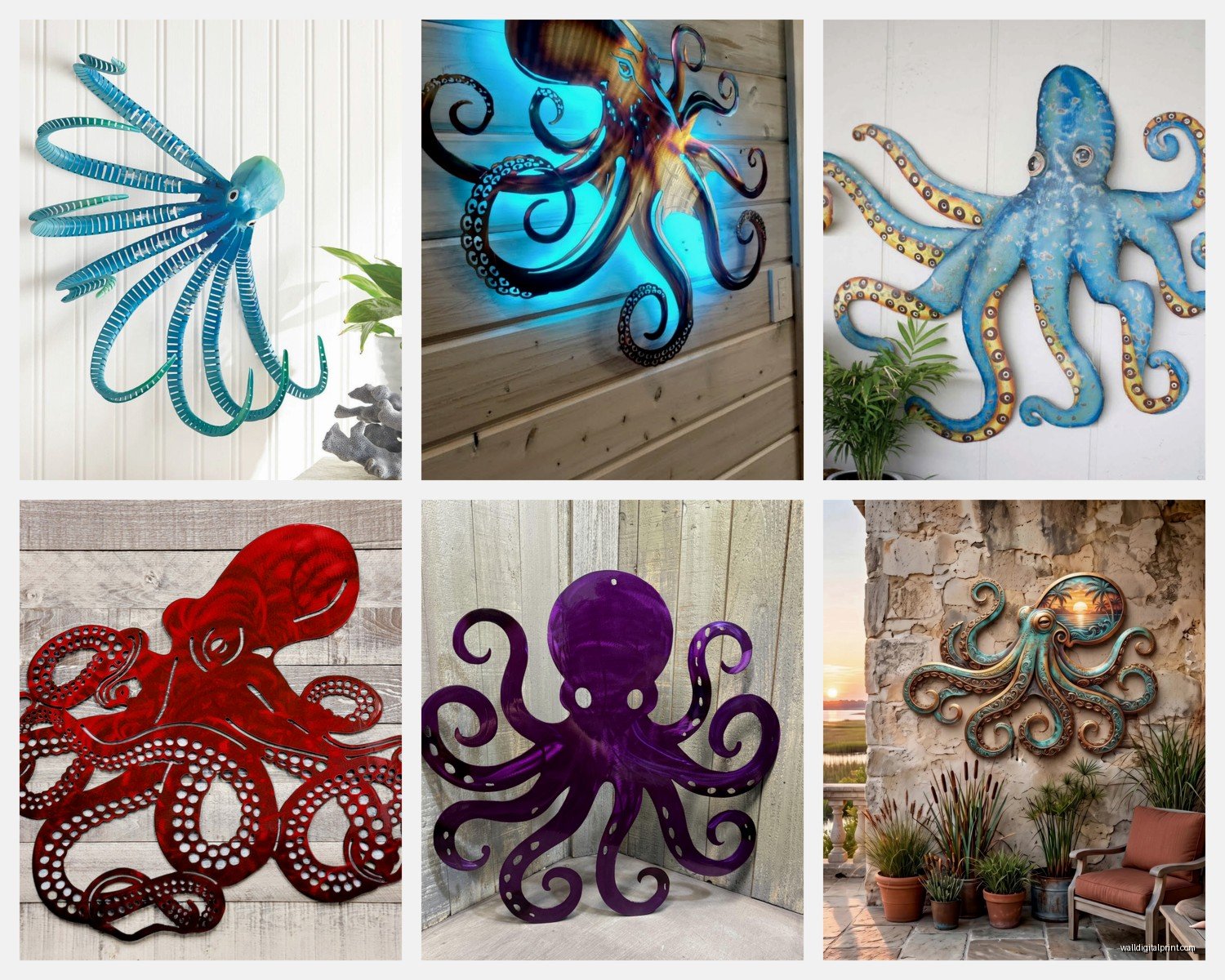
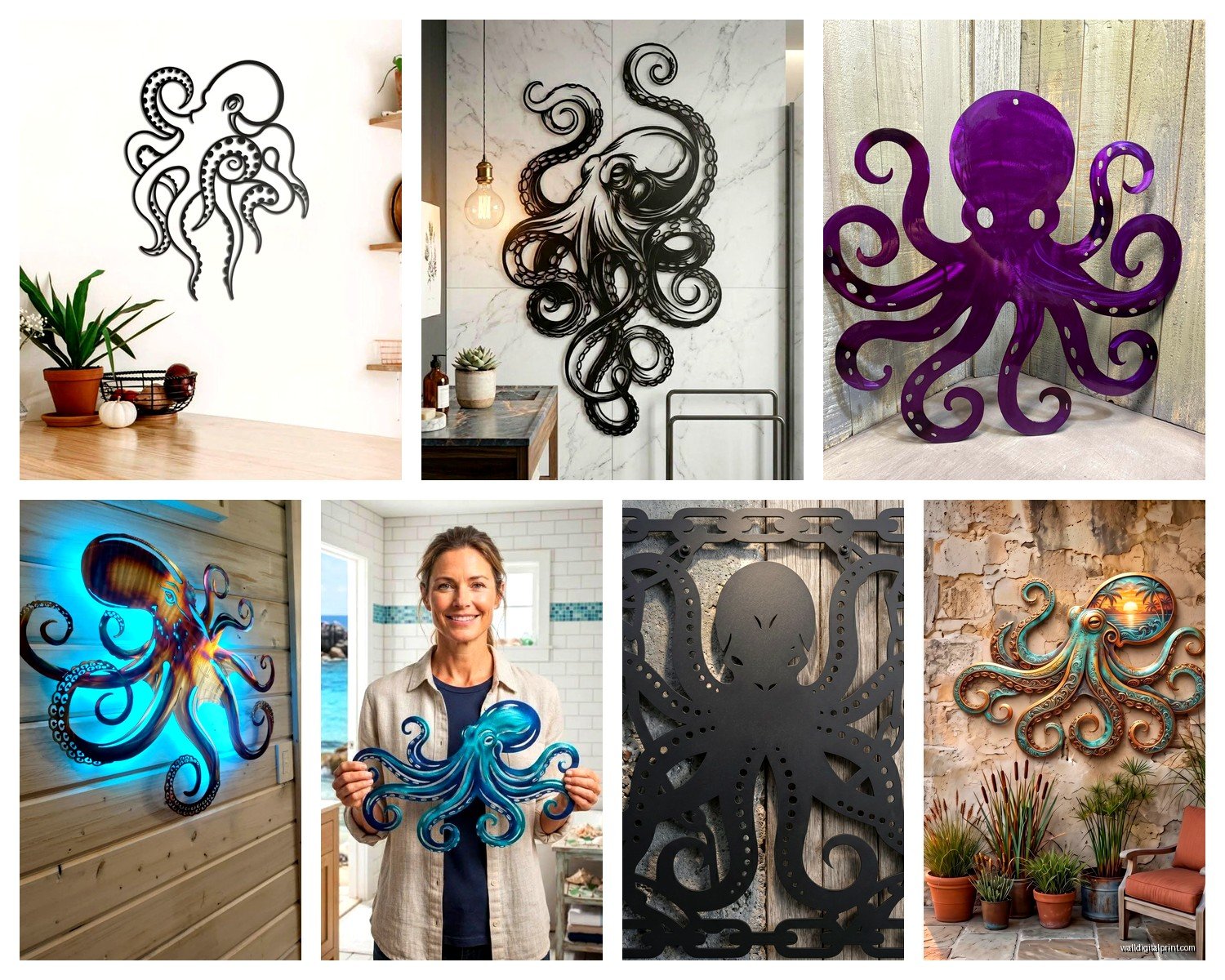
The thing about octopus sculptures is they’re not like hanging a painting of a beach scene or whatever. The tentacles create this crazy dimensional effect that changes depending on where you’re standing, and metal specifically catches light in ways that make the whole piece feel alive. I’ve got one in my own hallway now and my cat is absolutely terrified of it which is kinda hilarious but also means placement matters.
Metal holds up way better than resin or wood versions too. I learned this the hard way when I bought a cheaper wooden one for staging a property and it warped within like six months from humidity. Metal doesn’t care about moisture which is perfect if you’re actually putting it in a bathroom or near a pool area.
Types of Metal and Finishes You’ll See
Okay so this gets specific but it matters. Most metal octopus art comes in these materials:
- Steel – usually powder coated, heavy as hell, very sturdy
- Aluminum – lighter weight, won’t rust naturally
- Copper or brass – develops patina over time which some people love
- Mixed metals – combines different finishes for contrast
The steel ones are what I recommend for outdoor use or high-traffic areas. I hung a massive steel octopus outside a restaurant client’s entrance and it’s been through two winters with zero issues. They usually powder coat them in black, bronze, or this really pretty oil-rubbed finish.
Aluminum is gonna be your friend if you’re hanging it yourself and you’re not super confident about finding studs. I have one that’s like 36 inches across and I can lift it with one hand. Still looks substantial on the wall though.
The Patina Situation
Oh and another thing about copper and brass pieces – they will change color. That greenish patina isn’t a defect, it’s literally just oxidation. Some manufacturers seal them so they stay shiny, others leave them natural so they age. You gotta ask about this before buying because I’ve had clients freak out thinking their art was “rusting” when nope, that’s just what copper does.
If you want to keep copper shiny you can seal it yourself with a clear lacquer but honestly the aged look is pretty gorgeous for ocean themes. Feels more authentic somehow.
Size Considerations That Nobody Tells You
This is where people mess up constantly. That octopus looks one size in the product photo and then shows up and it’s either weirdly small or absolutely massive. Here’s my rule – measure your wall space and go bigger than you think.
For above a couch or bed, you want something that’s at least 2/3 the width of the furniture. So if your couch is 72 inches, you’re looking at 48 inches minimum for the octopus. Otherwise it looks like you stuck a postage stamp up there.
I’ve used these measurements successfully:
- Small (12-24 inches) – hallways, bathrooms, gallery walls
- Medium (24-36 inches) – bedroom accent walls, above nightstands
- Large (36-48 inches) – living rooms, above furniture
- Oversized (48+ inches) – statement walls, commercial spaces
The tentacles extend out quite a bit too so factor that in. I once ordered one without checking the full tentacle spread and it was like 8 inches wider than I expected. Luckily it still worked but barely.
Installation Real Talk
Most metal octopuses come with either keyhole hangers on the back or D-rings. The keyhole ones are easier for solo hanging but D-rings with wire are more secure for heavier pieces.
You absolutely need to hit studs or use heavy duty anchors for anything over 20 pounds. I’m gonna be honest, I’ve seen too many of these crash down from drywall anchors that weren’t rated correctly. My neighbor tried hanging a 30 pound steel octopus with those little plastic anchors and it lasted exactly three days before ripping out of the wall at 2am. Not fun.
What I do now is always use toggle bolts rated for at least double the weight of the piece. Overkill maybe but I sleep better. Also get someone to help you level it – the tentacles make it really hard to tell if it’s straight when you’re holding it up by yourself.
The Stud Finder Problem
Wait I forgot to mention – stud finders are basically useless on textured walls or if you have older plaster. I finally bought one of those rare earth magnets on a string and it works way better for finding screws in the studs. Cost like $8 and saved me so much frustration.
Design Placement Ideas That Actually Work
So beyond the obvious “hang it on a wall” thing, there are some placements that consistently look amazing:
Above the bed in a beach house bedroom – creates that underwater canopy vibe. I did this in navy blue walls with a bronze octopus and it was *chef’s kiss*. Client still sends me photos of it.
In a bathroom with white subway tile – sounds weird but the industrial metal against clean white tile is really striking. Just make sure it’s sealed metal or powder coated so moisture isn’t an issue.
Outdoor patio walls – if you have a covered patio, a large metal octopus becomes this unexpected focal point. I combined one with string lights and it casts the coolest shadows at night.
Commercial spaces – restaurants, beach shops, hotels. The sculptural element reads from a distance which is perfect for businesses.
Color and Finish Matching
The finish you pick needs to work with your existing vibe. I’ve tested this extensively because my client canceled one day so I spent an hour comparing different finishes against paint swatches like a total nerd.
Black powder coat – super versatile, works with literally everything. Modern, traditional, coastal, industrial. Can’t go wrong.
Bronze or copper tones – warmer feel, pairs beautifully with creams, tans, sage greens, navy. This is my go-to for traditional or coastal homes.
Brushed silver or aluminum – cooler contemporary look. Works with grays, whites, blues. Can feel a bit sterile if the rest of your decor isn’t modern though.
Multicolor or painted – some artists do hand-painted tentacles with blues, greens, purples. These are statement pieces for sure and you gotta commit to them being the star of the room.
Mixing Metals
Okay so funny story – I used to think you couldn’t mix metal finishes but that’s completely outdated. A bronze octopus looks great with silver picture frames or stainless steel furniture. The key is having at least one other piece in the room that echoes the octopus finish so it doesn’t look random.
Where to Actually Buy These
I’ve ordered from probably a dozen different places at this point. Etsy has the most unique handmade options – lots of independent metal artists who do custom sizes and finishes. Quality varies wildly though so read reviews carefully and look for shops that show actual installed photos not just the piece on a white background.
Wayfair and Amazon have more mass-produced versions that are honestly pretty decent for the price. They’re not gonna be heirloom quality but for like $60-150 you can get something that looks good and holds up.
Higher end galleries and coastal home stores carry really beautiful sculptural pieces in the $300-800 range. These usually have more detailed tentacle work, better welds, and unique finishes. Worth it if you want something truly special.
I’ve also found amazing pieces at local art festivals and beach town galleries. Supporting local artists and you can often commission custom colors or sizes.
What to Look for Quality-Wise
Check the welds if you can see them in photos. Sloppy welds look messy and can be sharp. The tentacles should have dimension and curl naturally, not just be flat cutouts. I’ve seen cheap versions that are basically just a flat silhouette and they look like a high school metal shop project.
The mounting hardware should be welded or bolted on, not glued. Glue will fail eventually especially with heavier pieces.
If it’s painted or powder coated, zoom in on detail photos to check for even coverage. You don’t want bare metal showing through or drips in the finish.
Styling Around Your Octopus
The octopus shouldn’t be floating in empty space – it needs supporting elements. I usually add:
- Smaller ocean-themed pieces nearby but not touching – shells, coral, other sea life art
- Lighting that highlights the dimensional tentacles – picture lights or wall sconces work great
- Natural textures like driftwood, rope, or woven baskets to play off the organic tentacle shapes
- Blue or green accent colors in throw pillows or art that echo the ocean theme
Don’t go overboard though (pun intended I guess). The octopus is sculptural enough that it should be the main attraction. I see people add like seventeen pieces of ocean art around it and it just becomes visual chaos.
Maintenance and Cleaning
Metal octopus art is pretty low maintenance but dust does accumulate in the tentacle crevices. I use a microfiber duster or soft paintbrush to get in there every few months.
For outdoor pieces, hit them with a hose occasionally to remove salt spray or pollen. If you’ve got unsealed copper or brass, you can use a metal polish if you want to remove patina but again, I think the aged look is better.
Check the mounting hardware once a year especially if it’s a heavy piece. Screws can loosen over time from vibrations or wall settling.
Custom and DIY Options
If you’re crafty or know someone with metal working skills, octopus wall art is actually a pretty approachable project. You can cut tentacle shapes from sheet metal, curl them with pliers and a torch, then weld or rivet them to a backing plate.
I haven’t done this myself because I don’t have welding equipment but I’ve worked with artists who do commissions. Expect to pay $200-500 for a custom piece depending on size and complexity. The advantage is you can specify exact dimensions, colors, and tentacle positioning to fit your specific space.
This is gonna sound weird but I’ve also seen people make mixed media versions using metal tentacles with mosaic tile or glass embellishments. Could be cool if you’re going for something really unique.
Common Mistakes to Avoid
Hanging it too high – the center should be at eye level, roughly 57-60 inches from the floor. People tend to hang wall art way too high and it looks awkward.
Ignoring the tentacle spread – measure the full dimensions including those curly tentacles reaching out. I’ve seen these hung too close to doorways or light switches which just looks cramped.
Buying the wrong finish for your location – unsealed metals outdoors in salty air will corrode faster. Powder coated or aluminum for coastal outdoor areas always.
Not considering lighting – these pieces really come alive with good lighting. If your wall is in a dark corner, add a picture light or the dimensional details get lost.
Going too literal with beach theme – you don’t need a octopus + starfish + anchor + ship wheel situation. Pick your statement piece and keep supporting decor more subtle.
Honestly once you get the right piece in the right spot with proper installation, metal octopus wall art is pretty foolproof and it consistently gets compliments. Just finished watching this documentary about actual octopuses and they’re even cooler than I realized which makes me appreciate the art even more.