Wall Art Guide, Wall Art Tutoriels
Plane Wall Art: Aircraft Airplane Aviation Flight Decor
Aug
So I’ve been obsessing over plane wall art lately because honestly, it started when a client wanted to redo their son’s room but didn’t want it to look like a kindergarten threw up in there, you know? And then I got completely sucked into this whole world of aviation decor and now I have like 47 browser tabs open about vintage propellers.
The Different Types You’ll Actually Find
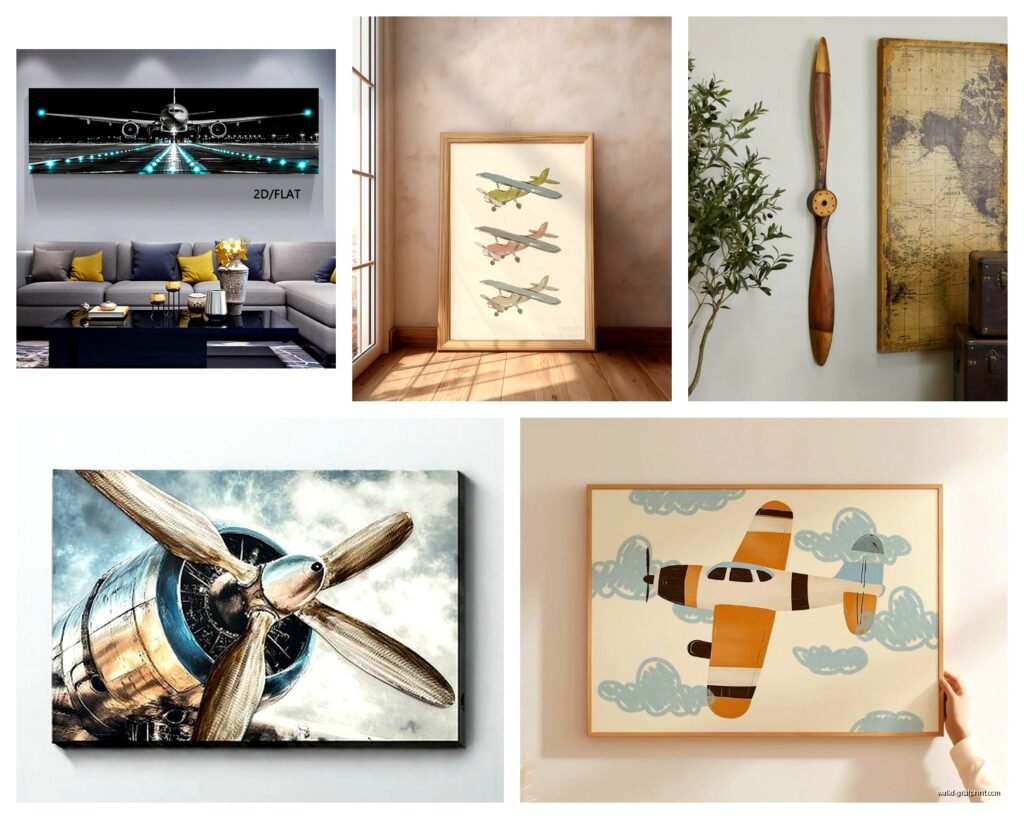
Okay so there’s basically a few categories and they’re wildly different in terms of vibe. You’ve got your vintage aviation prints – think old Pan Am posters, technical drawings of aircraft, those sepia-toned photos of pilots from the 40s. Then there’s modern metal wall art which is like… silhouettes of planes cut from metal, sometimes 3D. There’s also canvas prints which can be anything from abstract to photorealistic. And then the really cool stuff – actual airplane parts mounted as art, but we’ll get to that because it’s its own thing.
I spent like three hours last Tuesday (my cat kept sitting on my keyboard while I was researching this) comparing metal pieces versus canvas and here’s what I figured out. Metal looks insanely good in modern spaces or industrial vibes. It’s got that weight to it, literally and visually. Canvas is more versatile but can look cheap if you don’t get decent quality.
Where to Actually Buy This Stuff
Etsy is gonna be your best friend for unique pieces. I found this seller who makes custom aircraft silhouettes from your specifications and the quality was shockingly good for the price. Like $80 for a 36-inch piece. But you gotta watch out because some sellers just dropship from AliExpress and mark it up 400%.
Wayfair has a decent selection if you want something quick and relatively affordable. Their search filters actually work which is rare. I filter by material first, then size, then customer photos because the styled photos they use are always misleading.
For high-end stuff, there’s places like Restoration Hardware (okay it’s RH now whatever) and they have these incredible vintage propeller replicas. Expensive though. We’re talking $800+. But if you want that statement piece and have the budget, it’s worth it.
Oh and another thing – AllModern has some really clean, minimalist aviation art that doesn’t scream “I’m a 12-year-old boy obsessed with planes.” More sophisticated. Good if you’re decorating an office or a more grown-up space.
Size Actually Matters Way More Than You Think
This is where everyone messes up. You see something online, it looks perfect, you order it, and then it arrives and it’s either comically small or way too big. I measure everything now with painters tape on the wall before buying. Sounds excessive but I learned this the hard way.
For above a bed or sofa, you want something that’s about two-thirds to three-quarters the width of the furniture. Single small plane? It’ll look lost. Better to go bigger or do a gallery wall situation.
If you’re doing a hallway, you can get away with smaller pieces but you need more of them. I did a client’s hallway with five different vintage aircraft prints, all different sizes but same frame style, and it looked intentional instead of cluttered.
Gallery Wall Layouts That Don’t Look Messy
Okay so funny story, I tried doing a symmetrical gallery wall once and spent two hours with a level and it still looked off. Now I do asymmetrical but balanced. Put your largest piece first – that’s your anchor. Then build around it with smaller pieces.
For aviation art specifically, I like mixing technical drawings with photographs. Maybe a blueprint-style print of a B-17 bomber next to an actual photo of one in flight. Keeps it interesting. Three to five pieces total usually works. More than seven and it starts looking like you’re trying too hard.
The Real Airplane Parts Thing
Wait I forgot to mention this earlier but you can actually buy real airplane parts as wall art and it’s cooler than it sounds. Propellers are the obvious choice – you can find vintage wooden ones on eBay or specialized aviation memorabilia sites. They’re not cheap (real ones start around $300) but they’re conversation pieces for sure.
I found a place online that sells decommissioned aircraft aluminum panels that are polished and mounted. They still have the original rivets and serial numbers. Very industrial-chic. Works great in a man cave or office situation.
You gotta be careful with authenticity though. Lots of reproductions out there being sold as vintage. Check seller reviews, ask for provenance if it’s expensive. I almost bought a “WWII propeller” once that turned out to be made in 2015.
Color Schemes That Actually Work
Most aviation art is gonna be in neutrals – blacks, whites, grays, metallics. Which is great because it goes with everything but can also feel cold. I like warming it up with the frame choice or surrounding decor.
If you’ve got a piece with those vintage blue skies or the old Pan Am blues, you can pull that into your room with throw pillows or a rug. But don’t go overboard. One accent color is enough.
Metal pieces in bronze or copper tones work surprisingly well in spaces with warm wood. I did a study last month with dark walnut shelving and a copper-finished airplane silhouette and it looked expensive even though the art was like $65.
Framing Decisions Nobody Tells You About
Prints need good frames or they look like dorm room posters. I usually go with simple black or natural wood frames. Nothing ornate – it competes with the subject matter.
For technical drawings or blueprints, floating frames are perfect. That little gap between the art and the frame makes it look more intentional, more curated.
If you’re doing metal art, obviously no frame needed but think about the finish. Brushed metal reads more sophisticated than shiny. Matte black powder coating is very now and works in almost any space.
Lighting Makes or Breaks It
This is gonna sound weird but I always think about lighting after I think about placement. A backlit metal airplane silhouette? Stunning. Just a spotlight from above? Meh.
Picture lights work great for framed prints. Those little LED strips you can stick behind metal pieces create this cool halo effect. I installed some for a client and he texts me photos of it at night like every week because he’s so proud of it.
Natural light is tricky with aviation art because a lot of it is reflective. Metal especially. You don’t want glare. I avoid placing shiny pieces directly across from windows.
Room-Specific Ideas Because Context Matters
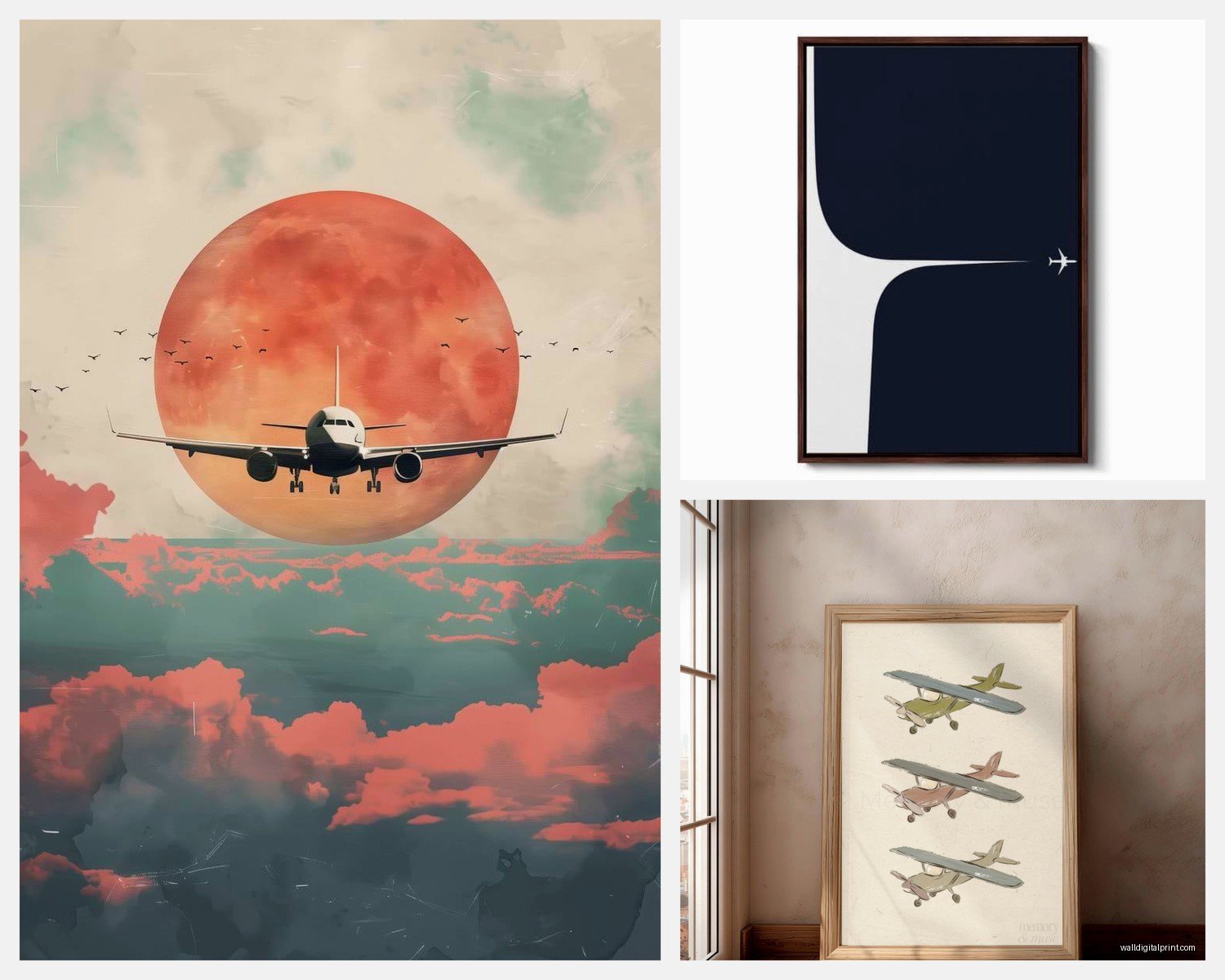
Bedrooms: Keep it sophisticated. A single large canvas of a plane in flight over clouds can be really serene actually. Or those vintage travel posters – “Fly to Paris” type stuff. Not too busy.
Offices: This is where you can go more technical. Blueprint-style drawings, black and white photography of aircraft details, propellers. It reads as professional and interesting without being distracting.
Kids rooms: You don’t have to do cartoon planes. There’s plenty of cool vintage-inspired art that works for kids but doesn’t look childish. I like colorful but still realistic depictions. And yeah okay sometimes a wooden propeller on the wall is just fun for a kid’s space.
Living rooms: Statement pieces work here. Big metal installations, gallery walls, that expensive propeller from Restoration Hardware. This is your chance to go bold.
Garages or workshops: Honestly anything goes. Mix real parts with art. Get weird with it. I’ve seen people mount actual aircraft seats as furniture and it somehow works in a garage setting.
DIY Options If You’re Crafty
You can make your own aviation art cheaper than buying it sometimes. I’ve done it. Get high-res images of vintage aircraft (there’s public domain stuff available), take them to a print shop, have them printed large format on nice paper. Frame it yourself. Total cost maybe $40-60 for something that would retail for $200.
Or if you’re handy, cut airplane silhouettes from wood or metal yourself. There’s templates online. I’m not that handy but I watched my brother do this and it turned out decent.
Stenciling is another option. Buy a plane stencil, use metallic paint on canvas or directly on wall. Very customizable and cheap.
What to Avoid Because I’ve Made These Mistakes
Don’t buy anything with inspirational quotes about flying or reaching for the sky or whatever. It’s cheesy. Just don’t.
Avoid super glossy prints – they look like you printed them at Costco even if you didn’t.
Don’t mix too many eras unless you really know what you’re doing. Like vintage WWII bombers next to modern fighter jets can look confused. Pick a lane.
Those peel-and-stick wall decals of planes? They’re fine for rentals I guess but they never look high-end. If you’re trying to make a space look curated, skip them.
Price Ranges So You Know What to Expect
Budget tier ($20-80): Canvas prints from Wayfair, metal silhouettes from Etsy, DIY projects, small framed prints.
Mid-range ($80-300): Larger metal pieces, quality framed prints, smaller authentic vintage items, custom pieces from independent artists.
Investment ($300+): Real propellers, large custom metal installations, authenticated vintage memorabilia, designer pieces from high-end retailers.
I usually tell people to spend more on one good piece than several cheap ones. Better to have one $200 metal airplane that looks amazing than five $40 canvases that look meh.
Hanging Tips Because You’ll Definitely Need Them
Heavy metal pieces need proper anchors. I use toggle bolts for anything over 10 pounds. Regular picture hangers aren’t gonna cut it and you’ll have a plane-shaped hole in your wall.
For gallery walls, lay everything out on the floor first. Take a photo. Then replicate on wall. Saves so many extra holes.
Height matters – center of the piece should be at eye level, which is usually 57-60 inches from the floor. Unless you’re tall then adjust accordingly.
Use a level. I know it’s obvious but I still see crooked art in people’s homes all the time and it drives me crazy. My client last week had a beautiful vintage propeller hung at like a 15-degree angle and didn’t notice until I pointed it out.
Oh and get those command strips that hold a lot of weight if you’re renting. They actually work now, not like the old ones that would just… fall off at 3am and scare the hell out of you.
Just measure twice, buy decent hardware, and don’t rush the installation part. That’s really it.