
Wall Art Guide, Wall Art Tutoriels
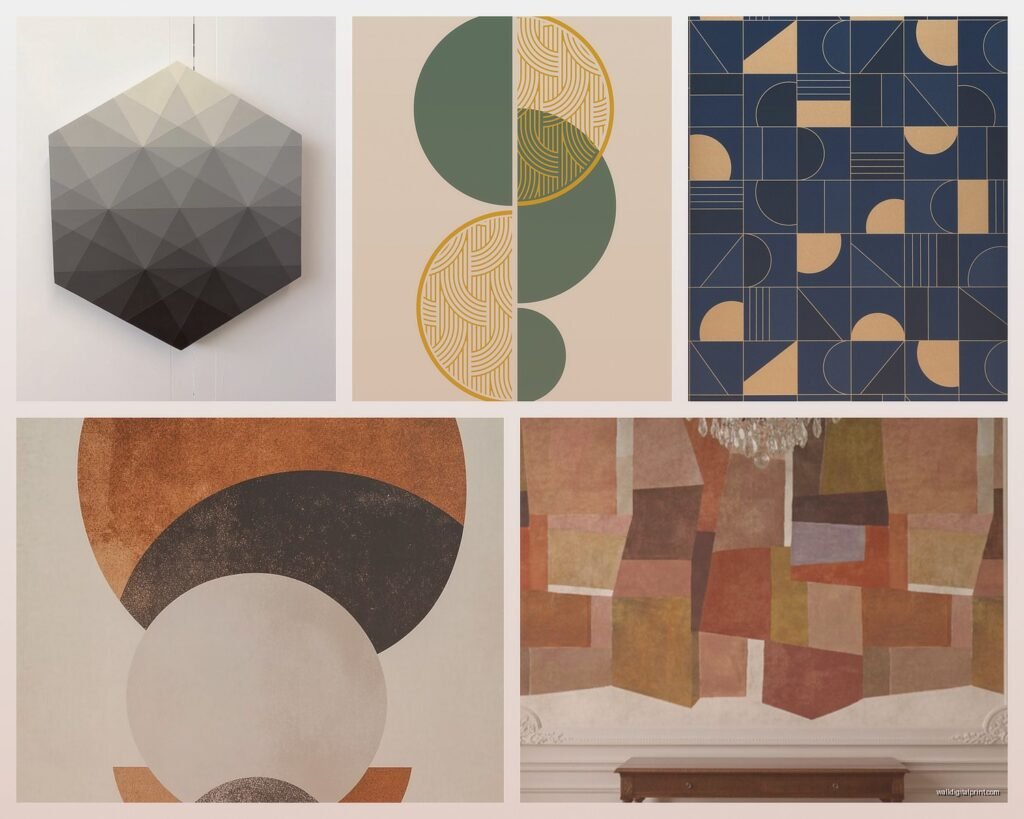
Geo Wall Art: Geometric Angular Shape Pattern Designs
Aug
So I’ve been totally obsessed with geometric wall art lately and honestly it started because I needed to fill this massive blank wall in my apartment and every painting I found was either boring or like $800. Geometric patterns are having this huge moment right now and they’re actually way easier to work with than you’d think.
Why Geometric Patterns Actually Work
Okay so the thing about angular geometric designs is they create visual interest without being too busy. Like, you know how some abstract art makes your eyes tired? Geometric stuff has structure so your brain can follow it. I tested this theory in my own space and then with three client projects last month and the feedback was wild. People kept saying the rooms felt “more pulled together” which is exactly what you want.
The angular shapes create these natural sight lines that draw your eye around the room instead of just landing in one spot. My cat knocked over a plant yesterday while I was photographing a client’s new geo wall and honestly the photos turned out better because it made me change angles and I noticed how the triangular patterns were literally directing where you look.
Choosing Your Pattern Style
There’s basically a few categories you’re gonna see everywhere:
- Sharp triangular patterns – very Scandinavian modern
- Hexagon arrangements – kinda mid-century vibes
- Mixed angular shapes – more contemporary artsy
- Linear geometric (just lines creating shapes) – minimalist
- 3D illusion patterns – these mess with depth perception
I personally love the triangular ones because they’re the easiest to DIY if you decide to go that route. But wait I forgot to mention – you gotta consider your existing furniture lines. If you have a lot of curved furniture (like those trendy bouclé chairs everyone’s buying), geometric wall art creates awesome contrast. But if everything in your room is already angular and modern, you might want softer geometric patterns with more organic spacing.
Scale Matters More Than You Think
This is gonna sound weird but I measure everything now before buying. Got burned too many times with art that looked huge online and arrived looking like a postage stamp on my wall. For geometric patterns specifically:
Small spaces need larger, simpler patterns. I know that sounds backwards but tiny intricate geometric designs in a small room just create visual chaos. One of my clients has this 10×10 bedroom and we did one massive canvas with like six large triangles in different shades of blue. Game changer.
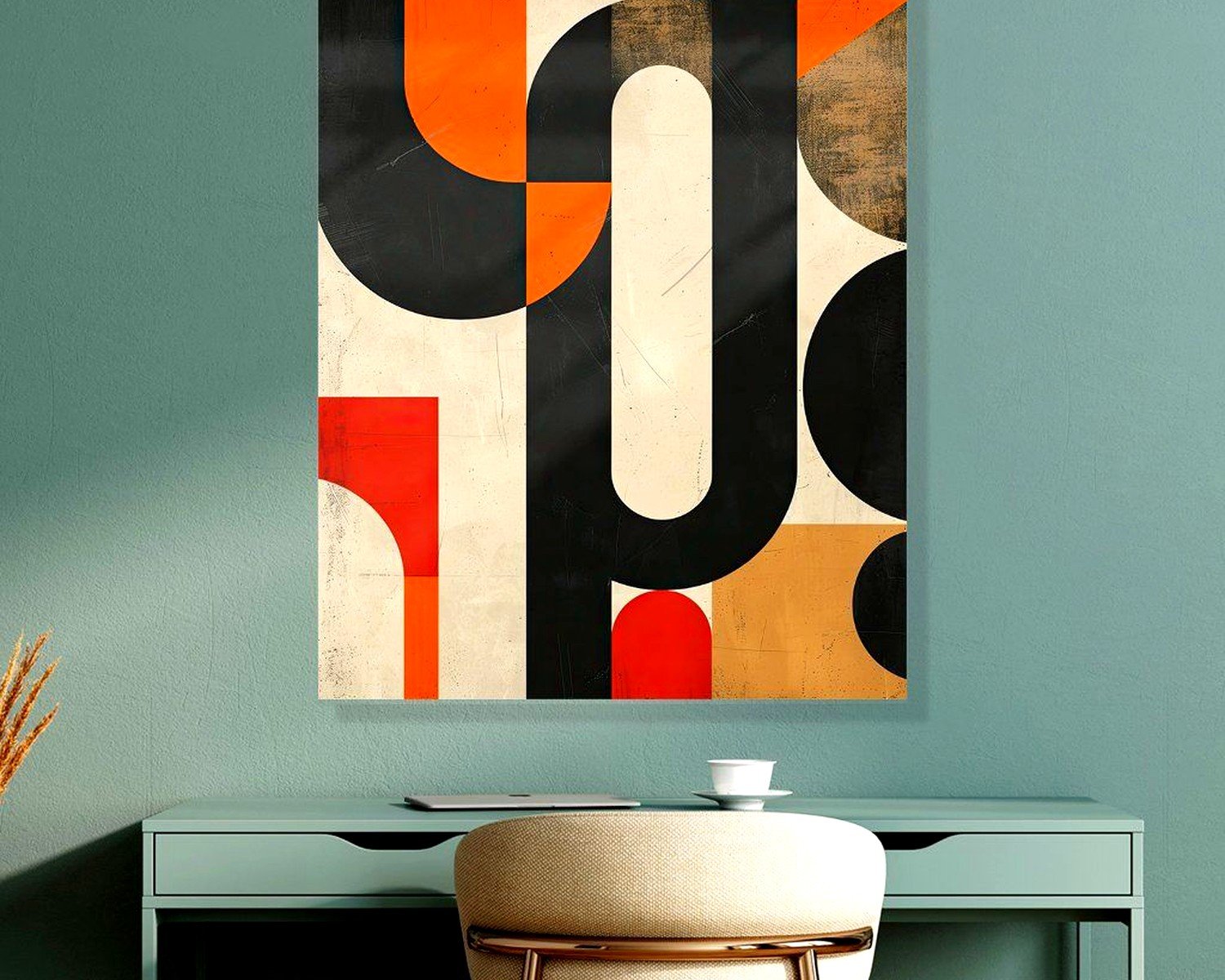
Larger walls can handle more complex patterns or multiple pieces arranged together. I did a gallery wall with nine geometric prints in different metallic finishes in my living room and it only works because the wall is like 12 feet wide.
Material Options I’ve Actually Tried
Oh and another thing – the material you choose completely changes the vibe. Canvas prints are safe but kinda boring tbh. Here’s what I’ve tested:
Metal prints: These are sick for geometric designs because the material itself has angular qualities. The way light hits metal throughout the day makes the geometric shapes almost shift. I got one from Displate (they use magnets which is genius) and the shadows it creates add another dimension to the pattern. They’re pricey though, like $40-150 depending on size.
Wood wall art: Carved or layered wood with geometric patterns has this warmth that metal doesn’t. I found an Etsy seller who does laser-cut layered wood pieces and the depth is insane. You can see the different wood layers creating actual 3D geometric shapes. Takes 2-3 weeks to arrive usually since they’re made to order.
Acrylic: Super modern and glossy. The edges catch light really beautifully. I have a hexagon pattern acrylic piece in my office and clients always ask about it. It’s from a company called Ink + Drop but honestly there’s tons of options on Amazon now for like $50-80.
Fabric wall hangings: Okay so funny story, I was watching this home reno show last week and they used a geometric tapestry and I was skeptical but then I tried it in a client’s boho-modern bedroom. The softness of fabric makes angular geometric patterns feel less cold. Society6 has a bunch and they’re machine washable which is clutch.
Color Theory for Geometric Patterns
This is where people mess up constantly. Just because geometric art looks modern doesn’t mean it should be black and white. Actually the most boring geometric pieces I see are the basic black lines on white background ones from HomeGoods.
Monochromatic geometric patterns work best in rooms that already have color elsewhere. Like if you have colorful furniture or bold curtains, a black/white/gray geometric piece creates balance.
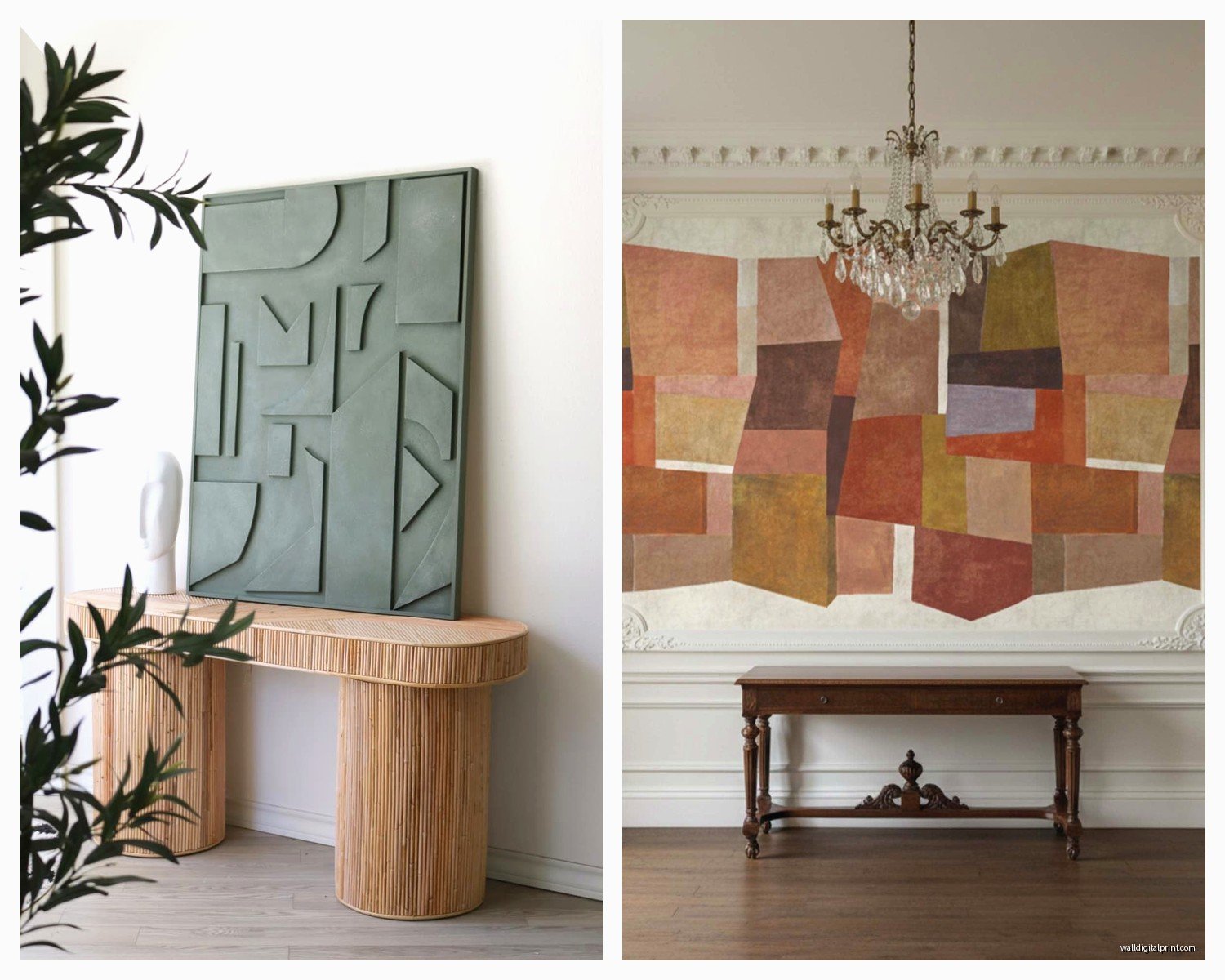
But if your room is mostly neutral (guilty, my whole apartment is basically beige), you need your geometric art to bring in color. I’m obsessed with rust orange and navy geometric patterns right now. Or this sage green and terracotta combo I used in a client’s dining room.
Metallic Accents Are Your Friend
Wait I forgot to mention metallics earlier. Geometric patterns with gold, copper, or silver elements are *chef’s kiss* because the angular shapes naturally create areas for light to hit differently. I have this triangle pattern piece with gold leaf accents that cost $120 but looks like $500. The gold catches afternoon light and makes the whole wall glow.
DIY Options If You’re Crafty
Look, I’m not super crafty but I’ve done three DIY geometric wall art projects and only one was a disaster. Here’s what actually works:
Washi tape geometric designs: Directly on your wall. Takes like 2 hours, costs $15 in tape, and you can change it whenever. I did a mountain range pattern using different colored washi tape in my entryway and it’s held up for 8 months. The trick is really pressing the edges down and using quality tape like MT brand.
Painted canvas: Get a large canvas from Michael’s (use the 50% off coupon they literally always have), tape off geometric sections with painter’s tape, and fill in with acrylic paint. The key is doing multiple thin coats instead of one thick coat so paint doesn’t seep under the tape. I learned that the hard way.
Wood shim art: You can buy wood shims at hardware stores for like $5 per bundle and arrange them in geometric patterns on a backing board. Stain them different colors or leave them natural. Glue gun them down. It’s very DIY-looking in a good way, like intentionally rustic-modern.
Where to Actually Buy This Stuff
My client canceled this morning so I spent an hour comparing prices across different sites and here’s what I found:
Etsy: Best for unique pieces and supporting actual artists. You’re paying more ($80-300 usually) but it’s custom and you’re not gonna see the same piece in everyone’s house. Search terms: “geometric wood wall art” or “modern angular art print”
Society6: Good middle ground. Artists upload designs, you choose the format (print, canvas, tapestry, etc.). Prices are reasonable ($30-150) and the quality is decent. I’ve ordered probably 15 things from them over the years.
West Elm/CB2: If you want the designer look without thinking too hard. Their geometric pieces are trendy and well-made but everyone has them. Expect to pay $100-400.
Amazon: Honestly has gotten way better for wall art. You can find geometric canvas sets (usually 3-5 pieces meant to hang together) for $40-80. Quality is hit or miss but the reviews usually tell you what’s up. I got a navy and gold geometric 3-piece set for my bedroom that’s held up great for a year.
Local art fairs: This is where I’ve found my favorite pieces. Artists often do geometric work because it sells well, and you can negotiate prices. Plus you can see the actual texture and colors in person.
Hanging and Arrangement Tips
Okay so the actual hanging part stresses people out but geometric art is actually forgiving because the patterns create their own sense of order.
For single large pieces: Center it on your wall or above your furniture. Eye level is generally 57-60 inches from the floor to the center of the artwork. I use a laser level now because eyeballing it has failed me too many times.
For geometric gallery walls: This is where it gets fun. You can do:
- Grid arrangement – super structured, pieces evenly spaced
- Scattered geometric – pieces at different angles, creates movement
- Stepped pattern – pieces arranged in ascending/descending sizes
- Corner focus – geometric pieces radiating from one corner
I always lay out gallery walls on the floor first and take a photo from above. Then I can see how the patterns interact before putting holes in my wall.
Command Strips vs Nails
Real talk: I use Command strips for anything under 8 pounds now. They work, they don’t damage walls, and I move my art around way more than I thought I would. The velcro-style ones are better than the poster strips for geometric pieces because angular frames are heavier on the corners.
For heavier pieces, just use proper wall anchors. I’ve had a 15-pound metal geometric piece fall off the wall at 2am and it’s not an experience I recommend.
Mixing Geometric with Other Styles
This is gonna sound weird but geometric art plays well with almost everything if you’re intentional about it. I’ve mixed geometric pieces with:
Botanical prints: The organic shapes of plants contrast beautifully with angular geometric patterns. I have a fern print next to a gold triangle pattern piece and they balance each other.
Photography: Black and white photos especially. The geometric piece adds color and pattern while the photos add realism and personal meaning.
Abstract art: As long as the color palettes relate. Don’t mix warm geometric art with cool abstract art unless you’re going for chaos.
Common Mistakes I See Constantly
Hanging geometric art too high. I see this in every third home I visit. Your art is not a crown molding, it should relate to your furniture and eye level.
Matching the art too perfectly to one accent pillow. This looks try-hard. Pull colors from the art into your room through multiple elements instead.
Buying geometric art that’s too small for the space because you’re afraid of commitment. Go bigger than feels comfortable. You’ll get used to it in three days and it’ll look intentional.
Forgetting about negative space. Geometric patterns are busy by nature, so the wall space around them matters. Don’t crowd geometric art with other stuff right next to it.
Oh and another thing – lighting makes or breaks geometric wall art. I installed picture lights above two of my geometric pieces and it completely transformed them. The shadows from the angular shapes create almost a secondary pattern on the wall. You can get battery-operated picture lights on Amazon for like $25 if you don’t want to deal with wiring.
Seasonal Rotation Strategy
Wait I forgot to mention this earlier but I rotate my geometric art seasonally now and it’s like redecorating without spending money. I have “warmer” geometric pieces with reds, oranges, and golds that go up in fall/winter. Then cooler pieces with blues, greens, and silvers for spring/summer. I store the off-season pieces in those under-bed storage bags.
The angular shapes of geometric art make them really easy to store flat without damage, unlike textured paintings or anything with dimension.
Honestly once you start paying attention to geometric patterns, you see them everywhere and you’ll develop your own preferences. I’m currently obsessed with asymmetrical geometric designs where the pattern doesn’t repeat perfectly – feels more organic and less computer-generated. But that’s just my phase right now, last year I was all about perfect hexagon grids.
Just start with one piece that speaks to you, hang it up, live with it for a week, and see how it makes you feel. The worst case scenario is you return it or move it to a different room. Best case, you’ve found your new wall art obsession and suddenly every blank wall feels like an opportunity.
