Wall Art Guide, Wall Art Tutoriels
Brass Wall Art: Antique Gold Metal Warm Tone Sculpture
Sep
So I’ve been obsessing over brass wall art lately and honestly it’s one of those things that sounds intimidating but once you figure out the basics it’s actually pretty straightforward. Let me just dump everything I know because I literally just hung three pieces in a client’s dining room yesterday and my arms are still sore.
Why Brass Actually Works When Other Metals Don’t
Okay so here’s the thing about brass that took me forever to appreciate. It’s warm. Like genuinely warm-toned in a way that chrome or silver or even copper sometimes can’t pull off. The antique gold finish especially has this depth that catches light differently throughout the day and I’m gonna be honest, it makes cheap pieces look expensive and expensive pieces look like family heirlooms.
I tested this theory in my own hallway with a $45 piece from this random Etsy shop and people always assume it cost way more. The patina on brass just does something magical where it hides imperfections but highlights craftsmanship at the same time.
What to Actually Look For When You’re Shopping
Weight is everything. I cannot stress this enough. If you’re holding a piece and it feels like a soda can, put it back. Real brass or even brass-plated metal should have some heft to it. I learned this the hard way with a sunburst sculpture that literally bent when I was mounting it and my dog freaked out at the noise.
Finish Types You’ll See
- Polished brass: super shiny, almost yellow-gold, shows fingerprints like crazy
- Antique brass: darker, more brown-gold, has that aged look already
- Brushed brass: matte finish, hides scratches better
- Lacquered vs unlacquered: lacquered won’t patina more over time, unlacquered will keep changing
For wall art specifically I always go antique or brushed because the polished stuff requires so much maintenance and honestly who has time for that.
Sizing is Where Everyone Messes Up
Okay so funny story, I once ordered what I thought was a massive statement piece for above a credenza and it arrived the size of a dinner plate. Always always always check the actual dimensions, not just the listing photos. Here’s my basic rule:
Above a sofa or bed, you want the art to be roughly two-thirds the width of the furniture. So if your couch is 90 inches, you’re looking at 60 inches of art width. You can do a single piece or a grouping that adds up to that.
For random wall space, stand back like 10 feet and hold up your hands to frame where you think the art should go. If it feels too small from that distance, it is. Brass wall art especially needs to be bigger than you think because it reads as more delicate than a painting would.
Gallery Wall vs Single Statement
I’m currently watching this show about art forgers and they keep talking about composition which is actually relevant here. For brass pieces, I’ve found that odd numbers work better than even. Three pieces or five pieces, not four. Something about the asymmetry just works.
If you’re doing a gallery wall with brass sculptures, mix sizes but keep the finish consistent. All antique gold or all polished, don’t mix them unless you really know what you’re doing. I tried mixing once and it looked like I raided three different estate sales.
The Actual Hanging Process Nobody Talks About
So brass is heavy, right? You can’t just use those little picture hooks. Here’s my setup that’s never failed:
For pieces under 10 pounds: heavy-duty picture hooks rated for at least double the weight
For pieces 10-30 pounds: wall anchors if you’re not hitting a stud, or wood screws directly into studs
For anything over 30 pounds: you gotta use wall anchors or French cleats, no way around it
I keep a stud finder in my car at all times now because trying to guess where studs are is how you end up with six holes in your wall. Also get a level. Not the app on your phone, an actual level. I learned this when a client pointed out that the “abstract sculpture” I hung was just crooked.
Placement Ideas That Actually Work
Living room above the couch is obvious but also consider the wall opposite your main seating. When you’re sitting down, that’s what you’re looking at, so why not make it interesting?
Entryways are perfect for brass because it catches light when you open the door. I have this geometric brass piece in my entryway that literally glows when the afternoon sun hits it.
Unexpected Spots
- Bathroom above the toilet (if it’s a nice bathroom, not like a gross one)
- Kitchen if you have a blank wall between cabinets
- Bedroom above nightstands instead of lamps
- Stairway walls going up, creates this nice rhythm
Oh and another thing, brass looks amazing against deep colors. Navy, forest green, charcoal gray, even black. The warm tone pops in a way it doesn’t against beige or white. Not saying don’t use it with light walls, but if you want drama, go dark.
Styles and What They Say
Okay this is gonna sound weird but different brass wall art styles really do set different moods.
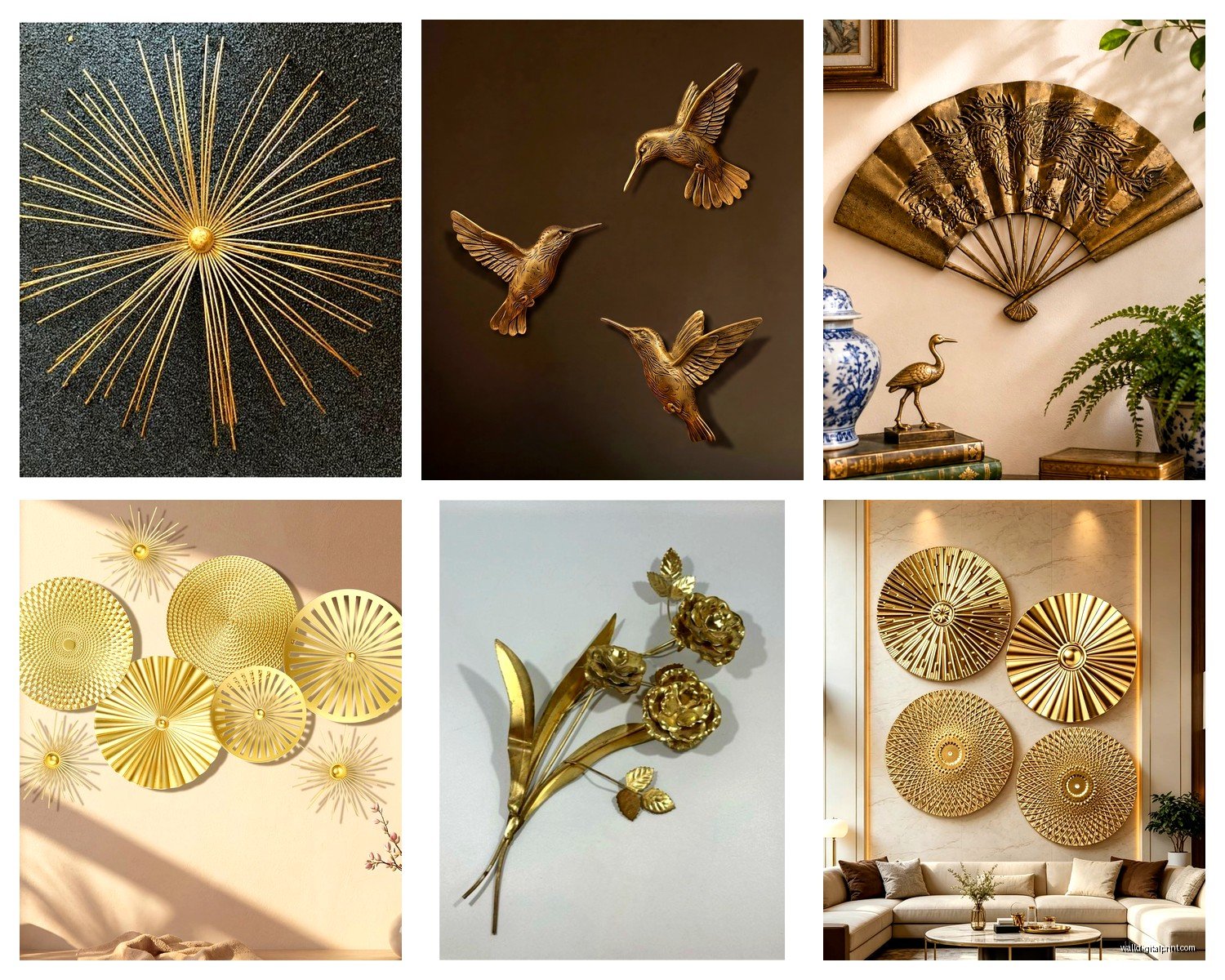
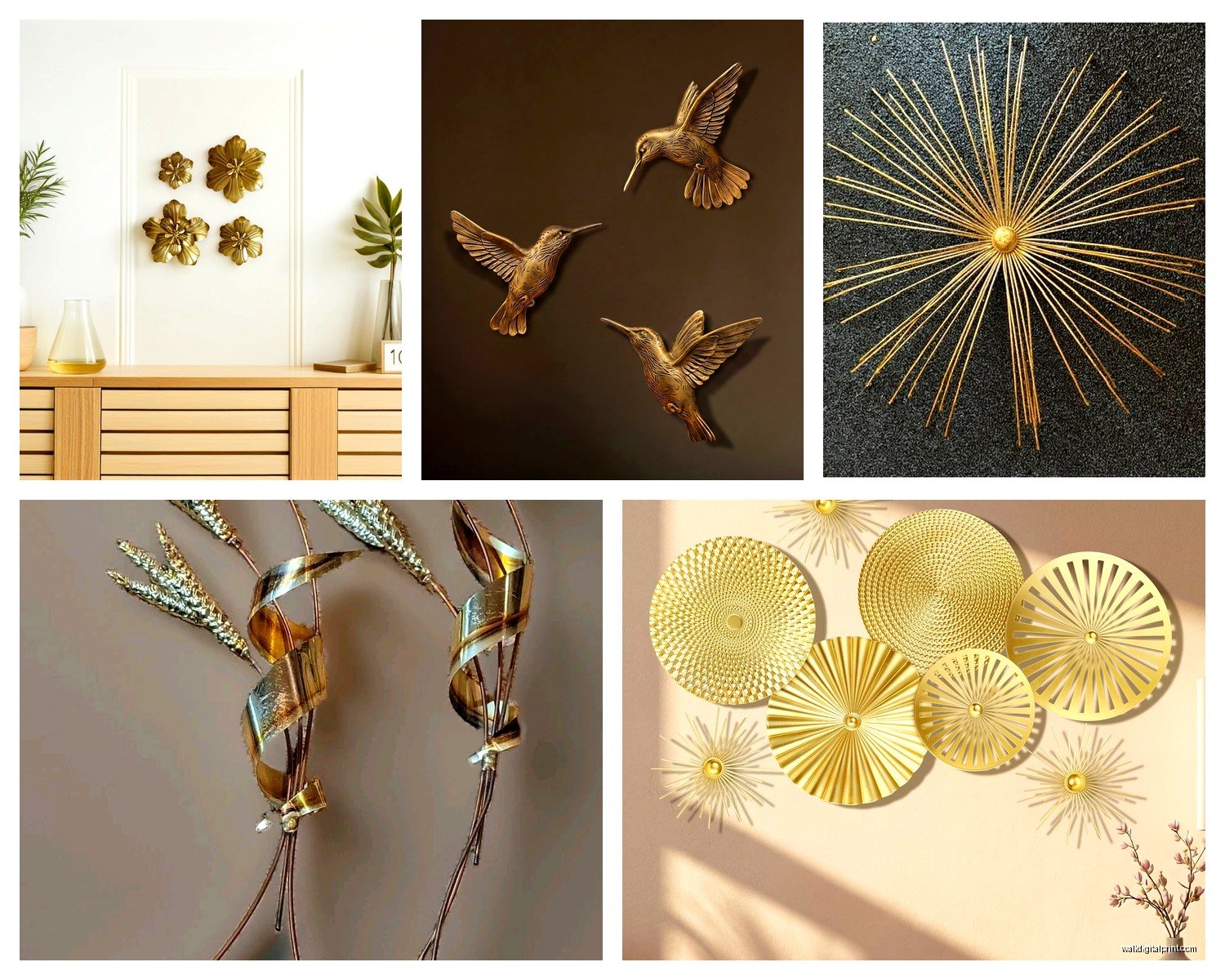
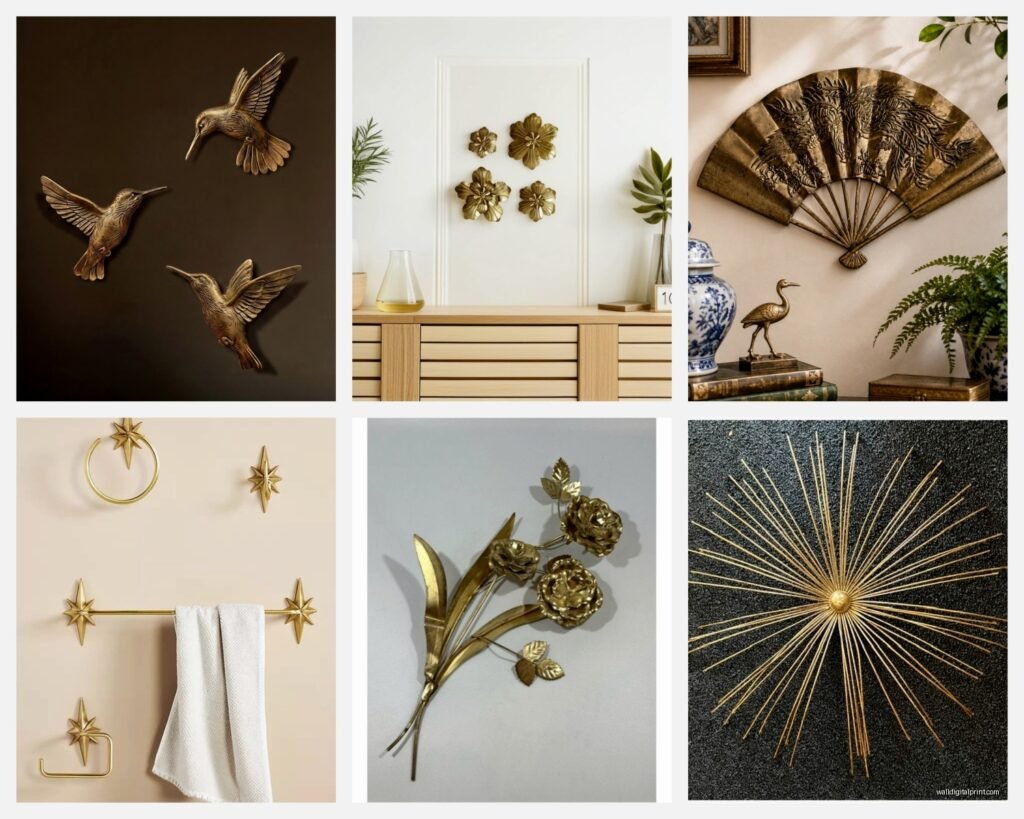
Sunburst designs: very mid-century, work in modern or retro spaces, tend to be statement pieces
Geometric abstract: contemporary, clean lines, good for minimalist rooms
Nature motifs (leaves, branches, birds): softer, work in traditional or transitional spaces
Sculptural 3D pieces: dramatic shadows, need good lighting to shine
I’ve been gravitating toward the abstract geometric stuff lately because it’s easier to integrate into different design styles. A client can change their whole color scheme and the brass piece still works.
Lighting Considerations You Can’t Ignore
Wait I forgot to mention this earlier but it’s super important. Brass needs light to do its thing. If you’re putting it on a wall that never gets any light, you’re wasting your money.
Picture lights are your friend here. Those little brass or bronze lights that mount above artwork? They make brass sculptures come alive at night. I installed some in a client’s home office and she texts me photos of it like every week.
Natural light is even better though. If you have a wall that gets morning or late afternoon sun, that’s your brass wall. The way the light plays off the texture and creates shadows is literally the whole point.
Avoiding Glare
Polished brass can create glare if it’s directly across from a window or lamp. This is another reason I prefer antique finishes, they diffuse light instead of bouncing it straight back at you.
Maintenance Real Talk
So here’s the deal. Brass tarnishes. That’s just what it does. If you bought unlacquered brass, it’s gonna develop a patina over time, getting darker and more varied in color. Some people love this (I do), some people hate it.
If you hate it, you need to either buy lacquered pieces or be prepared to polish. I use a product called Brasso maybe twice a year on my pieces and it takes like 10 minutes. Soft cloth, little bit of polish, circular motions, done.
For dusting, just use a dry microfiber cloth. Don’t use anything wet unless you’re actually polishing, because water can accelerate tarnishing on unlacquered brass.
Price Ranges and What You’re Actually Getting
Under $50: probably brass-plated steel or aluminum, thin construction, fine for low-visibility spots
$50-$150: better construction, might be solid brass or thicker plating, good for most residential applications
$150-$500: solid brass, better craftsmanship, unique designs, these are investment pieces
Over $500: artisan work, limited editions, gallery-quality, only if you’re really into it
I’ve bought pieces at every price point and honestly some of my favorites are in that $75-$125 range. There’s a sweet spot where you’re getting decent quality without the markup for a designer name.
Where to Actually Shop
Etsy has a ton of options from individual artists. Search “brass wall sculpture” or “metal wall art brass” and you’ll find stuff that isn’t mass-produced.
West Elm and CB2 have good mid-range options that are pretty reliable. I’ve ordered from both multiple times.
Antique stores and estate sales can be goldmines if you’re patient. Real vintage brass has a quality you can’t really replicate.
HomeGoods and TJ Maxx sometimes have brass wall art but it’s hit or miss. I check every time I’m there though because when they have good stuff it’s usually cheap.
Mixing Metals (Breaking the Rules)
Okay so everyone says don’t mix metals but I’m gonna push back on that a little. You CAN mix brass with other finishes if you do it intentionally. I have brass wall art, chrome cabinet pulls, and matte black light fixtures in my kitchen and it works because each metal has its own zone.
The key is not letting them compete directly. Don’t put brass wall art right next to a silver mirror frame. Give them space. Let each metal do its thing in its own area.
Common Mistakes I See All The Time
Hanging it too high. The center of your art should be at eye level, which is usually around 57-60 inches from the floor. Unless you have really high ceilings, then you adjust up slightly.
Buying pieces that are too matchy-matchy. If you’re doing multiple brass pieces, vary the style or texture so it doesn’t look like a furniture showroom.
Ignoring the wall color relationship. Brass can look muddy against certain yellows or oranges. Test if you can or at least visualize how the warm tones will interact.
Not considering the room’s existing metal finishes. If everything else in your room is brushed nickel, a super shiny brass piece might feel out of place.
Installation Tricks From Someone Who’s Done This Too Many Times
Use painter’s tape to map out your layout before making any holes. Cut pieces of tape to match your art dimensions and stick them on the wall. Move them around until it feels right.
For gallery walls, lay everything out on the floor first. Take a photo. That’s your map for the wall.
If you’re hanging something heavy, get someone to help you. I’ve tried to muscle 40-pound pieces onto walls by myself and it never ends well. My client canceled last week so I spent an hour trying to hang this massive brass palm frond thing alone and almost dropped it on my foot.
Start with the center piece or the largest piece first, then work outward. This gives you an anchor point for everything else.
When Brass Wall Art Doesn’t Work
Super modern minimalist spaces with only cool tones might not be the right fit. Brass is inherently warm and decorative.
Small, dark rooms where you can’t get any light on it. It’ll just look brown and sad.
If you already have a ton of visual clutter. Brass wall art is a statement, so the rest of the wall needs to be relatively calm.
Outdoor spaces unless it’s specifically rated for exterior use. Regular brass will corrode pretty quickly outside.
Look, at the end of the day brass wall art is one of those things that either speaks to you or it doesn’t. I love it because it adds warmth and texture without being precious about it. It’s metal, it’s durable, it catches light in interesting ways, and it makes walls feel intentional instead of just blank.
My best advice is to start with one piece in a spot where you see it every day. If you love it after a month, add more. If you don’t, at least you only committed to one piece. And honestly brass is pretty easy to resell if you change your mind because it’s trendy enough right now that someone will want it.