Wall Art Guide, Wall Art Tutoriels
Desert Wall Art: Cactus Sand Dune Southwest Arid Landscape
Nov
So I’ve been working with desert wall art for like three years now and honestly it’s one of those things that sounds super specific but actually works in way more spaces than you’d think. Let me just dump everything I know because I literally just finished styling a client’s living room with this exact theme yesterday.
Why Desert Art Actually Works (Even If You Live Nowhere Near a Desert)
Okay so here’s the thing – desert landscapes have this really calming, minimalist vibe that doesn’t scream “theme” like beach art can sometimes do. The color palette is naturally neutral which means it plays nice with basically everything you already own. I’ve put cactus prints in modern apartments, southwestern homes obviously, and even this super traditional colonial house where the client wanted something unexpected.
The textures in desert art – sand dunes, rock formations, dried grasses – they add visual interest without being busy. My cat literally knocked over a vase while I’m typing this but anyway… the point is these pieces give you warmth through those terracotta and sand tones without needing actual warm colors if that makes sense.
Choosing the Right Desert Subject Matter
Not all desert art is created equal and you gotta think about what vibe you’re actually going for.
Cactus Prints
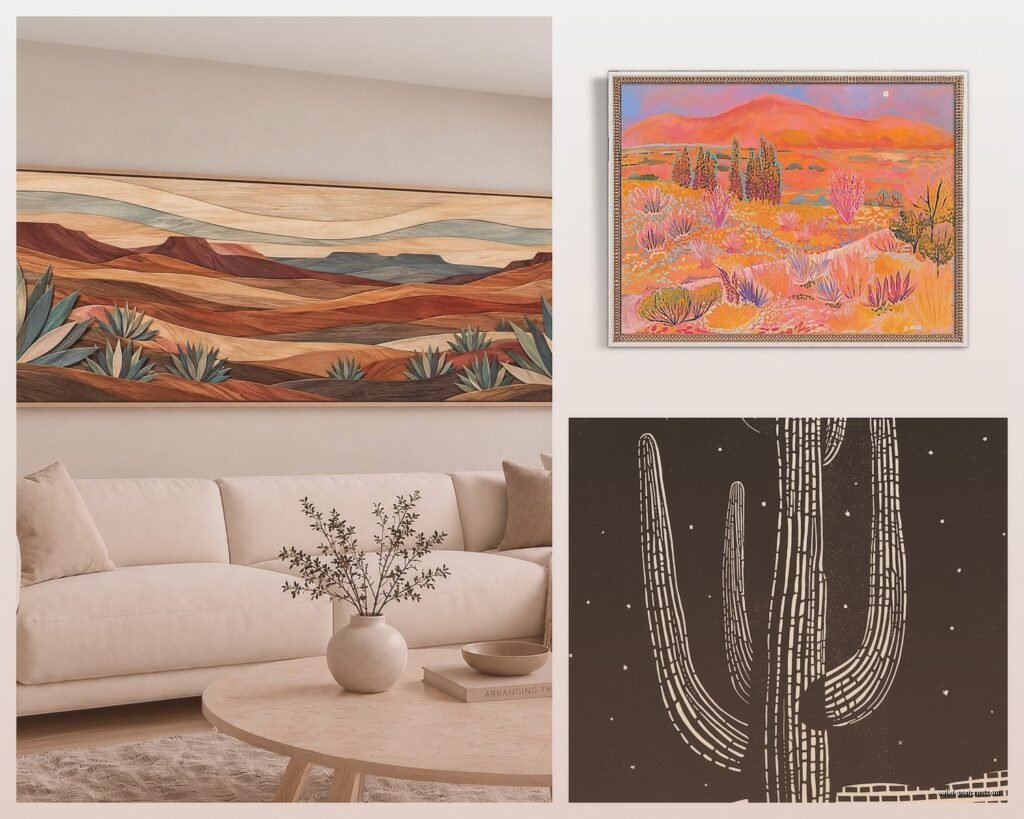
Saguaro cacti are the most iconic and they photograph really dramatically – lots of vertical lines which is great for smaller walls or spaces where you need height. I usually go for these in entryways or narrow hallway spaces. The ones with the arms reaching up have more personality but can read kinda quirky, while single columnar cacti are more sophisticated.
Prickly pear cacti are softer, more organic shapes. They work better in bedrooms or spaces where you want things to feel less stark. I found this gorgeous prickly pear print last month that had these subtle pink tones in the paddles and it was *chef’s kiss* for a client’s nursery.
Barrel cacti and mixed cactus gardens give you that collected, botanical vibe. These are your best bet if you’re going for that curated desert garden look.
Sand Dune Landscapes
This is gonna sound weird but sand dune art is secretly the most versatile? The curves and shadows create these abstract compositions that people don’t immediately clock as “desert themed.” I’ve used dune photography in really modern spaces because the forms are so sculptural.
Look for pieces with good contrast – the interplay between light and shadow on sand is what makes these interesting. Flat, evenly-lit dune photos are honestly boring. You want drama in the ridgelines and shadows.
Wide Arid Landscapes
These are your statement pieces – think big horizons, maybe some mountains, that endless sky feeling. They need space to breathe so don’t try to cram these onto a small wall between two windows. I learned this the hard way with a client who insisted and it just looked… cramped.
The best ones have a clear focal point even within all that space. Maybe it’s a lone Joshua tree or an interesting rock formation. Without that anchor point your eye just kinda wanders around confused.
Size and Placement Strategy
Okay so funny story – I once bought this massive 4-foot desert landscape for my own place without measuring and it was absolutely comically large for the wall. Learn from my mistakes.
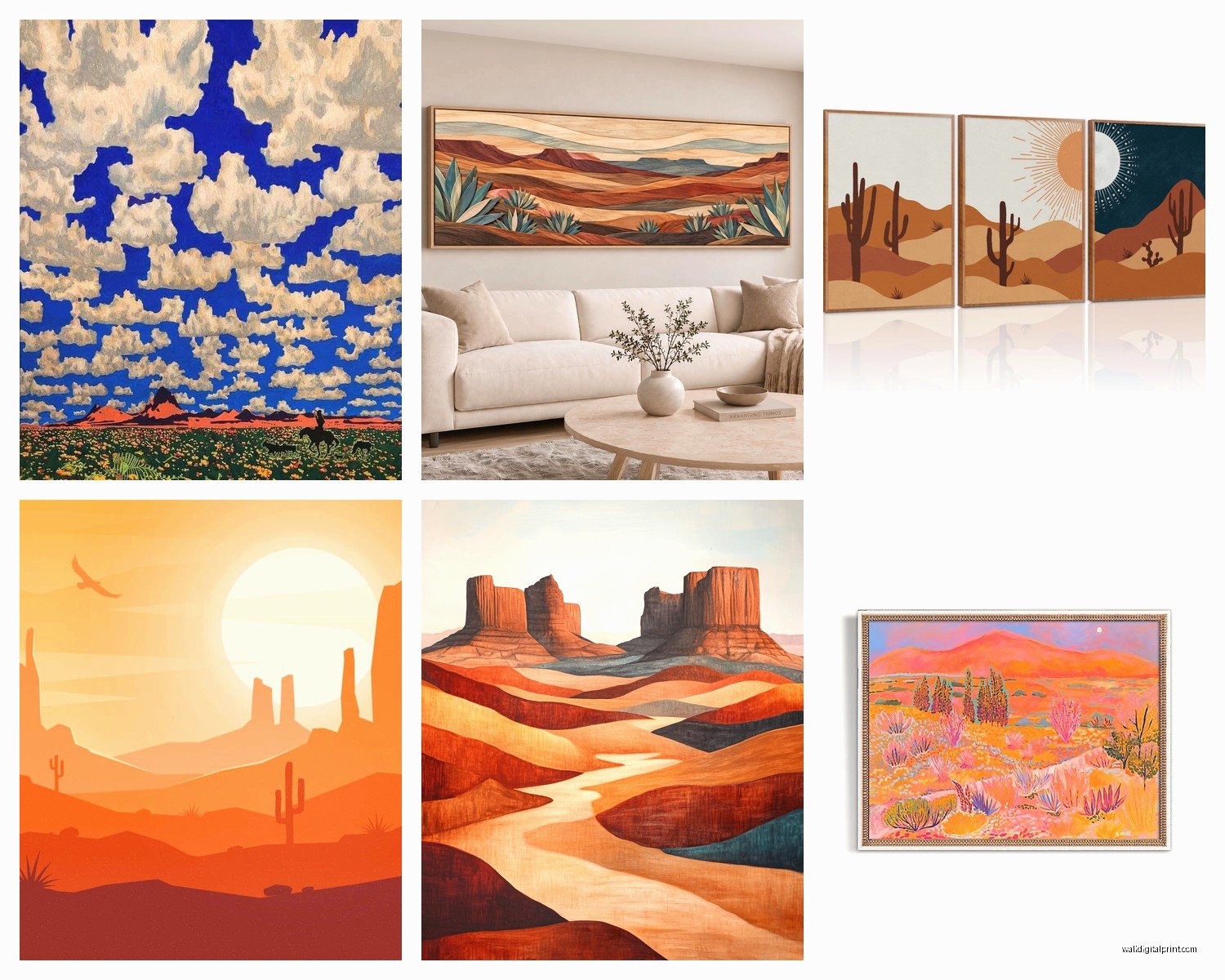
For above a sofa: Your art should be roughly two-thirds to three-quarters the width of your sofa. With desert landscapes especially, you want them large enough that you can actually see the details and textures. A tiny cactus print above a big sectional just looks sad and floaty.
Gallery walls: Desert art actually does really well in gallery wall configurations. Mix different subjects – a close-up of cactus needles, a wide landscape, maybe an abstract rock formation. Keep your frames consistent though or it gets messy fast. I usually stick with either all natural wood frames or all black for desert pieces.
Bedroom placement: I’m obsessed with putting horizontal desert landscapes above beds. The wide, open feeling works with the rest-and-relaxation vibe. Just make sure it’s centered and hung about 6-8 inches above your headboard.
The Height Thing Everyone Gets Wrong
Standard gallery height is 57 inches center point but honestly in residential spaces I go a bit lower, especially with landscape-oriented pieces. You want to be able to see it comfortably from your main seating areas. I usually do a quick sit test – sit where you’ll actually be looking at it and have someone hold it up at different heights.
Color Palette Coordination
Desert art comes in way more color variations than people realize and this is where things can go wrong fast.
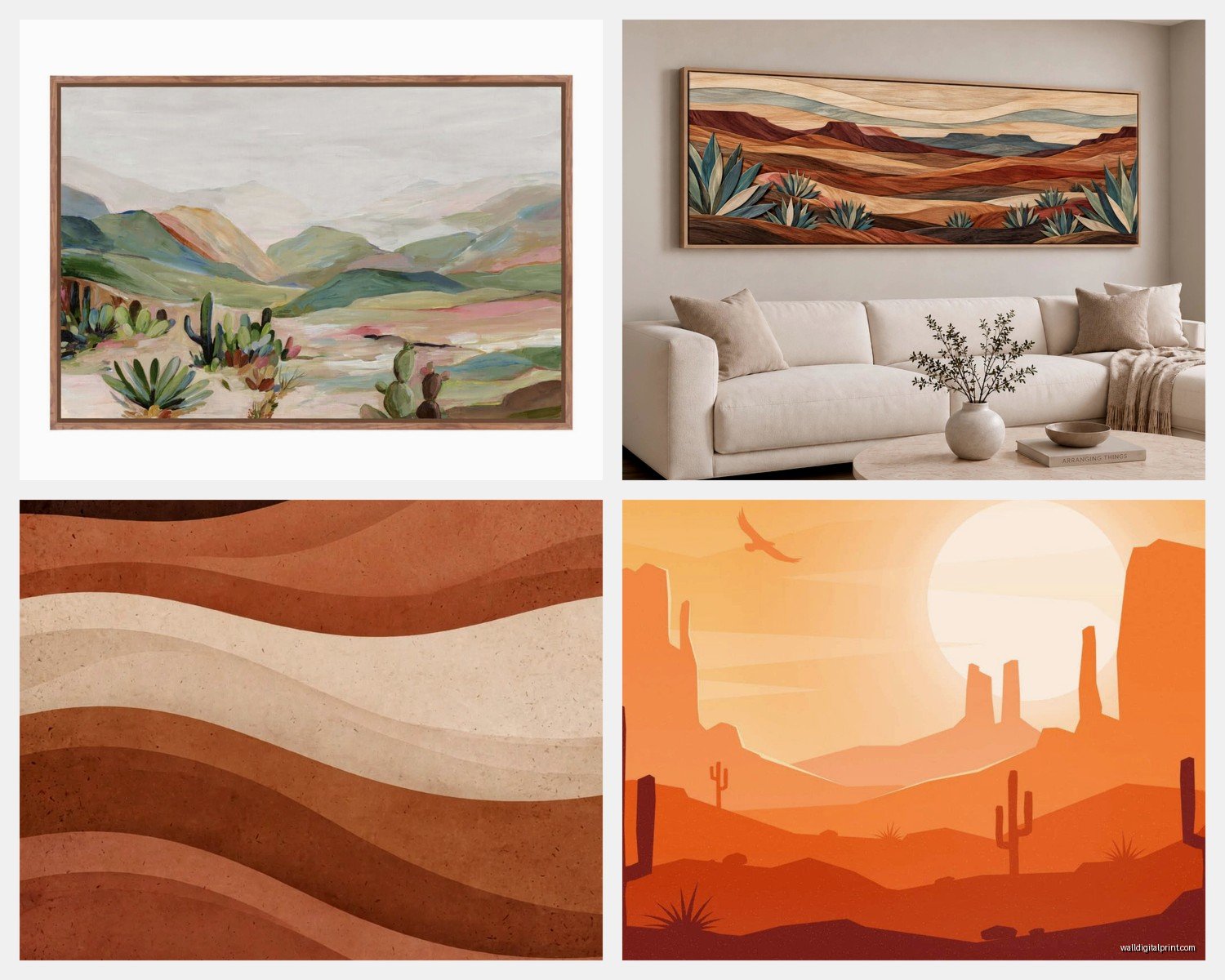
Warm terracotta/rust tones: These are your traditional southwest vibes. They pair beautifully with cream, tan, warm grays, and other earth tones. If your space has any orange or red undertones in the wood or flooring, this is your safest bet.
Cool desert tones: Think sage green, dusty blue, silvery gray. These are the colors of desert twilight and they’re honestly my favorite for modern spaces. They work with cooler gray walls and contemporary furniture without feeling too matchy-matchy.
High contrast black and white: Desert photography in black and white is *so good* if you want the subject matter without committing to a color story. The textures really pop and it works literally anywhere.
Wait I forgot to mention – be careful with prints that have too much golden hour sunset coloring unless you’re really committing to that warmth throughout the room. I’ve seen people buy these gorgeous peachy-orange sunset desert prints and then wonder why they clash with everything.
Frame Selection Actually Matters
I cannot stress this enough – the frame makes or breaks desert art.
Natural wood frames in light oak or walnut are the obvious choice and yeah they work great. But they can also make things feel very “Pottery Barn catalog” if you’re not careful. I like to go with raw wood frames that have visible grain – adds more texture and feels less manufactured.
Black frames make desert art feel more contemporary and gallery-like. This is my go-to for clients who want desert subject matter but have a really modern aesthetic. The contrast between organic desert forms and crisp black framing is really satisfying.
Metal frames, especially in brass or copper tones, can be gorgeous with warm-toned desert prints. Just don’t go too ornate or it starts feeling southwestern kitsch rather than sophisticated.
For sand dune photography specifically, I often skip the mat and go edge-to-edge in the frame. The abstract quality of dunes works well with this more modern presentation.
Glass or No Glass
If you’re getting something with texture – like a canvas print or anything with dimensional elements – skip the glass obviously. But for photography prints, I usually do go with glass or acrylic glazing to protect the piece, especially in high-traffic areas. Non-glare glass is worth the extra cost if the piece will be opposite windows.
Mixing Desert Art with Other Styles
You don’t have to go full desert-themed-everything and honestly please don’t because that’s a lot.
I mix desert pieces with abstract art all the time – the organic forms complement each other really well. Had a client last month where we did a large abstract in terracotta and cream tones flanked by two smaller black and white cactus prints and it looked so much more interesting than three matching desert pieces would have.
Botanical prints pair naturally with desert art since cacti are technically plants. You can create a whole plant-focused gallery wall that includes both lush tropical leaves and stark desert specimens for contrast.
Even in traditional spaces, one statement desert landscape can work as an unexpected element. I did this in a house full of antiques and oriental rugs – added a massive sand dune photograph in a simple wood frame and it somehow made everything else look more intentional rather than just old stuff.
Where to Actually Buy This Stuff
For original photography: Etsy is honestly amazing for this. Search for specific locations like “Sonoran desert print” or “Joshua Tree photograph” and you’ll find actual photographers selling their work. The quality is usually way better than mass-market stuff and you’re supporting actual artists. Prices range wildly from like $30 for a digital download you print yourself to $500+ for large format professional prints.
For affordable options: Society6 and Minted both have good selections. The quality is decent for the price and they have tons of frame and size options. I use these for rental properties or when clients have tighter budgets. Just be aware that the colors can sometimes print differently than they appear online – I always order swatches when possible.
For high-end pieces: If you’ve got budget, check out galleries that specialize in landscape photography. Photographers like Michael Stearns or Ansel Adams’ work (though his estate pieces are pricey) if you want something that’s also an investment.
DIY route: If you’re visiting desert areas, take your own photos! I did this in Arizona last year and got some of my favorite pieces for my own place. Just make sure you shoot in good light – early morning or late afternoon – and get your files professionally printed on quality paper.
Common Mistakes I See All the Time
Going too literal with the theme. Like, you don’t need cactus art AND cactus throw pillows AND actual cacti AND a cow skull. Pick one or two desert elements and let them be the statement.
Hanging pieces too high. I mentioned this before but seriously, everyone does this. Lower than you think.
Choosing prints that are too busy. Desert landscapes should have some breathing room in the composition. If every inch of the image is packed with detail, it loses that calm, spacious feeling that makes desert art appealing in the first place.
Forgetting about lighting. Desert art really benefits from good lighting – either natural light or picture lights. The textures and subtle color variations get lost in dim spaces.
Buying something just because it says “southwest” without considering if it actually fits your aesthetic. I’ve seen people buy really dated desert art with weird color palettes because they thought they were supposed to like it? Trust your eye.
Styling Around Desert Art
Once you’ve got your art up, you gotta make it feel integrated.
Layering textures helps a ton – think woven textiles, leather, rough wood, maybe some ceramic pieces. These natural materials echo the textures in desert landscapes. I’m watching this show about house flipping while writing this and they just did this exact thing actually.
Plants are your friends. Actual cacti and succulents are the obvious choice, but don’t feel limited. I actually think the contrast of lush green plants against stark desert art is really beautiful. Just did a space where we had a fiddle leaf fig next to a massive cactus print and the juxtaposition was perfect.
Keep your color palette relatively neutral with pops of warmth. Too many competing colors will fight with your art. I usually build around sand, cream, warm gray, and then add interest through texture rather than color.
Avoid desert clichés in the rest of the decor unless you’re really going for that vibe. You probably don’t need the wagon wheel or the howling coyote sculpture.
Seasonal Considerations
One thing people don’t think about – desert art can actually feel different depending on the season and your climate. In winter, those warm terracotta tones feel cozy and inviting. In summer, especially if you live somewhere hot, you might want to lean more into cooler desert tones or black and white pieces that feel less heat-focused.
I have a client who actually swaps out her desert art seasonally – warmer toned pieces in winter, cooler sage and blue-gray desert landscapes in summer. It’s extra but it works for her.
Making It Feel Personal
The best desert art installations I’ve done feel personal to the client somehow. Maybe they visited Sedona on their honeymoon, or they grew up in New Mexico, or they just really love the aesthetic. Try to pick pieces that actually mean something to you rather than just filling wall space.
If you have personal photos from desert travels, those are gonna beat random stock prints every time. The story behind the piece matters, even if you’re the only one who knows it.
Mix in other meaningful objects on the same wall or nearby – maybe some found rocks from a desert hike, or pottery you picked up at a market. These personal touches make the whole thing feel curated rather than just decorated.
Okay I think that’s everything? Honestly desert art is so forgiving and works in so many spaces, you really can’t go too wrong as long as you pay attention to scale and don’t go overboard with the theme. Start with one piece you genuinely love and build from there rather than trying to do a whole room at once.