Wall Art Guide, Wall Art Tutoriels
Religious Wall Art: Faith Spiritual Sacred Worship Decor
Nov
So I’ve been completely obsessed with religious wall art lately because honestly, my neighbor asked me to help her create this meditation corner and I went down this whole rabbit hole of what actually works versus what just looks good on Pinterest but feels totally off in person.
First thing – and this is gonna sound weird but – you need to figure out if you want something that’s like, devotional for actual prayer and worship or more contemplative art that happens to have religious themes. Because the energy is completely different. I learned this the hard way when I bought this gorgeous Tibetan mandala print for like $200 and realized it felt too… museum-y? Like I was looking AT it instead of being WITH it, if that makes sense.
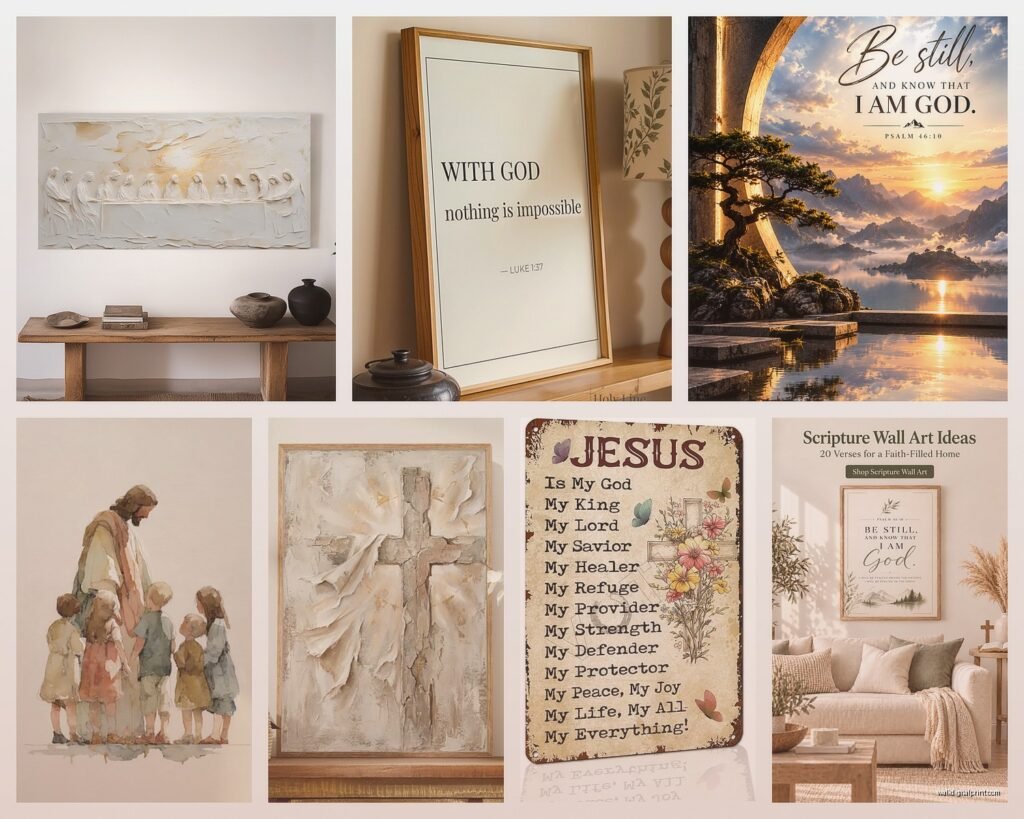
The Whole Sacred vs Decorative Thing
Okay so here’s what I figured out after testing a bunch of pieces in my own space and with clients. Religious wall art falls into these categories and you gotta know which one you’re after:
- Icons and devotional images – these are meant for actual worship, prayer, meditation
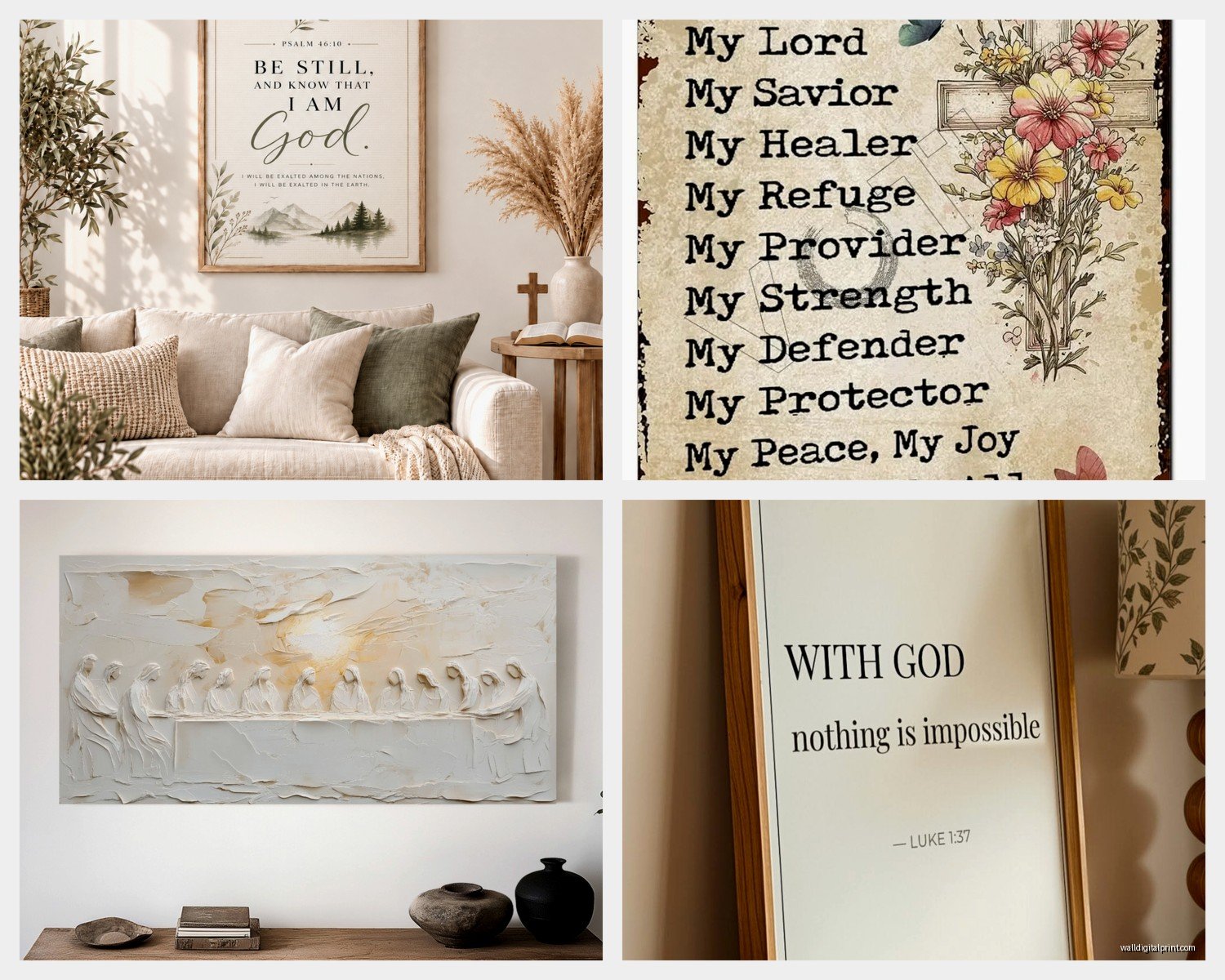
- Scripture and text art – verses, prayers, sacred writings
- Symbolic pieces – crosses, om symbols, hamsa hands, Buddha statues mounted as art
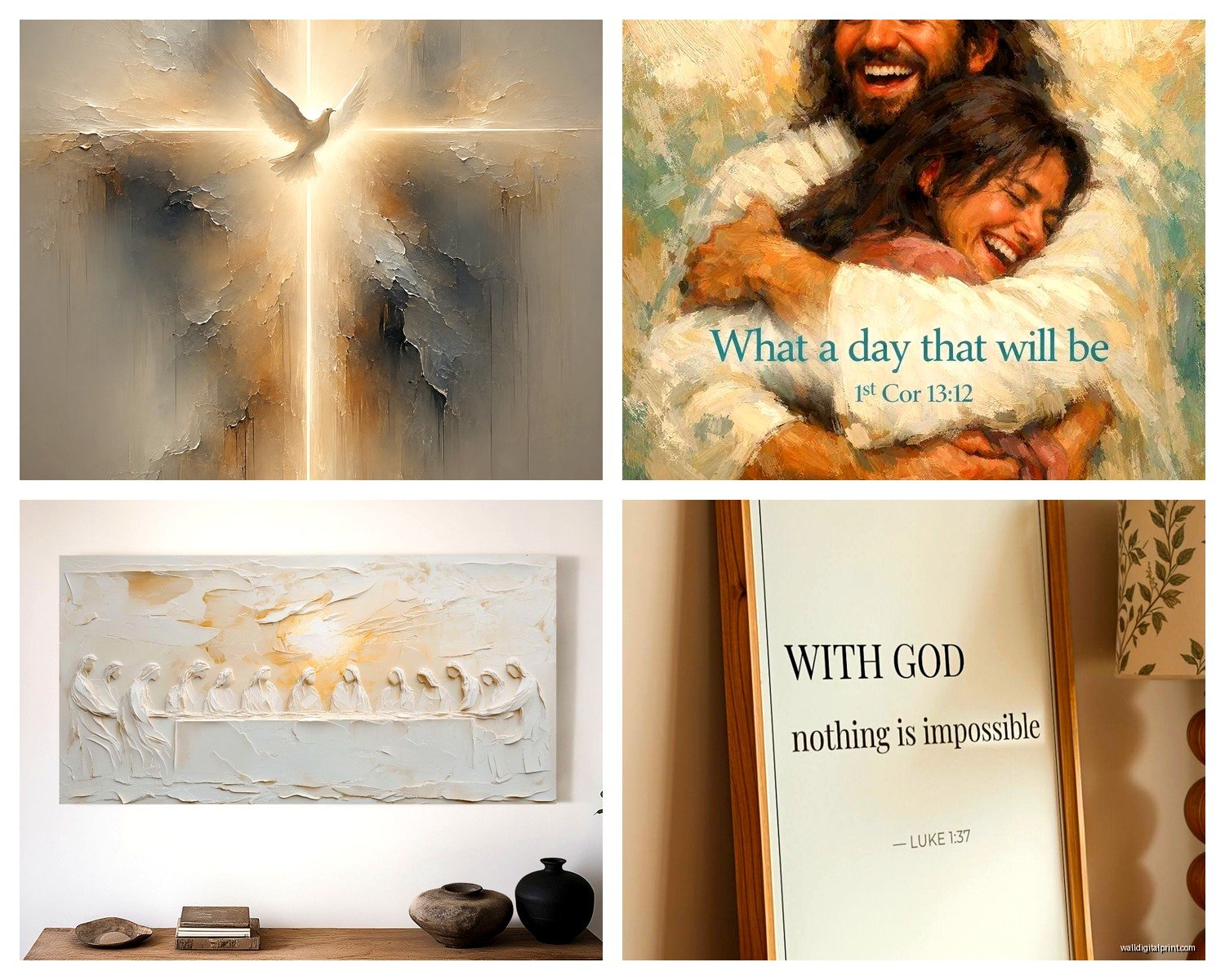
- Religious fine art – paintings of religious scenes that are more artistic interpretation
- Interfaith or abstract spiritual – less specific to one tradition
The devotional stuff needs to be at eye level when you’re sitting or kneeling, depending on your practice. I put a Byzantine icon reproduction above my client’s prayer bench and we had to move it down like eight inches because she kept craning her neck. Seems obvious now but yeah.
Material Choices That Actually Matter
Canvas prints are everywhere and they’re fine for like, inspirational quote art or softer imagery, but for icons or really sacred pieces, I honestly think wood panels or metal prints hold up better. There’s this company – I think it’s called The Printed Image or something – that does museum-quality reproductions on wood and the difference is wild. My cat knocked over a canvas print once and it just looked cheap after that, all dented.
Metal prints have this luminous quality that works SO well for religious art, especially anything with gold tones or halos. I tested one of those aluminum prints with a Christ Pantocrator image and the way light hits it throughout the day… it’s not static, which feels right for something meant to be contemplated.
Framed paper prints under glass are traditional for a reason though. If you’re doing Islamic calligraphy or Jewish papercuts or anything with really fine detail, you want that protection and the formal presentation. Just make sure you’re using UV-protective glass because I’ve seen too many beautiful pieces fade out in sunny rooms.
Size and Scale Nobody Talks About
Here’s the thing about sizing – bigger is not always more reverent or whatever. I had a client who wanted this massive Last Supper reproduction and it completely overwhelmed her dining room, turned it into a theme restaurant vibe instead of a home.
For personal prayer spaces, I usually recommend pieces between 16×20 and 24×36 inches. Big enough to see details from a few feet away but not so large that it dominates everything. Your eye should be able to rest on it comfortably.
If you’re doing a gallery wall of saints or multiple deity images, keep them consistent in size or use the rule of threes – one large piece flanked by two smaller ones. I mixed sizes randomly once and it just looked chaotic, which is the opposite of what you want.
Placement That Makes Sense
Okay so funny story – I put a beautiful Ganesh print in a client’s entryway because it’s traditionally about removing obstacles and new beginnings, right? But then she mentioned she felt weird having visitors’ backs to it when they were leaving and we moved it to face her desk instead. The placement has to work with your practice and beliefs, not just design principles.
Some general things that worked for me:
Prayer or meditation spaces: East-facing walls if possible, or whatever direction is significant in your tradition. Height should allow comfortable viewing from your prayer position. Leave some empty space around it – cluttering sacred art with other decor dilutes the focus.
Bedrooms: This is personal but I keep religious art on the wall I face when waking up. Some traditions have specific rules about this though, like not placing certain images where feet point toward them, so definitely research your specific faith requirements.
Living areas: Above a console table or shelf where you can add candles or flowers creates a little altar situation without being too formal. Just… don’t put it above the TV. I’ve seen this and it never feels right.
Lighting Is Everything
Natural light is beautiful but it fades art, so if you’ve got a sunny wall, either get UV-protective framing or use artificial lighting instead. I installed these small picture lights above a couple of icons in my own space and the focused illumination actually helps with contemplation – draws your eye right there.
Candles are traditional in lots of practices but be careful with smoke damage. I learned this after a year of burning incense near a Tara print and having to get it professionally cleaned. Now I keep candles offset from the art itself.
Where to Actually Buy This Stuff
Oh and another thing – sourcing matters more for religious art than regular decor because you want to make sure it’s respectful and ideally supporting the right people.
Monastery and religious community shops: These are my favorite for Christian icons, Buddhist thangkas, and other traditional pieces. The quality is usually excellent and money often goes back to the community. Mount Athos icon studios, Tibetan refugee cooperatives, that kind of thing.
Etsy: Great for finding artists who specialize in specific traditions. I found this amazing woman who does custom Islamic calligraphy and she was so helpful about choosing the right verses. Just read reviews and make sure they’re knowledgeable about the tradition they’re representing.
Museum shops: Reproduction prints from places like the Met or British Museum are solid quality and the scholarship is legit. Good option if you want classical religious art.
Specialty retailers: There are stores focused on specific faiths – like Autom for Catholic/Orthodox stuff, or Dharma Shop for Buddhist items. Usually more expensive but the authenticity is there.
Avoid like, HomeGoods or TJ Maxx for actual devotional pieces. I’ve seen some cringy appropriation stuff there – om symbols made into wine holders and stuff. If you want casual spiritual decor that’s fine but know what you’re getting.
The DIY Route
Wait I forgot to mention – if you’re crafty, creating your own religious art can be incredibly meaningful. I’m not talking about painting your own icon unless you’re trained in that tradition, but there are ways to personalize things.
Framing fabric art works beautifully. I bought a vintage silk painting of Krishna from an estate sale, had it professionally mounted and framed, and it’s one of my favorite pieces. Way more character than a new print.
Pressed flowers or natural materials arranged around a central image… I did this with a small Mary print surrounded by dried roses and it has this folk art quality that feels very devotional.
Scripture or prayer text printed on nice paper in a simple frame – you can customize the typography, size, everything. Just use archival materials if you want it to last.
Mixing Traditions or Staying Specific
This is super personal but I’m gonna share what I’ve observed. Some people have really eclectic spiritual practices and mix imagery from multiple traditions – Buddha next to Mary next to a hamsa hand. Totally valid if that’s your genuine practice.
But if you’re doing it just because it looks bohemian or worldly, it can come off as spiritual window shopping and might feel empty over time. I went through a phase of collecting religious art from everywhere and eventually pared down to what actually resonated with my practice. The pieces I kept have so much more meaning now.
If you do mix traditions, give each piece its own space to breathe. Don’t just jumble everything together on one wall.
Maintenance and Care
Dust regularly with a soft brush or microfiber cloth. Sounds basic but dust buildup on religious art feels particularly neglectful somehow.
If you burn candles or incense nearby, check periodically for smoke residue. Professional cleaning for valuable pieces, gentle cleaning for prints – test any cleaning method on an inconspicuous spot first.
Refresh the space around your religious art seasonally. I swap out flowers, clean the surface below it, maybe rearrange accompanying objects. Keeps the energy from getting stagnant.
Cost Breakdown From My Experience
You can definitely do this on a budget. I’ve found beautiful pieces at estate sales and antique shops for under $50. Reproduction prints from online retailers run anywhere from $30-$200 depending on size and quality.
Original art or hand-painted icons start around $300 and go up from there – way up if you’re commissioning something. But honestly, a $40 print that speaks to you and supports your practice is worth more than a $500 piece you bought because it seemed important.
Custom framing is where costs sneak up. A good frame with UV glass can easily cost more than the art itself. I usually budget at least $150-$300 for professional framing of important pieces.
Common Mistakes I’ve Made
Buying something because it matched my color scheme rather than because it resonated spiritually – ended up removing it within months.
Hanging religious art too high because I was following regular art hanging rules. Prayer art needs to be lower, around seated eye level usually.
Not researching symbolism and accidentally placing imagery inappropriately – like I didn’t know certain Buddhist images shouldn’t be in bathrooms or below waist level. Oops.
Treating sacred art as just decor and surrounding it with random stuff. It needs intentional space.
Going too matchy-matchy with frames. A little variation in frame styles actually looks more collected and authentic than everything identical.
The Practical Setup
If you’re starting from scratch, here’s what actually worked for me and clients:
Pick one wall or corner that gets good light but not direct sun. Clear it completely – this is not the gallery wall above your sofa.
Choose your main piece first. Everything else is secondary. Spend time with it before hanging – prop it up and live with it for a few days to make sure it’s right.
Add a small shelf or table below if space allows. Somewhere to place candles, flowers, prayer beads, whatever objects support your practice.
Consider a small lamp or picture light. Being able to illuminate the space for evening prayer or meditation is surprisingly important.
Keep it simple. One or three pieces max in a prayer space. You can always add more later but starting minimal helps you figure out what you actually need versus what just seems like a good idea.
My dog keeps sleeping in front of my meditation corner and honestly it’s kinda perfect – the space should be lived in and real, not some untouchable shrine unless that’s specifically what your practice requires.
The main thing is making sure whatever you choose actually supports your spiritual practice rather than just looking religious. There’s a difference and you’ll feel it pretty quickly once you start spending time with the art. Trust that instinct over what looks good on Instagram or whatever.