Wall Art Guide, Wall Art Tutoriels
Christian Wall Art for Dining Room: Faith Eating Space Decor
Oct
So I’ve been totally obsessed with Christian wall art for dining rooms lately because honestly, it’s one of those spaces that people completely overlook when decorating. Like, you’ll spend forever on your living room gallery wall but then the dining room is just… blank? Doesn’t make sense.
Starting With Size Because Everyone Gets This Wrong
Okay so first thing – measure your wall before you do literally anything else. I cannot tell you how many times I’ve seen someone buy this gorgeous piece and then it’s either massive and overwhelming or tiny and sad-looking. For a standard dining room wall, you’re looking at anywhere from 24×36 inches to 40×60 inches depending on your wall space. If your dining table is like 6 feet long, go for something in the 30×40 range minimum. Smaller than that and it just looks like an afterthought.
I actually tested this in my own space last month when I was binge-watching that new crime show – spent three hours moving different sized prints around and taking photos. The sweet spot is when your art piece is roughly two-thirds to three-quarters the width of your table. Not a hard rule but it works most of the time.
What Actually Works Style-Wise
Here’s where it gets tricky because Christian wall art has this reputation for being kinda… cheesy? But there’s actually amazing stuff out there now. I’ve been curating pieces for clients and there are basically a few categories that work really well in dining spaces:
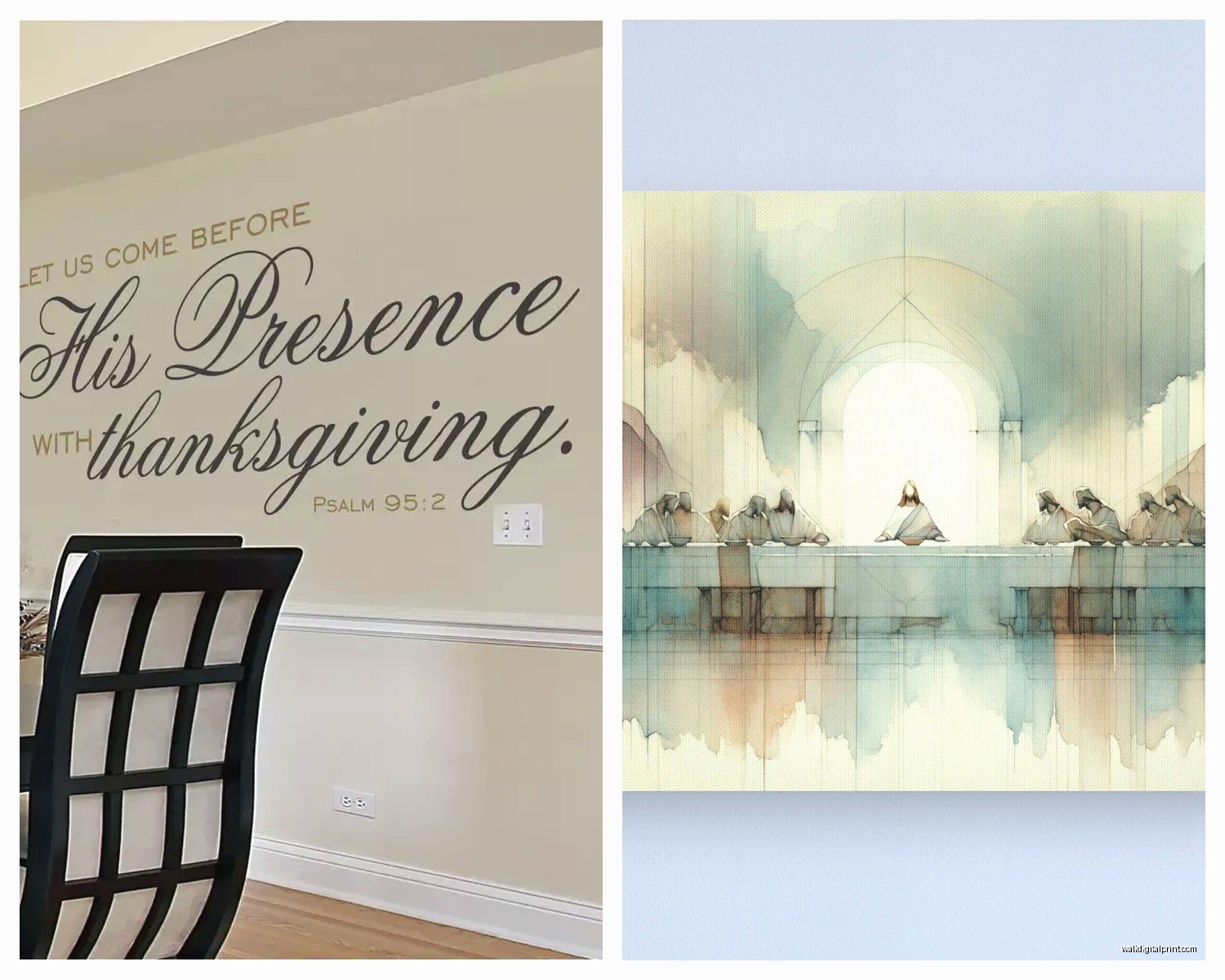
- Scripture typography – clean, modern fonts with verses about gathering, bread, gratitude
- Vintage-style prints that look like old hymnal pages or biblical manuscripts
- Abstract pieces with subtle Christian symbolism (fish, cross, olive branches)
- Farmhouse-style wooden signs with blessings or prayers
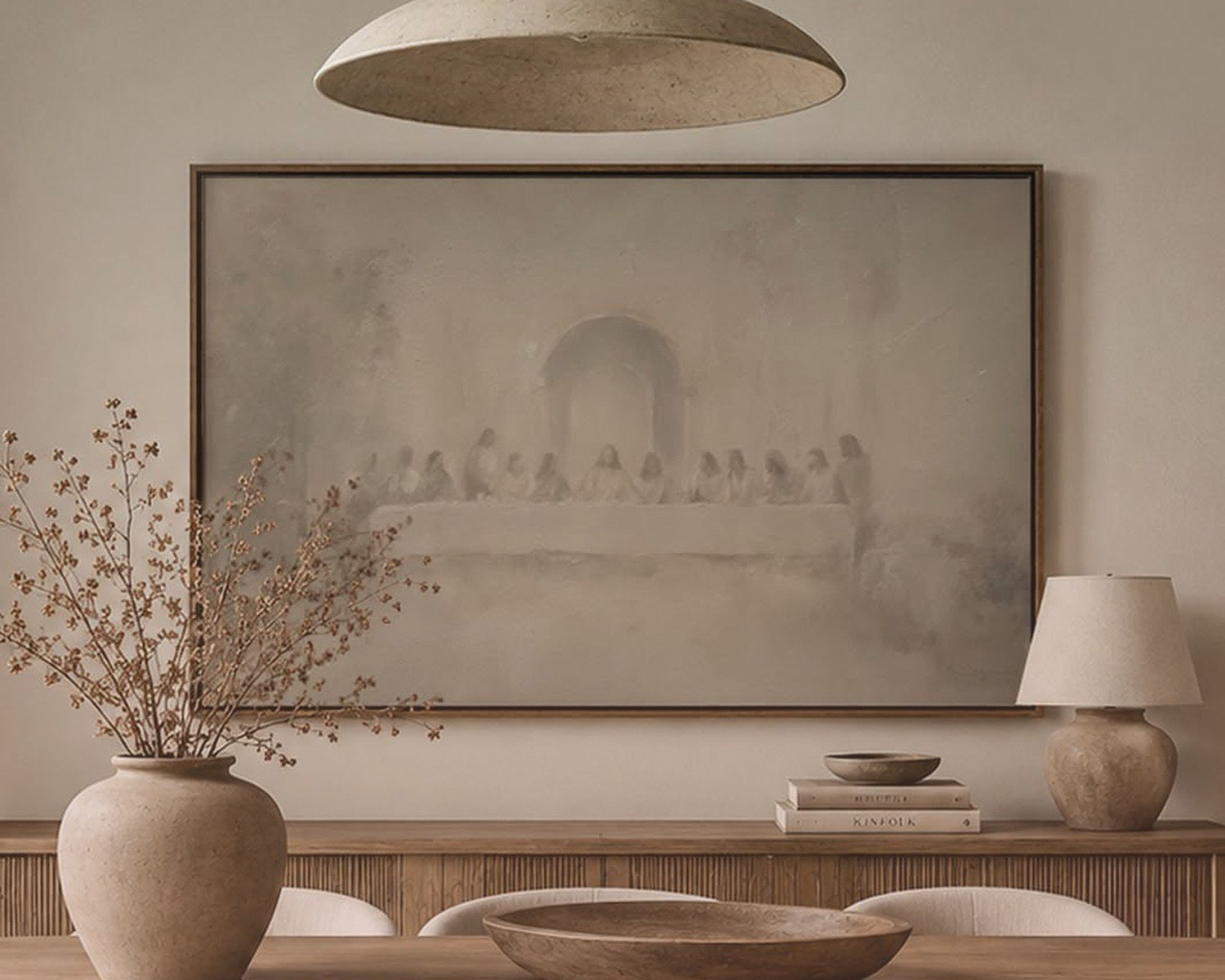
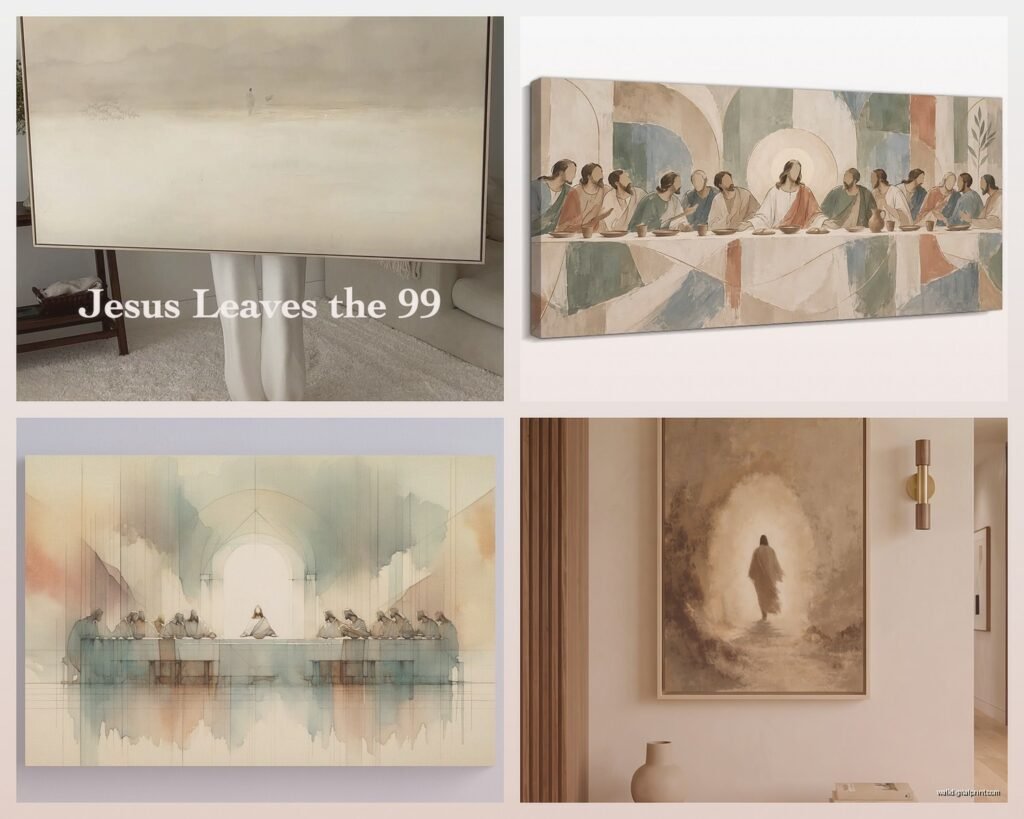
- Fine art reproductions of classic religious paintings
The typography ones are honestly my go-to recommendation because they work with literally any decor style. You can find minimalist versions that are just black text on white, or you can go for something with more visual interest. Verses about breaking bread, fellowship, thanksgiving – those all make sense for a dining space without being too preachy if you’re having non-Christian guests over.
Specific Verses That Don’t Feel Forced
Okay so this is gonna sound weird but some verses just photograph better than others for wall art. I keep a running list on my phone:
- “Give us this day our daily bread” – short, recognizable, fits the space
- “Taste and see that the Lord is good” – Psalm 34:8, literally about tasting
- “Better is a dinner of herbs where love is” – Proverbs 15:17, one of my favorites
- “As for me and my house, we will serve the Lord” – classic but works
- “Gather at the table” – not a direct quote but based on communion imagery
Wait I forgot to mention – avoid anything too long. If you need to squint to read it from across the room, it’s not working. Maximum like 15 words or it becomes visual clutter.
Frame or No Frame Situation
This is where I see people waste money. Canvas prints don’t necessarily need frames if they’re gallery-wrapped (the image wraps around the edges). I actually prefer the frameless look for modern spaces because it’s cleaner. But if you’re going for farmhouse or traditional, a frame adds that finished look.
For frames, stick with:
- Black or walnut for modern/contemporary rooms
- Distressed white or natural wood for farmhouse
- Ornate gold or dark wood for traditional/formal
My dog just knocked over my coffee while I’m writing this but anyway – one thing I learned from a client who’s an actual framer is that you can buy inexpensive prints and then invest in a really nice custom frame. Makes a $25 print look like a $200 piece. The frame matters more than people think.
The Placement Thing Nobody Talks About
So you’ve got your art, now where does it actually go. Standard rule is 57 inches from the floor to the center of the artwork – that’s museum height. But in dining rooms I actually go slightly lower, like 54-56 inches, because people are sitting most of the time they’re in there. You want them to be able to enjoy it from a seated position.
If you’re hanging above a buffet or sideboard, leave 6-8 inches between the furniture and the bottom of the frame. Less than that feels cramped, more feels disconnected.
Oh and another thing – if you have a chandelier, make sure there’s visual balance. Your wall art shouldn’t compete with your light fixture. They should feel like they’re in conversation with each other, not fighting for attention.
The Gallery Wall Option
Okay so funny story, I was totally against gallery walls in dining rooms until I did one for a client in this tiny apartment. Sometimes a single large piece is too much for a small space, but a collection of smaller Christian prints actually works better.
If you’re gonna do a gallery wall:
- Keep it to 3-5 pieces maximum for a dining room
- Stick to one or two frame colors
- Mix sizes but keep a consistent style (all scripture, all vintage, etc.)
- Lay it out on the floor first and take a photo – saves so many nail holes
I use painter’s tape to map it out on the wall before committing. Sounds extra but it’s saved me so many times.
Color Coordination Without Being Matchy-Matchy
Your wall art should pull from colors already in the room but not match exactly – that’s the secret. If you have navy dining chairs, maybe your art has navy accents but isn’t entirely navy. If your space is neutral, you can go bold with the art or keep it monochromatic.
I’ve noticed that three-color maximum in the artwork itself keeps things cohesive. Like black, white, and one accent color. More than that and it starts competing with your table settings, centerpieces, all that stuff.
For Christian art specifically, earth tones work really well – olive greens, deep burgundy, gold, cream, charcoal. These colors feel both spiritual and sophisticated without being churchy.
Where to Actually Buy This Stuff
Real talk – Etsy is my number one source. You can find independent Christian artists who make modern, non-cheesy pieces. Search terms that work: “modern scripture print,” “minimalist Christian art,” “neutral Bible verse print.” I’ve probably spent like 10 hours total just browsing Etsy for client projects.
Society6 and Minted also have Christian artists, though you gotta dig through their collections. The nice thing about these sites is you can order the same design in different sizes and formats.
For physical pieces – Hobby Lobby obviously, but their stuff can be hit or miss. HomeGoods sometimes has surprisingly good Christian decor if you catch it at the right time. I found this gorgeous “Bless the Food Before Us” wooden sign there for $25 that looks way more expensive.
Oh wait, gotta mention – if you want something really unique, commission a piece from a local artist or calligrapher. I did this for a client who wanted her grandmother’s favorite hymn verse in custom lettering. Cost more (around $200) but it’s one of a kind.
The Lighting Component
This is something I learned the hard way – your beautiful Christian wall art means nothing if it’s in a dark corner. If your dining room lighting is centered over the table, consider adding picture lights or making sure there’s enough ambient light to actually see the piece.
Battery-operated picture lights are like $30 on Amazon and they’re a game changer. No wiring, just stick them above your frame. Makes the art look intentional and expensive.
Mixing Christian Art With Other Decor
You don’t have to make your entire dining room a Christian showcase. Actually it works better when you don’t. I usually do one statement Christian piece and then mix in neutral artwork, mirrors, or other decor elements. Like maybe your main wall has a scripture print, but the opposite wall has a vintage botanical print or something. Keeps it from feeling like a church fellowship hall.
Plants, candles, regular table decor – all that stuff should still be there. The Christian art is part of the story, not the whole story.
Seasonal Rotation
Okay this might sound extra but hear me out – having 2-3 different pieces you rotate seasonally keeps your dining room from getting stale. A Thanksgiving/gratitude focused piece for fall, maybe something about light or joy for Christmas, a resurrection theme for spring. I store the off-season pieces in those flat storage bags under my bed.
You don’t have to do this, but if you’re someone who gets bored easily or likes refreshing your space, it’s worth having options.
The Budget Breakdown
Since you’re probably wondering what this actually costs:
Budget-friendly (under $50): Printable downloads from Etsy that you print at FedEx or Staples, then frame with a basic frame from Target or Ikea. Total cost usually $30-45.
Mid-range ($50-150): Ready-to-hang canvas prints or framed prints from online retailers. This is the sweet spot for quality without breaking the bank.
Investment pieces ($150+): Original artwork, custom calligraphy, large-scale pieces, or really high-quality framed prints with museum glass.
I usually tell clients to invest in the dining room art if they’re gonna invest anywhere because it’s a space where you gather regularly. Makes more sense than spending big money on a guest bathroom nobody uses.
What Doesn’t Work
Let me save you from mistakes I’ve seen:
- Those word collages with like 47 different phrases – too busy for a dining space
- Anything glittery or with fake jewels – feels craft project-y
- Super literal religious imagery (like detailed crucifixion scenes) – too intense for eating
- Pieces with too many fonts mixing together – visual chaos
- Anything that clashes with your chandelier style
Also gonna say this – if a piece makes you feel uncomfortable or doesn’t spark joy or whatever, don’t hang it just because it’s Christian. Your space should feel peaceful and welcoming, not obligatory.
The whole point is creating a space where faith feels natural and integrated into daily life, not performative. That’s why I love dining room Christian art – it’s there during regular family dinners, not just when you’re trying to impress people.
Anyway that’s basically everything I’ve learned from decorating probably 30+ dining rooms at this point. The main thing is just start with one piece you actually love and build from there. Don’t overthink it too much.