Wall Art Guide, Wall Art Tutoriels
Koi Fish Wall Art: Japanese Pond Ornamental Carp
Jul
So I’ve been obsessing over koi fish wall art lately and honestly it started because a client wanted to do this whole zen garden vibe in their living room but didn’t want it to feel like a takeout menu, you know? And I went down this massive rabbit hole about how to actually pull off Japanese koi art without making your space look like a sushi restaurant waiting area.
Understanding the Different Styles You’ll Actually See
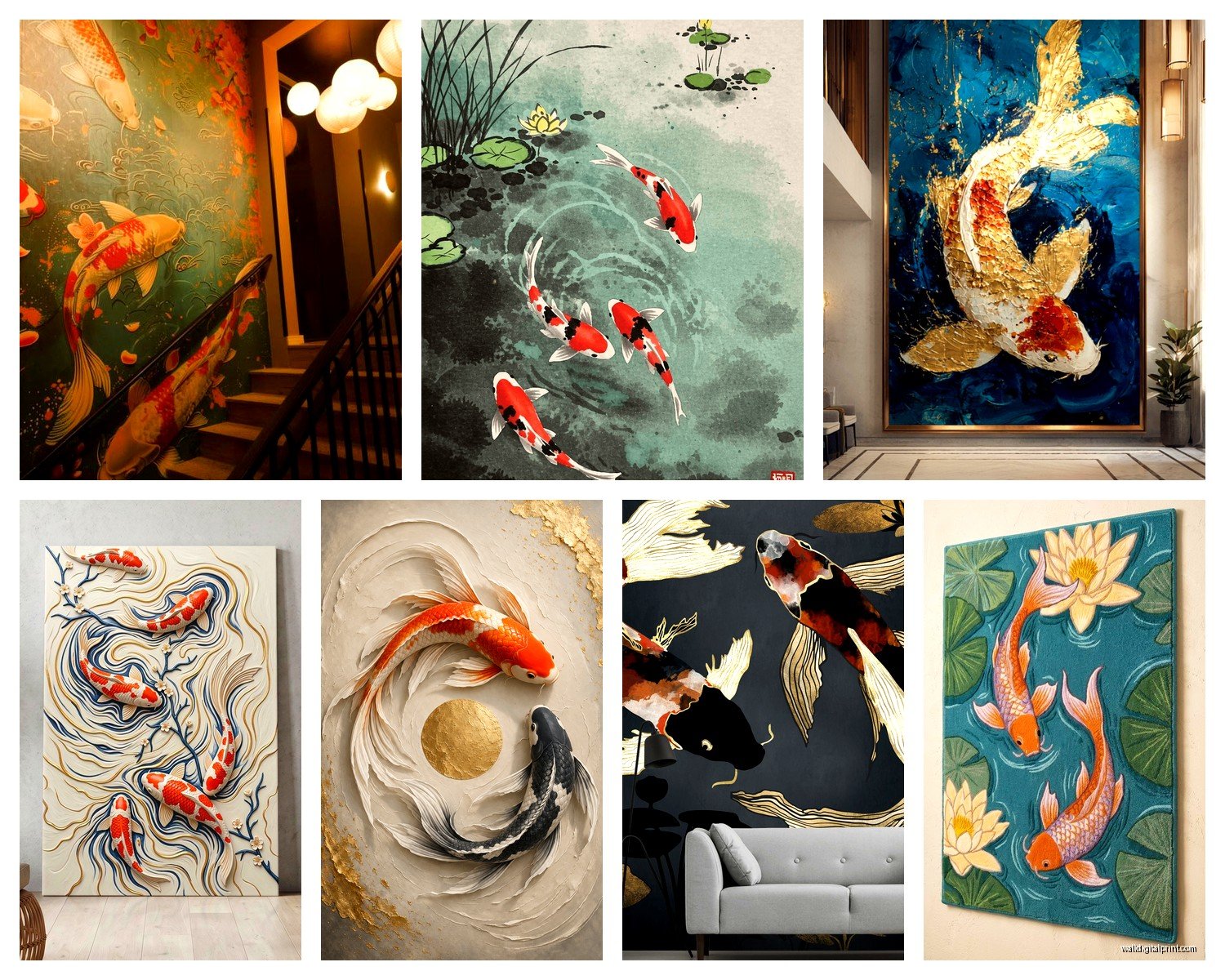
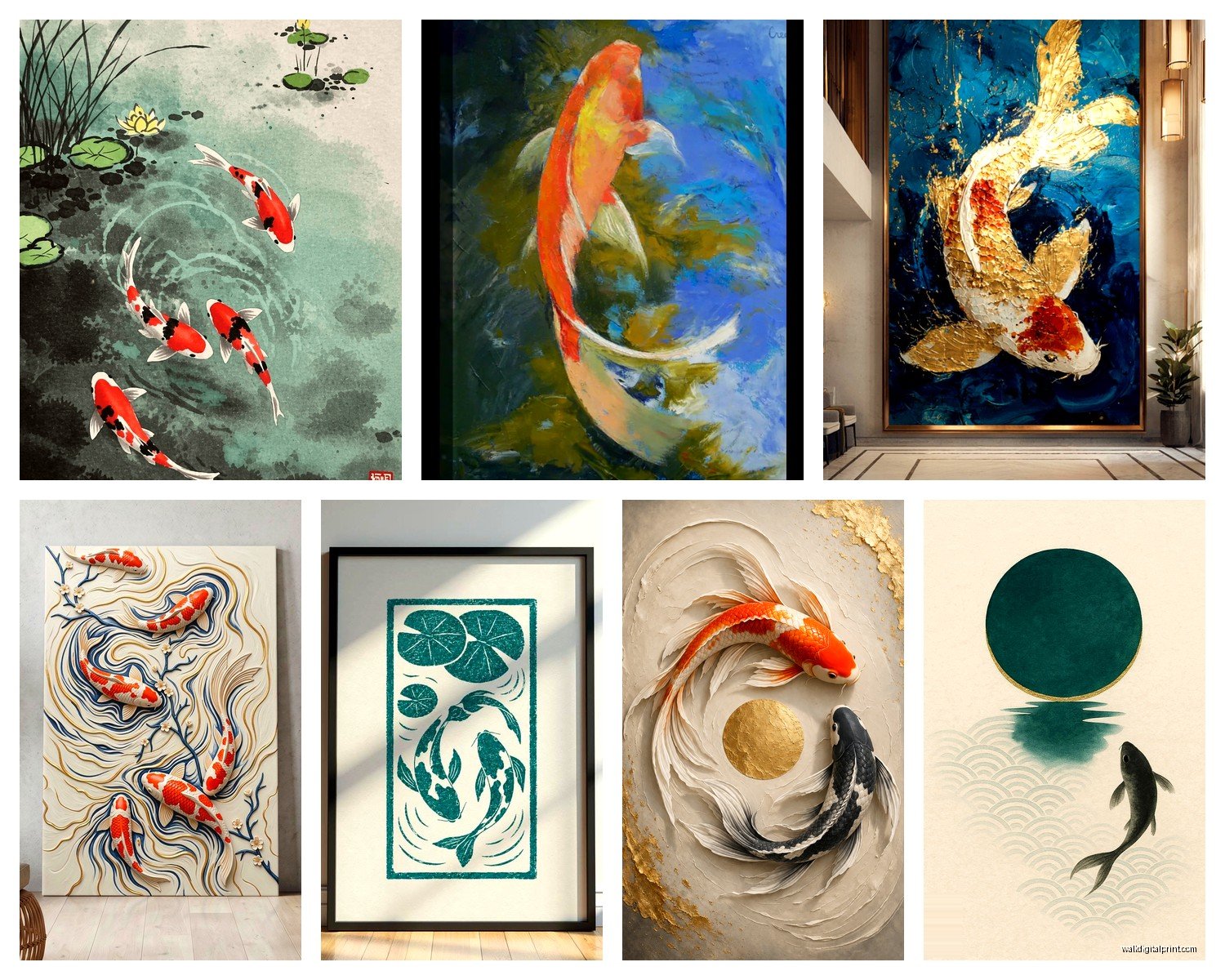
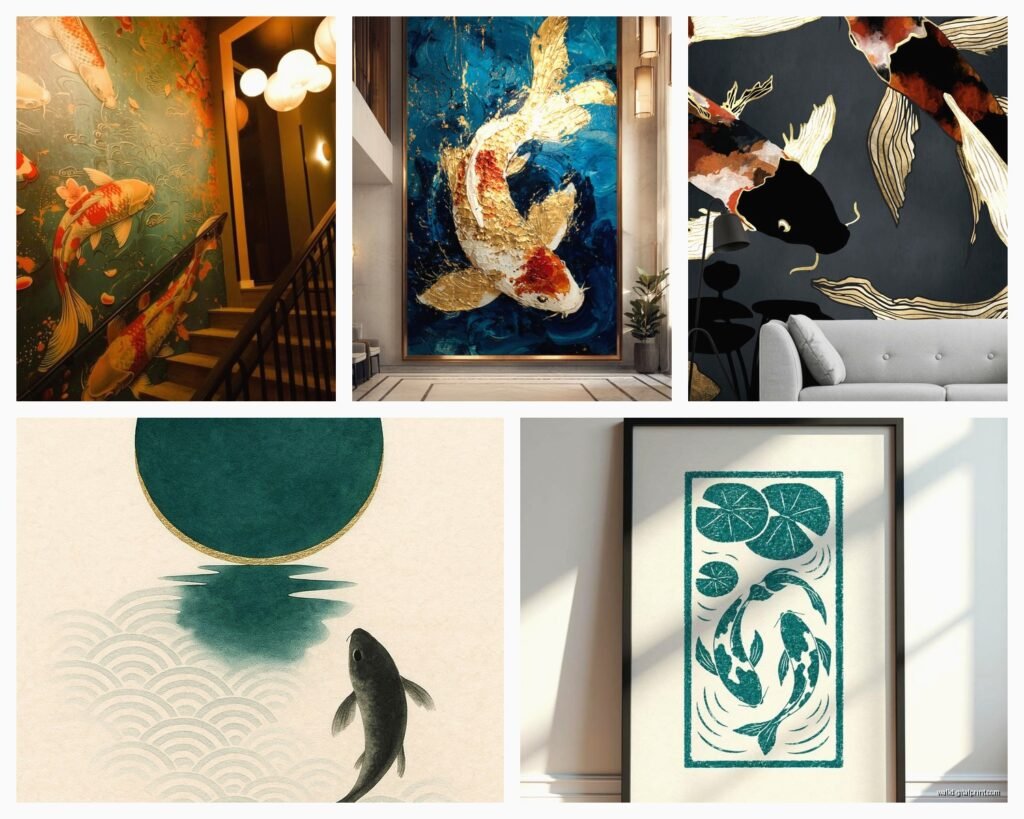
Okay so first thing, koi art isn’t just one thing. There’s traditional Japanese woodblock print style (ukiyo-e if you wanna get fancy about it), watercolor paintings, modern abstract interpretations, metal sculptures, and then like…those weird 3D resin things that are kinda cool but also kinda tacky depending on execution.
The traditional woodblock style is probably what most people think of first. It’s got those bold outlines, flat color planes, and usually shows the koi from above swimming in circles. I have this one print in my office that’s from the 1800s style reproduction and it just never gets old. The thing about these is they work in literally any room because they’re graphic enough to hold their own but not so loud they dominate everything.
Watercolor koi art is where things get tricky though. I’ve seen some gorgeous ones that have this flowing, almost ethereal quality with the colors bleeding into each other. But I’ve also seen some that look like someone’s first attempt at painting and they’re charging $400 for it on Etsy. The key difference is usually in the details of the scales and how the water is rendered, if there’s water shown at all.
Size and Placement Because That’s Where Everyone Messes Up
This is gonna sound weird but I literally made a sizing mistake last month that I’m still annoyed about. Got this beautiful three-panel koi set for above a console table and didn’t account for the frame width, so what should’ve been this elegant triptych ended up looking cramped. Measure twice, order once, whatever.
For a standard living room wall, you’re looking at:
- Single large piece: 36×48 inches or bigger for a statement wall
- Triptych sets: each panel around 20×30 inches works well
- Gallery wall situations: mix 8×10, 11×14, and 16×20 sizes
- Above furniture: should be roughly 2/3 the width of whatever’s below it
The viewing distance matters too. Koi art has all these intricate details in the scales and water ripples, so if you hang it where people will only see it from across the room, you’re losing half the impact. I usually suggest placing detailed pieces in spaces where you’ll actually stop and look, not just walk past.
Color Schemes That Actually Work in Real Homes
Okay so funny story, my dog knocked over my coffee while I was researching this and I had to choose between saving my laptop or this vintage koi book I borrowed from the library…chose the laptop, RIP book, had to pay the fine. But anyway.
Traditional koi come in these specific colorations and understanding them helps you pick art that’ll work with your existing palette:
Kohaku koi are white with red patterns, super classic, and they pair beautifully with minimalist spaces that have white or cream walls. The red pops without being aggressive.
Sanke koi add black to that white and red combo, giving you more visual weight. These work better in spaces that already have darker accent pieces.
Showa koi are predominantly black with red and white, and honestly these are my favorite for modern interiors because they have this dramatic quality that feels contemporary even when rendered in traditional style.
The fully gold/yellow koi (Yamabuki Ogon) are harder to work with because yellow can read as dated really quickly, but in the right space with navy blues or charcoal grays, they’re stunning.
Materials and Mediums Worth Your Money
I’ve tested a bunch of different materials at this point and here’s what actually holds up:
Canvas prints are the most common and they’re fine, honestly. Gallery-wrapped canvas where the image continues around the edges looks way more expensive than it is. Just make sure you’re getting giclée printing not that cheap inkjet stuff that’ll fade in a year. Ask about UV coating.
Metal prints have this really cool luminous quality that makes the koi scales look almost iridescent. I used aluminum prints in a bathroom once and the way they handle moisture without warping is *chef’s kiss*. They’re pricier but worth it for humid environments.
Wood panel prints give you this organic texture that feels very aligned with the whole Japanese aesthetic philosophy. The wood grain shows through slightly and it adds warmth. My client’s office has a massive koi on birch wood and it’s probably my favorite installation I’ve done.
Actual paintings on canvas or paper, if you can afford original art, there’s nothing like it. But be realistic about your budget. A good original koi painting from an established artist starts around $800 and goes up from there.
Wait I forgot to mention framing, which is actually super important. Traditional Japanese art often uses simple black or natural wood frames with wide mats. The mat creates breathing room around the image which is very much part of the aesthetic. Modern pieces can go frameless but you gotta be careful that doesn’t make them look cheap.
Mixing Koi Art with Other Decor Styles
This is where people get nervous but honestly koi art is more versatile than you’d think. I’ve incorporated it into:
Modern minimalist spaces: Go for graphic, high-contrast pieces. Black and white koi photography or simplified illustrations work better than busy traditional prints. Keep the rest of the wall empty, let it breathe.
Bohemian/eclectic rooms: This is where you can go wild with colorful, painterly koi art. Mix it with plants, textiles, other nature-inspired pieces. The organic shapes of koi swimming complement the layered boho aesthetic.
Coastal themes: Koi art brings in that water element without being literal about shells and anchors. Pair it with blues, whites, natural textures. I did a beach house where we used soft watercolor koi pieces and it felt cohesive with the ocean vibe without being matchy-matchy.
Mid-century modern: Clean-lined koi prints in teak or walnut frames fit perfectly. The period-appropriate color palettes of oranges, teals, and creams work naturally with koi colorations.
The Symbolism Stuff People Ask About
Look, you don’t have to get deep into the symbolism but people do ask, so here’s the quick version. Koi represent perseverance, strength, and good fortune in Japanese culture. There’s this whole legend about koi swimming upstream and becoming dragons which is why you’ll sometimes see them paired with waterfall imagery.
Different colors supposedly mean different things like red for love, black for overcoming adversity, blue for tranquility, but honestly unless you’re super into feng shui, just pick colors you like. Your home should feel good to you, not stress you out about whether you hung the correct symbolic fish in the wealth corner or whatever.
Where to Actually Buy This Stuff
I’ve ordered from all over and here’s what I’ve learned:
Etsy is hit or miss. You can find incredible independent artists doing original work, but you can also find dropshipped garbage from AliExpress marked up 300%. Check reviews, look at shop policies, message the seller with questions. If they don’t respond or give vague answers, skip it.
Society6 and Redbubble are good for affordable prints. Artists upload designs and you can get them on various products. Quality is consistent, prices are reasonable, but it’s all print-on-demand so nothing feels super special or unique.
Local art fairs and galleries if you have any Asian art galleries near you, that’s honestly the best way to find quality koi art. You can see it in person, talk to artists, and you’re supporting actual working artists instead of corporations.
Vintage and antique shops sometimes have amazing Japanese woodblock prints or vintage koi paintings. I found an incredible silk painting at an estate sale for $45 that probably should’ve cost ten times that. Estate sales in general are underrated for art hunting.
Installation Tips Nobody Tells You
Okay so you’ve got your art, now what. First off, hanging height matters. The center of the artwork should be at eye level, which is usually around 57-60 inches from the floor. But if you’re hanging it above furniture, different rules apply.
For pieces above a sofa or console, leave 6-8 inches between the furniture top and the bottom of the frame. Any closer and it looks cramped, any farther and it looks like it’s floating away into space.
If you’re doing a multi-panel koi piece, the spacing between panels should be 2-3 inches. I use these little spacer tricks with painter’s tape to mark out positions before hammering anything. Measure from the center point outward to keep things symmetrical.
Lighting is huge and people totally overlook this. Koi art has all these subtle color gradations and scale details that disappear in bad lighting. Picture lights are classic but they can create glare. I prefer adjustable track lighting or even well-placed floor lamps that can angle upward. Natural light is gorgeous but watch for direct sun which will fade prints over time.
Common Mistakes I See People Make
Going too literal with the theme. Like, you don’t need koi art AND koi throw pillows AND a koi area rug. Pick your statement piece and let other elements be more subtle.
Choosing overly busy backgrounds. Some koi art has these super detailed pond scenes with rocks and plants and other fish and it’s just…a lot. Unless you have a huge wall and minimal furniture, simpler compositions work better.
Ignoring scale proportions. A tiny 8×10 koi print on a massive empty wall looks sad and lost. A huge 60-inch canvas in a small bathroom feels oppressive. Match the art size to the wall and room size.
Mixing too many different artistic styles of koi in one space. A traditional woodblock print doesn’t really vibe with a modern geometric koi abstraction. Pick a style direction and stick with it, or at least keep them in different rooms.
DIY and Budget-Friendly Options
If you’re crafty or just broke (no judgment, art is expensive), there are ways to get the koi aesthetic without dropping hundreds of dollars.
Print your own from high-res public domain images. Sites like the Met Museum and Rijksmuseum have free downloadable images of historical Japanese art including tons of koi prints. Download, take to a print shop, have them print on nice paper, frame it yourself. Total cost maybe $40-60.
Paint your own if you’re even slightly artistic. Koi are forgiving subjects because they’re supposed to look fluid and organic. Watercolors are cheap and you can watch YouTube tutorials. I’m not saying it’ll look gallery-worthy but it’ll be unique and personal.
Fabric wall hangings are another option. You can find beautiful Japanese koi fabric by the yard and stretch it over a frame or hang it tapestry-style. Adds texture and color without the cost of commissioned art.
oh and another thing, temporary options like removable wallpaper or wall decals work great for renters. There are some really beautiful koi-themed removable wallpapers that you can do as an accent wall.
Caring for Your Koi Art
This is boring but important I guess. Keep it out of direct sunlight to prevent fading. Dust frames regularly with a soft cloth. If you have actual canvas paintings, don’t use cleaning products on them, just gentle dusting.
For glass-covered prints, you can use regular glass cleaner but spray it on your cloth, not directly on the glass, so it doesn’t seep behind and damage the print.
Metal and wood prints are pretty low-maintenance. Just wipe them down occasionally. The finish protects them from most environmental stuff.
If you’ve invested in valuable pieces, consider museum glass which has UV protection and is anti-reflective. It’s stupid expensive but if you’ve got a $2000 original painting, it’s worth protecting.
Anyway, that’s pretty much everything I’ve figured out through trial and error and client projects. The main thing is just to pick pieces you actually like looking at, not what you think you’re “supposed” to have. Koi art can be dramatic or peaceful, traditional or modern, colorful or monochromatic…there’s no wrong answer as long as it makes your space feel more like you.