Wall Art Guide, Wall Art Tutoriels
Large Buddha Wall Art: Oversized Zen Meditation Designs
Jul
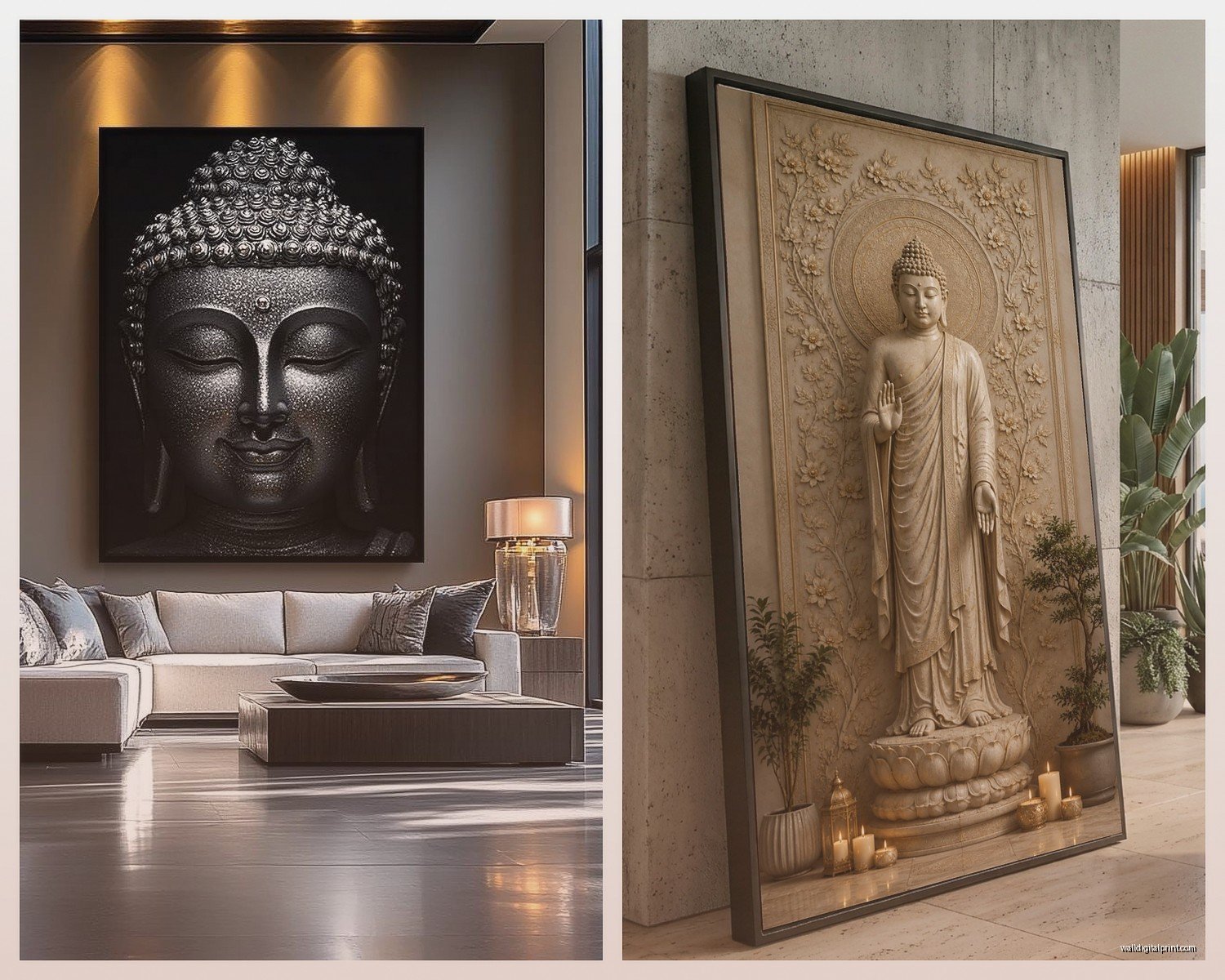
So I’ve been obsessing over large Buddha wall art lately because my sister called me last month asking how to make her new meditation corner not look like a sad afterthought, and honestly? The oversized pieces completely changed everything. Not the tiny 12×16 prints everyone defaults to – I mean the massive statement pieces that actually anchor a space.
Why Size Actually Matters Here
Okay so here’s the thing about Buddha art specifically. When you go small, it reads as generic hotel decor. But when you commit to something 40 inches or larger, suddenly it becomes this intentional focal point that grounds the entire room. I tested this in my own living room last spring – had a 24×36 Buddha print that just disappeared on my wall, swapped it for a 60×40 three-panel piece and people literally stopped mid-conversation to look at it.
The scale tricks your brain into slowing down, which is kinda the whole point of meditation imagery anyway. My friend Jess has this enormous 72-inch canvas in her yoga studio and she said client feedback completely shifted after she installed it – people mentioned feeling calmer before they even started their practice.
Canvas vs Metal vs Wood Prints
I’ve worked with all three materials and they each do something different. Canvas is what most people default to and honestly it works great for softer, more painterly Buddha designs. The texture adds depth and it’s lightweight enough that you won’t destroy your walls hanging it. Got one from a boutique supplier for a client’s bedroom and the matte finish kept it from competing with natural light.
Metal prints though – okay this is gonna sound weird but they’re incredible for minimalist spaces. The Buddha image gets printed directly onto aluminum and the slight sheen makes it feel contemporary instead of overly spiritual. I have one in my home office that’s 48×32 and when afternoon light hits it… chef’s kiss. Only downside is they’re heavy as hell. Needed actual wall anchors rated for like 50 pounds.
Wood prints give you that organic texture which works perfectly if you’re going for that natural zen aesthetic. The grain shows through the image slightly and it adds warmth. Used one in a client’s cabin and it felt way more appropriate than canvas would’ve been. Just make sure the wood is sealed properly – learned that the hard way when moisture got into one and it warped slightly.
Color Palettes That Actually Work
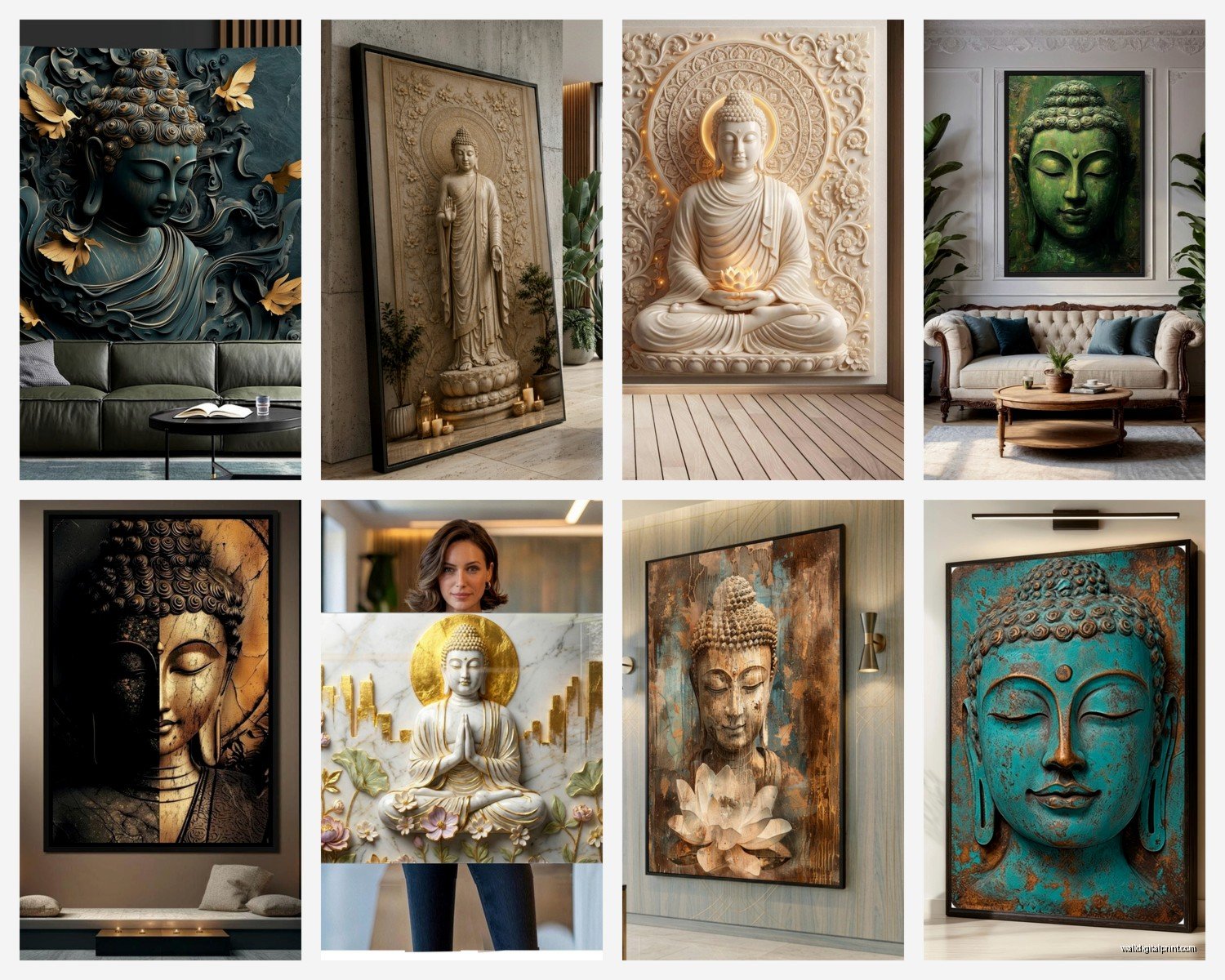
Everyone thinks Buddha art has to be gold and red but that’s honestly limiting. The monochromatic pieces – blacks, whites, grays – are ridiculously versatile. I put a huge black and white Buddha face in a client’s modern farmhouse living room and it somehow worked with both her beige couch and her industrial coffee table.
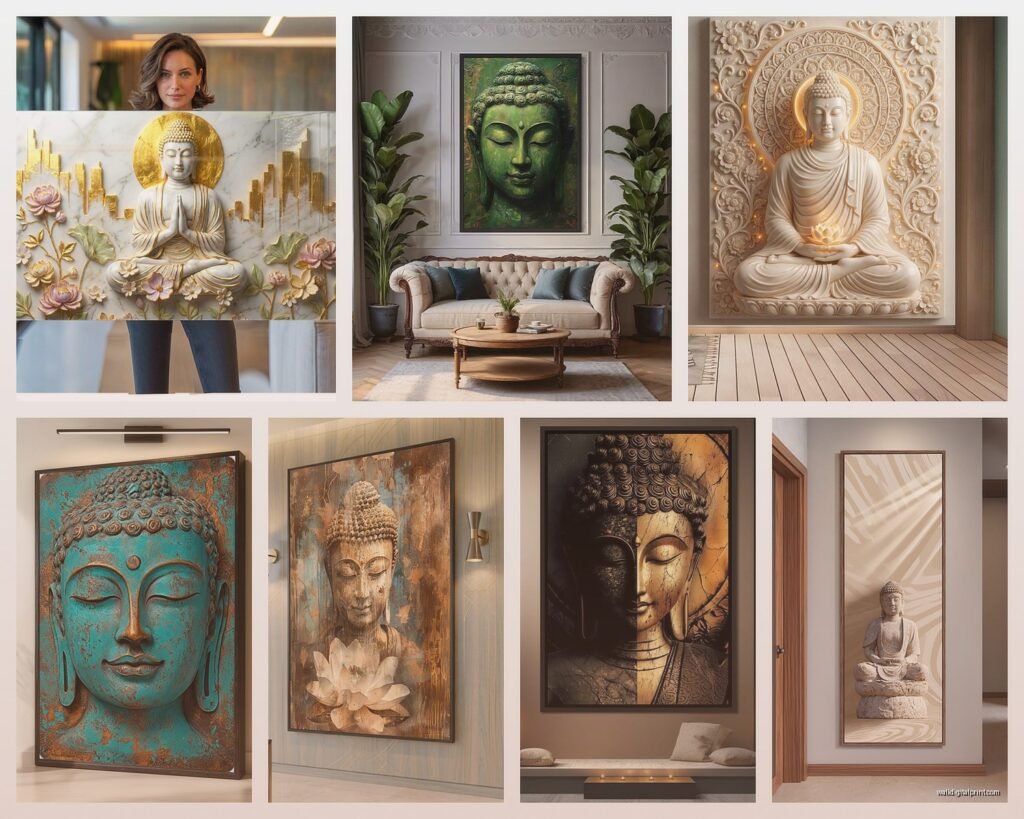
Teal and copper combinations have been having a moment. There’s this oversized piece I keep seeing with a turquoise background and copper Buddha silhouette that looks expensive even when it’s not. Works especially well in spaces with warm wood tones.
Oh and another thing – the full gold leaf look is tricky at large scale. It can read as very Las Vegas Buddha if you’re not careful. But if you have the right room – high ceilings, lots of natural materials, maybe some plants – it becomes this luxe focal point. Used one in a client’s entryway and visitors literally asked if it was from a temple.
Sepia and Earth Tones
My cat knocked over my coffee while I was researching this but anyway – sepia tones are super underrated for Buddha art. Browns, tans, warm grays. They create this aged, timeless quality that works in literally any design style. I’ve successfully used sepia Buddha pieces in everything from bohemian spaces to corporate offices.
The earth tone palettes (terracotta, sage, cream) are having their moment right now too. They play nicely with the whole biophilic design trend. If your space has lots of plants, natural fibers, raw wood – go this direction.
Composition Styles You’ll See Everywhere
The straight-on Buddha face is classic but you gotta be careful with sizing. Too large and it can feel like you’re being stared at constantly. I learned this when a client called me saying she felt “judged by her wall” which made me laugh but also… fair point. If you’re going huge with a face composition, slightly angled or profile views feel less intense.
Multi-panel sets (triptychs) are my secret weapon for really large walls. Three panels that span 80+ inches total creates movement without overwhelming. Plus you can play with spacing – I sometimes do uneven gaps between panels for a more contemporary look. Wait I forgot to mention – these work amazing above sofas or beds where you need horizontal coverage.
Silhouettes and Meditation Poses
The seated meditation silhouettes are probably the most versatile option for oversized pieces. They read more as abstract art than religious imagery, which matters if you’re decorating a shared space or professional environment. I used a 5-foot tall meditation pose silhouette in a corporate wellness room and nobody batted an eye.
Full-body standing Buddha sculptures as wall art – okay so these are trickier. They need really high ceilings to work properly. Tried one in a standard 8-foot ceiling room and it felt cramped. But in a loft or great room? Stunning.
Lotus position with mandala backgrounds is having this huge surge right now. The geometric patterns behind the Buddha figure add visual interest at large scale. Just watch out for ones that are too busy – from across the room they can look muddy.
Where to Actually Put These Things
Everyone defaults to the meditation corner but honestly that’s thinking too small. I’ve put oversized Buddha art in living rooms, bedrooms, home offices, even dining rooms. The key is treating it like any other large-scale art piece – it needs breathing room.
Behind the bed is money. Like, center it above your headboard and let it extend wider than the bed frame. Creates this hotel suite vibe but calmer. My sister did this and said her sleep improved which might be placebo but who cares if it works.
Living Room Focal Points
Above the sofa is obvious but effective. Standard rule – your art should be about two-thirds to three-quarters the width of your furniture. So if you have an 84-inch sofa, you’re looking at 56-65 inches of art. I usually go slightly larger with Buddha pieces because the subject matter can handle the scale.
This is gonna sound weird but hallways are incredibly underutilized for oversized Buddha art. Long narrow walls are perfect for tall vertical pieces. I did a 24×72 vertical Buddha canvas in a client’s hallway and it completely transformed what was basically dead space into this gallery moment.
Opposite your desk in a home office – game changer. You look up from your screen and there’s this calm presence. Way better than staring at a blank wall during Zoom calls. Mine is directly in my background and I’ve had people comment on it during meetings.
Practical Hanging Tips Nobody Tells You
Okay so this is important – anything over 30 pounds needs actual wall anchors. I don’t care if you think your nail will hold it, it won’t. Get the heavy-duty picture hangers rated for at least 1.5x your art’s weight. Learned this when a 40-pound metal print slowly pulled out of the wall over three months and left a huge hole.
For multi-panel pieces, make a paper template first. Seriously. Tape together newspaper or kraft paper in the exact dimensions, hang it with painters tape, live with it for a day. So much easier than putting holes in your wall and realizing it’s too high/low/whatever.
Height Guidelines
Standard gallery height is 57-60 inches to the center of the artwork but with oversized pieces I go lower, especially in living spaces. You’re usually viewing them while seated, so center should be around 54-56 inches. Measure from the floor to center, not to the top or bottom edge.
Oh and another thing – if you’re hanging above furniture, leave 6-8 inches between the furniture top and the art bottom. More than that and they look disconnected, less and it feels cramped. This is like the one hard rule I actually follow consistently.
Mixing Buddha Art with Other Decor
You don’t need to commit to full zen temple vibes just because you have Buddha art. I’ve mixed large Buddha pieces with abstract art, photography, even vintage posters. The key is keeping your frames or canvas styles consistent – all matching wood frames, or all floating canvas, or all metal prints.
Plants are your friend here. Like, aggressively use plants around Buddha art. The organic elements balance any potential stuffiness. I’m watching this documentary about interior forests right now and it’s making me want to add even more plants but anyway – fiddle leaf figs, monstera, even simple pothos vines make Buddha art feel more integrated.
Furniture and Textiles
Natural materials work best – wood, stone, linen, cotton, jute. But honestly I’ve seen oversized Buddha art work beautifully with velvet sofas and marble coffee tables too. It’s more about intentionality than following strict rules.
Metallics can either elevate or cheapen the look depending on execution. Brass and copper accents? Yes. Shiny chrome? Usually no. Gold frames on gold Buddha art? Risky unless you commit hard to the luxe aesthetic.
Lighting Makes or Breaks It
This is something I see people mess up constantly. You need proper lighting on oversized Buddha art or it just becomes a dark blob on your wall. Picture lights are traditional but I prefer track lighting or adjustable can lights that you can aim at the piece.
Backlighting is super dramatic with the right piece. LED strips behind a metal or acrylic Buddha print create this floating effect. Did this in my friend’s meditation room and the ambiance is unreal. Just use warm white LEDs not cool white – learned that mistake quickly.
Natural light is tricky. Direct sunlight will fade any print over time, so avoid walls that get harsh afternoon sun unless you’re okay replacing the art eventually. Indirect natural light though? Perfect. North-facing walls are ideal.
Budget Reality Check
You can definitely find decent oversized Buddha canvas prints for $150-300 if you shop around. Sites like Society6, Etsy, and even Amazon have options. Quality varies wildly though – read reviews about shipping damage because large canvases are prone to corner dents.
Mid-range is $300-800 and that’s where you get better materials, proper stretching, sometimes hand-embellished details. This is my sweet spot for client projects honestly. Good enough quality to last but not so precious you’re terrified of it.
High-end custom pieces start around $1000 and go up from there. Had a client commission a 6-foot mixed media Buddha piece for $3500 and worth every penny for her space. But that’s obviously not necessary for most people.
Where I Actually Shop
Etsy has tons of independent artists doing really interesting Buddha interpretations. You can often request custom sizes. Just vet the seller reviews carefully and ask about their return policy before ordering something massive.
Local art fairs and Asian import stores sometimes have amazing oversized pieces for way less than you’d expect. I found a 5-foot wooden Buddha panel at an estate sale for $200 that would’ve been $800+ retail.
Oh wait – don’t sleep on Wayfair and Overstock for this stuff. Their selection is hit or miss but when you find a good piece the pricing is usually competitive and shipping is easier than dealing with individual sellers.
Common Mistakes to Avoid
Going too matchy-matchy with your whole room. Just because you have Buddha art doesn’t mean everything needs to be zen-themed. Actually the opposite – let the art be the statement and keep everything else relatively neutral.
Hanging it too high is probably the most common error I see. People treat it like a painting in a museum instead of considering actual sight lines in their space. Lower is almost always better.
Ignoring scale relationships – your Buddha art needs to relate proportionally to your furniture and ceiling height. A 30×40 piece on a massive wall looks sad. A 60×80 piece in a tiny room feels claustrophobic. There’s no exact formula but use your gut… if it feels wrong when you mock it up, it probably is.
Anyway I gotta stop here because this is already way longer than I planned but hopefully this helps. The main thing is just commit to the scale – if you’re gonna do Buddha wall art, go big or honestly just do something else.