Wall Art Guide, Wall Art Tutoriels
Medallion Wall Art: Circular Ornamental Decorative Designs
Jul
So I’ve been obsessing over medallion wall art lately and honestly it started because I hung one in my hallway three months ago and now I can’t stop seeing places where they work. Like, they’re these circular ornamental pieces that add this really specific kind of visual interest that’s hard to get with regular rectangular art.
The thing about medallions is they break up the monotony of straight lines everywhere. Your walls are rectangles, your furniture is mostly rectangular, your windows… you get it. A circular piece creates this anchor point that your eye actually wants to rest on. I tested this theory in my own living room by swapping out a landscape print for a Moroccan-style medallion and the difference was wild. The room felt more intentional somehow.
What Actually Makes a Good Medallion Design
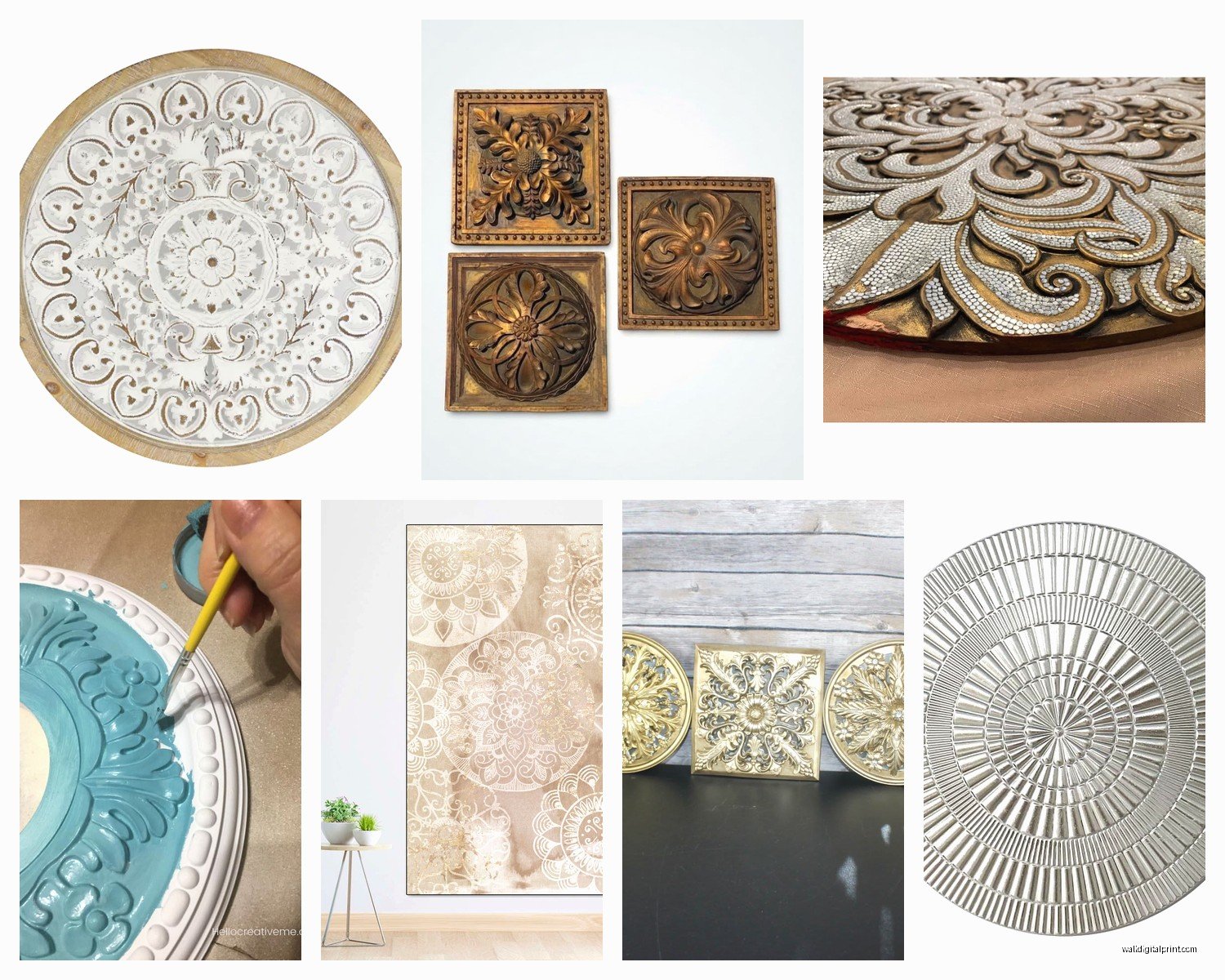
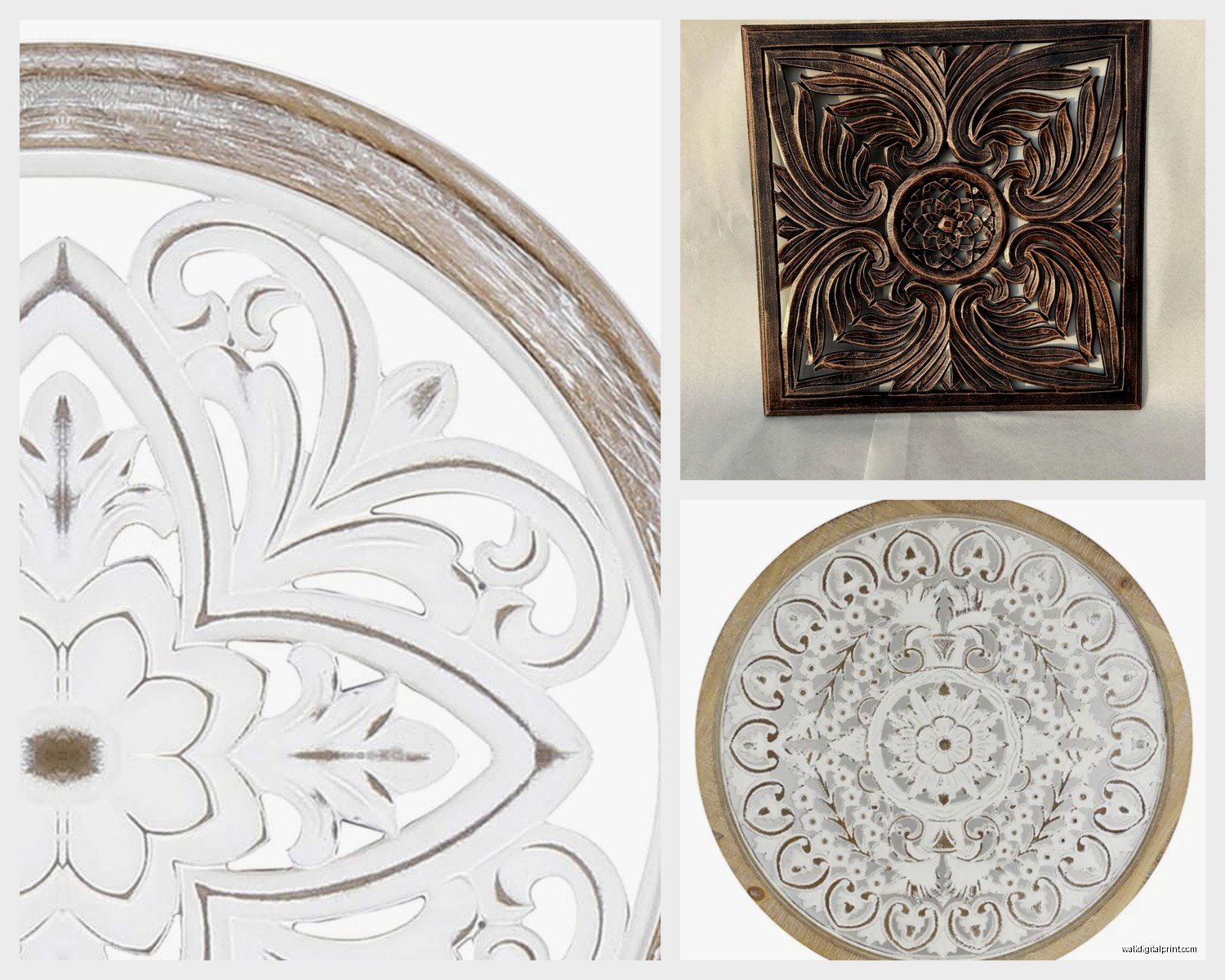
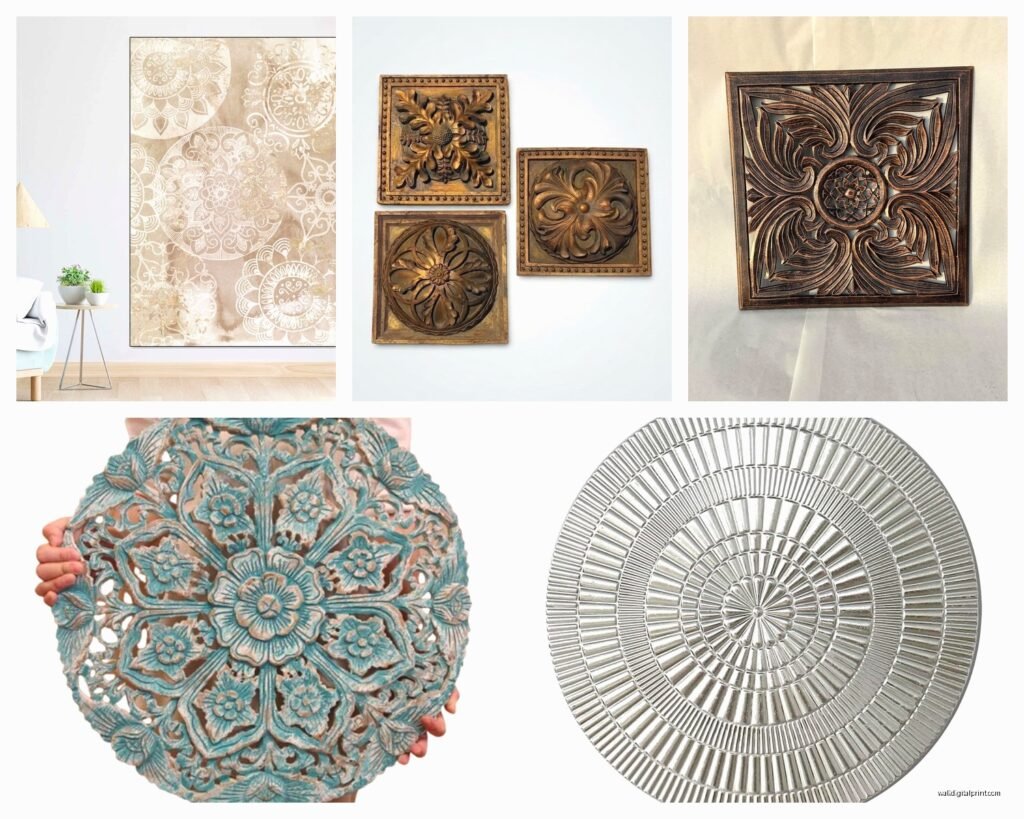
Okay so not all circular wall art counts as medallion art in my book. Real medallion pieces have this ornamental quality – like there’s pattern work, symmetry, maybe some geometric or floral elements radiating from the center. Think architectural rosettes, mandalas, Moroccan tile patterns, that sort of thing.
The best ones I’ve found have good contrast between the design and the background. If it’s all one tone, it reads flat from a distance and you lose that decorative punch. I learned this the hard way with a beige-on-beige piece that looked amazing in the store but completely disappeared on my client’s taupe wall.
Material matters more than I initially thought. Wood medallions give you texture and shadow play which is gorgeous but they’re heavy – you gotta make sure your wall can handle it. Metal ones are usually lighter and they catch light differently throughout the day. I have this iron medallion in my bedroom that looks completely different at 7am versus 8pm because of how the light hits it. Canvas or fabric ones are the lightest but sometimes they look a bit cheap unless you’re spending decent money.
Size and Placement That Actually Works
This is where everyone messes up including me the first time. A medallion that’s too small just looks like you didn’t commit to the idea. Too big and it overwhelms the space. The general rule I follow now is measure your wall space and aim for a medallion that’s about 2/3 the width of your furniture below it if you’re hanging it above something like a console or sofa.
For a standalone wall situation, I usually go bigger than feels comfortable at first. Like, uncomfortably big. A 36-inch medallion sounds massive until you actually get it on the wall and realize it’s just right. I have one client who insisted on a 24-inch piece for her big empty wall and we ended up returning it for the 40-inch version.
Height-wise, center it at eye level which is roughly 57-60 inches from the floor to the center of the piece. But honestly if it’s going above furniture, position it 6-8 inches above the furniture line. My cat knocked over a lamp while I was measuring this once and I just… anyway, those measurements work.
Style Combinations That Don’t Look Weird
Mixing medallion art with your existing decor is where it gets fun. Mediterranean and Moroccan medallions with their intricate geometric patterns work insanely well in bohemian spaces obviously, but also – and this surprised me – they look incredible in modern minimalist rooms. The contrast between the ornate circular design and clean lines creates this tension that’s really sophisticated.
I’ve used wooden carved medallions in farmhouse-style spaces and they fit right in with that rustic vibe. The texture plays nicely with shiplap and reclaimed wood. Metal medallions are super versatile – bronze or copper tones warm up industrial spaces, while silver or gold can go glam really fast.
One thing that’s gonna sound weird but works: pairing medallions with botanical prints. The circular shape echoes organic forms so if you’ve got some leafy prints happening, a medallion nearby creates this visual conversation. I did this in my dining room with a rattan medallion next to some pressed fern prints and everyone asks about it.
Color Coordination Without Overthinking It
You don’t need to match the medallion colors exactly to your room palette but you should pull at least one color from it. If your medallion has blue accents, echo that blue somewhere in the space – throw pillows, a vase, whatever. This ties it in so it doesn’t look random.
Neutral medallions in white, cream, natural wood, or black are the easiest to work with because they go with literally everything. I keep a natural wood one in my inventory that I move around my house depending on my mood and it works in every single room.
Metallic medallions add instant elegance but watch out for mixing metal tones. If you’ve got gold medallion art, try to keep other metallics in the room warm-toned too. Or just commit to the mix – I’ve seen silver medallions in rooms with brass accents and if you own it confidently enough, it works.
Arrangement Ideas Beyond Just One
Oh and another thing – you can absolutely do multiple medallions together. I created a gallery wall situation with three different sized medallions in my entryway and it’s become like, the thing people comment on. The trick is varying the sizes but keeping a similar style or color story.
Try a cluster of three medallions in different sizes arranged in a triangle formation. Or go symmetrical with two matching ones flanking a doorway or window. I saw this in a boutique hotel once and recreated it in a client’s bedroom – two 24-inch medallions on either side of the bed instead of traditional art. Really striking.
You can also mix medallions with other art shapes. A medallion surrounded by smaller rectangular pieces creates a focal point in a gallery wall. The circular shape becomes the anchor and everything else supports it. Just make sure the medallion is the biggest piece so it reads as the main event.
Installation Without Destroying Your Walls
Lightweight medallions under 5 pounds can usually hang on a regular nail or command strip depending on the surface. But here’s what I learned after one fell at 2am and scared me half to death – check the weight first and use appropriate hardware.
For wood or metal medallions over 10 pounds, you need to find a stud or use heavy-duty wall anchors. I use a stud finder now because spackling holes is annoying. Most medallions come with a keyhole hanger on the back or a wire. Keyhole hangers are easier to level in my opinion.
If your medallion doesn’t have a hanger, you can add a sawtooth hanger to lightweight ones or screw D-rings onto the back of heavier pieces. Hot glue works for adding a wire between D-rings if you don’t wanna deal with tools.
For really heavy carved wood medallions, I’ve used two hooks spaced apart to distribute weight. And honestly, sometimes I just lean larger ones on a mantel or shelf instead of hanging them. Less commitment, easier to rearrange.
Where to Actually Source Good Ones
I’ve bought medallion wall art from all over at this point. HomeGoods and TJ Maxx have surprisingly good options in the $30-60 range. The selection is random but when you find something good, grab it because it won’t be there next week.
Etsy is great for unique handmade pieces especially if you want carved wood or custom sizes. I got this incredible hand-carved teak medallion from a seller in Bali that’s probably my favorite piece of art I own. Took six weeks to arrive but worth it.
World Market has a decent Mediterranean and Moroccan selection. Target occasionally has trendy options but they tend to be on the smaller side. For high-end carved wood pieces, check out Pottery Barn or West Elm when they have sales – the regular prices are rough but 30% off makes them reasonable.
Local antique shops sometimes have vintage architectural medallions that are actual ceiling rosettes repurposed as wall art. These have crazy good detail and they’re one-of-a-kind. I found one at an estate sale once for $15 that would easily cost $200 new.
DIY Options If You’re Crafty
Wait I forgot to mention you can totally make your own if you’re into that. I’ve done this a few times when I couldn’t find the right size or style. The easiest method is getting a round wood piece from a craft store and using stencils with paint or wood stain to create patterns.
You can also use rope or jute cord glued in geometric patterns on a wooden circle base. Looks very coastal and textured. I made one while watching that show about the chess player – Queen’s Gambit – and it turned out better than expected considering I was distracted.
Another option is fabric wrapped around embroidery hoops in graduated sizes, then layered and glued together. Add some trim or decorative elements and you’ve got a soft medallion piece. Takes maybe two hours total.
Styling the Space Around Your Medallion
Once your medallion is up, you gotta style around it so it feels integrated. I usually add something below it if there’s floor space – a console table, a plant stand, whatever makes sense. This grounds the medallion visually.
Flank it with small sconces or candles if it’s above a console. The symmetry reinforces that intentional decorator look. Or go asymmetrical with a tall plant on one side and books stacked on the other – this feels more casual and collected.
If your medallion has a lot of detail, keep the surrounding area simpler. A busy medallion plus busy wallpaper plus lots of small decor equals visual chaos. Trust me, I’ve created that chaos before and had to edit back down.
Lighting makes a huge difference too. If you can position a medallion where natural light hits it during the day, the shadows from textured pieces create this really dynamic effect. Or add a picture light above it or an uplighting situation below.
The last thing I’ll say is don’t be afraid to move it around if the first spot doesn’t work. I’ve rehung the same medallion three times in one room before finding the right location. Sometimes you just gotta live with it for a week to know if it’s working.