Wall Art Guide, Wall Art Tutoriels
Metal Bird Wall Art: Flying Sculpture & Nature Decor
Jun
So I’ve been kinda obsessed with metal bird wall art lately and honestly it started because a client asked me to find something for this weird narrow wall in their hallway and I went down a total rabbit hole. Like three hours of research that turned into me buying two pieces for my own place which…probably shouldn’t admit that but here we are.
The Different Types You’ll Actually See
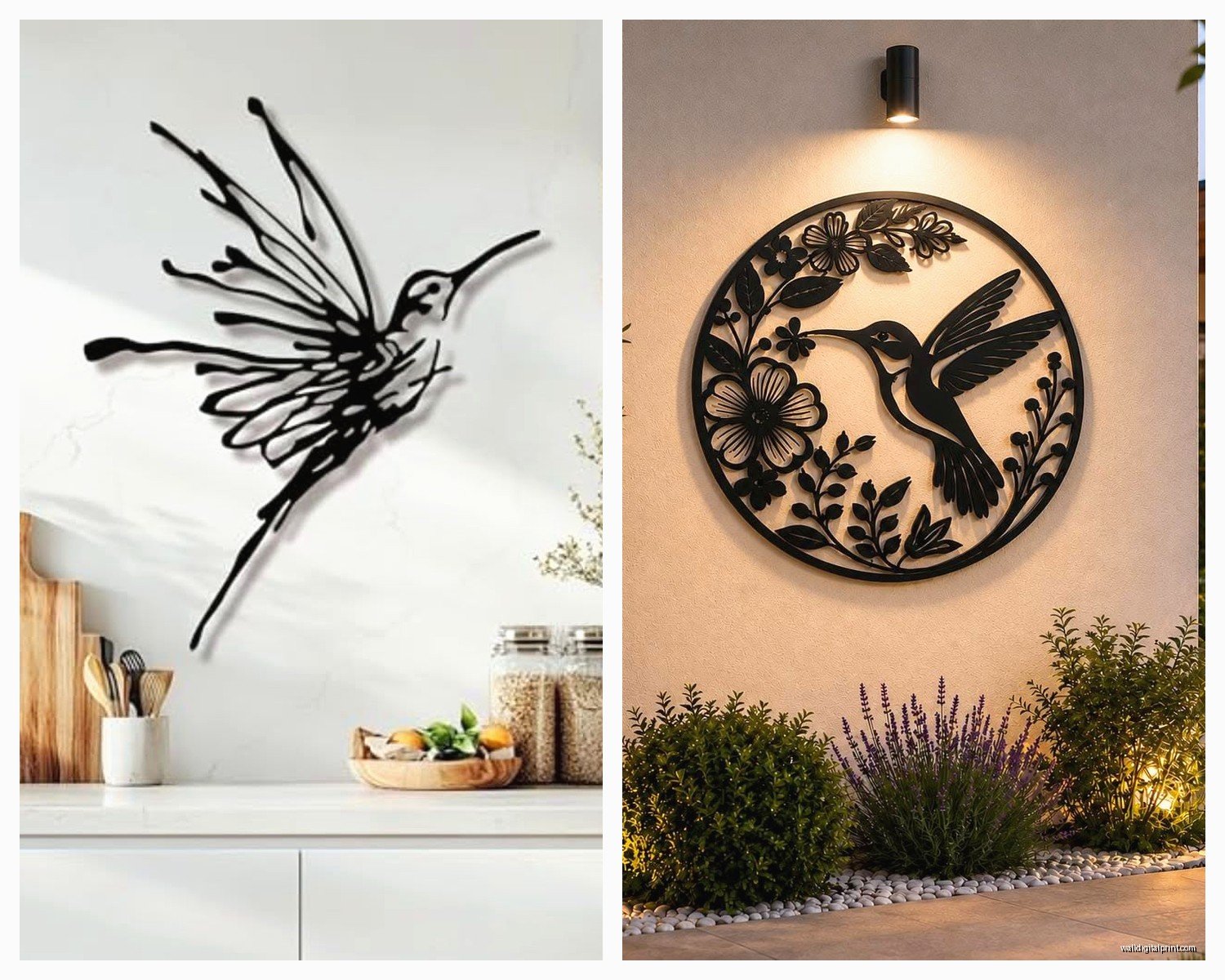
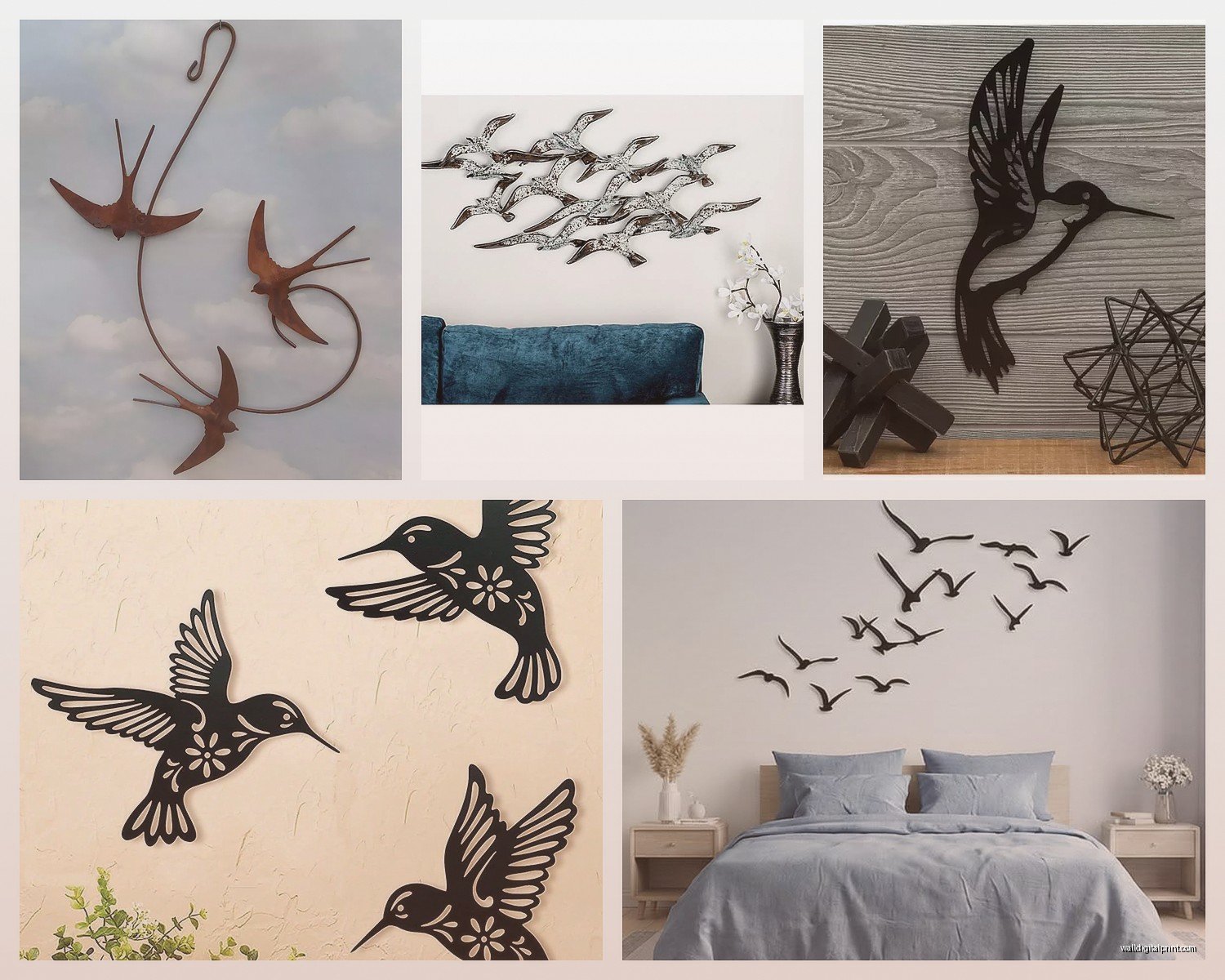
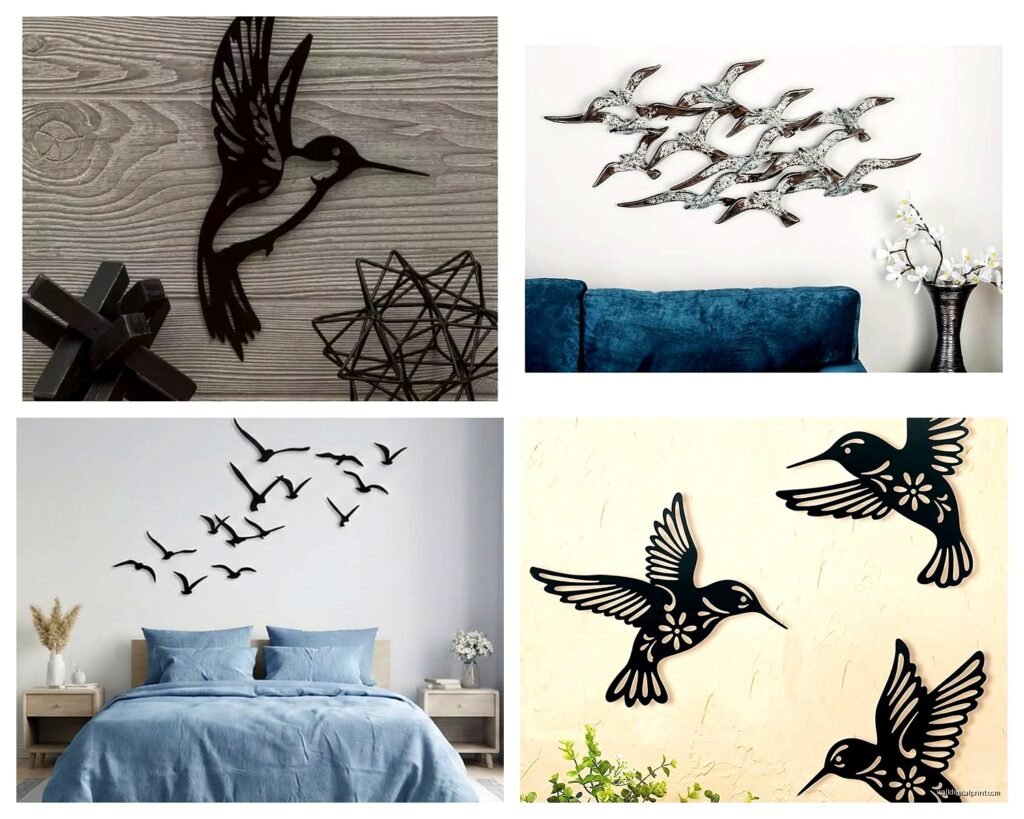
Okay so there’s basically a few categories and knowing which one you want makes shopping SO much easier. There’s the silhouette style which is just flat cutouts, usually powder-coated steel or iron. Then there’s the dimensional/3D sculptures where the wings or body have actual depth and texture. And then—this is where it gets interesting—there’s the kinetic pieces that have parts that move slightly when air hits them.
I tested the flat silhouettes first because they’re cheapest, usually like $30-80 depending on size. They work amazing in modern or minimalist spaces. The ones I got were these three flying geese in a formation and honestly they look way more expensive than they were. The key with silhouettes is making sure the metal is thick enough that it doesn’t look flimsy. Anything under 16-gauge steel tends to look kinda cheap up close.
The 3D sculptural ones are where I ended up spending more money but they’re worth it if you’ve got the budget. We’re talking $150-400 range usually. The wings have actual curve to them, sometimes multiple layers of metal creating shadows and depth. I have this heron one above my reading nook and depending on the light it looks completely different throughout the day which…I didn’t expect but it’s actually really cool.
Materials Matter More Than You’d Think
Most of what you’ll find is steel or iron. Steel is lighter and easier to hang, iron feels more substantial but you gotta watch for rust if you’re putting it anywhere with humidity. There’s also aluminum which is super lightweight—good if you’re hanging on drywall without studs—but it can look a bit cheaper.
Copper and brass exist too but they’re pricey and they develop patina over time. I actually love that look but you gotta want it because you can’t really stop it unless you’re gonna seal it constantly. Had a client who bought this gorgeous copper hummingbird and freaked out six months later when it turned greenish. Like…that’s what copper does? But anyway, just know what you’re getting into.
The finish matters too. Powder coating is the most durable, won’t chip or fade. Painted finishes can be beautiful but they’re more delicate. Raw metal looks industrial and cool but will definitely change over time. I’ve got a raw steel piece that’s developed this warm rust patina and I love it but my sister saw it and thought it looked “old” so it’s really personal preference.
Sizing This Stuff Is Weird
This is gonna sound weird but metal bird art always looks smaller in person than you think it will. Or maybe not smaller but…less impactful? The photos online show them perfectly lit with tons of wall space and then you get it home and it’s like oh, that’s it?
My rule now is to go bigger than you think you need. If you’re looking at a wall space that’s say 4 feet wide, don’t get a 2-foot piece thinking it’ll look balanced. Get something 3-3.5 feet. The negative space around metal art is part of the design, you need more of it than with a framed print.
Actually measure your wall though. I know that sounds obvious but I watched my neighbor eyeball it and order this massive crane sculpture that literally didn’t fit between her windows. Had to return it which with metal art can be annoying because shipping is expensive.
Where to Actually Buy Them
Etsy is honestly my go-to for unique pieces. There are metalworkers on there doing custom stuff and the quality is usually really good. Just read the reviews carefully and check if they’re actually handmaking them or dropshipping from China. Nothing wrong with manufactured pieces but the price should reflect that.
Wayfair and Overstock have decent selections in the $50-200 range. The quality is hit or miss though—I’ve gotten pieces where the welds were visible and sloppy. But their return policies are pretty solid so there’s that.
For higher end stuff I like looking at actual art galleries or sites like Houzz. You’re paying more but it’s actual art, not just decor. There’s this artist I found who does these incredibly detailed songbirds with individually cut feathers and they’re like $800 but they’re genuinely sculpture quality.
Oh and another thing—don’t sleep on local craft fairs or art markets. I found my favorite piece, this abstract flock of swallows, at a farmer’s market of all places. The artist was there, I watched him make adjustments to another piece with a torch right there. Cost me $120 and it’s better quality than stuff I’ve seen for $300 online.
How to Hang These Without Destroying Your Wall
Okay so this part stressed me out at first because metal is heavy and the hanging mechanisms are all different. Some come with a simple hook on the back, some have wire, some have these weird bracket systems.
For smaller pieces under like 5 pounds you can usually get away with a regular picture hanger nail. But honestly I just use wall anchors for everything now because I’d rather overkill it than have a sculpture crash down at 2am and scare the crap out of me and my cat.
The toggle bolt anchors are your friend for drywall. They distribute weight really well. If you can hit a stud obviously do that but most of the time the perfect placement for the art is not where your studs are because the universe is cruel like that.
Here’s what I actually do: hold the piece up where I want it, have someone else look at it from across the room to confirm placement, mark it with pencil, measure twice, install anchor, hang. The measuring twice thing saved me so many times. Metal doesn’t hide holes well if you mess up.
Some of the 3D pieces have multiple hanging points which is great for stability but annoying to install. You gotta get them perfectly level. I bought this cheap laser level for like $15 and it’s been a game changer. Way better than trying to use a regular bubble level while also holding a metal bird.
The Whole Flying Formation Thing
You’ll see a lot of sets sold as “flying formations” with like 3-7 birds arranged in a pattern. These can look amazing but they’re also easy to mess up. The trick is to not make them too uniform—you want it to look like actual birds in flight which is random and organic.
I usually lay them out on the floor first in different configurations, take photos, and then pick the one that feels most natural. The spacing matters more than you’d think. Too close together and they look cluttered, too far apart and they don’t read as a cohesive group.
Height variation is important too. Don’t put them all at the same level unless you’re going for a very specific modern look. Stagger them going up or down like they’re actually ascending or diving.
Wait I forgot to mention—consider the direction they’re flying. I know this sounds nitpicky but birds flying toward a corner or off the edge of the wall creates this weird uncomfortable feeling. You want them flying into the space or across it. There’s actually some feng shui stuff about this but honestly it just looks better from a design perspective.
Mixing Metals and Finishes
You can totally mix different metal finishes in the same space. I’ve got matte black birds on one wall and a brushed copper one on another wall in the same room. The key is having some other element that ties them together—like both walls have white backgrounds, or there’s copper accents elsewhere in the room.
What doesn’t really work is mixing quality levels in the same vignette. Like don’t put a $30 flat cutout right next to a $300 dimensional sculpture because the difference will be super obvious and make the cheaper one look worse.
Actually funny story, I was watching this home reno show while pricing out bird sculptures for a client and the designer did this whole feature wall with mixed metal birds and it looked incredible on camera but I could tell some of them were wobbling which means they probably weren’t secured properly and that’s all I could focus on.
Outdoor vs Indoor Pieces
If you want metal birds outside you gotta specifically buy outdoor-rated stuff. The metal needs to be galvanized or have a weather-resistant coating. Regular steel will rust, and not in a cool patina way, in a streaky gross way that’ll stain your siding.
I made this mistake with a fence decoration that I thought would be fine because it was “under the eaves” but rain still got to it and within three months it looked terrible. Had to sand it down and reseal it which was a whole thing.
Outdoor pieces are usually more expensive because of the coating process but they last forever. My parents have had the same metal heron in their garden for like eight years and it still looks great. The ones marketed for indoor use will deteriorate outside within a year, guaranteed.
Styling Them In Different Rooms
Living rooms are the obvious choice but I’ve actually found them really effective in unexpected places. I put a small wren sculpture in my bathroom and it’s like a little surprise every time someone notices it. Makes the space feel more curated.
Bedrooms can handle bird art but keep it calming—flying formations can feel chaotic above a bed. I prefer a single larger piece or a peaceful perched bird rather than a flock in motion. There’s something about birds dive-bombing over your head while you sleep that’s just…no.
Hallways are perfect for this stuff, especially narrow ones where you can’t fit much else. A vertical arrangement of birds flying upward makes the space feel taller. I used this trick in a client’s split-level and it totally changed the feel of this awkward transitional space they had.
Dining rooms work well with more formal bird sculptures—herons, cranes, peacocks. Something with elegance rather than the whimsical sparrow vibe. Though honestly rules are meant to be broken, do what you like.
Color Considerations
Black metal is the most versatile and works with literally everything. It’s also the easiest to find. But don’t automatically default to black just because it’s safe.
Colored metal or painted finishes can be gorgeous if they tie into your existing palette. I did a nursery with these soft blue birds that matched the bedding and it was so sweet without being overly themed.
Metallic finishes like gold, bronze, or copper add warmth. They work especially well in rooms with warm wood tones or if you’ve got brass fixtures elsewhere. The light plays off them differently than matte finishes which adds another layer of interest.
White or cream painted metal is underrated. It gives you the sculptural element without the weight of dark metal. Really pretty in light, airy spaces or coastal designs.
Natural rust or weathered finishes are very trendy right now but make sure they fit your style. They lean industrial or farmhouse pretty hard. I love them but they’re not for everyone.
Maintenance Is Actually Pretty Easy
Most metal bird art just needs occasional dusting. I use a microfiber cloth or a duster with a long handle for pieces I can’t easily reach. The 3D sculptural ones collect dust in the crevices so you gotta get in there.
If you’ve got outdoor pieces, spray them down with a hose once or twice a year. Check for any spots where the coating might be wearing and touch those up before rust starts.
For pieces that do develop rust (if that’s not the look you want), you can use steel wool and then apply a clear sealant. Or embrace it, honestly. Some of my favorite pieces have developed character over time.
The kinetic pieces with moving parts might need a drop of oil on the joints every year or so to keep them moving smoothly. Just basic machine oil works fine.
What Actually Looks Expensive vs What Is Expensive
Here’s the thing—you can get the expensive look without spending a fortune if you know what to look for. Hand-hammered textures, multiple layers creating dimension, and detailed feather work are the markers of quality pieces.
Simple silhouettes can still look high-end if the design is really clean and the scale is right. I’ve got a $45 raven silhouette that people always assume cost way more because it’s large and the proportions are perfect.
What screams cheap: visible rough edges, poor welds, uneven coating, flimsy metal that wobbles when you touch it. Also those sets that come with like 10 tiny birds for $25—they look exactly as cheap as they cost.
If you’re on a budget, buy one really good piece rather than multiple mediocre ones. The single quality sculpture will elevate your space more than a bunch of obvious decor items.
Oh and pro tip—shop end of season sales. Garden centers often discount outdoor metal art at the end of summer and you can use those pieces indoors just fine. I got an amazing deal on a hummingbird sculpture this way, like 60% off.
Anyway that’s pretty much everything I’ve learned through trial and error and way too much time browsing metal bird art when I should’ve been working. The main thing is just make sure you actually like looking at it because you’re gonna see it every day and trends change but good design is pretty timeless.