Wall Art Guide, Wall Art Tutoriels
Mid Century Modern Wall Art: 1950s Retro Clean Lines
Jun
So I’ve been dealing with mid century modern wall art for like three years now and honestly it’s one of those things where you think it’ll be easy but then you’re standing in West Elm at 2pm on a Tuesday second-guessing everything.
The thing about 1950s retro clean lines is that it’s actually really specific. Like, you can’t just throw up any geometric print and call it MCM. I learned this the hard way when I bought what I thought was a perfect Mondrian-inspired piece and my mentor took one look and was like “that’s 80s Memphis, Sophia.” Embarrassing.
What Actually Counts as Mid Century Modern Wall Art
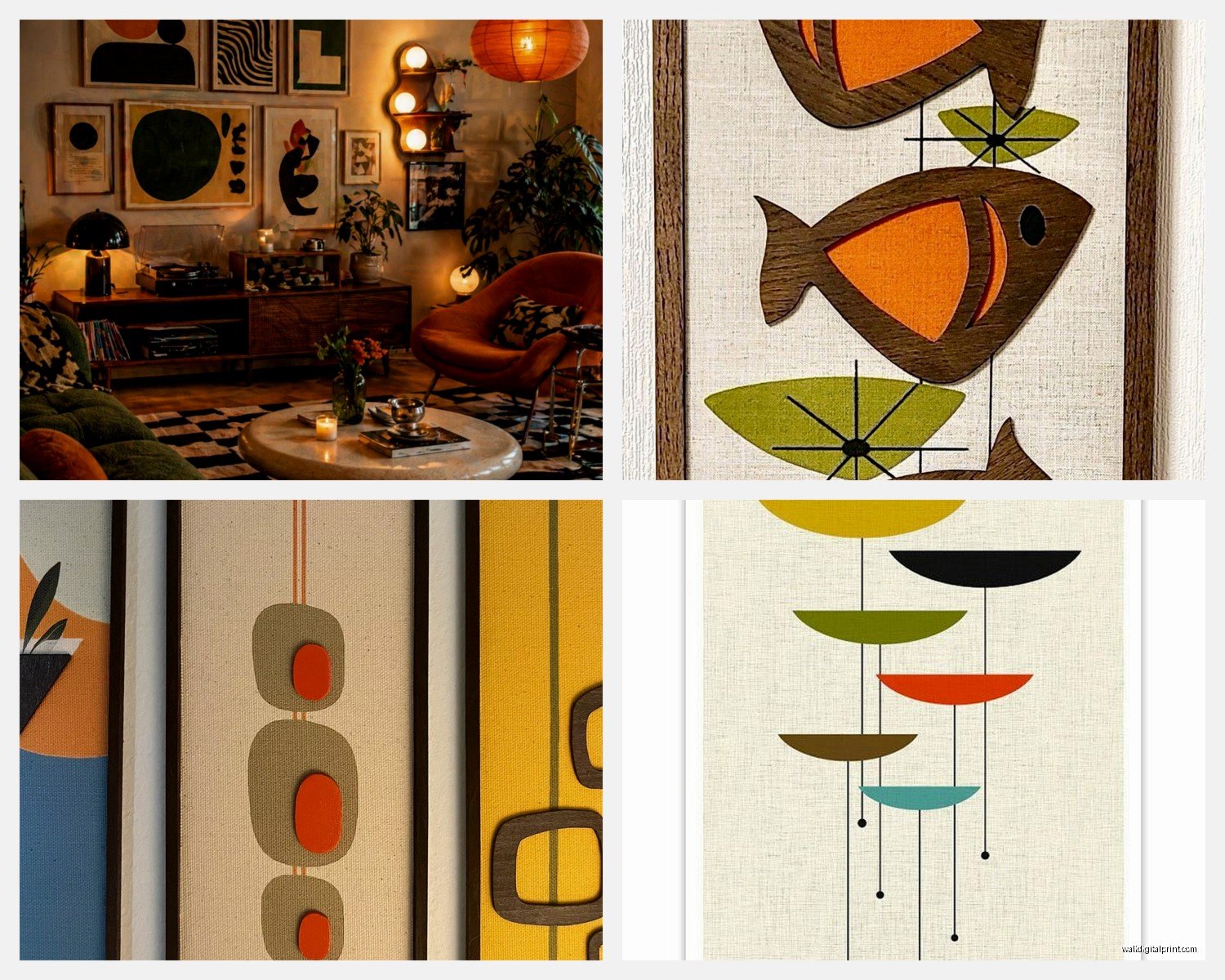
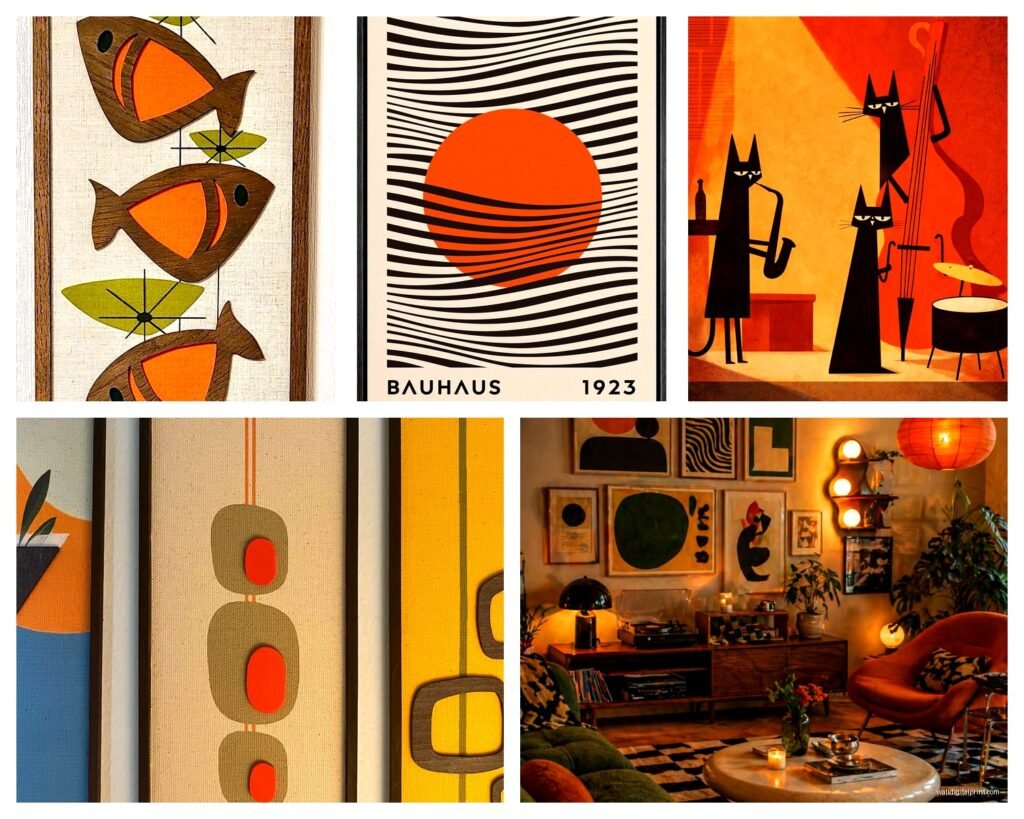
Okay so the real deal from the 50s and 60s has these characteristics: super clean lines (obviously), organic shapes mixed with geometric ones, muted color palettes OR really saturated primaries (no in-between), and this thing I call “optimistic abstraction.” Like the shapes are abstract but they’re not angry or chaotic. They’re orderly. Hopeful, even.
Think Charley Harper’s wildlife prints, Alexander Girard’s geometric textiles turned into prints, or those atomic starburst designs that were literally everywhere in 1957. My client in Silver Lake has an original Girard environmental enrichment panel and I literally stood there for ten minutes just staring at it last month.
The Color Thing Everyone Gets Wrong
People see “mid century” and immediately think orange, teal, and mustard yellow. And yeah, those colors were huge, but the actual wall art from that era was often working with:
- Burnt orange and cream (not bright orange)
- Olive green and rust
- Teal but like, a grayed-down teal
- Chocolate brown with pale pink
- Black and white with one accent color
The super saturated stuff was more for accent pieces and textiles. The wall art tended to be a bit more sophisticated because it was, you know, on your wall permanently.
Where to Actually Find This Stuff
Oh and another thing – sourcing is gonna make or break your whole vibe. I’ve got a whole system now but it took forever to figure out.
Vintage Originals
Etsy is honestly your best bet for actual vintage pieces. Search for “1950s abstract lithograph” or “vintage Scandinavian wall art” or “atomic era print.” I found an incredible set of three Danish botanical prints for a client’s dining room for like $180 total. The catch is you gotta be patient and check back frequently because the good stuff goes fast.
Estate sales are hit or miss. I went to probably fifteen before I found anything worthwhile, and then suddenly I walked into this ranch house in Pasadena and there were FIVE original pieces from the 50s just hanging in the hallway. Bought three of them. The family had no idea what they were worth, which felt a little guilty but also… that’s the game.
Quality Reproductions
Look, not everyone has $400 to drop on an original. I get it. These places do really good reproduction prints:
Minted has some artists who nail the MCM aesthetic. There’s this one designer, I think her name is Francesca, who does these geometric abstracts that look exactly like something from a 1959 interior design magazine.
Society6 is cheaper but more hit or miss. You gotta really dig through their stuff. I spent my whole Sunday morning once (my dog was sick so I was home anyway) just scrolling and favoriting things.
Actually commissioned prints from artists on Instagram can be surprisingly affordable. I worked with this artist in Portland who did a custom piece inspired by Alexander Calder for $250. It’s 24×36 and looks incredible in my client’s office.
Size and Scale Because This is Where People Panic
Okay so funny story – I once hung a 16×20 print above a king size bed and stood back and literally laughed out loud because it looked like a postage stamp. Size matters SO much with MCM art.
For above a sofa (standard 84-90 inches wide), you want your art to be roughly 2/3 the width of the sofa. So that’s like 56-60 inches. You can do this with one large piece or a grouping.
Single large pieces (36×48 or bigger) work best in:
- Above sofas
- In dining rooms (that big empty wall everyone has)
- Bedroom focal walls
- Stairway landings where you need something dramatic
Medium pieces (24×36 or thereabouts) are perfect for:
- Above console tables
- In hallways
- Flanking windows or doors
- Office spaces
The Gallery Wall Situation
Gallery walls are tricky with MCM because the aesthetic is supposed to be clean and uncluttered. But you CAN do it if you’re strategic. I did one in my own apartment that actually works.
Keep it to 4-6 pieces max. Use identical frames (this is crucial – all black, all wood, all brass, whatever). Maintain consistent spacing (I use 2-3 inches between frames). And stick to a cohesive color story across all pieces.
Wait I forgot to mention – if you’re doing a gallery wall, use paper templates first. Tape them to the wall, live with it for a day, adjust. I cannot tell you how many nail holes I’ve patched because I just went for it without planning.
Framing Makes or Breaks Everything
This is gonna sound weird but I have strong feelings about frames for MCM art. The wrong frame will completely destroy the vibe you’re going for.
Frame Styles That Work
Thin black frames are classic and never wrong. I use these probably 60% of the time. They’re clean, they don’t compete with the art, and they work with literally any MCM color palette.
Natural wood frames in walnut or teak are *chef’s kiss* for this era. They add warmth without being rustic or farmhouse-y. I found these perfect walnut frames at Frame It Easy online and now I recommend them to everyone.
Brass or gold frames can work but they’re riskier. They need to be thin – like really thin – or they look too ornate. I saw someone use chunky gold baroque frames with MCM art once and I’m still recovering.
White frames… honestly, I usually skip them for true MCM. They read too contemporary or too shabby chic. Unless you’re doing a really specific black and white print, just go with black or wood.
Matting Decisions
Double mats were big in the 50s and 60s. Like a white outer mat with a thin colored inner mat that picks up a color from the print. It’s very authentic to the era and adds this extra layer of sophistication.
But also, no mat at all can look amazing with the right piece. Especially geometric abstracts or prints with bold colors. Just frame edge to edge and let the art breathe.
Actual Placement on Your Actual Walls
The standard rule is center of the art at 57-60 inches from the floor (that’s average eye level). But in rooms with 8-foot ceilings, I sometimes go slightly lower, like 56 inches, so it doesn’t feel like everything’s floating.
Above furniture, leave 6-8 inches between the furniture top and the bottom of the frame. I’ve seen people leave like 15 inches and it just looks disconnected.
Lighting This Stuff
Oh and another thing that nobody talks about – lighting is huge. MCM art often has these muted colors that just die in bad lighting.
Picture lights are very traditional but can work if they’re sleek. I like the battery-operated LED ones from Cocoweb because you don’t need an electrician.
Track lighting is actually super era-appropriate. The 50s and 60s loved track lighting. Just make sure the track itself is minimal and modern.
My favorite trick though is just making sure you have good ambient lighting in the room. Table lamps, floor lamps (get an arc lamp, very MCM), and natural light during the day.
Mixing Eras Without Looking Confused
So you probably don’t have a fully MCM house, right? Most people don’t. Here’s how to make this art work in a more eclectic space.
Limit your MCM art to one or two rooms max. Like, make your living room the MCM zone and let your bedroom be something else. Otherwise it starts feeling theme-y.
You can totally mix MCM art with contemporary furniture. Actually this works really well. The clean lines complement each other. I did this in a client’s loft and the 1956 abstract print looked incredible above her CB2 sofa.
What doesn’t work: mixing MCM art with very traditional or ornate furniture. The contrast is too jarring. Unless you’re like a really experienced designer who knows how to pull off high-low eclectic, just don’t.
The Authenticity Question
Some people care a lot about having actual vintage pieces. Some people just want the look. Neither is wrong, but know which camp you’re in before you start shopping.
If you want authenticity, you’re gonna pay more and spend more time hunting. But there’s something really special about owning a piece of actual design history. I have a small Calder lithograph from 1963 that I saved up for and it makes me happy every single day.
If you just want the aesthetic, reproductions and new art in the MCM style are totally fine. Most people can’t tell the difference anyway and you’ll have way more options in terms of size and color.
Common Mistakes I See All the Time
Hanging art too high. I already mentioned this but seriously, it’s the number one problem. Your art is probably hanging too high right now. Go check.
Choosing art that matches your throw pillows exactly. This looks really staged and catalog-y. The art should complement your space but not match it perfectly.
Going too literal with the atomic/starburst motif. Yes, starbursts are very 50s. But if you have starburst art, a starburst clock, starburst light fixtures, and starburst drawer pulls, it’s too much. Pick one or two elements max.
Forgetting about negative space. MCM design is all about that clean, uncluttered look. You don’t need art on every wall. Sometimes an empty wall with one perfect piece of furniture is better than a wall full of mediocre art.
My Current Favorite Pieces and Where to Get Them
Okay so right now I’m obsessed with these geometric abstracts from an artist called Berit Mogensen Lopez. She’s on Etsy and her stuff is like $60-120 depending on size. Very Girard-influenced, amazing colors.
There’s also this shop called Penny Parcel Prints that does really good reproductions of vintage Scandinavian design. I bought their set of three botanical prints for my own hallway and I get compliments constantly.
For original vintage, there’s a dealer in Palm Springs called Modern Way who has incredible stuff but it’s not cheap. Worth following on Instagram just for the eye candy though.
The DIY Option
If you’re crafty at all, you can make your own MCM-style art. I’m not super crafty but even I’ve done this. Get a canvas, some acrylic paint in your chosen color palette, painter’s tape for clean lines, and just create some geometric shapes. It’s actually hard to mess up if you stick to simple compositions.
There are also printable MCM art files on Etsy that you can download and print yourself at like Staples or FedEx Office. Quality varies but some of them are really good.
Just make sure you use good paper if you’re doing this. Don’t print it on regular printer paper and expect it to look legit. Use cardstock at minimum, or actual photo paper.
The thing about MCM wall art is that it’s supposed to make your space feel intentional and curated but not fussy. When I’m styling a room, the art is usually one of the last things I add because it needs to tie everything together without trying too hard. And honestly, sometimes the best piece is the one you found randomly at an estate sale or on Etsy at midnight when you couldn’t sleep, not the one you agonized over for three weeks.