Wall Art Guide, Wall Art Tutoriels
Mid Century Wall Art: 1950s-1960s Retro Modern Designs
May
So I’ve been hunting for mid century wall art for like three years now and honestly it’s way more complicated than people think because there’s actual vintage stuff from the 50s and 60s and then there’s the reproduction stuff that honestly sometimes looks better? Which feels wrong to say but it’s true.
What Actually Counts as Mid Century Wall Art
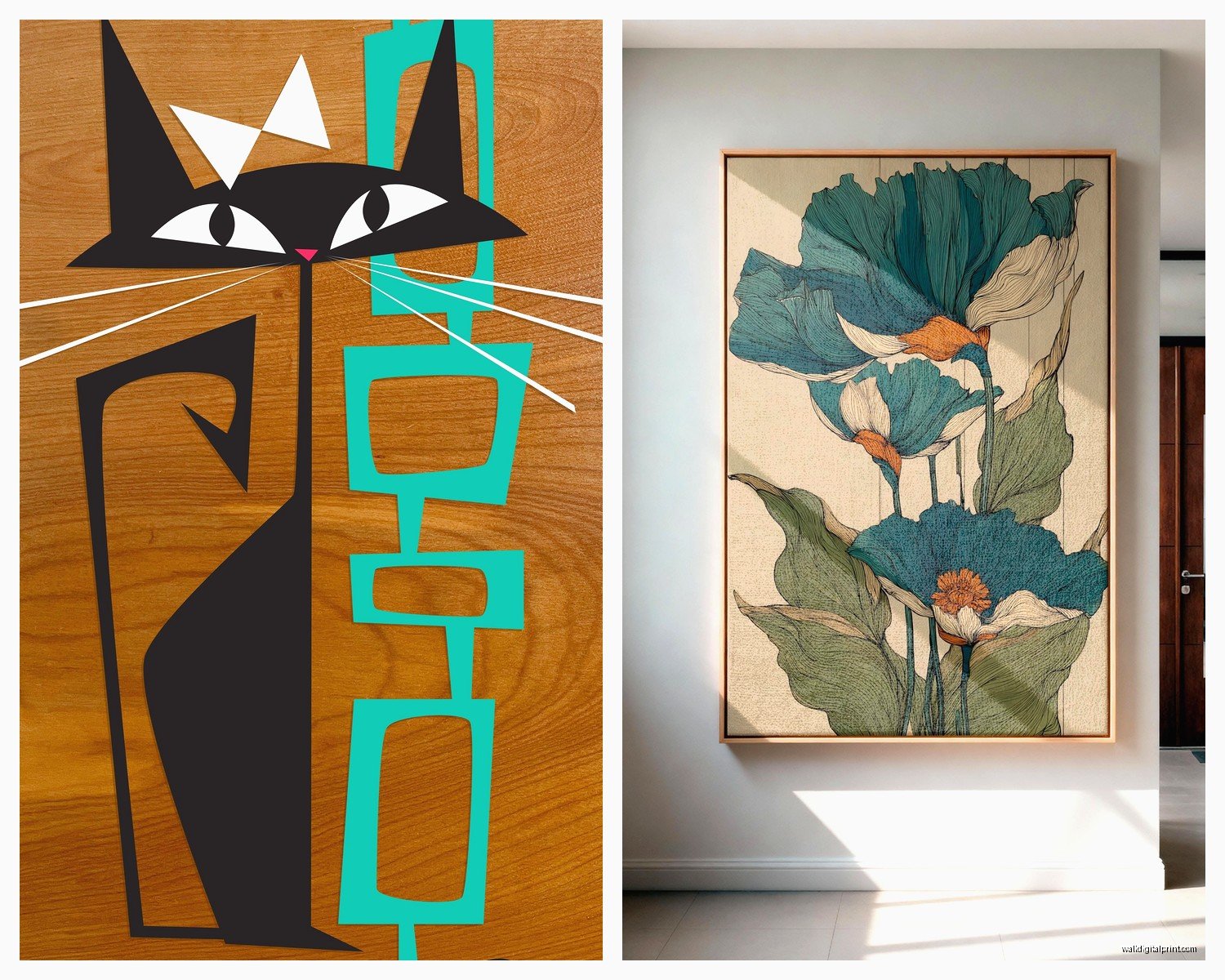
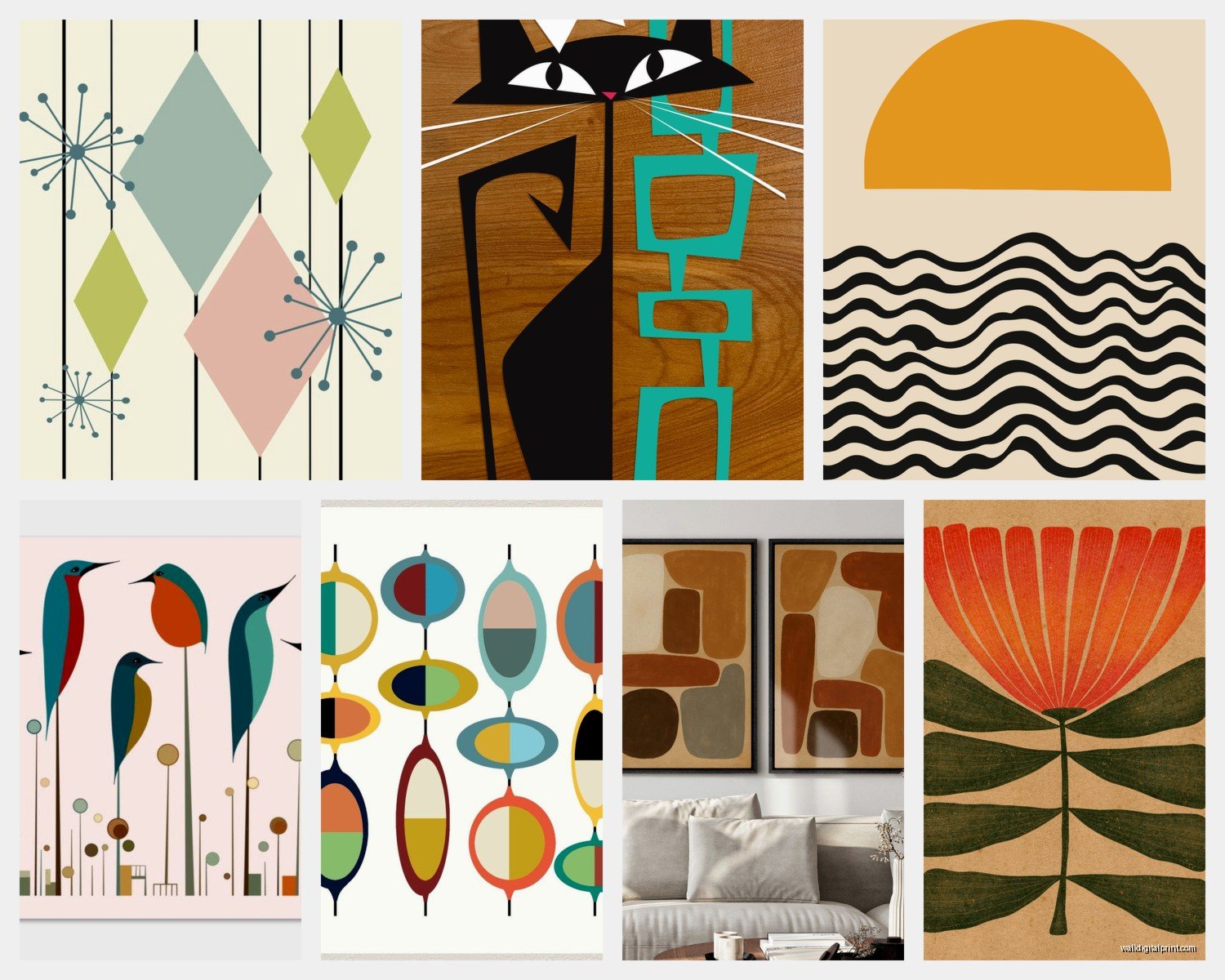
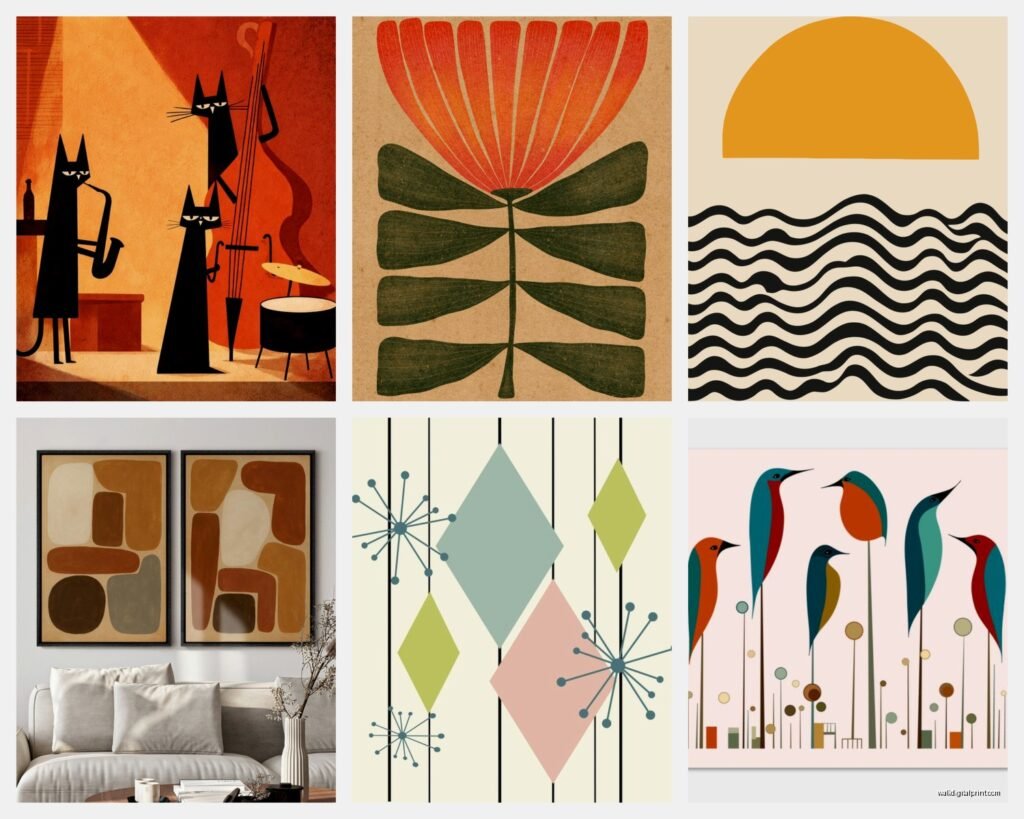
Okay so real talk, mid century modern wall art from the 1950s-1960s has these really specific characteristics. You’re looking at abstract geometric shapes, atomic age starburst patterns, those weird amoeba blob shapes that were everywhere, and lots of wood elements. Like actual carved wood pieces or those string art things your grandma probably had.
The color palette is super specific too—mustard yellow, burnt orange, avocado green, teal, and then lots of black and white contrast. If someone’s trying to sell you “mid century” art that’s all pastels and soft colors, they’re lying to you or confused. The era was bold. Like really bold. My neighbor has this original piece from 1962 and it’s so aggressively orange that I have to look away sometimes but that’s the vibe.
Spotting Real vs Reproduction
Here’s where it gets tricky and where I’ve wasted so much money learning this the hard way. Real vintage pieces usually have:
- Actual wear on the frames—not distressed on purpose but like genuine aging
- Backing paper that’s yellowed or has old staples
- Price tags or gallery stickers from actual 1950s-60s shops
- Slight fading in a natural pattern where sun would’ve hit
- Printing techniques that look different from modern digital prints
I bought what I thought was a real Mondrian-inspired piece last year and my friend who works at an auction house took one look and was like “that’s a 2010 print” and I wanted to die. The giveaway was the paper quality was too bright white and the printing was too perfect.
Where to Actually Find This Stuff
Estate sales are gonna be your best bet for real pieces. I’ve found incredible stuff at estates in older neighborhoods where people bought these pieces new and just kept them. You gotta get there early though, like annoyingly early. I set my alarm for 6am on Saturdays sometimes which my dog absolutely hates because it messes with our routine.
Etsy has a ton but you really need to read descriptions carefully. Search for “vintage mid century wall art” not just “mid century wall art” because that second search gives you 10,000 reproductions. Look for sellers who show the back of the piece, who mention specific artists if known, who acknowledge condition issues honestly.
eBay is actually underrated for this. The older sellers who don’t know how to photograph well sometimes have incredible pieces listed for nothing because the photos are terrible. I got this amazing teak wall sculpture for $45 because the listing photo was blurry and taken in bad lighting.
Thrift stores are hit or miss. I’ve found exactly three good pieces in probably fifty visits over two years, so don’t make it your main strategy but check when you’re there anyway.
Types of Mid Century Wall Art Worth Getting
Starburst/Sunburst Pieces
These metal or wood pieces with the rays coming out were EVERYWHERE in the 60s. The originals were made by companies like Elgin and they have this specific weight to them—they’re heavy. The reproductions from Target or whatever are super lightweight. If you pick it up and it feels like nothing, it’s new.
I have two vintage sunbursts in my living room and people always ask about them. One is brass with these little ball ends on each ray, the other is teak with copper tips. They were like $35 each at an estate sale and honestly they make the whole wall.
Gravel Art and Pebble Mosaics
This is gonna sound weird but these are having a moment again. People in the 60s made these wall hangings with actual pebbles and gravel arranged in abstract patterns, sealed in some kind of resin or glue. They’re textural and interesting and you can find them for cheap because most people think they’re ugly.
I installed one in a client’s den last month and she was skeptical but now she’s obsessed. It adds this organic element that balances out all the clean lines of MCM furniture.
String Art
Okay so string art is very divisive. My sister thinks it’s the ugliest thing ever created. But authentic 1960s string art, especially the geometric patterns or abstract faces, is actually cool? The key is it has to be well-executed. Messy string art just looks messy.
There’s this one I’ve been watching on eBay for weeks that’s a sailboat design and I can’t decide if I love it or if it’s too kitschy. It’s $28 and I keep putting it in my cart and then closing the browser.
Wood Wall Sculptures
These are my absolute favorites and also the most expensive if you want originals. We’re talking carved wood pieces, layered wood designs, those cool geometric wood assemblages. Artists like Witco made these amazing carved pieces that now sell for hundreds or thousands.
But you can find smaller artists’ work for reasonable prices. I got a three-piece wood sculpture set at an antique mall for $120 and it’s probably my favorite wall art I own. It’s walnut and teak with these overlapping angular shapes.
Atomic Age Prints
The boomerang shapes, atoms, starbursts in print form—these are super collectible now. Original prints from the 50s and 60s, especially if they’re signed or numbered, can be pricey but worth it if you’re really into the aesthetic.
Watch out for reproductions though. So many Etsy sellers are printing “vintage inspired” designs and calling them vintage. Read those descriptions word by word.
How to Hang This Stuff Without Screwing It Up
Okay so funny story, I hung a heavy wooden piece with just regular nails last year and it fell off the wall at 2am and I thought someone was breaking in. My cat lost his mind. Don’t be like me.
For heavy pieces—anything over like 10 pounds—you need proper wall anchors or studs. Those plastic anchor things from the hardware store work great for plaster walls which a lot of mid century homes have. For drywall, use toggle bolts for heavy stuff.
Gallery Wall Arrangements
Mid century gallery walls should feel intentional but not too precious. I usually go with asymmetrical arrangements that have a loose geometric pattern. Like if you imagine drawing a triangle or rectangle connecting all the pieces, that’s your guide.
Space them closer together than you think—like 2-3 inches between frames rather than 6 inches. It creates more visual impact. I learned this from a curator friend who was very patient with my bad instincts about spacing.
Mixing Vintage and Reproduction
Real talk? You’re probably gonna need to mix unless you have a huge budget. I do it all the time. The key is making sure the reproductions are high quality and the colors match the era accurately.
West Elm actually makes some decent MCM-inspired prints. CB2 has some good options too. Just don’t put them right next to your authentic pieces because the difference in printing quality becomes super obvious.
What to Pay for This Stuff
Small prints or string art: $15-50 for vintage
Medium wall sculptures or gravel art: $40-150
Large statement pieces or signed art: $150-500+
Really collectible stuff from known artists: sky’s the limit honestly
I overpaid for things when I first started because I didn’t know the market. Now I walk away from anything that feels overpriced because there’s always more out there. Unless it’s perfect and you’re in love with it, then sure, pay the premium.
Styling Tips That Actually Matter
Don’t go full theme park with it. Like you don’t need EVERYTHING to be aggressively mid century. I made this mistake in my first apartment and it looked like a museum exhibit not a place where humans live.
Mix in some contemporary pieces or even vintage from other eras. I have a 1960s sunburst next to a modern black and white photograph and they look great together because the shapes complement each other.
The wall color matters way more than you’d think. Mid century art looks incredible on white walls obviously but also on those deeper colors that were popular then—forest green, navy, even a dusty rose if you’re feeling bold. My office is painted this specific shade of sage green and my MCM art pops against it.
Lighting Considerations
If you’re spending real money on vintage pieces, keep them out of direct sunlight. That mustard yellow will fade to a sad beige faster than you think. I use UV-filtering glass on anything valuable, which yeah it’s more expensive but it’s worth it.
Picture lights can be cool but make sure they’re the right style. Modern LED picture lights look weird with vintage art. Look for brass or black metal fixtures that nod to the era.
Caring for Vintage Wall Art
Don’t clean it too aggressively. Seriously. That patina and slight aging is part of the charm and value. For wood pieces, just dust them gently with a microfiber cloth. For prints behind glass, clean the glass but be careful not to disturb the backing.
If something needs serious restoration, take it to a professional. I tried to “fix” a torn print myself once with tape and made it so much worse. Cost me $80 to have someone repair my repair.
oh and another thing—humidity is the enemy. If you live somewhere humid, make sure you have decent ventilation. I’ve seen gorgeous vintage pieces get moldy or warped because someone hung them in a bathroom or basement with moisture issues.
Current Market Trends
Prices have gone up a lot in the last five years as mid century stuff has gotten more popular. Things that were $20 at estate sales are now $80 at antique malls. It’s annoying but it is what it is.
The good news is this means more reproductions are being made, and some of them are actually well-done. Society6 and Minted have artists creating MCM-inspired work that captures the aesthetic without the vintage price tag.
Certain styles are trendier right now—anything with terrazzo patterns, abstract faces in that Picasso-esque style, botanical prints with that 60s illustration style. Which means they cost more but also means they’re easier to find because dealers are stocking them.
wait I forgot to mention—dimensions matter for resale value. Pieces that are standard frame sizes (like 16×20, 18×24) are worth more because they’re easier to reframe if needed. Weird custom sizes can be amazing but they’re harder to sell later if you decide to.
So yeah that’s basically everything I’ve learned from obsessively collecting this stuff and making plenty of mistakes along the way. Start small, don’t overpay for reproductions when you can get the real thing for similar prices, and trust your gut on what you actually like versus what you think you should like because it’s “authentic” or whatever.