Wall Art Guide, Wall Art Tutoriels
Oversized Wall Art: Extra Large Statement Wall Pieces
Sep
So I basically spent all of last Tuesday hanging a massive 6-foot canvas in a client’s loft and honestly, oversized wall art is one of those things that seems straightforward until you’re actually doing it and then you’re like… wait, why is this so complicated?
First Thing – Sizing Actually Matters Way More Than You Think
Okay so here’s what nobody tells you. That “large” piece on the website? It’s gonna look completely different in your actual space. I learned this the hard way when I ordered what I thought was a huge abstract piece for my own living room and it arrived and looked like a postage stamp on my 14-foot wall.
The rule I use now – and I literally have this written on a sticky note on my desk – is that your art should take up about two-thirds to three-quarters of the furniture width below it. So if you’ve got an 8-foot sofa, you’re looking at something between 5 and 6 feet wide. But here’s where it gets tricky… if you have high ceilings, like over 9 feet, you need to go bigger than you think or it’ll just float there looking sad.
I had a client once who insisted on a 3×4 foot piece for their double-height entryway and I was like, trust me, this isn’t gonna work, but they ordered it anyway and then called me back two weeks later asking how to return it because it looked ridiculous.
Where to Actually Find Oversized Pieces Without Selling Your Kidney
Oh and another thing – the price range on these is absolutely wild. You can spend $200 or $20,000 and honestly, sometimes the cheaper ones look better because expensive doesn’t always mean good taste.
Places I Actually Use
Saatchi Art is my go-to for original pieces. They have this filter for extra-large works and you can find stuff from emerging artists that’s actually affordable. I found this incredible 5×7 foot abstract there for around $1,800 which sounds like a lot but for an original that size, it’s pretty reasonable.
Etsy but you gotta be specific with your search terms. Try “large canvas art” or “oversized wall art” with actual dimensions. Lot of artists will do custom sizes too. I’ve ordered probably a dozen pieces from various Etsy sellers and the quality is hit or miss, so read those reviews carefully.
Minted does really large-scale prints and their framing options are decent. The thing with Minted is that it’s print-on-demand so you’re not getting an original, but their art is curated and looks way more expensive than it is.
This is gonna sound weird but Target actually has some surprisingly good oversized options now through their Project 62 line. I used a massive black and white photo print from there in a client’s den and people always ask where it’s from assuming it’s some fancy gallery piece.
The Hanging Situation Is Where Everything Goes Wrong
Okay so funny story, I once tried to hang a 5-foot canvas by myself because the installer canceled last minute and I ended up with a hole in my wall, a dent in the floor, and nearly took out my coffee table. These things are HEAVY and awkward and you absolutely need help.
What You Actually Need
- Two people minimum – this is non-negotiable
- A stud finder that actually works (I like the Zircon ones)
- Heavy-duty picture hanging hooks rated for at least double the weight of your piece
- A level – get the longer one, like 24 inches minimum
- Painter’s tape for marking
- Power drill if you’re going into studs
Here’s my actual process that I’ve refined after hanging probably 50+ oversized pieces:
First, figure out your center point. The middle of your art should be at about 57-60 inches from the floor – this is standard gallery height. But if your ceilings are really high, you might wanna go up to 65 inches. I usually tape a piece of paper at the height I’m thinking and live with it for a day because once you put holes in the wall, you’re committed.
Wait I forgot to mention – before you buy anything, make a template. Use newspaper or kraft paper taped together to the exact dimensions of the piece you want. Tape it on the wall and look at it for a few days. Walk past it in different lighting. This has saved me so many times from making expensive mistakes.
The Actual Hanging Part
For anything over 30 pounds, you HAVE to hit studs. Those drywall anchors people swear by? They’re fine for smaller pieces but I’ve seen too many massive canvases crash down in the middle of the night because someone trusted an anchor. It’s not worth it.
If your studs don’t line up with where you need to hang your piece – which happens constantly because whoever designed stud spacing clearly never thought about art – you need a picture rail system or a French cleat. French cleats sound fancy but they’re basically two interlocking pieces of wood, one on the wall (screwed into studs) and one on the back of your art. Super secure and you can slide the piece left or right to center it perfectly.
My contractor friend showed me this trick and it’s been a game changer for really heavy pieces.
What Style Actually Works in Real Spaces
So everyone thinks they want something super bold and colorful and then it arrives and it’s like… too much. Or they go completely neutral and then their room looks flat.
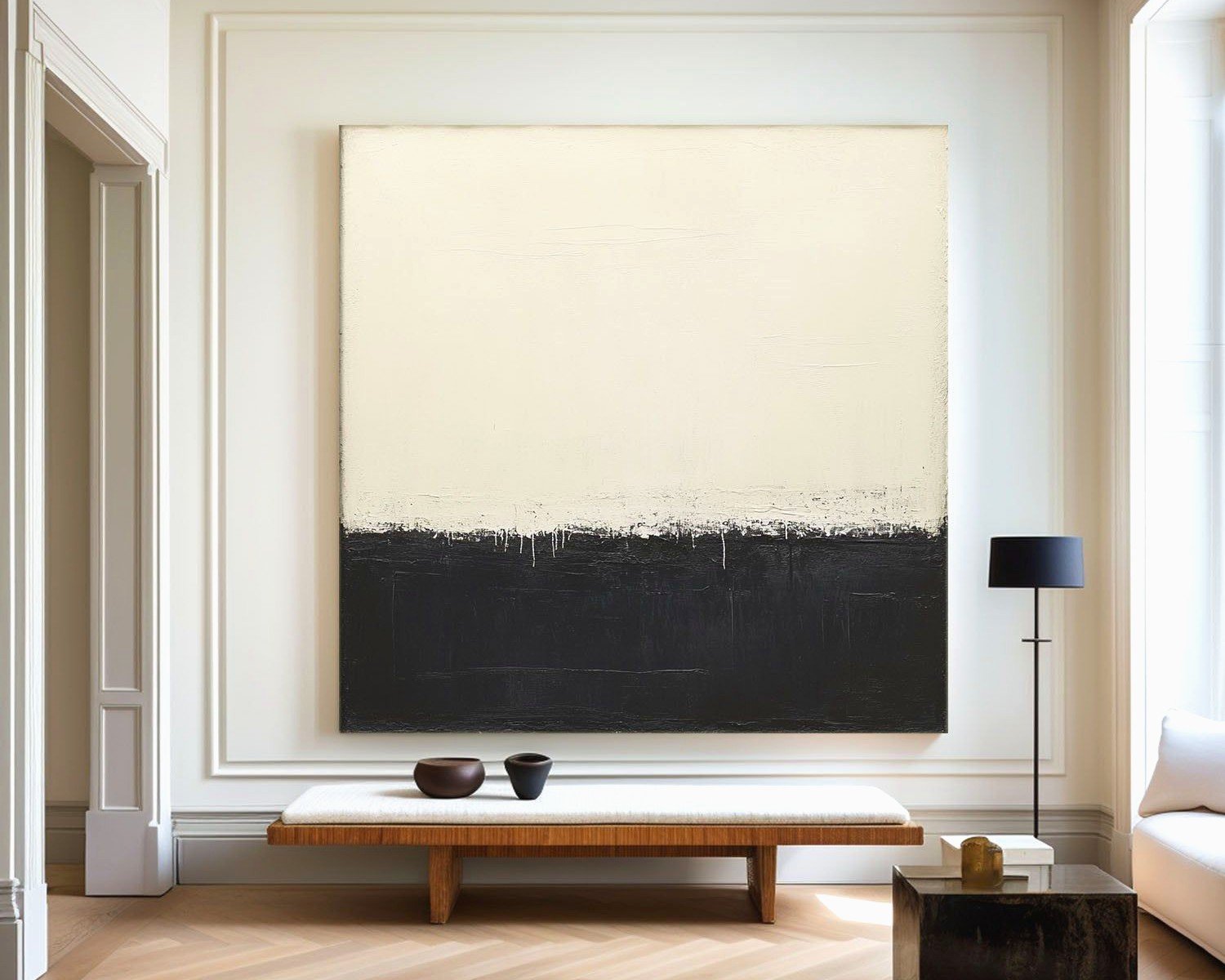
Abstract works are honestly the safest bet for oversized pieces because they don’t compete with your furniture as much. I’ve used these massive abstract canvases with just black, white, and one accent color and they always work. The key is picking up one color that’s already in your room.
Photography can be stunning when it’s huge but it has to be high resolution otherwise it looks pixelated and cheap up close. I did a 6-foot black and white landscape photo in a minimalist bedroom and it was perfect, but you need the right space for it – high ceilings, simple furniture, not a lot of other stuff competing for attention.
Line drawings or minimalist illustrations are having a moment and they actually scale up really well. There’s something about simple black lines on white canvas at a huge scale that just works. Plus they’re usually cheaper to produce so you get more size for your money.
One thing I’ve noticed – and my cat is literally walking across my keyboard right now sorry – is that textured pieces photograph terribly but look amazing in person. So if you’re buying online, try to find something with detailed close-up shots or read reviews about the texture.
Framing Is Its Own Nightmare
Okay so you’d think framing is straightforward but nope. Custom framing for oversized pieces is insanely expensive. Like, I’ve had frames cost more than the actual art.
Canvas wraps are your friend. This is where the image wraps around the edges of a thick canvas so you don’t need a frame at all. Just make sure it’s at least 1.5 inches deep, preferably 2 inches, otherwise it looks cheap.
If you do want a frame, float frames are usually the way to go for contemporary pieces. They’re simpler and less expensive than traditional frames. I order these from Frame It Easy online and they do custom sizes up to like 8 feet. Takes forever to arrive but the quality is good.
For really large pieces, sometimes I just use a simple metal frame or even leave it unframed if it’s on canvas. The whole point of oversized art is the impact, and a heavy ornate frame can kill that.
The Acrylic vs Canvas Thing
I’m seeing more pieces printed on acrylic or metal now and they can look really modern and sleek. Acrylic has this depth to it that’s cool, but it’s reflective so you gotta think about your lighting and windows. Metal prints are super durable and have this industrial vibe.
But honestly? For most people, canvas is still the move. It’s lighter, easier to hang, and if you mess up the wall you can patch it and move it. Try moving a 5-foot acrylic piece – it’s like maneuvering a sheet of glass that costs $3,000.
Common Mistakes That’ll Make You Wanna Cry
Hanging it too high. I see this constantly. People think bigger means higher but then you can’t even see the bottom half properly. Your art should relate to your furniture, not float up by the ceiling.
Ignoring scale in the rest of the room. If you have a massive piece on one wall, you need substantial furniture to balance it. Those tiny mid-century modern legs everyone loves? They’re gonna look ridiculous next to a 7-foot canvas. You need visual weight.
Buying before measuring. I cannot stress this enough – measure your wall, measure your doorways, measure your stairwell if you have to get it upstairs. I had a piece that literally wouldn’t fit around the corner to the bedroom and we had to return it. Also measure your car if you’re picking it up yourself because yeah, that’s been an issue too.
Cheap printing on huge scale. This shows. The resolution needs to be really high for large formats or you’ll see pixelation and banding. If you’re getting prints made, ask about the DPI and make sure it’s at least 150, preferably 300.
Lighting Makes or Breaks the Whole Thing
Oh and another thing I always forget to mention until clients call me saying their expensive art looks weird – you need proper lighting. Overhead lighting alone doesn’t cut it for large statement pieces.
Picture lights are traditional but can look dated. I like the battery-operated LED ones from Cocoweb if you don’t want to deal with wiring.
Track lighting or adjustable can lights work great if you’re doing a renovation anyway. You can aim them right at the art and adjust as needed.
Wall washers give you that gallery effect where the whole wall is evenly lit. This is my favorite for really large pieces because it doesn’t create hot spots.
Natural light is beautiful but be careful about direct sunlight because it’ll fade your art over time. UV-protective glass or acrylic helps but it’s expensive at large sizes.
Living With It Is Different Than Buying It
Here’s something nobody talks about – you’re gonna get tired of looking at the same huge piece every day if it’s too specific or too bold. I learned this with a massive colorful floral piece I put in my own bedroom. Loved it for three months, then started waking up feeling like it was yelling at me.
This is why I usually push clients toward pieces that are interesting but not exhausting. Something you can look at every day without it demanding all your attention. Abstract works well for this. So does photography that’s more about mood than specific subject matter.
Also consider that your style might change. That trendy piece you love right now might feel dated in two years, and replacing a $2,000 oversized canvas gets expensive real quick. I usually suggest going more timeless with your big investment pieces and saving the trendy stuff for smaller, cheaper art you can swap out.
My designer friend has this philosophy about treating your main art piece like you’d treat a couch – it should be something you can live with for at least 5-10 years without getting sick of it.
Anyway, I gotta run because I’m supposed to meet with a framer in twenty minutes, but hopefully this helps you figure out the oversized art situation without making all the mistakes I did when I was starting out.