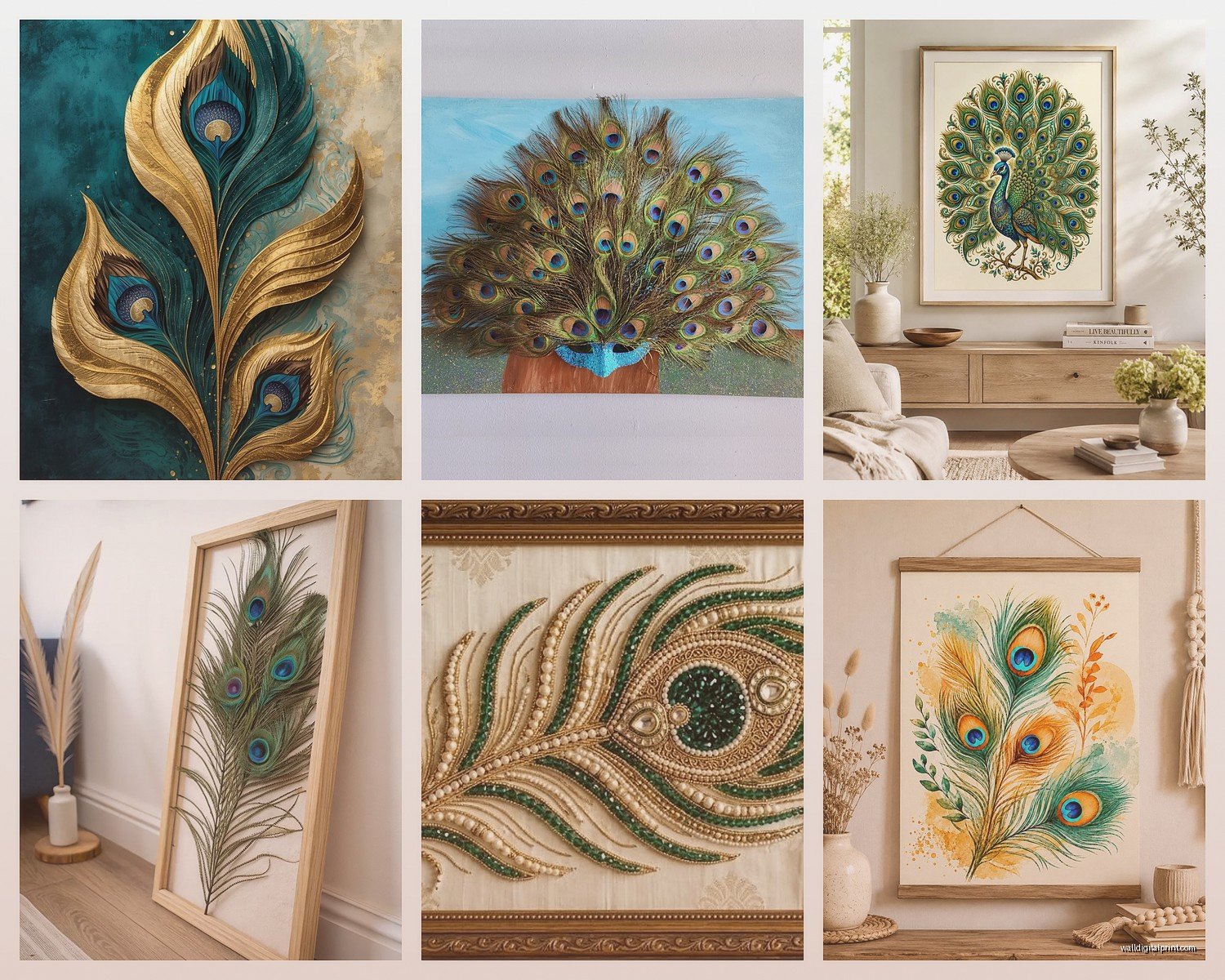
Wall Art Guide, Wall Art Tutoriels
Peacock Feather Wall Art: Natural Bohemian Decor
Jun
So I’ve been obsessing over peacock feather wall art lately and honestly it’s one of those things that sounds really specific but actually works in like, way more spaces than you’d think. My neighbor asked me about it last week and I ended up texting her for like an hour about all the ways to style it.
Real vs Fake Feathers – What Actually Works
Okay so first thing, you gotta decide if you want real peacock feathers or prints/artificial ones. I’ve used both and they each have their moment. Real feathers are gorgeous but here’s what nobody tells you – they collect dust like crazy and if you have cats (my Jasper knocked down my first arrangement twice), they become toys. Also real feathers fade in direct sunlight, which I learned the hard way in a client’s south-facing living room.
The printed versions or those resin-encased ones? Way more practical. I found this set on Etsy where they’re preserved under glass and the colors stay vibrant. They cost more upfront but you’re not replacing them every two years when they get ratty looking.
Where to Actually Buy Them
- Etsy sellers – look for ones with actual photos not just mockups, read reviews about packaging because feathers are delicate
- World Market has framed peacock feather prints that are surprisingly nice for like $40
- HomeGoods is hit or miss but I’ve found incredible deals on shadow box arrangements
- Amazon has bulk real feathers if you wanna DIY but quality varies wildly
- Local craft stores around fall when they stock them for arrangements
Styling Them Without Looking Like a College Dorm
This is where people mess up. Peacock feathers can go really wrong really fast if you’re not careful. The trick is treating them like art, not craft supplies.
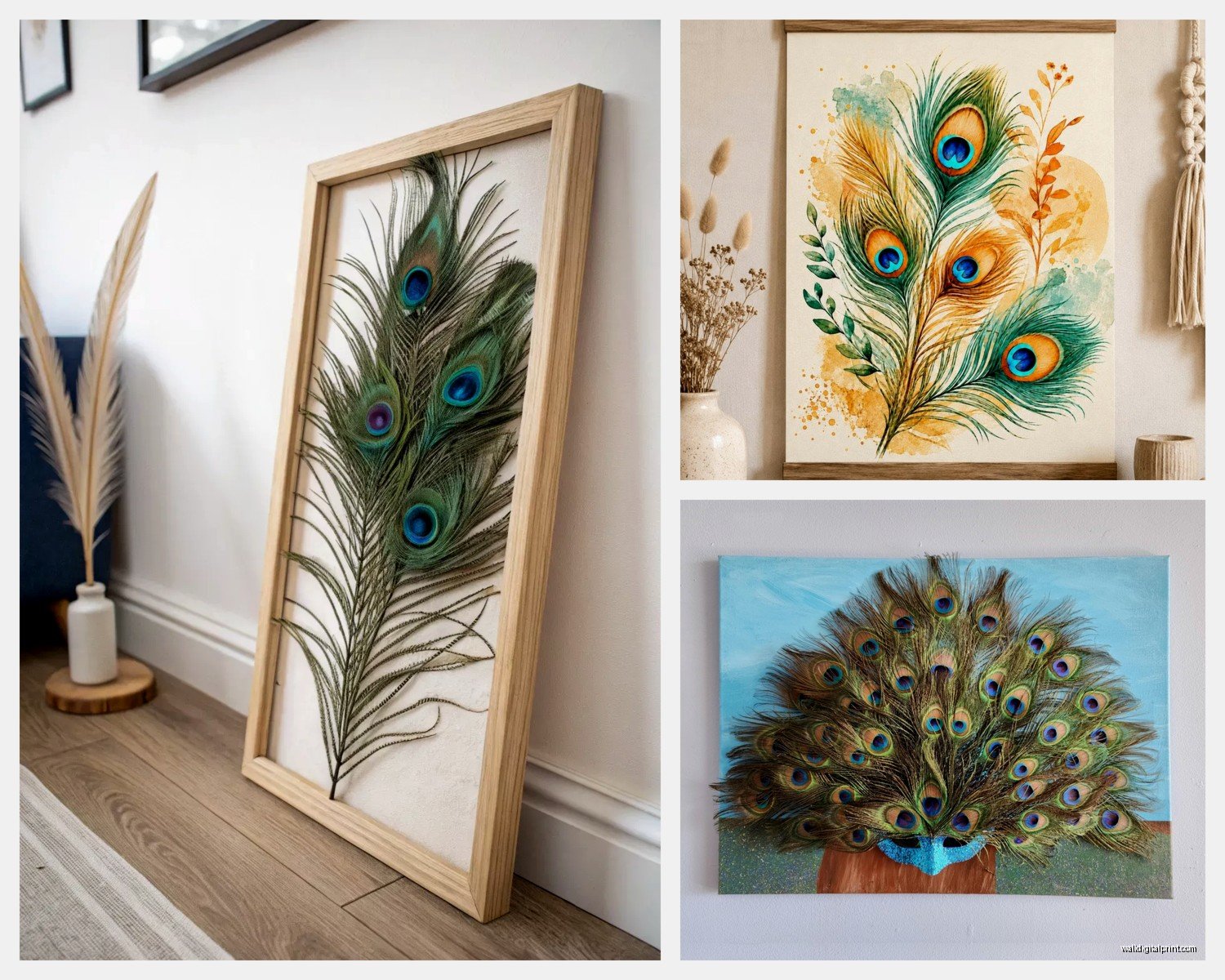
The shadow box method is my favorite for real feathers. Get a deep frame (at least 2 inches deep), arrange 3-5 feathers in there with a neutral mat background. I did cream linen fabric as backing once and it looked so much more elevated than plain white. Mount it like you would any other art piece.
For bohemian vibes specifically, you want that collected-over-time look not matchy-matchy. I mixed peacock feathers with pampas grass and dried eucalyptus in my studio and people always ask about it. The key is varying heights and textures.
Color Schemes That Don’t Fight the Feathers
Peacock feathers have those blue-green iridescent eyes with gold and that deep brown, so your wall color matters more than you’d think.
Works amazing with:
- Warm whites and creams
- Soft grays (not cool grays, they make the feathers look garish)
- Deep teals or navy if you want moody
- Terracotta or rust colors for that boho desert vibe
- Natural wood tones obviously
Avoid pairing with: bright whites, cool pastels, anything too matchy with the blue-green in the feathers because it gets overwhelming.
Room-by-Room Breakdown
Living Room
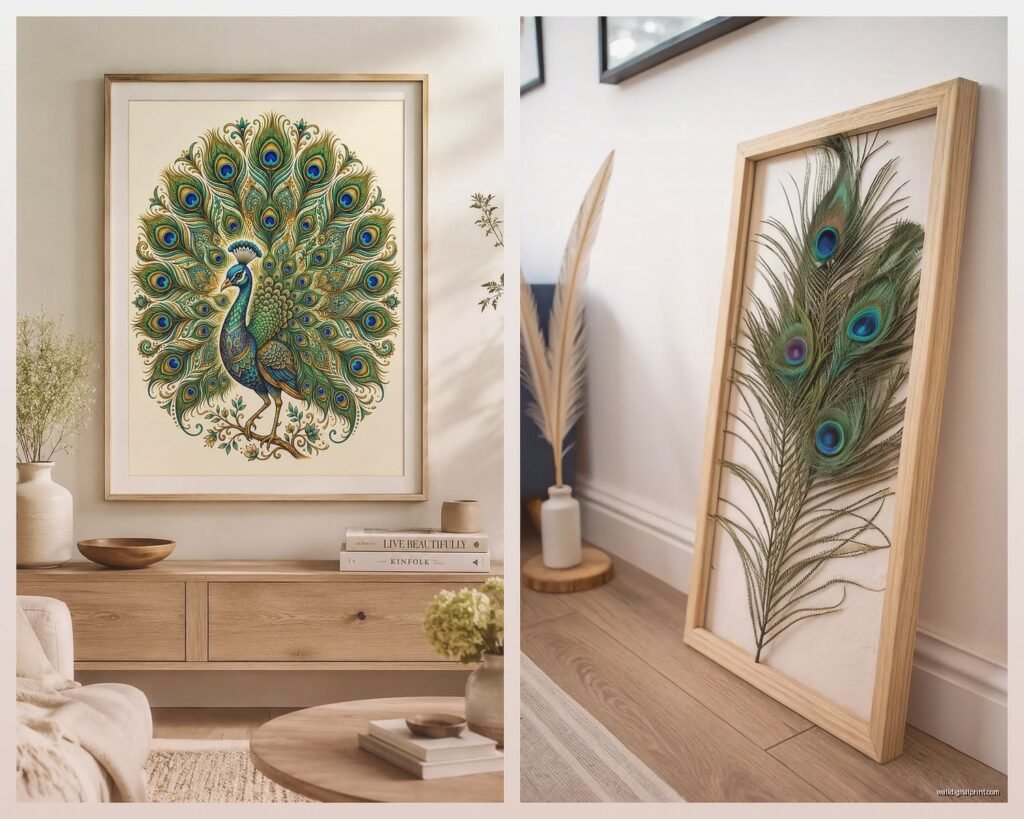
I did a whole gallery wall in my living room last year and included a large peacock feather print as the anchor piece. Hung it above a rattan chair with cream cushions and layered in some brass accents. The feathers tie into the natural texture thing without being too literal about it.
Size matters here – in a living room you can go big. Like 24×36 inches or even larger if you have the wall space. One statement piece works better than a bunch of small ones that just look busy.
Oh and another thing, lighting is huge. I added a small picture light above my feather art and the way it catches the iridescence at night is just *chef’s kiss*. Regular overhead lighting doesn’t do it justice.
Bedroom
Bedrooms are tricky because you don’t want the energy too intense. I’ve found that peacock feathers work best in bedrooms when they’re more subtle – maybe a framed print on a side wall rather than above the bed.
Did a client’s bedroom where we hung three individual feathers in slim gold frames in a vertical arrangement beside the window. Super elegant, brought in that bohemian element without overpowering the space. She had white bedding and lots of plants and it just worked.
Entryway or Hallway
This is actually my favorite spot for peacock feather art. You’re only passing through so you can handle more visual interest. I have a narrow hallway where I hung like seven different feather prints in mismatched vintage frames – some gold, some wood, different sizes. Sounds chaotic but because they’re all the same subject it reads as cohesive.
The trick for hallways is staggering the heights. Don’t do a straight line unless you want it to look like a doctor’s office.
Bathroom
Gonna sound weird but peacock feathers in a powder room? Amazing. Obviously use prints or protected pieces because humidity, but the jewel tones work so well with brass fixtures and marble. Keep it small scale though – one framed print is enough.
DIY Options If You’re Into That
Okay so if you wanna make your own arrangement, here’s what actually works. I spent a whole Saturday testing different methods when I should’ve been watching that new show everyone’s talking about.
Simple shadow box:
Get a deep frame from Michael’s (wait for the 50% off sale, they have them constantly). Buy 3-5 real peacock feathers – make sure they’re not damaged. Arrange them fanned out or in a line, use tiny dots of hot glue or those mounting squares to hold them in place. Put the glass back on. Done. Takes like 20 minutes.
Pressed feather method:
This is more involved but looks really professional. You basically press the feathers under heavy books for a few days (I used my collection of design books), then mount them on watercolor paper with a tiny bit of adhesive. Frame under glass. The flattened look is super modern-bohemian.
Cluster arrangement:
Buy a bunch of feathers in different sizes, get a large corkboard or foam board, cover it in linen or burlap, then arrange the feathers in a fan or circular pattern. Pin them down with tiny corsage pins. This is more craft-fair looking unless you keep it really minimal and intentional with your spacing.
What to Pair Them With
Peacock feather art doesn’t exist in a vacuum, right? You need supporting elements.
Textures that work:
- Rattan and wicker furniture
- Macramé wall hangings (but don’t overdo it or it gets too craft-y)
- Velvet pillows in jewel tones
- Natural fiber rugs like jute or sisal
- Brass or gold metal accents
- Plants obviously – pothos, monstera, anything with big leaves
I did a living room last month where we had peacock feather art, a velvet emerald sofa, brass floor lamp, and tons of plants. Sounds like a lot but because we kept the walls neutral and the other art minimal, it didn’t feel overwhelming.
Common Mistakes I See
Too many patterns competing with the feathers. Like if you have a busy rug and patterned pillows and then add peacock feathers, it’s visual chaos. The feathers themselves are patterned so let them be the star.
Hanging them too high. Art should generally be at eye level which is like 57-60 inches to the center of the piece. I see people hang peacock feather art way up near the ceiling and it just floats there looking awkward.
Using the wrong frame color. Black frames can work but they’re harsh with peacock feathers unless your whole space is really modern. Gold, brass, natural wood, or even white frames are usually better choices.
Seasonal Switching
Wait I forgot to mention – peacock feathers are kinda seasonal in their vibe. They feel more fall/winter to me with those rich colors. In summer I sometimes swap mine out for something lighter or just style around them differently. Add more whites and greens in the accessories, it lightens the whole thing up.
Or you could just leave them year-round, I’m not the decor police. My studio pieces stay up constantly because I’m too lazy to keep switching things out.
Budget Breakdown
Since you probably wanna know what this actually costs:
Budget option: $20-50
Print from Etsy or Amazon, basic frame from Target or Ikea, hang it yourself. Totally doable and can look great if you choose well.
Mid-range: $75-150
Better quality framed print or shadow box with real feathers, nicer frame, maybe a custom mat. This is where I usually land with clients.
Splurge: $200+
Custom framing with museum glass, preserved feathers under glass, vintage frames, or original peacock feather artwork. I have one client who spent $400 on a massive commissioned piece and it’s stunning but like, not necessary for most people.
Maintenance Stuff
Real feathers need dusting every few weeks with a soft brush or low-setting vacuum attachment. Don’t use cleaning products on them. If they’re under glass you’re fine, just clean the glass normally.
Prints basically need nothing except maybe dusting the frame.
Keep both away from direct sunlight if possible, especially real feathers which will fade and get brittle.
When Peacock Feathers Don’t Work
Okay real talk, they’re not for every space. If your whole vibe is minimalist Scandinavian or ultra-modern, peacock feathers are gonna look out of place. They need a bit of that eclectic, layered, collected aesthetic to make sense.
Also if you’re going for coastal or farmhouse, they read wrong. Like I tried to make them work in a farmhouse-style dining room once and it just felt forced. Some things don’t need to be combined.
The space needs to have some personality already. Peacock feathers in a beige box of an apartment with no other character? They’ll stick out in a bad way. Build up your bohemian elements gradually – plants, textures, natural materials – then add the feathers.
My client who has that really sleek modern condo? We skipped peacock feathers entirely and went with abstract art instead. You gotta know when something doesn’t fit your actual lifestyle and space.
Just stop when you’ve covered enough ground and tested enough scenarios. The person reading this has what they need to make a decision now.