
Wall Art Guide, Wall Art Tutoriels
Quirky Kitchen Wall Art: Eccentric Fun Cooking Space Decor
Oct
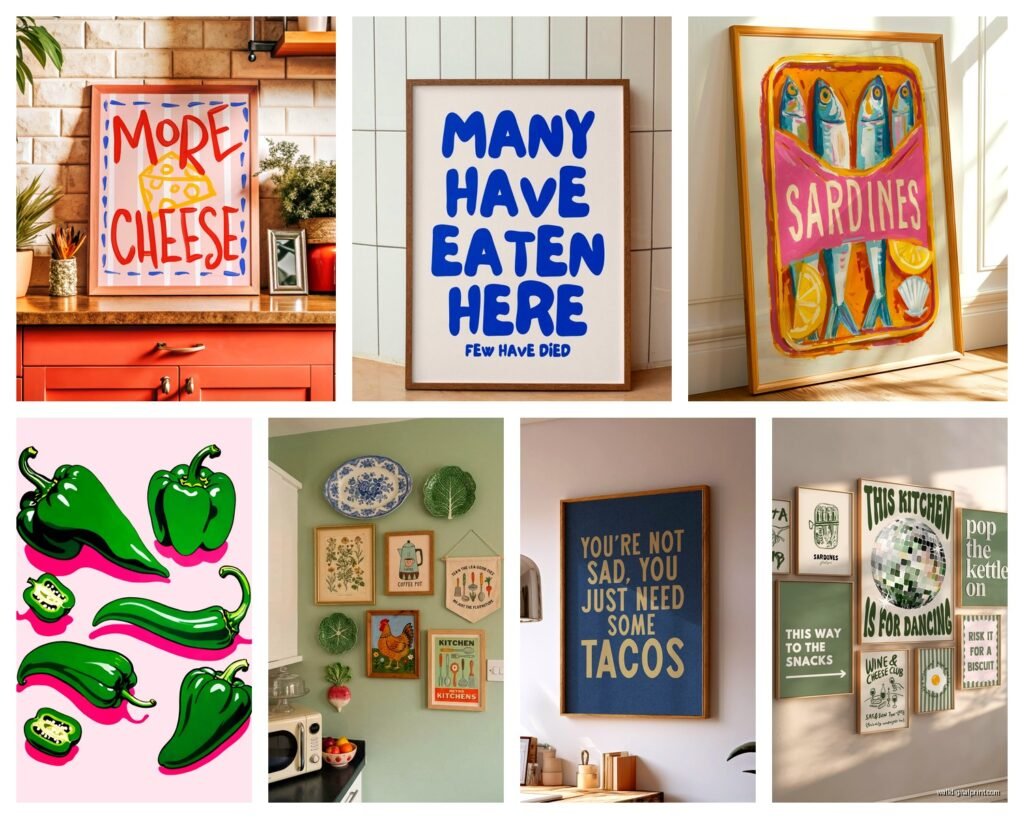
So I’ve been decorating kitchens for like 15 years now and quirky wall art is honestly where people get the most stuck, they think it’s gotta be all farmhouse signs or those boring herb prints but trust me there’s so much more fun to be had.
Finding Your Weird Thing That Actually Works
Okay so first thing, you gotta figure out what kind of quirky you’re going for because there’s like vintage quirky, modern weird, ironic funny, or just straight up bizarre. I had this client last year who wanted to put a collection of vintage egg beaters on her wall and I was skeptical but honestly it looked amazing? The key is committing to it.
What I do is scroll through my phone at all the food photos I’ve saved and see what makes me smile. Like if you’re obsessed with coffee, lean into that hard. Not just one “but first coffee” sign though, we’re past that. I’m talking a whole wall dedicated to vintage coffee advertising, old grinder parts mounted as sculpture, maybe a neon coffee cup sign if you’re feeling bold.
The Gallery Wall Approach Without Looking Like Everyone Else
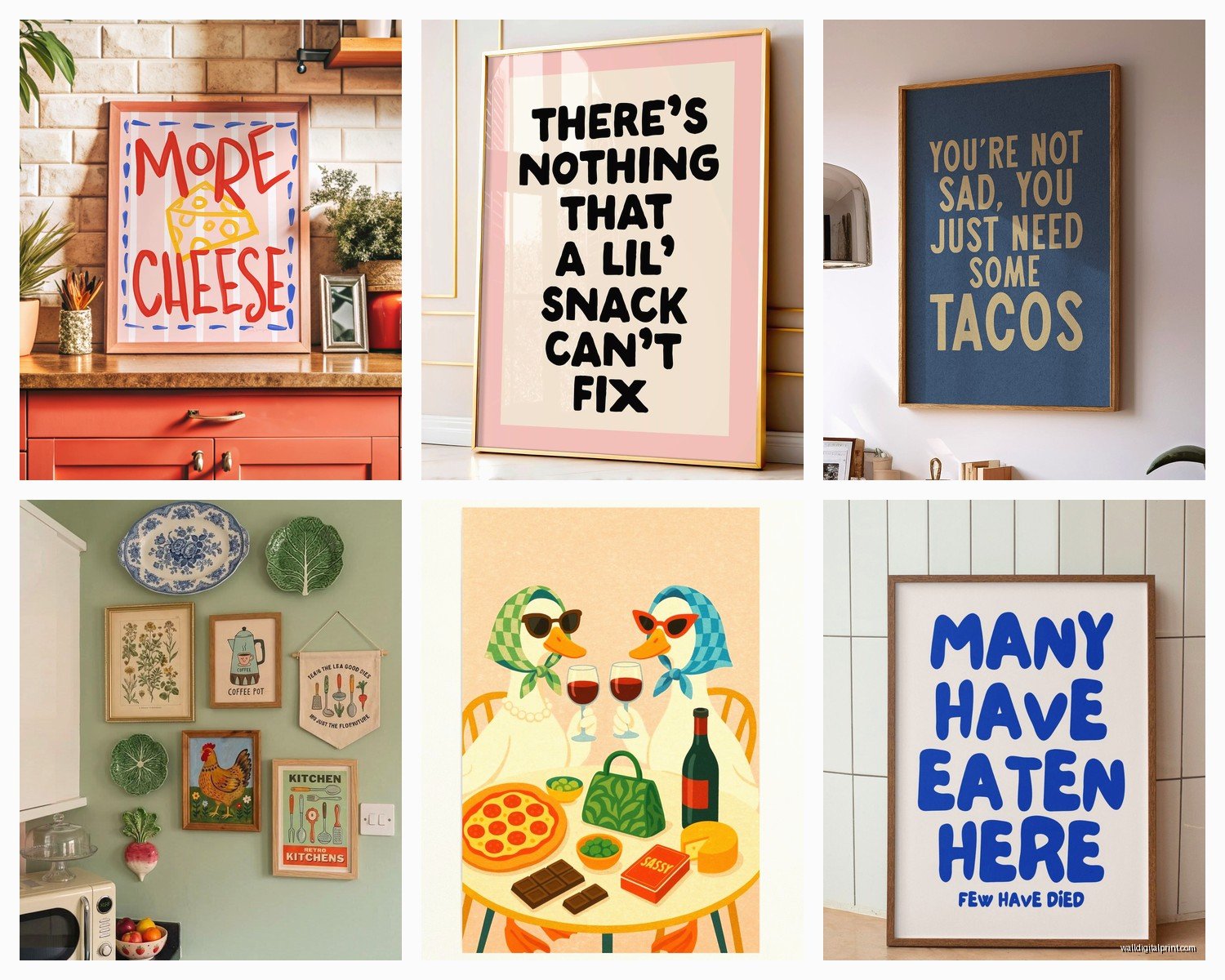
Gallery walls can go so wrong so fast. I see people doing the same IKEA frame setup and it’s just… fine. For quirky kitchen art you want mismatched but intentional, you know?
Here’s what actually works:
- Mix frame colors but keep them in the same finish family (all matte or all glossy, not both)
- Use actual vintage cooking tools as part of the display, like mount a wooden spoon between frames
- Include at least one piece that’s three-dimensional, breaks up the flatness
- Odd numbers, always odd numbers for groupings
- Leave more space than you think you need, cramped quirky just looks messy
I found this amazing set of vintage jello mold advertisements from the 1950s on Etsy last month and they’re genuinely hilarious. The colors are insane, the food looks absolutely unappetizing by today’s standards, and it makes people laugh every time. Cost me like $45 for digital downloads that I printed at a local shop.
Where to Actually Find This Stuff
Okay so funny story, I was watching The Bear (have you seen it? so stressful but so good) and got inspired to hunt down actual restaurant supply catalogs from the 70s and 80s. You can find scans online and the typography alone is chef’s kiss. Print those pages, frame them, instant conversation starter.
My Go-To Sources
Etsy is obvious but you gotta search weird terms. Don’t search “kitchen art” search like “vintage food advertising” or “mid century cookbook illustrations” or “retro recipe cards.” The algorithm shows you different stuff based on specific searches.
Estate sales are goldmines. I’m talking about finding actual hand-painted signs from old diners, menu boards, those weird decorative plates nobody wants anymore. My neighbor was gonna throw out this collection of fondue-themed art from the 60s and I literally grabbed it from her donation pile. It’s now worth something apparently? But also it’s just delightfully weird.
Antique malls, specifically the booths run by younger dealers who don’t know what to do with the kitschy stuff. I’ve found amazing vegetable crate labels, old seed packets still in their original display boxes, advertising thermometers from dairy companies.
Oh and another thing, museum gift shops have amazing food-related art prints that nobody thinks about. The MoMA store has this whole section of vintage design posters and some are food packaging from like the 1930s. Not cheap but they’re actual quality prints.
The Practical Stuff Nobody Tells You
Kitchen walls get greasy, it’s just physics. You need to think about this before you spend money on something you can’t clean.
Frame It Right
Glass fronts are your friend in kitchens. I know exposed prints look more casual but trust me after six months near your stove they’ll be gross. Get frames with actual glass (not just plastic) because you can wipe them down with glass cleaner.
For stuff you’re mounting directly, use a matte sealer spray. I use Krylon Matte Finish on any paper goods before they go up. Two light coats, let it dry completely. Makes them wipeable-ish.
Command strips work great for lighter pieces but anything over 3 pounds needs actual wall anchors. I learned this the hard way when a vintage baking pan collection came crashing down during a dinner party at my place, so embarrassing.
Specific Ideas That I’ve Actually Installed and Loved
The Vintage Cookbook Page Wall
Buy damaged vintage cookbooks from thrift stores (never destroy good ones, that’s a crime). Pull out the most visually interesting pages, the ones with weird illustrations or horrifying aspic recipes. I did this whole wall of 1960s Weight Watchers recipe cards for a client and people literally take photos of it. The recipes are unintentionally hilarious.
Frame them in simple black frames, all the same size. It looks cohesive even though the content is chaotic. I did a 3×3 grid of 8×10 frames for like $80 total including the frames from Amazon.
Neon Signs But Make It Weird
Custom neon is expensive but there are these LED neon alternatives now that look almost identical and cost way less. I got one made that says “BUTTER” in yellow neon script for my own kitchen and it was $120. Worth it? Debatable but I love it.
You can also find vintage neon signs from old restaurants and diners if you’re willing to hunt. They need professional installation usually and sometimes restoration but the vibe is unmatched.
The Utensil Shadow Box Situation
This is gonna sound weird but I’ve done this three times now and it always works. Get a deep shadow box frame (like 2-3 inches deep) and arrange vintage or antique cooking utensils inside. Not in a cutesy way, more like a museum display.
I did one with old ice cream scoops, all different mechanisms and styles. Another with vintage cheese graters that looked like medieval torture devices honestly. The key is having enough variety that it’s interesting but not so much that it’s overwhelming.
Actual Vegetables and Fruits (Not Real Ones, Obviously)
Okay so there’s this whole world of botanical illustration that’s not the boring herbs everyone uses. I’m talking like cross-sections of pineapples, detailed drawings of cabbage varieties, vintage seed catalog illustrations of weird heirloom tomatoes.
The Biodiversity Heritage Library has thousands of these available as free downloads. You just need to print them nicely. I use a local print shop that does archival printing and it’s worth the extra cost over your home printer.
Mount them on colored matboard, something unexpected like deep navy or even black. Makes the illustrations pop and feels less country kitchen, more cabinet of curiosities.
The Weirder Stuff That Might Not Be For Everyone
wait I forgot to mention, if you’re into maximalist vibes, you can go full weird with it.
Taxidermy-Adjacent Without Actual Dead Animals
Okay bear with me. Papier-mâché or ceramic vegetables and fruits in those old-school still life arrangements. You can find these at antique stores or even make them. Mount them on plaques like hunting trophies. I did a wall of ceramic mushrooms for someone and it was delightfully creepy in the best way.
The Oversized Single Object
One giant thing can be more impactful than a whole gallery wall. I found a 4-foot wooden fork and spoon set at a flea market for $30 and it’s become my whole personality apparently, everyone asks about it.
You can also commission these. Local woodworkers will often do custom pieces. I had someone make a 3-foot whisk sculpture out of copper pipe and it’s genuinely art.
Ironic Corporate Food Art
This is my guilty pleasure category. Vintage fast food advertising, old cereal box mascots, discontinued product packaging blown up huge. There’s something about putting a 2-foot vintage McDonald’s poster in your expensive kitchen that feels rebellious and fun.
You can find high-res scans of a lot of this stuff through vintage advertising archives online. Print it big, frame it seriously (like nice frames, not cheap poster frames), and it becomes commentary instead of just nostalgia.
Color Coordination Without Being Boring
Even quirky art needs to work with your space. I’m not saying match your walls exactly but there should be some conversation happening between the art and the room.
If your kitchen is all white and stainless steel, you can go wild with color in your art. This is where those insane vintage jello ads really shine, all that artificial green and orange.
If you’ve got a colorful kitchen already, consider black and white quirky art. Vintage food photography, old restaurant menus, line drawings of kitchen equipment. It calms things down while still being interesting.
My cat just knocked over my coffee which is perfect timing because coffee-themed art is huge right now and mostly terrible? But there are some good vintage options. Old coffee can labels, especially from regional roasters that don’t exist anymore, have amazing graphics.
Making a Theme Work Without Going Too Far
You can do a theme without it being like a TGI Friday’s situation. The trick is varying the medium and style even if the subject is the same.
For example, if you’re doing fish (very having a moment in design right now), you could have:
- A vintage fish market sign
- A scientific illustration of salmon anatomy
- A ceramic fish mounted on a plaque
- A neon outline of a fish
- Vintage fishing lure display
All fish, all different vibes, feels curated not themed.
Installation Tips From Someone Who’s Hung Way Too Much Art
Use a laser level, seriously just buy one they’re like $25. Eyeballing it always looks wrong even when you think it looks right.
For gallery walls, trace your frames on kraft paper, tape the paper to the wall, arrange it until it looks good, then nail through the paper. Remove paper, hang frames on nails. Game changer, learned this from an old curator I worked with.
Behind the stove is tricky because of heat. Nothing too precious back there, nothing that will fade or warp. I usually do tile or metal pieces in that zone. Vintage enamel advertising signs work great, they’re made to withstand weather so kitchen heat is nothing.
Lighting Makes or Breaks It
If you’re putting art on a wall that doesn’t get natural light, you gotta add lighting. Those battery-operated picture lights are okay for renters but they always look temporary. If you can, install proper picture lights or even just make sure you have good overhead lighting that hits the wall.
I did track lighting in my kitchen specifically to highlight my wall of vintage copper molds and it makes such a difference at night.
Budget Real Talk
You can do this cheap or expensive, both work. I’ve done stunning quirky kitchen art walls for under $200 total and I’ve done them for thousands. It’s about the hunting and the eye, not necessarily the budget.
Cheap options that look expensive:
- Printable downloads from Etsy printed at FedEx or local print shop
- Thrift store frames spray painted all one color
- Free museum digitized collections printed large
- Flea market finds cleaned up and properly mounted
- DIY projects using vintage materials
Where to spend money if you have it:
- Custom framing for weird-sized pieces (it’s worth it, makes everything look intentional)
- One statement piece that’s actual art, not a print
- Proper lighting
- Professional installation for heavy or valuable pieces
The mix of high and low actually looks better than all expensive or all cheap anyway.
Mistakes I’ve Made So You Don’t Have To
Don’t put paper art directly across from the sink. Splashing is real and it will ruin your stuff, I’ve learned this twice somehow.
Don’t go too small. Kitchen walls can handle bigger art than you think. Those 5×7 prints get lost. Go at least 8×10, preferably bigger.
Don’t forget about the space above your cabinets if you have it. That’s prime quirky art real estate. I’ve put vintage bread boxes up there, old kitchen scales, whatever doesn’t fit on the walls.
Test command strips before you commit if you’re renting. Some walls they work great, some they pull paint off. Do a test in a hidden spot first.
And honestly, don’t overthink it. The best quirky art is stuff that makes you happy when you see it. If you love it and it’s weird, it’s gonna work in your kitchen. I’ve seen people pull off the strangest combinations just because they committed to it with confidence.
That’s pretty much everything I’ve figured out through trial and error and decorating way too many kitchens at this point, hope some of it helps you figure out your wall situation.
