
Wall Art Guide, Wall Art Tutoriels
Wall Artwork: Original vs Prints Buyer’s Guide

Mar
So I was literally just helping my sister pick out art for her new apartment yesterday and she asked me this exact question, and honestly it’s something I deal with constantly in my work. Let me just dump everything I know about originals vs prints because there’s actually a lot more to consider than just the price tag.
The Real Cost Breakdown Nobody Talks About
Okay so first thing – when people say “original” they usually mean one of three things and this is where it gets confusing. You’ve got actual original paintings or drawings, limited edition prints that are signed and numbered, or open edition prints that are basically mass-produced. The pricing is gonna vary wildly.
Original paintings from emerging artists start around $200-500 for smaller pieces, but I’ve seen them go up to like $5000+ easy. Limited edition prints usually run $100-800 depending on the artist and edition size. Open edition prints? You’re looking at $30-300 typically, sometimes less if you’re buying from big box stores.
But here’s what nobody tells you – framing costs can completely flip your budget. I learned this the hard way when I bought a gorgeous $150 print and then spent $400 getting it professionally framed because it was an odd size. Custom framing for originals is even more because you need UV-protective glass, acid-free matting, all that preservation stuff.
Quality Differences You’ll Actually Notice
The texture thing is real. When you stand in front of an original oil painting, you can see the brushstrokes, the layers of paint, sometimes even fingerprints or palette knife marks. It has this physical presence that’s just… different. My dog walked past one of my client’s new paintings last week and his tail brushed it and I nearly had a heart attack, but also that’s the thing – it’s THERE in a way prints aren’t.
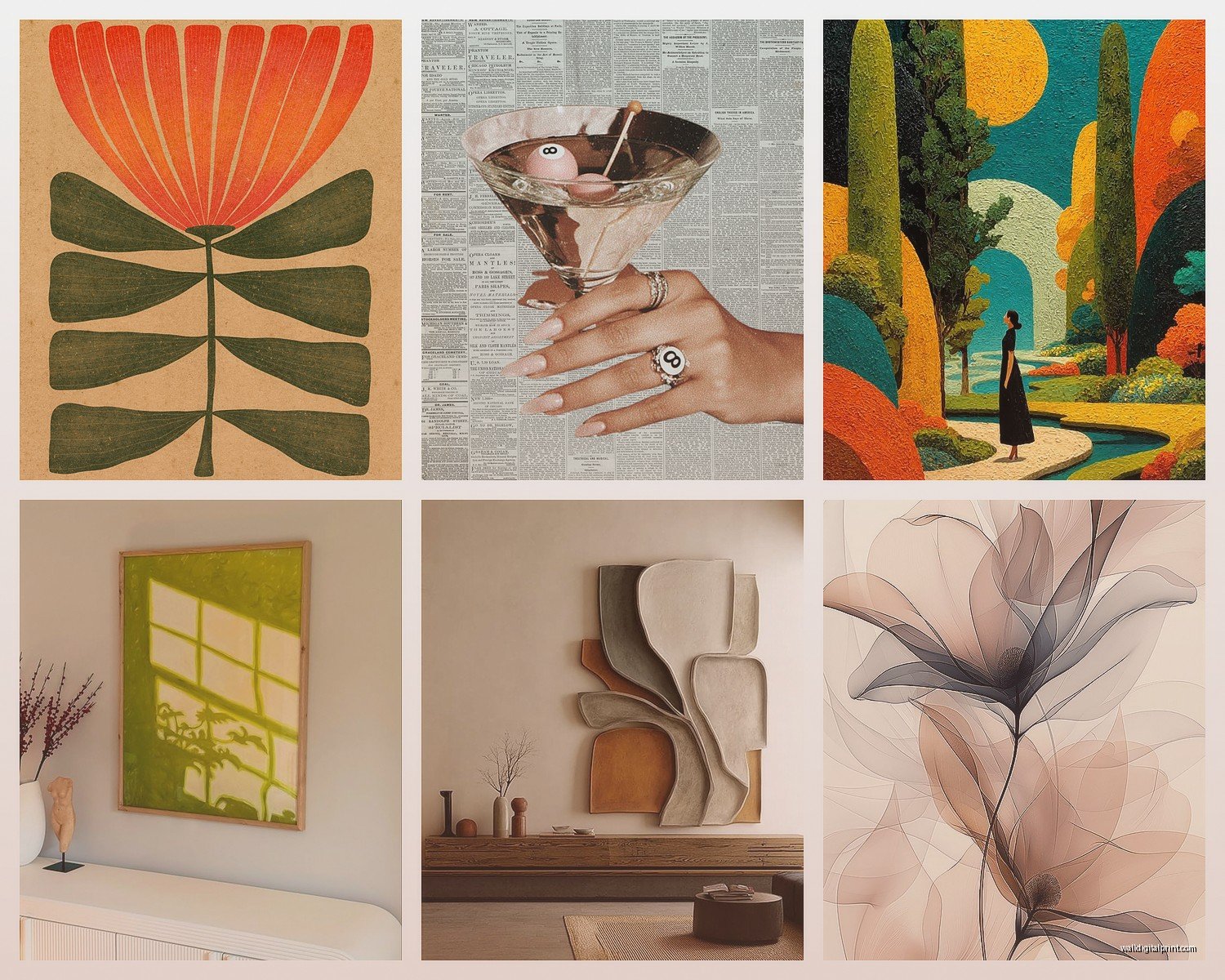
Prints though have gotten insanely good. Giclée prints especially – they use archival inks and can reproduce colors so accurately that from like 3 feet away you honestly can’t tell. I did a side by side comparison once with a Rothko reproduction and the original at a gallery and yeah okay up close the difference was obvious but in someone’s living room? The print looked amazing.
Color Accuracy and Lighting
This is where I get kinda nerdy but it matters – originals react to light differently throughout the day. Oil paintings especially will look completely different in morning light versus evening. The colors shift, shadows appear in the texture, it’s like the piece changes moods with you.
High-quality prints maintain consistent color but they’re flat. What you see at noon is what you see at 8pm. Some people prefer this actually – my minimalist clients love the predictability. But if you want that living, breathing quality, you gotta go original.
Investment Value (And Why It’s Complicated)
Look, I’m gonna be honest – most art isn’t an investment in the financial sense. Everyone wants to believe they’re buying the next Basquiat when he was unknown, but statistically that’s not happening. I’ve bought probably 30 original pieces over the years for clients and myself, and maybe 2 have increased in value.
BUT here’s what does have value – originals hold their resale value better than prints. A $500 original might sell for $400-600 years later. A $500 print? Good luck getting $100 for it used. Prints depreciate like cars basically.
Limited editions are the middle ground. If you buy a 15/50 print from an artist who later gets gallery representation or museum shows, it can appreciate. I have a client who bought a limited print for $250 in 2015 that’s now worth around $800 because the artist blew up. But that’s still kinda rare.
Where to Actually Buy This Stuff
Originals – I usually hit up local art fairs, open studio events, Instagram honestly (so many artists sell direct now), and smaller galleries. Avoid the big name galleries unless you’ve got serious money. Oh and university art department shows are goldmines for affordable originals from talented students.
Prints – Etsy has a massive selection but quality varies wildly. Society6 and Minted are more consistent. For museum-quality reproductions, check out places like Art.com or directly from museum shops. I got this incredible Klimt print from the Belvedere Museum shop online for like $80 and it’s stunning.

Wait I forgot to mention estate sales – you can find incredible original art at estate sales for nothing. I found a original 1960s abstract piece for $45 last month. Needed $200 in restoration but still.
The Online vs In-Person Dilemma
Buying originals online is risky because colors on screens are lies. I’ve ordered pieces that looked warm and vibrant online and arrived looking muddy and dull. Always ask for additional photos in natural light, and check the return policy obsessively.
For prints, online is usually fine because what you see is closer to what you get. Just make sure you’re looking at the actual print dimensions – I’ve seen so many people order “large” prints that arrive and they’re like 11×14 inches.
Maintenance and Longevity Stuff
Originals need more care, period. You can’t hang oil paintings in direct sunlight or they’ll fade and crack. Watercolors are even more fragile. I have a client whose original watercolor got exposed to humidity and the paper warped – $800 down the drain basically.
Archival quality prints (giclée on cotton rag paper with archival inks) can last 100+ years if properly framed and cared for. Cheap poster prints? Maybe 10 years before they start fading noticeably. The paper yellows, colors wash out, it’s not pretty.
Oh and another thing – originals often need professional cleaning every few years. Dust and pollutants build up on the surface. I learned this when I noticed my original acrylic painting looking dingy after 5 years. Restoration specialist charged $150 to clean it and it looked brand new.
The Emotional Weight Factor
This is gonna sound weird but owning an original feels different. You know a human being stood in front of that canvas and made every single mark. There’s only one in the world. When I bought my first original – this small abstract piece from a local artist – I felt this connection to it that I’ve never felt with my prints.
Some people don’t care about this at all and that’s totally fine. My husband thinks I’m ridiculous and he’s perfectly happy with the $40 print in his office. But for me and a lot of my clients, that one-of-a-kind aspect adds meaning.
Prints let you own imagery you could never afford as an original though. I have a gorgeous Monet print that brings me joy every day. The original is in a museum in Paris and worth millions. The print cost me $65. That’s pretty magical in its own way.
Size and Scale Considerations
Originals in large sizes get expensive FAST. Like, a 4×5 foot original painting from even an emerging artist is gonna run you $2000-5000 minimum. The same size in a quality print? Maybe $300-600 including framing.
If you need big statement pieces for high ceilings or large walls, prints make way more financial sense. I staged a loft last year with 6-foot tall prints that looked incredible and cost $800 total. Originals at that size would’ve been $15,000+.
Small originals though – under 16×20 inches – are often very affordable and can be more impactful than large prints. There’s something intimate about a small original piece that draws you in.
Color Matching Your Space
With prints, you can often get custom colors or find exactly what matches your sofa or whatever. Lots of print-on-demand services let you adjust hues and saturation. Can’t do that with originals – you get what you get.
But here’s the flip side – originals can inspire your whole color scheme. I’ve designed entire rooms around a single original painting, pulling accent colors from unexpected places in the piece. It creates this cohesive look that feels organic rather than matchy-matchy.
My Actual Recommendation Process
When I’m working with clients, I ask them these questions and you should ask yourself too:
- Budget including framing – what’s the total you can spend?
- How long are you staying in this space – renting or owning?
- Do you care about resale value at all?
- Are you emotionally drawn to owning unique pieces?
- How much maintenance are you willing to do?
- What size do you actually need?
If you’re renting or might move soon, prints make more sense. They’re easier to transport, less nerve-wracking to handle. If this is your forever home and you’re building a collection, mix of both is ideal.
For high-traffic areas or rooms with kids – prints all the way. I don’t care how careful you think you are, accidents happen. My cat knocked over a vase onto one of my prints last year and I was annoyed but not devastated. If it had been an original I would’ve cried.
The Hybrid Approach That Actually Works
What I do personally and recommend most often – buy one really good original piece as your focal point, then surround it with quality prints. This gives you that special feeling of owning original art without breaking the bank.
I have one original abstract painting above my fireplace that cost $600. Around it I’ve arranged various prints – some limited editions, some open edition – that complement it. Total cost for the whole gallery wall was maybe $1200, but it looks like I spent way more.
The original elevates the prints somehow. People always assume the whole collection is original when they first see it. Then when I point out which one is the real deal, they’re surprised but it doesn’t diminish the overall impact.
Testing Before Committing
Here’s something I started doing – buy a cheap print of an image first to see if you actually like living with it. So many times I’ve been obsessed with a piece in a gallery or online, brought it home, and realized after a week that it didn’t work in my space.
If after a month you still love the print version, then maybe invest in the original or a limited edition. If you’re already tired of it, you’re only out like $30 instead of $300 or $3000.
Okay so the bottom line after doing this for years – there’s no wrong choice really. I have incredibly cheap prints I love just as much as my expensive originals. The “best” option depends entirely on what you value, what you can afford, and what brings you joy when you look at your walls. Start with what excites you and fits your budget, and build from there. You can always upgrade or add to your collection later.
