Wall Art Guide, Wall Art Tutoriels
Large Outdoor Metal Wall Art: Weather-Resistant Sculptures
Apr
So I spent like three weeks last month helping a client pick outdoor metal art for their patio and honestly, I learned way more than I expected about what actually holds up versus what just looks good in catalog photos.
The Metal Types That Actually Matter
Okay so first thing – not all metals are created equal when it comes to sitting outside getting rained on. Corten steel is probably gonna be your best friend here. It’s that rusty-looking stuff you see on fancy buildings and it’s SUPPOSED to rust. Like, that’s the whole point. It forms this protective layer of rust that actually stops it from rusting further, which sounds fake but it’s real science or whatever. I have a corten piece on my own balcony and it’s been through two winters now, looks exactly the same.
Stainless steel is the other obvious choice but here’s the thing – you need marine grade (that’s 316 stainless) if you’re anywhere near the coast. Regular 304 will pit and corrode faster than you’d think. Found that out the hard way with a sculpture I curated for a beach house in Charleston… had to replace it after like 18 months because it looked terrible.
Aluminum is super lightweight which makes installation easier, but it can oxidize and get chalky looking. Powder-coated aluminum though? That’s actually pretty solid. The coating protects it and you get way more color options.
Powder Coating vs Raw Metal
If you’re going with steel that isn’t corten, you absolutely need powder coating. Not paint – powder coating. It’s baked on at like 400 degrees and forms this really tough shell. I’ve seen powder-coated pieces last 10+ years outside with minimal fading.
Colors matter too though. Darker colors fade faster in direct sun. My client last year insisted on this deep navy blue piece and I warned her but she loved it so… anyway it’s now more of a dusty blue-grey after one summer. Not ruined, just different. Metallics and lighter colors hold up better.
Size and Weight Considerations Nobody Talks About
Large outdoor pieces are HEAVY. Like really heavy. That gorgeous 6-foot metal tree sculpture? Probably 80-150 pounds depending on the metal thickness. You need to think about:
- Can your wall actually support it
- How you’re gonna get it there (my delivery guy was so mad at me once)
- What hardware you’re using to mount it
- Wind load if you’re in a gusty area
I usually tell people to assume you need at least 3 mounting points for anything over 4 feet in any dimension. And not those little picture hanging hooks – you need proper masonry anchors or heavy-duty wall anchors rated for outdoor use.
Oh and another thing – check the thickness of the metal itself. Anything under 14 gauge is gonna feel flimsy for large pieces. 12 gauge or thicker is better. Some cheaper pieces are like 18 gauge and they just don’t have that substantial feel, plus they can warp in extreme heat.
Design Styles That Work Outside
So this is gonna sound weird but I actually think simpler designs age better outdoors. Really intricate pieces with lots of small details… the shadows and depth get lost from a distance, and they collect dirt and spider webs in all the crevices.
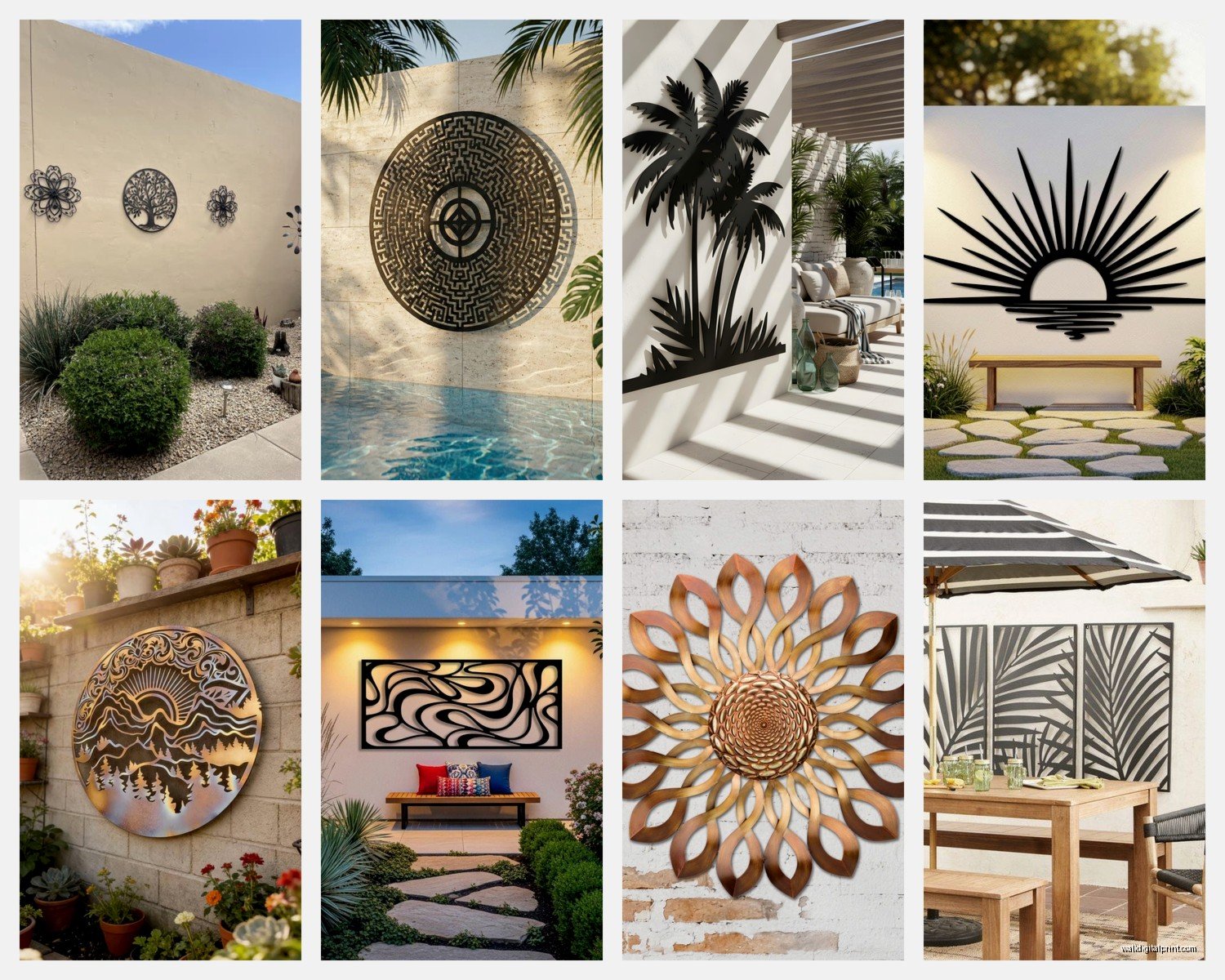
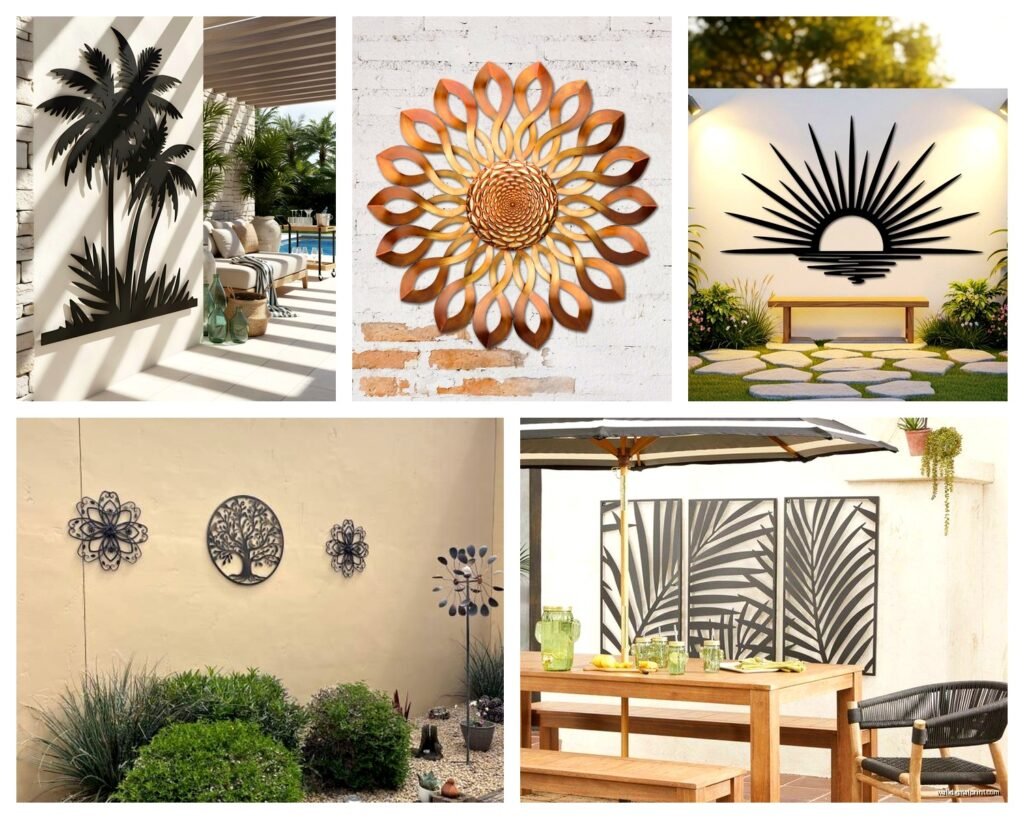
Geometric/Modern: Clean lines, abstract shapes. These are my go-to recommendations honestly. A large geometric sunburst or angular abstract piece reads well from across a yard and doesn’t compete with plants and landscaping.
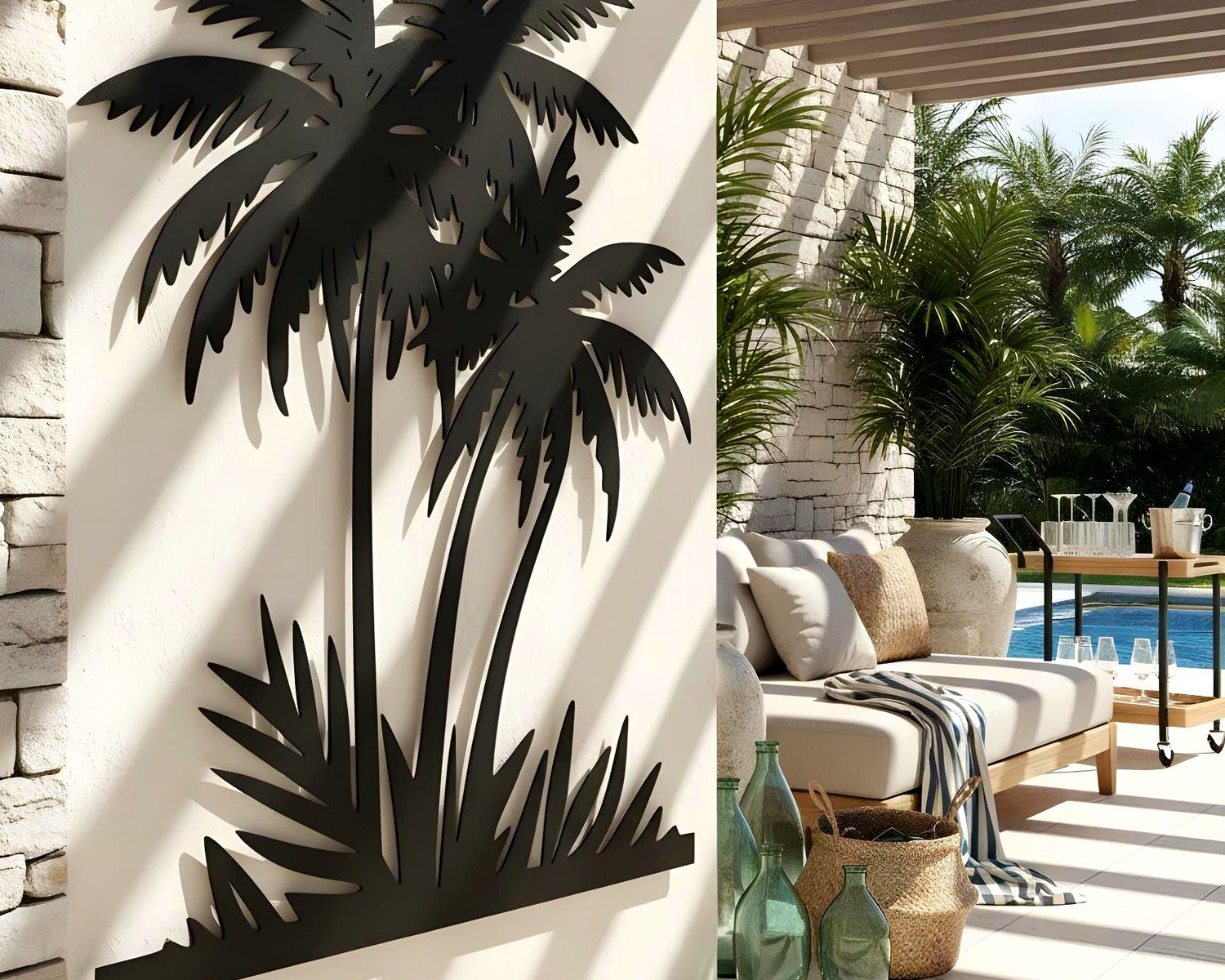
Nature-Inspired: Tree silhouettes, oversized leaves, birds. These blend nicely but make sure they’re stylized, not too realistic. The super realistic heron sculpture looks amazing up close but from your patio door it just looks like… a dark shape.
Metal Wall Planters: Technically functional art? I’m obsessed with these lately. Large metal frames that hold actual plants. They weather naturally and the plants change seasonally so it never gets boring.
What I’d Skip
Words and phrases unless they’re REALLY meaningful to you. That “Live Laugh Love” metal sign is gonna make you cringe in like two years. Also skip anything with moving parts unless you’re committed to maintaining them – those spinners and kinetic pieces seize up or squeak after one season.
Installation Real Talk
Okay so funny story – I tried to install a 5-foot metal gecko by myself last spring and nearly dropped it on my foot. Get help. Seriously.
For brick or stucco walls you need:
- Masonry drill bit
- Concrete anchors (I like Tapcon screws or sleeve anchors)
- Level (obvious but you’d be surprised)
- Someone to hold it while you mark holes
For wood siding or fence mounting:
- Find the studs or use toggle bolts
- Stainless steel screws minimum
- Washers to distribute weight
The trick nobody tells you – hang it slightly lower than you think. People always hang outdoor art too high. Your eye level when you’re standing in your yard is different than indoor eye level. I usually aim for the center of the piece to be about 5.5 feet up, maybe 6 feet max.
Wait I forgot to mention – some pieces come with built-in hangers welded on the back, others have holes you need to attach hardware to. Check this before you buy because it affects installation difficulty. The welded hanger tabs are so much easier.
Maintenance Schedule You’ll Actually Do
I’m gonna be honest, if maintenance is too complicated you just won’t do it. Here’s what actually works:
Monthly (or whenever you remember):
Spray it down with a hose. That’s it. Just rinse off dust, pollen, bird poop. Takes 30 seconds.
Twice a year:
Wipe down with mild soap and water. Check mounting hardware is still tight. Look for any spots where coating is damaged.
Yearly:
If it’s powder-coated and you see any chips, touch them up with outdoor spray paint in a similar color. This prevents rust from starting underneath.
For corten steel you literally do nothing. Let it rust. That’s the whole aesthetic.
Where to Actually Buy This Stuff
So I’ve ordered from probably two dozen different places at this point and here’s my hierarchy:
Best Quality: Direct from metal artists on Etsy or at art fairs. You’re paying more but it’s custom, well-made, and unique. I found this amazing sculptor in Colorado who does large-scale mountain ranges… her work is incredible and she ships everywhere.
Good Value: Wayfair and Overstock actually have decent selections. Read reviews carefully though – some pieces look huge in photos but are weirdly small in person. Always check actual dimensions.
Budget Friendly: Home Depot and Lowe’s have surprisingly okay options now, especially for simpler geometric pieces. The quality is fine for the price. Not heirloom pieces but they’ll last 5-7 years easily.
Avoid: Random Amazon sellers with no reviews or sketchy photos. I’ve gotten burned twice with pieces that were clearly not as described. Also those popup Facebook ads for metal art – they’re usually dropshippers marking up cheap imports.
Pricing Reality Check
A quality large outdoor metal piece (like 4-6 feet) is gonna run you:
- Budget: $100-250
- Mid-range: $250-600
- High-end/Custom: $600-2000+
I know that seems like a lot but think of it like outdoor furniture. You wouldn’t buy a cheap patio set expecting it to last, same logic applies here.
Specific Recommendations I Keep Coming Back To
There’s this company called Inspired by Nature (I think that’s the name?) that does oversized leaf designs in powder-coated steel. I’ve specified their pieces for probably five different projects and they always look great. The coating holds up and they’re surprisingly affordable.
For corten steel, look at H Potter – they do garden art but their wall pieces are solid. Thick metal, proper welding, ships fast.
If you want something really custom, search “metal wall art” + your state on Instagram. Local metal artists are everywhere and usually happy to do custom sizes or colors. Plus you skip shipping costs if you can pick up.
The Wind Factor Everyone Forgets
Oh man, so important. If you’re in a windy area (I’m looking at you, Chicago clients), you need to think about wind resistance. Large flat pieces basically become sails. Either:
- Choose designs with cutouts that let wind pass through
- Mount extra securely with more anchors
- Position in a more protected spot
I had a client’s piece actually rip out of their fence during a storm because we didn’t use enough mounting points. It was like 6 feet tall with minimal cutouts and just caught the wind wrong. Now I always overbuild the mounting system.
Mixing Metals and Materials
This is gonna sound weird but metal + wood looks amazing outside. Like a metal tree sculpture on a cedar fence, or geometric metal shapes on a stone wall. The contrast in textures makes both materials look better.
You can also layer pieces – a large background piece with a smaller dimensional piece in front. Creates depth and shadow play that changes throughout the day. My dog keeps barking at the shadows from my layered piece setup which is annoying but also proves it’s visually interesting I guess.
Seasonal Considerations
Metal gets HOT in summer sun. Like burn-your-hand hot. Keep this in mind if you have kids who might touch it or if it’s near a frequently used area. Dark metals heat up more than lighter ones.
In winter, most metals are fine but ice buildup can add weight. Make sure mounting hardware accounts for this. And if you’re in a freeze-thaw climate, water can get into crevices and expand, so good drainage design matters.
Lighting It Up
One thing that elevates outdoor metal art SO much is uplighting or backlighting. A simple LED spotlight aimed at your sculpture at night creates these dramatic shadows and highlights. You can get solar ones now that are actually decent. I installed some for a client last fall and the nighttime effect is honestly better than daytime.
Just make sure the light fixture is also weather-resistant because nothing’s sadder than a corroded spotlight pointing at your beautiful non-corroded art.
Common Mistakes I See All The Time
Hanging it on a fence that’s not sturdy enough. The fence needs to be solid – new-ish posts, no wobble. Otherwise you’re just gonna stress the fence structure.
Not considering the background. A black metal tree on a black fence disappears. You need contrast – light art on dark backgrounds or vice versa.
Buying too small. People always underestimate scale outdoors. What looks huge in your living room looks tiny on a 20-foot wall. Go bigger than you think you need.
Forgetting about plant growth. That perfect spot next to your small shrub? Yeah in two years that shrub is gonna cover half your art. Plan for growth or choose a different spot.
The Patina Question
Some metals develop patina over time and it’s beautiful if you like that look. Copper turns green-blue, bronze goes brown-green, corten gets that rich rust color. But if you want it to stay looking new forever, you need sealed or coated options.
I personally love the patina effect – feels more organic and less “I just bought this from a catalog.” But clients are split on this. Just know what you’re getting into.
Okay I think that covers most of what I’ve learned through trial and error. The main thing is just make sure it’s actually rated for outdoor use – sounds obvious but you’d be surprised how many “outdoor” pieces aren’t really meant to live outside year-round. Check the product description carefully and don’t be afraid to email the seller and ask specific questions about materials and coating.