Wall Art Guide, Wall Art Tutoriels
Large Metal Wall Art for Outside: Garden & Patio Sculptures
Apr
So I’ve been testing outdoor metal wall art for like three years now, ever since I mounted this gorgeous steel sunburst on my back fence and my neighbor asked where I got it. Now half my clients want the same vibe but bigger, more dramatic, and I’ve learned SO much about what actually holds up outside versus what rusts into an orange mess after one winter.
The Metal Types That Actually Matter
Okay so here’s the thing about metal—not all of it wants to live outside. I made this mistake with a client’s courtyard where we hung this beautiful copper piece that was supposedly “outdoor safe” and within like six months it had this green patina situation that she actually ended up loving? But that’s not always gonna be the vibe you want.
Corten steel is my absolute go-to for large pieces. It’s that rust-colored steel that develops a stable rust layer that protects the metal underneath. Sounds counterintuitive but it works. I’ve got a 4-foot geometric panel that’s been on my patio wall through two harsh winters and it looks exactly the same. The rust doesn’t flake off or stain like regular steel would. Just know it WILL leave orange streaks on light-colored walls or pavement for the first few months while it’s weathering, so mount it away from anything you care about staining.
Stainless steel is the fancy option—never rusts, always looks polished. I use this for clients who want that modern sculptural look. There’s this amazing wave design I installed last spring that catches light like crazy. Downside is it shows water spots and you gotta wipe it down occasionally if you’re picky about that stuff.
Powder-coated aluminum is lightweight which makes installation way easier when you’re dealing with something massive. My arms still hurt from that time I tried mounting a 50-pound steel piece by myself… anyway, aluminum won’t rust but the powder coating can chip if something hits it. I always keep touch-up paint on hand.
What About Wrought Iron
People ask me about wrought iron constantly because it looks so classic and ornate. Here’s my honest take—it’s gorgeous but high maintenance. You gotta seal it regularly or it will rust. I have a client who’s religious about resealing her iron sunburst every spring and it still looks perfect after five years, but like, who wants that job? If you love the look though, just commit to the maintenance schedule.
Size Considerations That Nobody Talks About
So here’s where I see people mess up constantly. They order something online that looks huge in the photo and it arrives and looks like a postage stamp on their actual wall. I use this rule now: your outdoor wall art should be AT LEAST half the width of the space you’re filling. Actually more like two-thirds if it’s a really large blank wall.
I just finished a project where we had a 12-foot fence section and the client initially wanted this 3-foot diameter piece. Would’ve looked ridiculous. We went with a 7-foot vertical panel installation instead and it completely transformed the space.
Oh and another thing—consider the viewing distance. If you’re looking at it from across a large patio or garden, you need something with bold shapes and strong lines. Delicate filigree stuff gets lost. I learned this the hard way when… wait I forgot to mention you should also think about how it looks from INSIDE your house if it’s visible through windows. I’ve got this tree sculpture that I positioned specifically so it frames perfectly in my kitchen window and every morning with my coffee it just makes me happy.
Installation Methods for Heavy Pieces
Okay so this is gonna sound weird but I actually enjoy the installation part now? I used to hate it but there’s something satisfying about getting a massive piece perfectly level.
For fence mounting, you need to hit the actual fence posts, not just the panels. Those panels will bow and your art will sag. I use heavy-duty outdoor screws—at least 3 inches long—and always predrill. Always. I split a beautiful cedar fence once because I was impatient and just drove screws in. Not making that mistake again.
Brick or stone walls require masonry anchors. The tapcon style concrete screws work great but you gotta use a hammer drill with a masonry bit. Match the bit size exactly to what the anchor packaging says. I keep a whole set of masonry bits in my garage now because I was constantly borrowing my neighbor’s and it got awkward.
For really heavy pieces—like over 40 pounds—I use French cleats. It’s basically two interlocking pieces where one mounts to the wall and one to the art. Super secure and you can adjust the positioning before you fully commit. This is how I mounted that massive 60-pound steel tree on my client’s stucco wall and it’s been solid for two years.
Stucco Wall Tips
Stucco is tricky because it’s brittle. You can’t just screw into it directly or it’ll crack and crumble. You need to find the studs behind it or use proper stucco anchors. I mark everything with painter’s tape first, use a stud finder (the expensive kind that actually works), and then drill carefully. My cat knocked over my level during an install last month and I had to remeasure everything because the tape shifted… anyway, take your time with stucco.
Weather Resistance Reality Check
Marketing will tell you everything is “all-weather” but lemme break down what that actually means. I’m in a climate with harsh winters and humid summers, so I’ve seen what happens.
Wind is your biggest enemy with large flat pieces. Anything over 3 feet that’s mounted on a fence needs to be super secure because wind creates sail effect. I had a 4-foot circular mandala design actually rip its mounting screws out during a storm because I underestimated this. Now I use at least 4 mounting points for anything large and flat.
Sun exposure matters for painted or powder-coated pieces. That UV will fade colors over time. Reds and blues fade fastest in my experience. If you love a specific color, position it somewhere with partial shade or just accept it’s gonna lighten up. I actually think the faded look adds character but not everyone agrees.
Salt air if you’re coastal—this is brutal on metal. Even stainless steel will eventually pit in constant salt exposure. Corten holds up better but you’re gonna want to rinse it off occasionally. My friend lives near the beach and she hoses down her metal art monthly.
Specific Pieces I Actually Recommend
Okay so funny story, I started keeping a running list in my phone of pieces that hold up because clients always ask for specific recommendations.
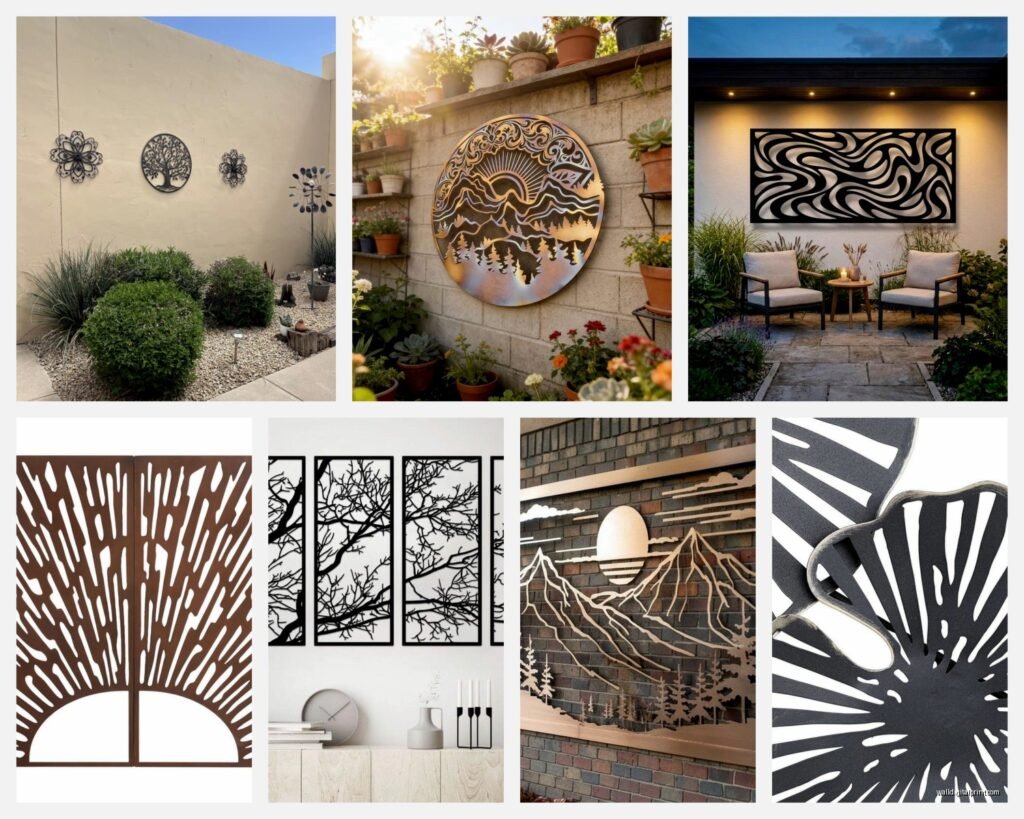
Large geometric panels in corten steel—there’s this brand that does angular mountain ranges and abstract cityscapes. I’ve installed probably six of these and they age beautifully. The rust patina develops evenly and they’re substantial enough that wind isn’t an issue. Usually run between $200-$500 depending on size.
Metal tree sculptures are having a moment and I’m here for it. The ones with branches that extend outward work great on fences. Look for welded construction, not bolted together, because bolts will rust and fail. I’ve got a 6-foot willow tree design that’s just… *chef’s kiss*.
Sunburst designs in powder-coated steel—classic but they work. The dimensional ones with layers catch light throughout the day and create cool shadows. Make sure the powder coating is outdoor-rated though, not just decorative indoor stuff.
Okay wait, metal wall planters technically count as wall art right? These are genius because they’re functional and decorative. I’m obsessed with the tiered designs where you can plant succulents or trailing plants. Just make sure they have drainage holes or you’ll have a rust situation from standing water.
Color Choices and Finishes
Natural metal finishes—the raw steel, copper, corten—these are always gonna be safe bets because they’re supposed to change with weather. That’s literally their thing.
But if you want color, powder coating is the way to go. It’s more durable than regular paint. I’ve seen powder-coated pieces last 5+ years with minimal fading. Black is obviously most versatile and hides dirt. White looks stunning against dark walls but shows every water spot and you gotta be okay with that.
This is gonna sound weird but I love aged bronze finishes for traditional gardens. There’s something about that dark patina that works with established landscaping. Feels grounded, substantial.
Mixing Metals
You can totally mix different metal finishes in one space. I just did a patio where we have corten steel panels on one wall and a stainless steel sculpture on another. The key is repetition—use at least two pieces of each finish so it looks intentional, not random.
Maintenance Schedule Nobody Follows But Should
Real talk, I’m terrible about maintenance but here’s what you’re supposed to do:
Monthly—spray down with a hose to remove dust, pollen, bird droppings. Takes like 5 minutes.
Seasonally—check mounting hardware, tighten any loose screws, inspect for rust on non-corten pieces.
Annually—reseal painted or powder-coated pieces if you notice wear, touch up any chips.
I actually only do the monthly rinse consistently and the annual inspection. My stuff is holding up fine. The client with the wrought iron though, she’s out there every spring with her rust-prevention spray and it shows.
Budget Breakdown
Since everyone wants to know what this actually costs… small pieces under 2 feet run $50-150. Medium pieces 2-4 feet are typically $150-400. Large statement pieces over 4 feet can easily hit $500-1000+ for quality stuff.
You can find cheaper options but I’ve learned that with outdoor metal art, you really do get what you pay for. That $40 “metal wall art” from a big box store? It’s gonna rust through in one season. I tested this because a client insisted and yep, orange flaky mess by fall.
If budget is tight, start with one quality statement piece rather than several cheap ones. That single amazing sculpture will have more impact than three mediocre pieces anyway.
Where to Actually Buy This Stuff
Garden centers surprisingly have good selections—they understand outdoor durability. I’ve found great pieces at local nurseries that also sell hardscaping stuff.
Etsy has tons of metal artists doing custom work. You can often get something made to your exact size specifications. Just check their reviews specifically mentioning outdoor durability.
Home improvement stores… hit or miss. Their higher-end stuff is usually fine but skip the bargain section.
Estate sales and architectural salvage places sometimes have vintage metal pieces. I found an old iron gate panel that I mounted as wall art and it’s probably my favorite piece. Just be prepared to do some restoration work.
Oh and I forgot to mention—some metal artists will do custom installations. Worth it for really large or complex pieces. They know how to properly secure their own work.
Common Mistakes I See Constantly
Mounting art too high—eye level is usually right, maybe slightly above. I see people putting it way up near the roofline and it just floats awkwardly.
Forgetting about plant growth—that spot might be clear now but will your climbing roses cover it in two years? Think ahead.
Not considering lighting—some pieces look amazing with uplighting at night. I added solar spotlights under a metal tree sculpture and it creates this incredible shadow effect on the wall behind it.
Choosing trendy over timeless—abstract geometric stuff has been popular forever for a reason. That metal flamingo might seem fun now but…
Ignoring scale with surrounding elements. Your 3-foot art piece next to your 8-foot pergola is gonna look tiny. Everything needs to relate proportionally.
Anyway I gotta go because I’m installing a massive corten panel tomorrow morning and need to organize my drill bits, but hopefully this helps. The main thing is just make sure whatever you get is actually rated for outdoor use, mount it properly so it doesn’t blow away, and accept that metal outside is gonna weather and change. That’s literally the point and honestly the beauty of it.