Wall Art Guide, Wall Art Tutoriels
Rajasthani Wall Art: Indian Regional Folk Art Decor
Aug
So I’ve been completely obsessed with Rajasthani wall art lately and honestly it started because a client wanted something “ethnic but not cliché” and I fell down this whole rabbit hole. Let me tell you everything I’ve learned because I’ve made some mistakes and wasted money on pieces that looked amazing online but were basically cheap prints on cardboard.
What You’re Actually Looking At When You Search for This Stuff
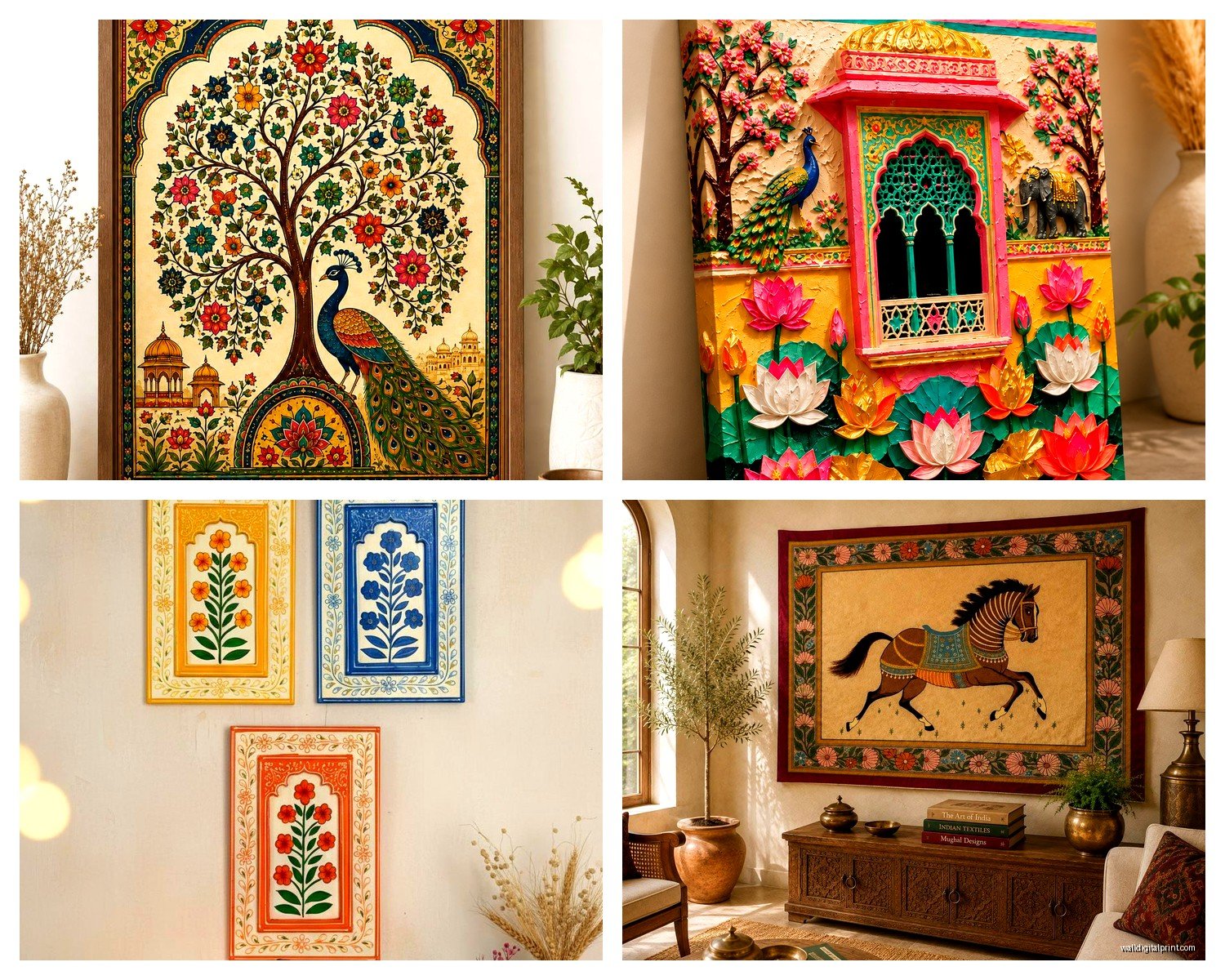
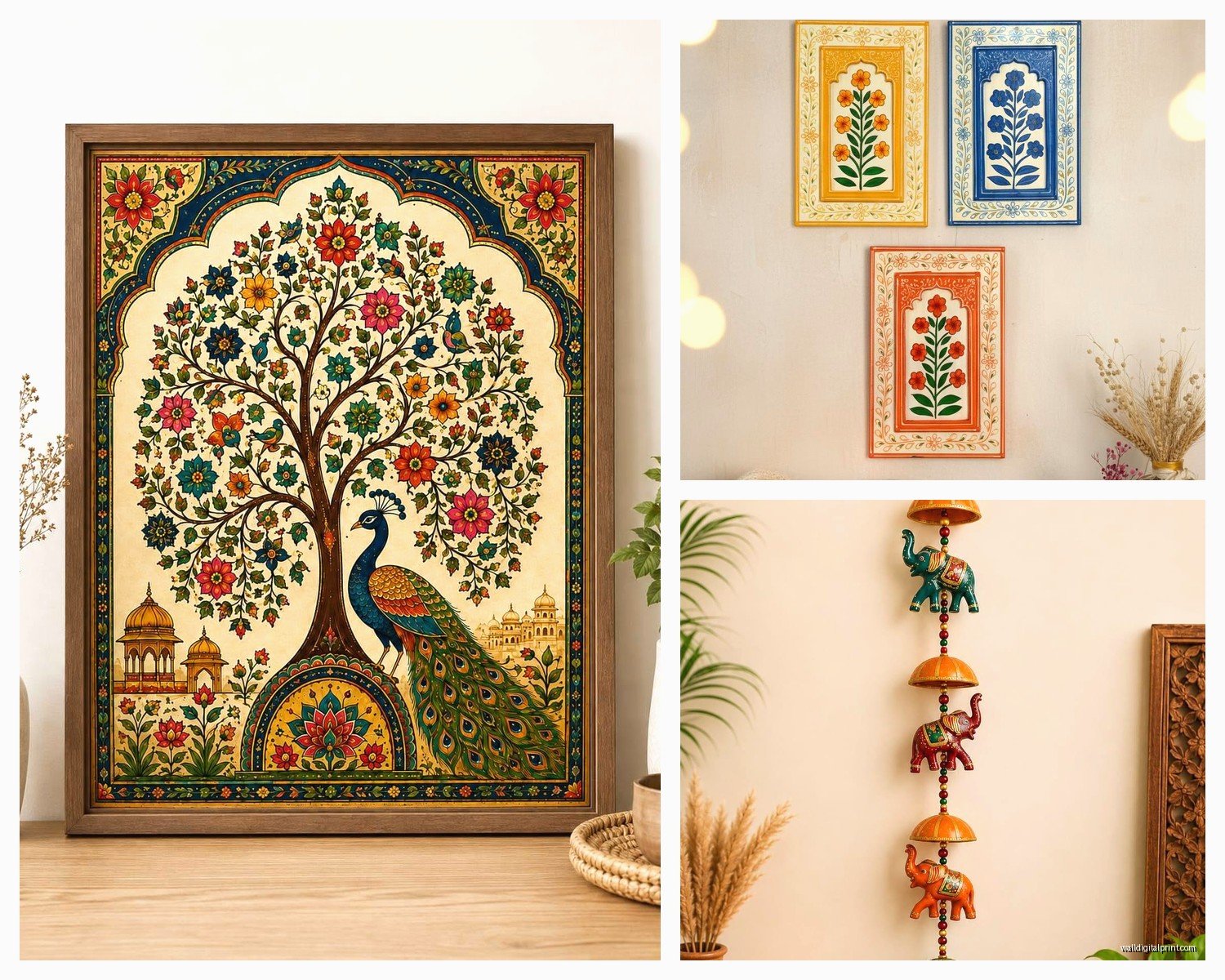
Okay so first thing – Rajasthani wall art isn’t just one thing. There’s like five different styles and the sellers on Etsy and Amazon mix them all together which is super confusing. You’ve got Phad paintings (those long scroll things with stories), Pichwai art (the Krishna temple paintings with cows and lotus flowers), Mandana (geometric floor art that people are now putting on walls), Kavad (the portable shrine paintings), and then general miniature painting style stuff.
I spent probably three hours one night – my dog was giving me judgmental looks because I hadn’t moved from the couch – just comparing different styles. Here’s what actually matters when you’re buying.
Phad Paintings Are Dramatic But Need Space
These are the horizontal scroll paintings that tell epic stories, usually about local deities or folk heroes. They’re traditionally done on cloth with natural dyes and they’re LONG. Like 5 feet to 15 feet sometimes. I bought a smaller one (about 3 feet) for my own apartment and it’s the centerpiece of my living room wall.
What to look for: the cloth should feel substantial, not flimsy. Real Phad paintings are done on hand-stitched cotton that’s been treated with starch and gum. If it feels like a regular canvas print, it’s probably not traditional. The colors should be earthy – reds, yellows, blacks, oranges. Lots of detailed figures and architectural elements.
Price reality check: a genuine hand-painted Phad from an actual Rajasthani artist family starts around $200-300 for smaller pieces. I’ve seen “Phad style” prints for like $40 and yeah, they’re just prints. Not terrible for temporary decor but don’t pretend it’s the real thing.
Pichwai Art Is Having a Moment and I Get Why
This is probably the most popular style right now in home decor. Originally these were temple hangings that went behind Krishna idols, and they feature Lord Krishna with cows, lotuses, peacocks, and these incredibly intricate details. The aesthetic is lush and maximal.
I curated a collection for a boutique hotel last year and we used three large Pichwai pieces in the lobby. The guests were constantly asking about them. The thing about Pichwai is that it works in both traditional and modern spaces if you frame it right.
How to Tell Quality Pichwai
Real Pichwai should have:
- Hand-painted details with visible brushstrokes (not digital perfection)
- Gold or silver leaf accents that catch light differently as you move
- Rich colors built up in layers
- Fabric base, usually cotton or silk
- Some slight imperfections because humans made it
I made the mistake of buying what I thought was a gorgeous Pichwai on sale for $75 and when it arrived it was literally a poster. The “gold leaf” was shiny yellow ink. Returned it immediately. Now I only buy from sellers who show close-up photos of the texture and brushwork.
Wait I forgot to mention – size matters SO much with these. A tiny 8×10 Pichwai looks kinda sad and lost on a wall. You want at least 18×24 inches, preferably bigger. I have a 3×4 foot one above my workspace and it’s the right scale to actually appreciate the details.
Mandana and Geometric Patterns for Modern Spaces
Okay so Mandana is traditionally done on floors and walls with white chalk or rice paste, usually by women during festivals. It’s all geometric patterns – grids, florals, peacocks, abstract designs. Some artists are now creating permanent versions on canvas or wood.
This style is perfect if your space is more minimalist or Scandinavian-leaning and you want to add cultural elements without going full maximalist. I used Mandana-inspired pieces in a client’s home office and it worked beautifully with her white oak furniture and neutral palette.
You can find these ranging from $50 to $300 depending on size and whether it’s hand-painted or screen-printed. The hand-painted ones have this lovely slightly uneven quality to the lines that makes them feel authentic.
Where to Actually Buy This Stuff
After buying from like ten different sources, here’s what I’ve learned:
Directly from Indian artisan platforms: Sites like iThinkArt, Mojarto, or SaffronArt if you want investment pieces. You’re gonna pay more but you’re getting documented provenance and supporting actual artists. I bought a miniature painting from a Jaipur artist through one of these and the artist sent me photos of himself working on it, which was cool.
Etsy sellers based in Rajasthan: Hit or miss honestly. Read reviews carefully. Look for shops that have been around for years and have hundreds of sales. I’ve found some gems but also received one “handpainted” piece that was clearly printed. The shop refunded me though.
Indian home decor stores in major cities: If you’re in a place with a significant Indian population, check out the local stores. I’ve found amazing pieces in Edison, NJ and Jackson Heights in Queens. You can see and touch before buying which is huge.
Avoid: Amazon unless it’s sold by a verified Indian handicraft seller. Wayfair and those big box sites usually have mass-produced stuff. Also those “bohemian decor” dropshipping sites that mark everything up 300%.
Framing and Displaying Without Making It Look Like a Restaurant
This is gonna sound weird but the wrong frame can make authentic folk art look like you bought it at a tourist trap. I’ve seen it happen so many times.
For Phad and Pichwai:
- Skip ornate gold frames unless the piece is small and you’re going full traditional
- Simple black or dark wood frames work surprisingly well for modern spaces
- Float mounting (where there’s space between the art and the mat) shows off the fabric texture
- Museum glass is worth it for pieces over $200 because these colors can fade
For Mandana geometric pieces:
- No frame at all sometimes works – just mount on a wood panel
- Thin metal frames in black or brass
- Grid arrangements of smaller pieces create impact
I learned this the hard way when I framed a beautiful Pichwai in this heavy baroque frame thinking it would look luxe and it just looked confused. Switched to a simple black float frame and suddenly the piece could breathe.
Mixing Rajasthani Art with Other Stuff
You don’t need to commit to a full Indian aesthetic to incorporate these pieces. I’ve mixed Pichwai art with mid-century modern furniture, contemporary photography, and even in a room with Scandinavian design.
The key is treating the Rajasthani piece as the statement and keeping other things more subdued. Like if you have a large colorful Phad painting, the furniture and other walls should be relatively calm. Let the art be the star.
Oh and another thing – lighting matters more than you’d think. These pieces have so much detail that they need good lighting to appreciate. I installed picture lights above my Pichwai and it completely transformed how it looked. You can see all the little brushstrokes and the gold leaf actually sparkles.
Caring for These Pieces
Real traditional Rajasthani art is usually on fabric with natural dyes, so it’s more delicate than regular canvas prints. Keep them out of direct sunlight – I ignored this advice and one piece faded noticeably in like six months. Now I’m paranoid about UV exposure.
Don’t hang them in humid rooms like bathrooms. The fabric can warp or get moldy. I made that mistake in a powder room once and had to get the piece professionally restored.
Dust gently with a soft brush, don’t use any cleaning products. If something gets spilled on it (my cat knocked over a coffee cup near mine once, I almost died), take it to a professional textile conservator. Don’t try to clean it yourself.
The Price Conversation Nobody Wants to Have
Look, authentic hand-painted Rajasthani folk art from skilled artisans is not cheap. A genuine quality piece starts around $150-200 for something small. Larger pieces from known artists can be $500-2000 or more. Museum-quality antique pieces are thousands or tens of thousands.
But there’s a whole range, and you can find legitimate artisan work at different price points. Here’s roughly what to expect:
- Small hand-painted miniatures (6-8 inches): $80-150
- Medium Pichwai or Phad (18×24 to 24×36): $200-500
- Large statement pieces (3×4 feet or bigger): $500-2000+
- Antique or museum-quality: $2000 and up
If you see a “hand-painted 4-foot Pichwai” for $65, it’s not hand-painted. It’s just not. The materials alone would cost more than that.
I’ve also found that buying during Indian festival seasons sometimes gets you discounts from artisan platforms. Diwali especially.
Starting Small If You’re Not Sure
If you’re testing whether this style works in your space, start with smaller pieces or even good quality prints. I usually tell clients to try a 16×20 print first (around $40-60) to see if they actually like living with the colors and style. Then invest in a real piece if it works.
There are some artists doing modern interpretations of traditional styles that are more affordable too. Not traditional but still supporting artists and getting original work.
Regional Variations Actually Matter
Not all “Rajasthani” art comes from the same place or tradition. Jaipur has a different miniature painting style than Udaipur. Nathdwara is famous for Pichwai. Bhilwara has its own folk traditions. If you’re buying from an artisan, ask about their specific regional tradition and training.
I curated a show last year where we had artists from three different Rajasthani cities and the variation was fascinating. The color palettes, the subject matter, the techniques – all different even though they’re all “Rajasthani art.”
This matters because it helps you understand what you’re buying and also lets you support specific artistic lineages. Some families have been doing this for generations.
What Actually Works in Real Homes
Theory is cool but here’s what I’ve seen actually work in regular people’s homes not just styled photoshoots:
Entryways: A vertical Pichwai or miniature painting makes a great first impression. Not too overwhelming when it’s just one piece.
Living rooms: Large Phad paintings above sofas or as a gallery wall centerpiece. They anchor the whole space.
Bedrooms: Softer Mandana geometric pieces or smaller Pichwai paintings. The meditation and spiritual elements fit the vibe.
Dining rooms: This is where people get nervous but I’ve used bold Rajasthani art here and it works. Creates a conversation piece.
Home offices: Geometric Mandana patterns or miniature paintings. Detailed enough to be interesting but not distracting.
What doesn’t work: tiny pieces on huge walls, hanging them too high (center should be at eye level around 57-60 inches), or clustering too many ornate pieces together which just looks chaotic.
Anyway that’s basically everything I wish someone had told me before I started buying this stuff. It’s such a rich artistic tradition and when you get a real piece from a skilled artist, it’s honestly magical. Just gotta do your research and not fall for the mass-produced knockoffs.