
Wall Art Guide, Wall Art Tutoriels
African American Wall Art: Black Art & Cultural Heritage
Jun
So I’ve been curating African American wall art for clients for like seven years now and honestly the landscape has changed SO much, in the best way. Let me just dump everything I know because I literally just finished a consultation where someone asked me all these questions.
First Things First – Know What You’re Actually Looking For
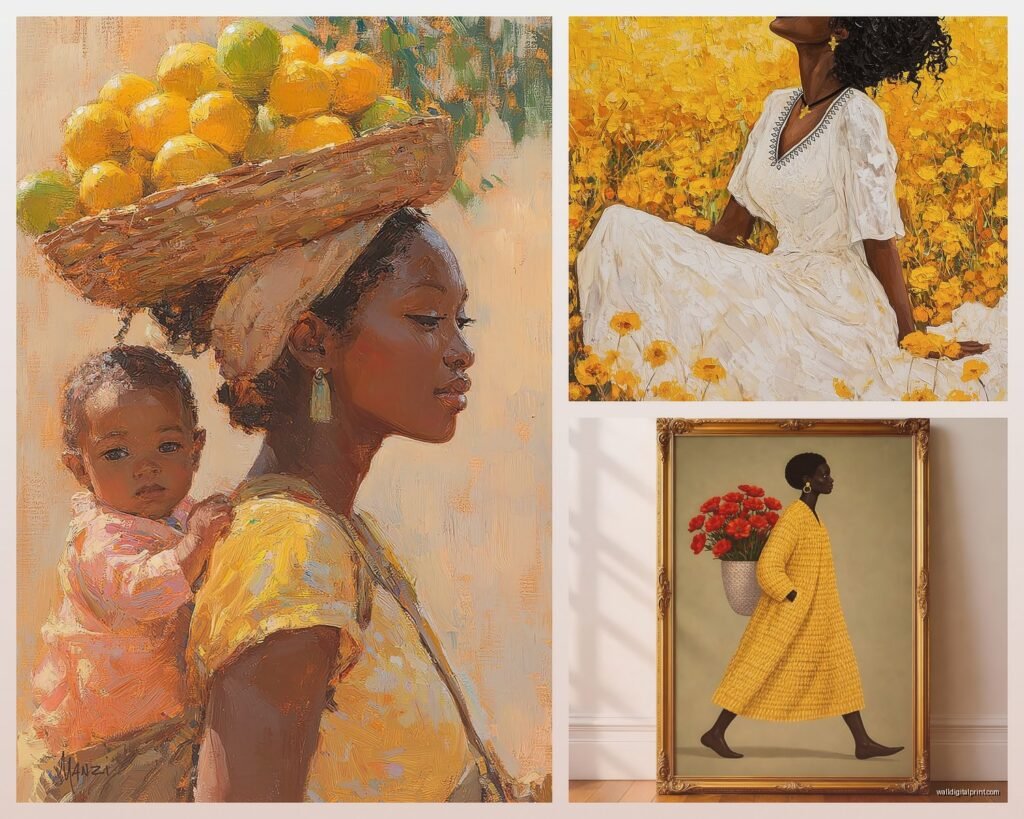
Okay so the biggest mistake I see is people just searching “Black art” on Etsy and getting completely overwhelmed. You gotta narrow it down because African American wall art spans like… everything. There’s contemporary abstract pieces, there’s historical photography, there’s Harlem Renaissance reproductions, there’s modern digital art celebrating Black joy, political commentary pieces, ancestral tributes. It’s massive.
What I do with clients first is figure out the vibe they want. Are you going for:
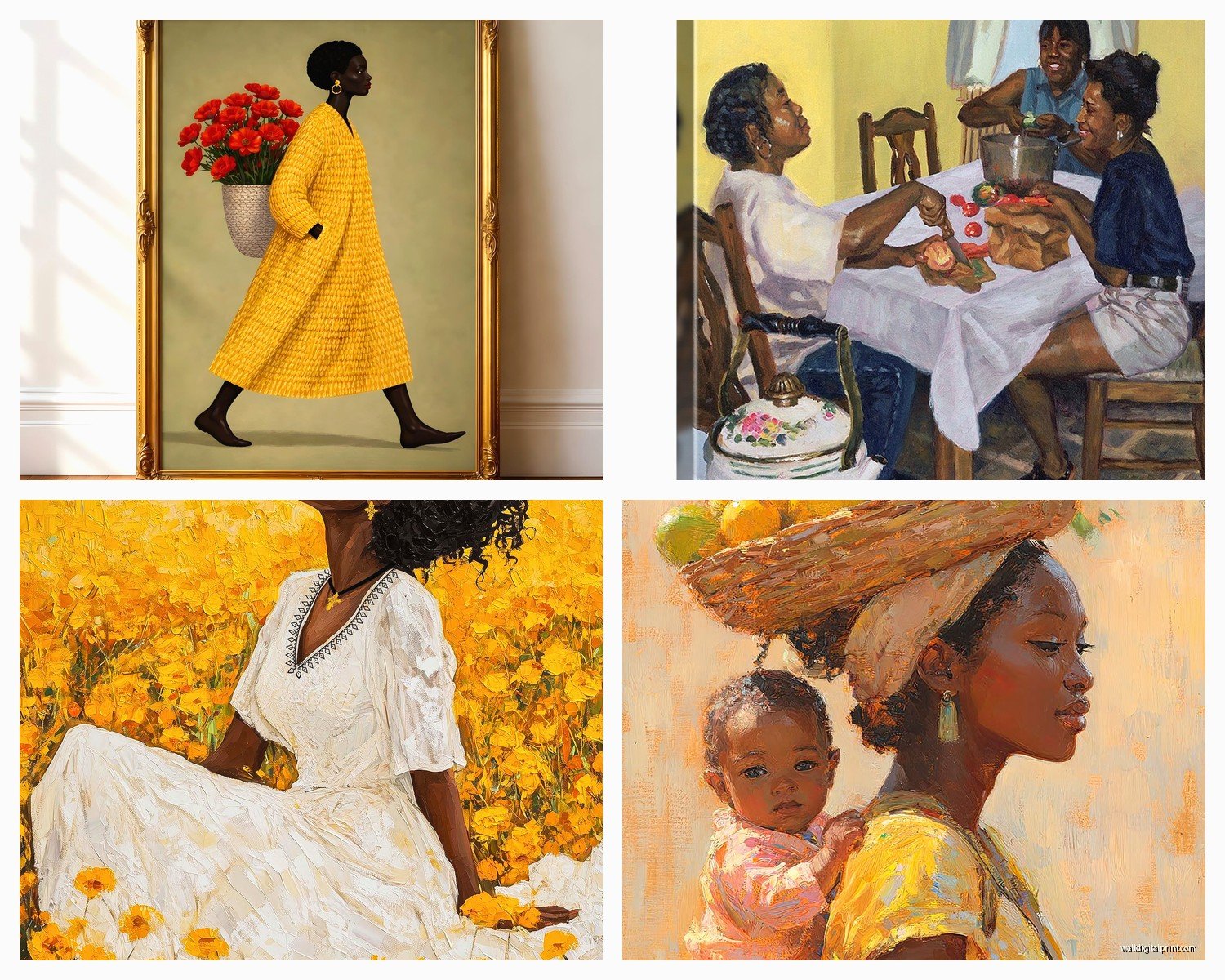
- Celebratory and joyful (think bright colors, everyday Black life, family scenes)
- Historical and documentary (civil rights imagery, vintage photography, cultural moments)
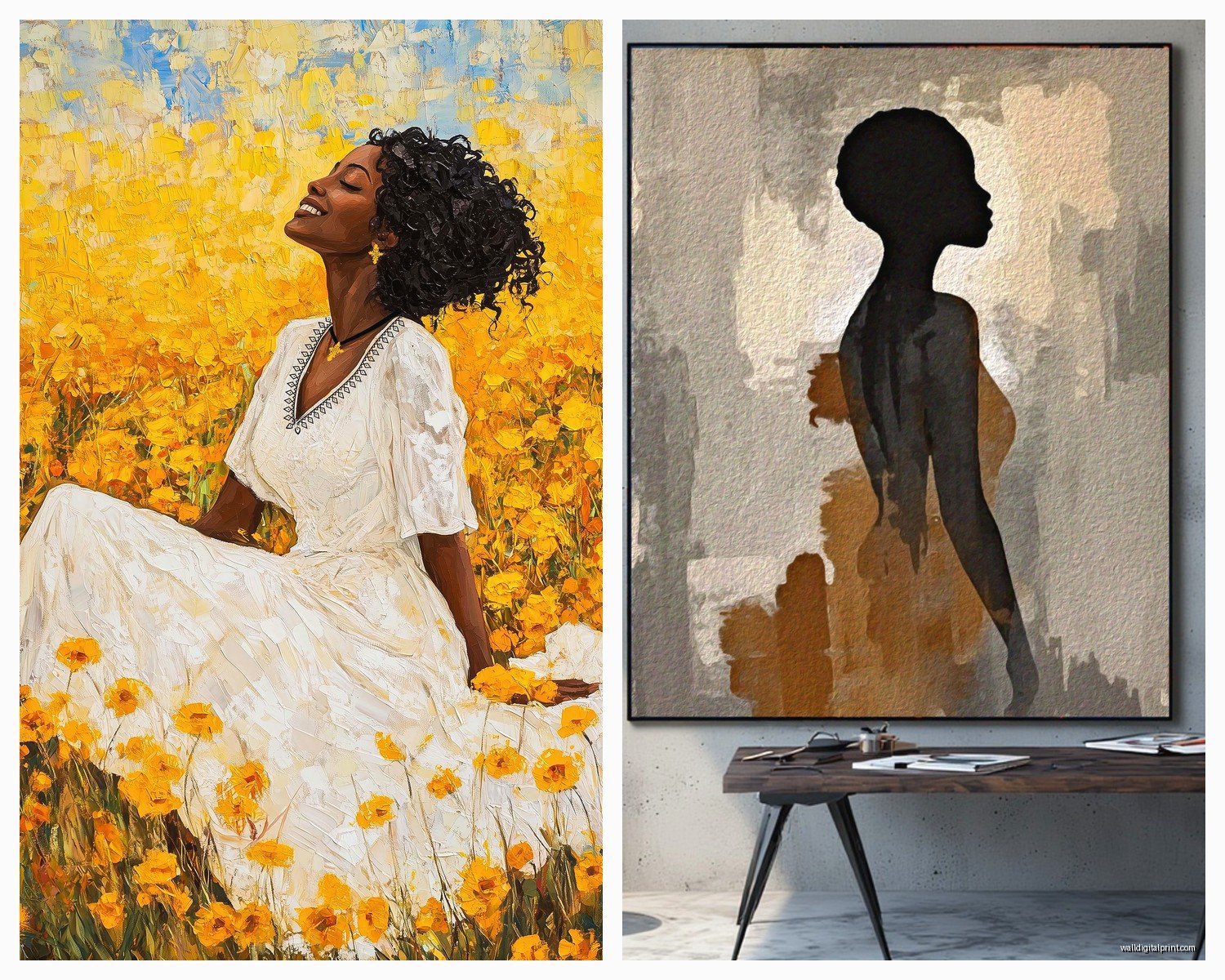
- Abstract and contemporary (where Blackness is in the artist’s identity and perspective rather than explicit imagery)
- Ancestral and spiritual (African diaspora connections, symbols, traditional patterns)
- Political and resistance-focused (protest art, social justice themes)
I had this client last month who kept saying she wanted “something meaningful” but that’s like… not helpful? We sat down and I showed her my Pinterest board and she immediately gravitated toward Bisa Butler’s quilted portraits style. That told me she wanted texture, color, celebration of Black individuals. See how that’s way more specific?
Where to Actually Buy This Stuff
Oh and another thing – sourcing matters SO much here because you wanna support actual Black artists when possible, not corporations slapping together “diverse” collections once a year.
Black-owned galleries and online platforms: Okay so Galerie Myrtis in Baltimore has an amazing online shop. There’s also Black Art In America which is like a marketplace specifically for Black artists. I’ve ordered from them probably fifteen times. The Conscious Kid has a curated shop too that’s more focused on children’s art but some pieces work great in adult spaces.
Individual artist websites: This is gonna sound obvious but like, if you see an artist’s work on Instagram or Pinterest, most of them sell prints directly. I just bought three pieces from Charly Palmer’s website for a client’s dining room and the quality was insane compared to third-party prints. Plus the artist actually gets the money which feels important with cultural work.
Etsy but make it strategic: Search for specific artists by name or use filters for Black-owned shops. There’s this seller called NicholasPrints who does these gorgeous vintage Black photography prints. Another one is CoutureTheCat – wait that’s a weird name but they have incredible afrofuturism digital art.
Society6 and Minted have Black artist collections but honestly the artist gets such a small cut that I only recommend if you literally cannot find the piece anywhere else.
The Actual Art Styles You’ll See
Let me break down what’s out there because the categories kinda blend but it helps to understand them.
Contemporary Portraiture
This is probably the most popular right now. Artists like Kehinde Wiley (you know, the Obama portrait guy) influenced this whole movement of grand, classical-style portraits of everyday Black people. Amy Sherald does this too. For your home, you’re looking at prints or works inspired by this style – think people in regular clothes but painted with the dignity and composition usually reserved for royalty.
I put a Sherald-inspired piece in my own living room last year and my mom cried when she saw it because she said she’d never seen a Black woman just… existing… presented like fine art. That hit different.
Afrofuturism and Sci-Fi
Okay so this aesthetic is HAVING a moment. It’s basically Black culture + technology + fantasy + African diaspora symbolism. Think vibrant colors, cosmic backgrounds, natural hair as this powerful element, combining traditional African patterns with futuristic stuff.
Artists doing this: look for works by Lina Iris Viktor, anything inspired by Wangechi Mutu, or digital artists on Instagram. My client’s teenage daughter wanted her room done in this style and we found this incredible print of a Black girl with an afro that dissolved into galaxies. From an artist called BrownGirlsDoSciFi or something like that on Etsy.
Vintage and Historical Photography
This is where you get Gordon Parks photographs, Ernest Withers civil rights documentation, old jazz club photos, Harlem Renaissance imagery. There’s something really powerful about having these historical moments on your wall.
The tricky part is making sure reproductions are licensed properly. I always check if the estate or archive authorized it. The Schomburg Center and Library of Congress both sell prints of historical Black photography that are legit.
Wait I forgot to mention – if you’re doing historical stuff, please frame it well. Like don’t put a Gordon Parks print in a cheap plastic frame from Target. It’s disrespectful to the subject and the work. Get it properly matted at minimum.
Abstract and Pattern Work
Not all African American art is representational obviously. There’s this whole tradition of abstract expressionism – look up Alma Thomas, Norman Lewis, Sam Gilliam. For your walls, you’re finding pieces where the cultural heritage is in the artist’s perspective and technique rather than explicit imagery.
I love mixing these with more obvious pieces. Like in my entryway I have a representational portrait next to this wild abstract piece with colors inspired by kente cloth patterns. They talk to each other in this cool way.
Sizing and Placement Because That’s Where People Mess Up
Okay real talk – I see people buy these beautiful pieces and then hang them wrong or in weird sizes that don’t work for the space.
Scale matters: A single 8×10 print on a huge wall looks sad and diminishes the work. If you’re gonna go small, do a gallery wall. If you want a statement piece, you’re looking at minimum 24×36 for most living spaces, honestly bigger for over a sofa.
Gallery walls for cultural storytelling: This is actually my favorite approach for African American art because you can create a narrative. Mix historical photos with contemporary work, add some text-based pieces (like quotes from Maya Angelou or James Baldwin), include family photos. I did this in a client’s hallway and it became like a visual essay on Black joy and resilience.
The rule I use is keep at least one element consistent – all black frames, or all similar color palettes, or all the same mat width. Otherwise it looks chaotic instead of intentional.
Height: Center of the artwork at 57-60 inches from the floor. This is museum standard and it actually works. I measured my whole house once when my cat knocked down a painting and I had to rehang everything… ended up fixing heights I’d eyeballed wrong for years.
Framing Without Going Broke
Custom framing is expensive holy crap. But there are ways to do this right without spending $300 per frame.
For standard sizes (8×10, 11×14, 16×20, 18×24), just buy quality ready-made frames. I like Framebridge for online – they’re not cheap but way less than custom and they do good work. IKEA’s RIBBA frames are actually decent for the price if you’re doing a big gallery wall and need like ten frames.
For non-standard sizes, you gotta budget for custom. But here’s the thing – cultural art deserves good presentation. I’d rather have three well-framed pieces than seven cheaply framed ones.
Mat color matters too. White and off-white are safe, but I’ve seen Black art really pop with deep colors – navy, burgundy, even black mats with certain pieces. The artist Kadir Nelson’s work looks amazing with warm cream mats.
Lighting Your Pieces
This is gonna sound extra but proper lighting makes such a difference. You don’t need gallery spotlights or anything, but consider:
- Picture lights for statement pieces (battery-operated ones exist now and they’re great)
- Avoid direct sunlight because it’ll fade prints over time
- Wall washers if you’re doing a gallery wall situation
I installed some simple LED picture lights from Amazon on my Harlem Renaissance prints and the difference was wild. Like suddenly you could see all the details.
Mixing Styles and Creating Cohesion
You don’t have to pick one style and stick with it. Actually I think the most interesting spaces mix different types of African American art.
What I do is find a thread – maybe it’s color palette, maybe it’s theme, maybe it’s just “these all make me feel something.” I worked on this brownstone in Brooklyn where we mixed vintage jazz photography with contemporary abstract pieces by Black artists and some Basquiat-inspired street art prints. Sounds random but we tied it together with consistent black frames and a shared color story of blues and golds.
Oh and another thing – don’t forget about mixing art with other cultural objects. African masks, textiles, pottery, books by Black authors. Your walls don’t have to be JUST framed art. Some of my favorite installations include floating shelves with small sculptures or books alongside the artwork.
The Conversation Pieces – Art That Tells Stories
This is where it gets really personal. The art that means the most is usually stuff connected to specific stories or moments in Black history and culture.
I have a print of the Little Rock Nine in my office. Every client asks about it and it opens this whole conversation about educational access and courage. That’s the power of historical imagery.
For celebrating joy and everyday life, artists like Annie Lee (the “Sunday Morning” series) or Ernie Barnes (who did that famous “Sugar Shack” painting) capture Black leisure and community in ways that feel both specific and universal.
Text-based art works great too. There are so many beautiful prints of quotes from Audre Lorde, Toni Morrison, Langston Hughes. I saw this gorgeous one recently that just said “We are our ancestors’ wildest dreams” in this beautiful typography with colors inspired by traditional African patterns.
Supporting Living Artists vs. Reproductions
Okay so here’s where I have feelings. Obviously not everyone can afford original art, I get it. But there’s a difference between buying a licensed print that supports a living Black artist and buying mass-produced “diverse wall art” from HomeGoods.
If you’re buying prints, try to buy directly from the artist or from platforms where they get a fair cut. A lot of established artists sell signed limited edition prints that are more affordable than originals but still support their practice.
For emerging artists, Instagram is honestly amazing for discovery. I’ve found so many incredible artists there and bought directly through DMs or their websites. Plus you can watch their process which makes the piece you buy feel more connected.
Original art from emerging artists is more accessible than people think. I’ve bought pieces for $200-$500 that are now worth way more, but honestly I bought them because I loved them not as investment.
What About Kids’ Spaces
Quick note on this because I get asked constantly – representation in children’s rooms matters so much. There are tons of Black artists creating work specifically celebrating Black childhood.
Vashti Harrison’s illustrations are gorgeous. There are also these great prints of Black children as superheroes, scientists, astronauts. I did a nursery last year with prints of Black babies with afros and natural hair and the parents were so emotional about it because they never had that growing up.
For older kids, involve them in choosing art. That teenage daughter I mentioned earlier who wanted afrofuturism? She found half those pieces herself on Instagram and it made her room feel really personal to her.
Caring for Your Collection
Real quick because I gotta wrap this up – take care of this stuff properly.
- Use proper hanging hardware (not those sticky strips for anything valuable or meaningful)
- Keep away from humidity and direct sunlight
- Dust frames regularly
- If you have original work, consider insurance if it’s valuable
- Take photos of your collection for records
I learned this the hard way when a pipe burst in my first apartment and damaged two prints I hadn’t documented. Insurance was useless without proof of value.
Anyway that’s basically everything I tell clients when they’re starting to collect African American art. The main thing is just start somewhere – buy what speaks to you, learn about the artists, let your collection grow organically. My walls have evolved so much over the years and that’s part of the beauty of it. You’re not trying to create a museum, you’re creating a home that reflects your values and celebrates Black culture and creativity.
Oh wait one more thing – there are some amazing coffee table books about Black art that can help you learn more and figure out what you like. “Black Refractions” is beautiful, anything about the Harlem Renaissance, books on specific artists. I leave these out in my living room and they’re basically art themselves plus they educate guests about the work on my walls.
