Wall Art Guide, Wall Art Tutoriels
Christian Home Decor Wall Art: Faith Religious House Designs
Oct
So I’ve been down this rabbit hole of Christian wall art lately because honestly, my sister asked me to help her redecorate after she moved, and she wanted something that reflected her faith without looking like a church gift shop exploded in her living room. I get it – there’s this weird line between meaningful and tacky.
Starting with What Actually Works on Walls
Okay so first thing, you gotta figure out what style you’re working with in your space. I made this mistake early on where I bought this gorgeous scripture canvas that was super modern and minimalist, but my client’s house was traditional farmhouse and it just… didn’t work. The piece was beautiful but it clashed hard.
The main categories I see working repeatedly:
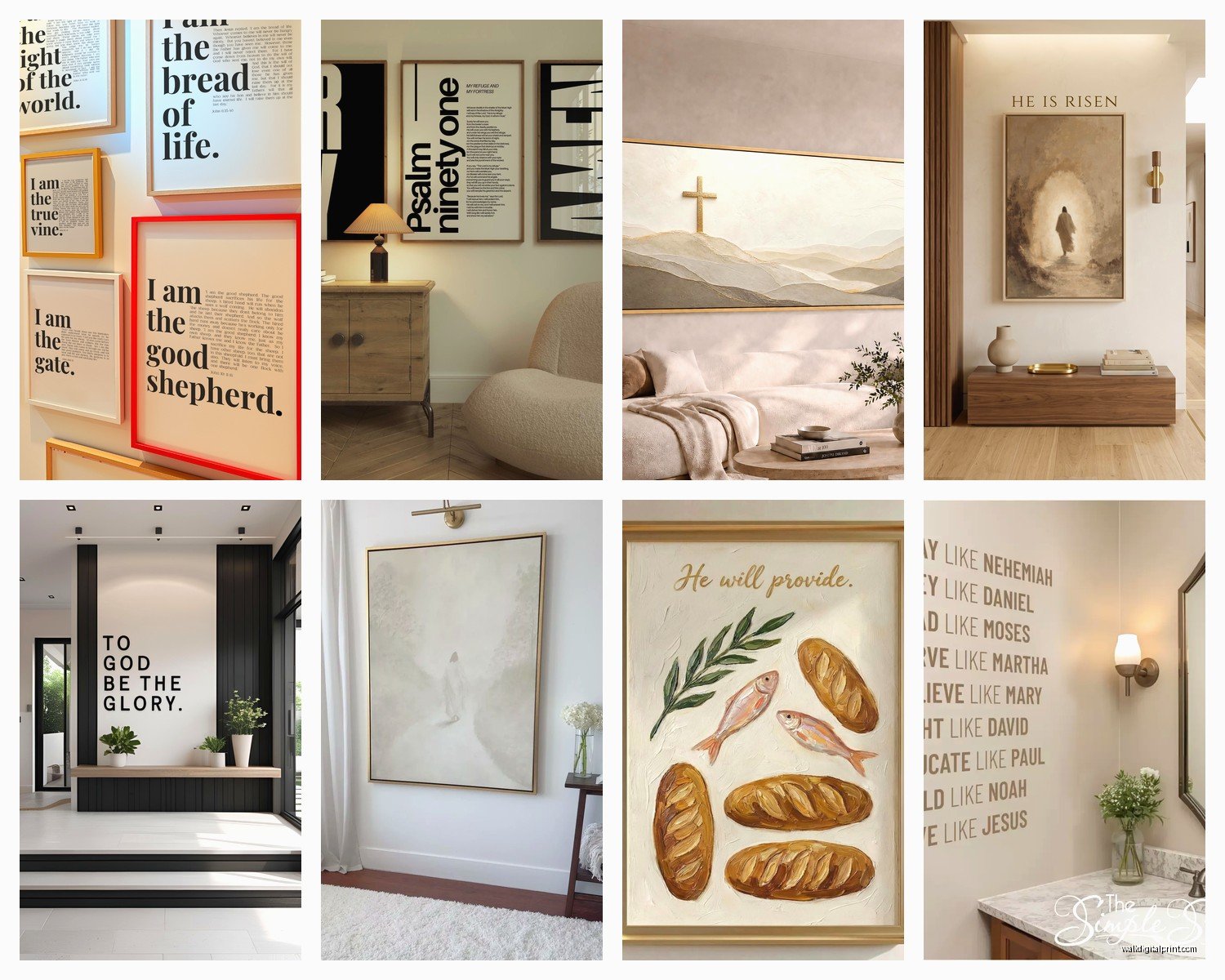
- Modern typography prints – these are the ones with Bible verses in clean fonts, usually black and white or muted colors
- Rustic wood signs – think distressed wood with carved or painted scripture
- Classic religious imagery – crosses, doves, that sort of thing but done tastefully
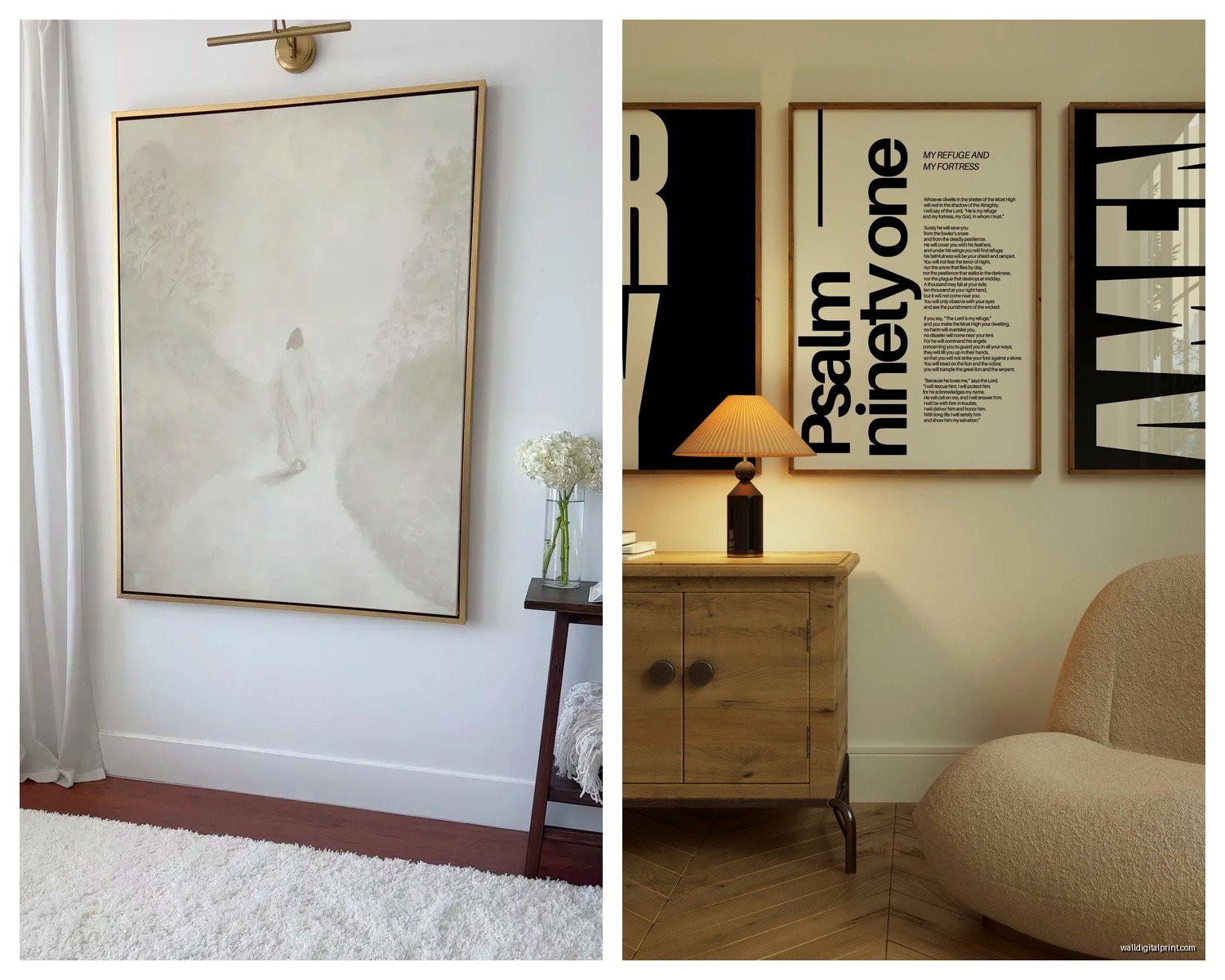
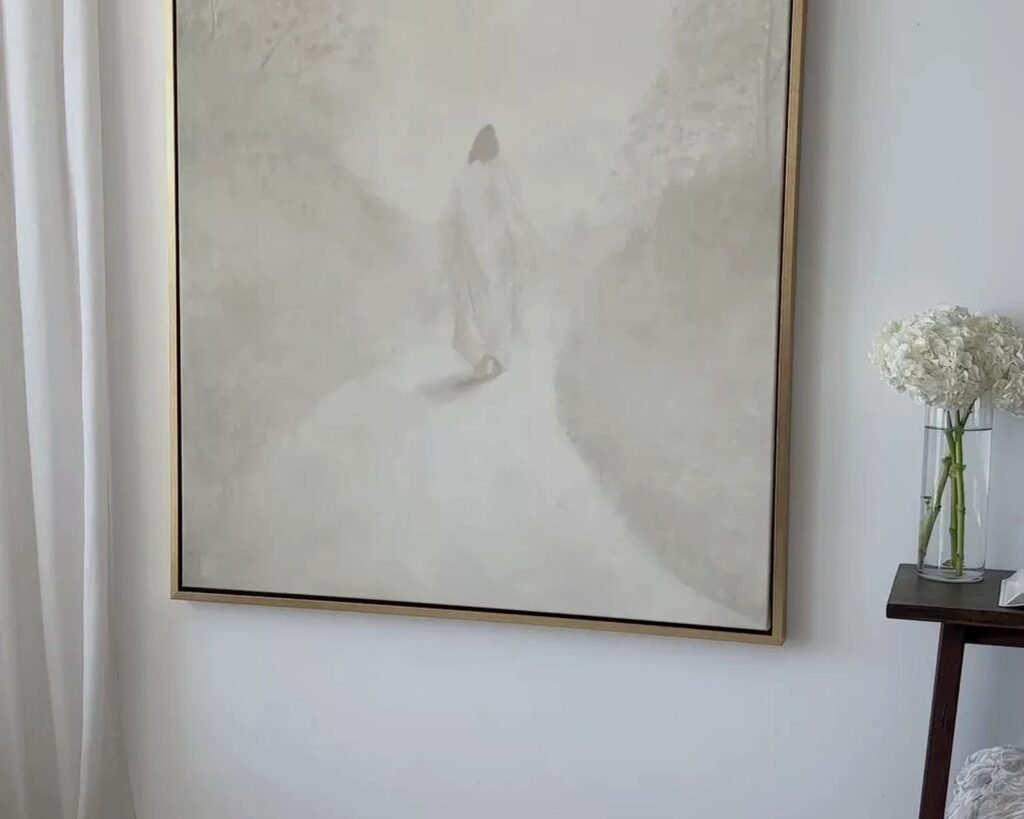
- Abstract faith-based art – more interpretive pieces that hint at spiritual themes
- Vintage-style prints – reproductions of old hymn sheets or biblical illustrations
Where to Actually Find This Stuff
I’m gonna be real with you, Etsy is where I find probably 60% of my best pieces. You can filter by style, get custom sizing, and a lot of sellers will do personalized verses which is amazing for gifts. I found this shop last month that does watercolor scripture prints and they’re stunning – way better quality than the mass-produced stuff at HomeGoods.
But also don’t sleep on:
- Kirkland’s (surprisingly good selection and they rotate stock frequently)
- Hobby Lobby (obvious choice but their sales are legit 50% off)
- World Market for more global/artistic interpretations
- Local Christian bookstores – I know, sounds old school, but some have really curated art sections now
Amazon has a ton but honestly the quality is hit or miss. I ordered three canvas prints for a client’s prayer room and one showed up with the text slightly blurry. Had to return it.
The Sizing Thing Nobody Talks About
This is where people mess up constantly. A tiny 8×10 print on a massive wall looks lost and sad. I learned this the hard way in my own hallway – had this beautiful “Be Still” print that just disappeared on the wall.
Here’s what actually works:
For above a couch or bed, you want your art to take up about 2/3 to 3/4 of the furniture width. So if your couch is 84 inches, you’re looking at something around 56-63 inches wide total. This can be one large piece or a gallery wall situation.
For hallways, I usually go with multiple smaller pieces (like 3-4 pieces in the 11×14 to 16×20 range) rather than one big piece. Creates visual interest as you walk through.
My cat knocked over a frame last week and I realized I had it way too close to the edge of the console table anyway, so that was a blessing in disguise I guess.
Gallery Wall Layouts for Scripture Art
Okay so gallery walls are tricky but they’re also the most impactful when done right. I always – and I mean always – lay everything out on the floor first. Take a picture with your phone. Move stuff around. Take another picture.
The grid layout works great for modern spaces. Get 6-9 frames in the exact same size and style, fill them with different verses or faith-themed prints, and hang them in perfect rows. Super clean, very Pinterest-worthy.
But for more eclectic spaces, I do the organic layout where you mix sizes and even mix framed pieces with wood signs or metal crosses. The trick here is to keep a consistent element – maybe all the frames are black, or all the pieces have the same color palette.
Start with your largest piece as the anchor (usually center or slightly off-center), then build around it. Keep spacing between frames at about 2-3 inches.
The Frame Situation
So frames matter way more than you’d think. I’ve seen beautiful art completely ruined by the wrong frame choice.
Black frames are your safe bet – they work with literally everything and they make the art pop. But don’t default to black if it doesn’t match your space.
Natural wood frames are perfect for farmhouse or rustic styles. I’ve been obsessed with these chunky wooden frames I found at Target lately – they’re like $15 and look way more expensive.
White frames work great in coastal or shabby chic spaces, and they keep things feeling light and airy.
For metal crosses or dimensional pieces, you don’t need a frame obviously, but think about the finish. Brushed bronze is having a moment right now and it pairs beautifully with warm-toned walls.
Specific Pieces I Keep Recommending
There’s this canvas print that says “As for me and my house, we will serve the Lord” that I’ve probably used in five different homes. It comes in like 20 different size options and the typography is just really well done. Not too churchy, not too modern – just right.
Also been loving these minimalist line-art crosses. They’re just a simple black line drawing but they’re so elegant. Work in literally any style home.
Oh and another thing – hymn prints are making a comeback. You can get vintage-style prints of old hymns like “It Is Well” or “Amazing Grace” with the sheet music and everything. They’re nostalgic without being grandma-ish.
DIY Options That Don’t Look Homemade
If you’re crafty at all (or even if you’re not really), there are some easy DIY options that look legit professional.
Canvas + vinyl lettering: Get a stretched canvas from Michael’s, paint it a solid color (white, cream, gray, navy – all work great), then use vinyl letters or a vinyl cutting machine to add scripture. Seal it with Mod Podge. I made three of these for my sister’s bedroom in like an hour and they look store-bought.
Wood pallet signs: Okay these can go wrong fast and look too rustic, but if you keep the design simple and don’t over-distress the wood, they’re actually really nice. Sand your pallet boards, stain or paint them, stencil on your verse, done.
Framed fabric: This sounds weird but I saw someone do this on Instagram and tried it – bought pretty fabric with a subtle cross pattern, stretched it over a canvas board, and framed it. Cost maybe $12 total and looks like expensive textile art.
Color Choices That Actually Matter
The color of your wall art needs to work with your existing palette. I know this seems obvious but I’ve seen so many people buy art they love in colors that just don’t work with their space.
If your walls are gray (and let’s be honest, everyone’s walls are gray right now), you can go basically any direction. Navy and white scripture prints look amazing on gray. So does blush pink or sage green.
For beige/tan walls, stick with warm tones – browns, golds, terracotta, warm greens. Cool-toned art will look off.
White walls are easy mode – anything works. This is where you can do bold black typography or colorful abstract pieces.
I’m watching this house renovation show right now where they keep painting everything white and honestly it’s smart for resale but so boring… anyway.
Mixing Religious and Non-Religious Art
You don’t have to make every single piece in your home faith-based. Actually I think it looks better when you mix.
In a living room gallery wall, maybe 2-3 pieces are scripture or crosses, and the rest are family photos, landscapes, or abstract art. It feels more collected and personal.
Your faith can be present without being overwhelming. One meaningful piece in each major room often has more impact than cramming religious imagery everywhere.
Specific Room Recommendations
Entryway: This is where I love putting “Bless this home” or “As for me and my house” pieces. It’s literally the first thing people see and it sets the tone. Keep it around 16×20 to 24×36 depending on your wall space.
Kitchen/Dining: Prayer-themed art works great here. “Give us this day our daily bread” or “Bless the food before us” – stuff that relates to gathering and meals. Also really like the simple “Gather” signs with a subtle cross incorporated.
Bedrooms: More personal and peaceful verses. “Be still and know that I am God” is probably the most popular one I use. Also love “I can do all things through Christ” for kids’ rooms or home offices. Keep these calming – bedrooms aren’t the place for bold dramatic pieces usually.
Bathrooms: Yes, you can put scripture in bathrooms. Small framed prints work great. Keep them simple and weather-resistant (canvas might warp from humidity).
The Custom Route
If you want something really specific, commissioning custom art is easier than you think. I’ve worked with several Etsy artists who’ll create personalized scripture prints with your choice of verse, colors, size, everything.
Expect to pay $40-150 depending on size and complexity. Turnaround is usually 2-3 weeks. Get the digital file too if they offer it – you can reprint it later in different sizes.
What to Avoid
Okay so some things I’ve learned NOT to do:
Don’t buy those super literal paintings of Jesus that look like they’re from the 1970s unless that’s genuinely your style. They’re hard to decorate around and they can make your space feel dated.
Avoid anything with too many fonts or design elements competing. Simple is almost always better. If the piece is hard to read from 6 feet away, it’s too busy.
Watch out for cheap canvas prints that are clearly just inkjet printed. The colors fade fast and they look pixelated up close. Read reviews before ordering.
Lighting Makes or Breaks It
Something I forgot to mention earlier but it’s actually super important – how you light your art matters. A beautiful piece in a dark corner isn’t doing anything for your space.
Picture lights are expensive but worth it for statement pieces. Or just make sure your art is on walls that get natural light or are near lamps.
I installed LED strip lighting behind a large cross in my dining room and the subtle glow effect is *chef’s kiss*.
Seasonal Switching
This might be extra but I have some clients who swap out certain pieces seasonally. Easter-themed art in spring, more general faith pieces the rest of the year. It keeps things fresh and you can go heavier on the religious imagery during specific seasons without it feeling like too much year-round.
Budget Breakdown
Since you’re probably wondering about cost:
- Budget option: $15-40 per piece (prints, small canvases, basic frames)
- Mid-range: $50-100 per piece (quality canvases, wood signs, better frames)
- Investment pieces: $150-400+ (large statement pieces, custom art, original work)
You can totally decorate a whole room for under $200 if you’re strategic. Hit sales, use coupons, maybe DIY one or two pieces.
Hanging Tips Nobody Tells You
Command strips are your friend for rentals or if you don’t wanna put holes everywhere. They hold up to 16 pounds if you use enough of them.
For the love of everything, use a level. I cannot tell you how many times I’ve seen slightly crooked art and once you notice it you can’t unsee it.
The standard height is center of the artwork at 57 inches from the floor – this is gallery standard and it really does work for most spaces.
For art above furniture, leave 6-8 inches between the furniture top and the bottom of your frame.
wait I forgot to mention – if you’re hanging multiple pieces vertically (like up a staircase), keep the spacing between them consistent. Usually 3-4 inches works well.
Honestly the biggest thing is just to start. Buy one piece you really love, hang it up, live with it for a bit. See how it makes you feel when you walk into that room. Then build from there. You don’t have to do everything at once and your style will probably evolve anyway.
The whole point is creating a space that reflects your faith in a way that feels authentic to you, not copying someone else’s aesthetic perfectly. Some people want bold declarative verses everywhere, some people prefer subtle symbols and softer messages. Both are totally valid.