Wall Art Guide, Wall Art Tutoriels
Foil Wall Art: Metallic Shiny Reflective Gold Designs
Sep
So I’ve been obsessing over foil wall art lately and honestly it started because I walked into this boutique hotel downtown and their entire lobby had these insane gold foil pieces that caught the light in like… three different ways depending on where you stood. I immediately texted my supplier about it.
The thing with foil art is it’s not just “shiny gold poster” like you might think. There’s actually this whole spectrum of techniques and finishes, and some of them look cheap as hell while others look like you spent thousands at a gallery. Let me break down what actually works because I’ve tested way too many of these in my own space and for clients.
The Different Types You’ll Actually Encounter
Okay so there’s foil stamping, foil printing, and then there’s like… fake foil which is just metallic ink. You gotta know the difference because shops online will absolutely try to pass off metallic prints as real foil.
Real foil stamping uses heat and pressure to apply actual metallic foil to paper or canvas. It creates this raised, super reflective surface that catches light like crazy. When you run your finger over it you can feel the texture. This is the expensive stuff but it’s what creates that luxury look.
Foil printing is more common now and it’s what most “foil art” you see online actually is. They use special printers that apply metallic foil through a different process. Still looks good, still reflective, but it’s flatter and the shine is slightly different. Not bad though, just different price point.
Then there’s metallic ink printing which… look, it can be pretty, but it doesn’t have that mirror-like quality. It’s more like a shimmer. If someone’s selling you a “foil print” for like $20, it’s probably this.
What Actually Looks Good on Walls
I’m gonna be honest, I thought I’d love giant gold foil pieces everywhere but when I actually hung them in my living room I realized you need restraint. Like, a lot of restraint. My cat knocked over a lamp that same week and I was lowkey relieved to have an excuse to rearrange.
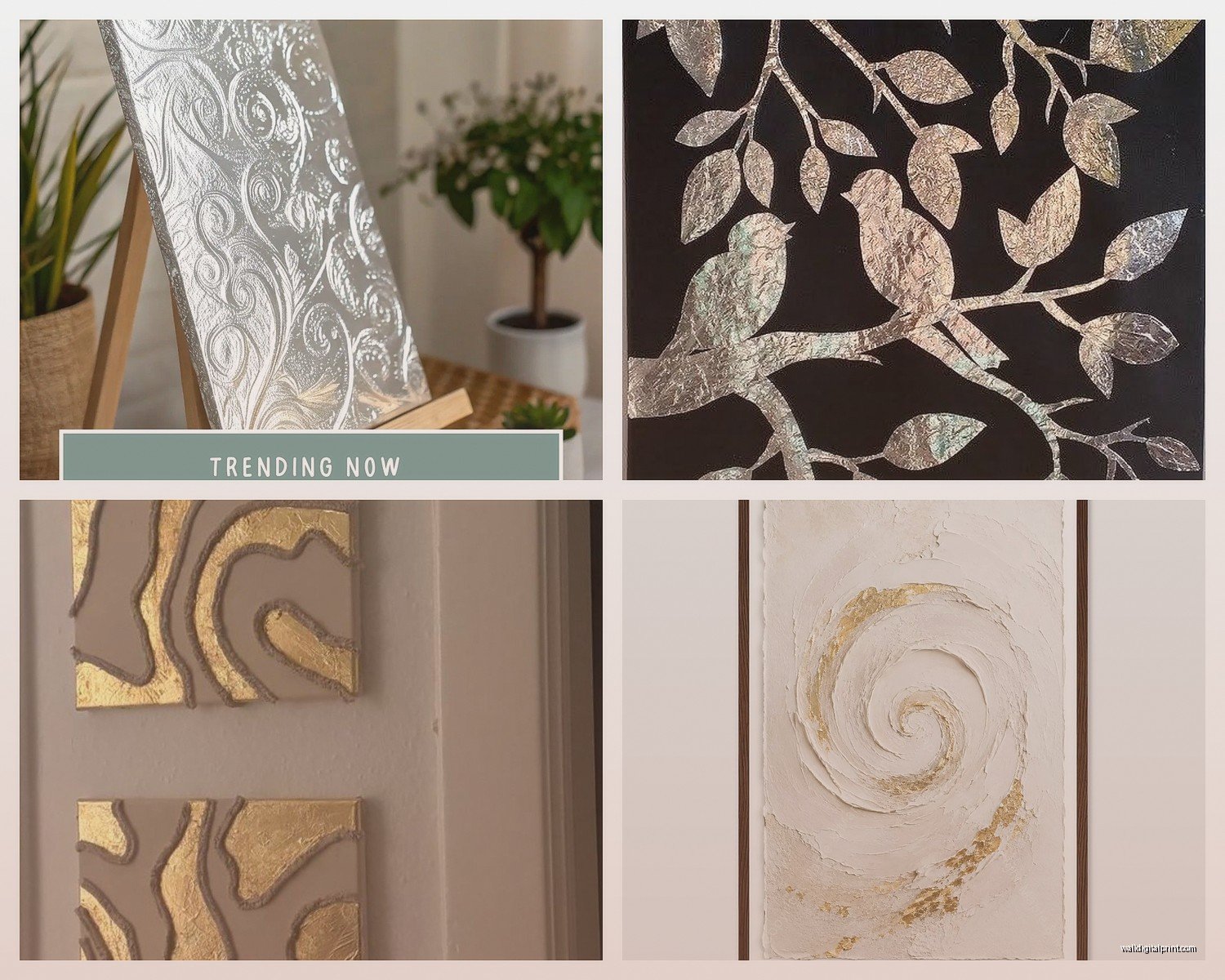
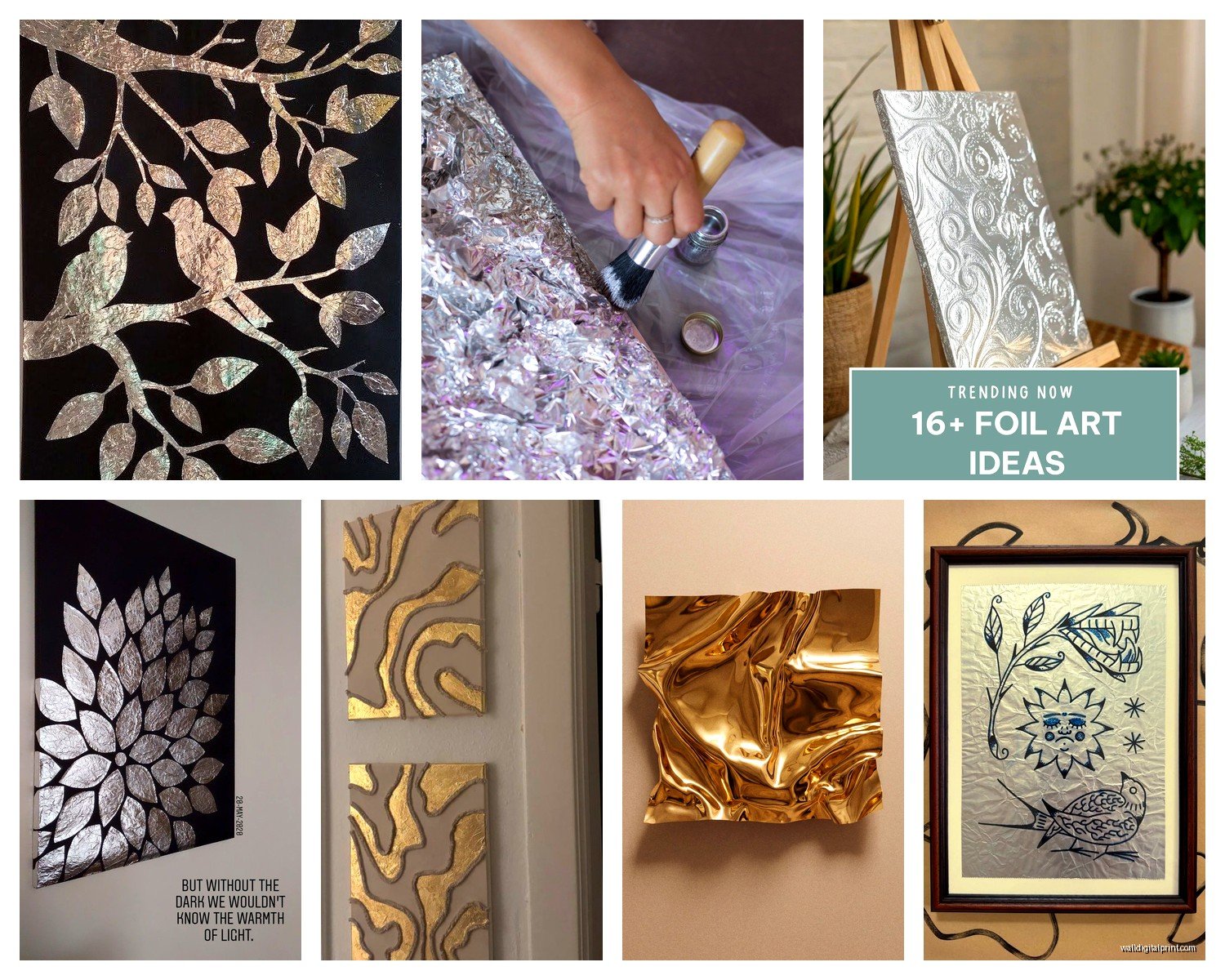
The best foil pieces I’ve worked with have maybe 30-40% foil coverage max. So like, a line drawing where just the outline is foiled, or an abstract piece where the foil creates accents. When the ENTIRE piece is gold foil it’s just… it’s too much. Your eye doesn’t know where to rest.
Abstract geometric designs work insanely well. Think circles, lines, mountain silhouettes, wave patterns. The foil catches different light throughout the day so even simple designs feel dynamic. I have this piece in my hallway that’s literally just overlapping circles in gold foil on white paper and people always ask where I got it.
Botanical prints with foil accents are having a moment too. Like a monstera leaf where just the veins are foiled, or cherry blossoms with gold foil branches. These work great in bedrooms or bathrooms where you want something calming but still interesting.
Size Matters More Than You Think
Small foil pieces (like 8×10) can look kinda cheap unless they’re in a really nice frame or grouped together. I learned this the hard way when I bought three small foil prints on Etsy and hung them individually. They just looked… lost. But when I put them in a grid with thick black frames suddenly they worked.
Medium sizes (16×20 to 24×36) are the sweet spot for most walls. Big enough to make a statement, not so big that the foil becomes overwhelming.
Large scale foil art (anything bigger than 36 inches) needs to be mostly negative space with strategic foil placement. Otherwise it’s like hanging a mirror that’s also a disco ball. Which could be cool if you’re going for maximalist but probably not what most people want.
Where to Actually Buy Them
Etsy is honestly your best bet for finding unique foil art that doesn’t look like everyone else’s. Search for “real foil print” or “foil stamped art” and check the reviews to make sure it’s actually foil. I’ve found some amazing independent artists there who do custom work too.
Minted has a decent selection of foil prints and their quality is consistent. It’s more expensive but you’re paying for that consistency. They also do sales constantly so wait for like 20% off.
Society6 and similar print-on-demand sites… I’m mixed on these. The quality varies wildly depending on which artist you’re buying from. I’ve gotten some great pieces and some that were clearly just metallic ink pretending to be foil.
West Elm and CB2 carry foil art sometimes but it’s marked up like crazy. You’re paying for the curated selection I guess. Though I did get this really beautiful abstract piece from West Elm during a clearance sale that I still love.
Oh and another thing, local art fairs and markets often have vendors doing real foil stamping. The quality is usually incredible because they’re doing small batches. Plus you can see exactly what you’re getting.
DIY Foil Art If You’re Feeling Crafty
So funny story, I tried making my own foil art last winter because I had a client who wanted something super specific and custom quotes from artists were like $800. Turns out it’s not that hard if you get the right supplies.
You need a laminator (yeah, like for documents), foil transfer sheets, and either a laser printer or a special toner-based print. The foil only sticks to toner, not regular inkjet ink. This took me three failed attempts to figure out.
Here’s the process: print your design with a laser printer, lay the foil sheet over it (shiny side up, which is counterintuitive), run it through the laminator on high heat. The foil sticks to the toner and creates that shiny effect. Peel off the sheet and boom, foil art.
The Deco Foil brand works really well. They have tons of colors beyond just gold—rose gold, copper, silver, even holographic. I got mine from Michaels with a coupon because I’m not paying full price for craft supplies.
DIY Tips That Actually Matter
Use thick paper or cardstock. Regular printer paper wrinkles too easily from the heat. I use 110lb cardstock and it works perfectly.
Run the laminator on the highest heat setting and go slowly. Like, really slowly. I was trying to rush through it at first and the foil barely stuck.
You can do multiple passes if needed. If some areas didn’t pick up enough foil the first time, just run it through again with a fresh sheet.
Simple designs work better than complex ones for DIY. Fine details sometimes don’t pick up the foil cleanly. Bold lines and shapes are your friend.
You can foil over black toner for a really dramatic look. Gold foil on black background is *chef’s kiss*.
Framing Makes or Breaks the Whole Thing
This is gonna sound weird but the frame matters more with foil art than with regular prints. Because the foil is so shiny and catches light, a cheap frame makes the whole piece look cheap even if the art itself is expensive.
Float frames are amazing for foil pieces. They create this gap between the art and the wall so light can hit the edges. Makes the foil pop even more. You can get decent float frames from Frame Bridge or even Target’s Threshold line.
Black frames create the most contrast and make gold foil really stand out. White frames work for a softer look but you lose some of that drama. Natural wood frames are great for botanical foil prints.
No glass is usually better than glass for foil art. The glass creates glare and reflections that compete with the foil’s reflectiveness. If you must use glass, get non-glare museum glass but that’s pricey.
Placement and Lighting Strategy
Okay so placement is everything with these pieces. I’ve moved the same foil art print around my apartment like five times trying to find where it looks best.
You want it where natural light can hit it but not direct sunlight all day. Direct sun makes the foil almost too bright to look at, plus it can fade the paper over time. Near a window but not directly in the light path is ideal.
Across from a light source works beautifully. Like if you have a lamp or window on one wall, hang the foil art on the opposite wall so the light bounces off it. Creates this really subtle glow effect.
In dimmer spaces like hallways or powder rooms, foil art is actually perfect because it brightens up the space. I have a copper foil piece in my bathroom that catches the vanity lights and makes the whole room feel warmer.
Don’t put foil art where there’s a lot of competing reflective surfaces. Like if you have a mirrored console table and a glass lamp and chrome fixtures all in one area, adding foil art is just gonna be sensory overload.
Mixing Foil Art with Other Pieces
Gallery walls with foil art can be tricky. I usually do one foil piece as the anchor and surround it with matte prints and maybe one or two with subtle texture. All foil everything looks like you robbed a fancy gift shop.
Pairing foil with black and white photography is actually really sophisticated. The warmth of gold foil contrasts nicely with cool-toned B&W images.
If you’re doing multiple foil pieces in one space, vary the foil colors. Like gold in one area, copper in another, maybe silver somewhere else. All gold throughout a room can feel… I dunno, like King Midas had a meltdown.
What to Avoid Because I Made These Mistakes
Foil art in super humid environments like bathrooms without good ventilation. The paper can warp and the foil can eventually tarnish or peel. I learned this the hard way with a piece above my shower.
Cheap foil prints from Amazon that are clearly dropshipped. Half the time the “foil” is just shiny plastic laminate. Check the reviews carefully and look at customer photos.
Trends that are already everywhere. Like those “hello gorgeous” gold foil prints were cute for five minutes in 2018 but now they’re kinda played out. Go for more timeless designs unless you’re cool with replacing them in a year.
Hanging foil art with command strips without the right weight rating. Foil art, especially framed, is heavier than you think. I had one fall off the wall at 3am and nearly had a heart attack. Use proper picture hanging hardware.
Matching your foil art exactly to your metal finishes. You don’t need gold foil just because you have gold cabinet pulls. Mixing metals is fine and actually looks more collected than matchy-matchy.
Caring for Foil Art Long Term
Dust with a microfiber cloth very gently. Don’t use any cleaning products because they can dull the foil or damage the paper.
Keep it away from heat vents and radiators. The heat can warp the paper and mess with the foil adhesive.
If it’s unframed, consider spraying it with a UV protective sealant. Krylon makes one that works well and doesn’t dull the foil too much.
Store extra prints flat in a portfolio or drawer, not rolled up. Rolling can crack the foil.
Honestly foil art isn’t as delicate as it seems but you do gotta treat it with a bit more care than a regular poster. Worth it though for how much visual interest it adds.
The nice thing about foil art is it works with so many different aesthetics. I’ve used it in modern minimalist spaces, boho rooms, even traditional settings. The key is just choosing the right design and not going overboard with the shine. Less is definitely more, even though when you first discover it you’re gonna want to foil everything in sight. Trust me on that one.